

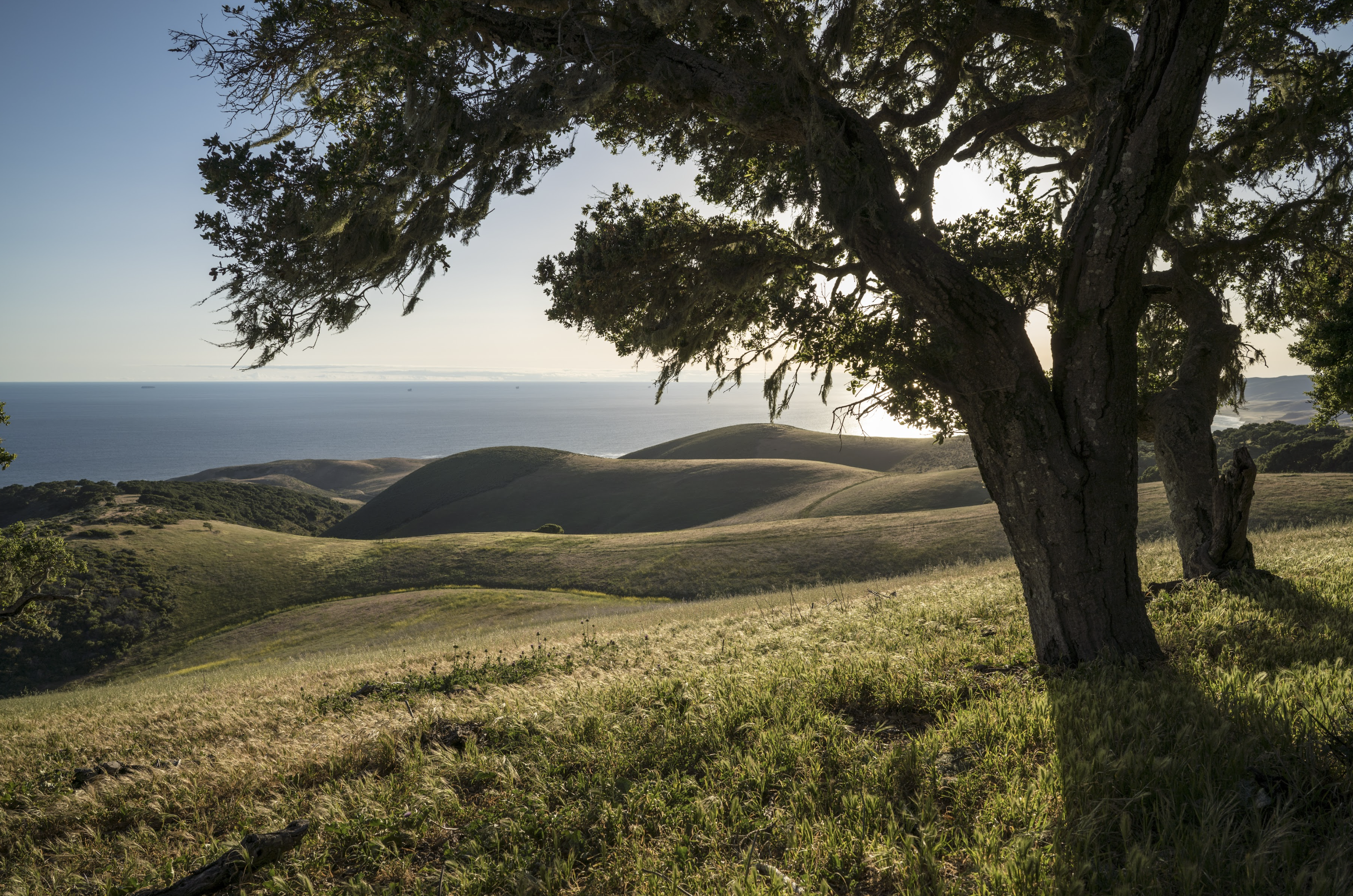
Just after the 24,000-acre Jack and Laura Dangermond Preserve was established by The Nature Conservancy (TNC) in 2017, dozens of conservation-savvy scientists convened to discuss its highest and best use. Mark Reynolds — a UC Berkeley-trained biologist and cofounder, in 1997, of the Sedgwick Reserve in the Santa Barbara backcountry — was among that meeting of the minds.
“Part of the concept,” Reynolds remembers, “was to protect it as a place of learning — a living laboratory.” The establishment of the Point Conception Institute (PCI), the preserve’s research division, emerged from the process. Reynolds oversaw the PCI in the interim before becoming director in 2021.
For more on the preserve as “a unique merger of conservation, academia, and technology,” Reynolds sat down for a Q&A. He speaks to the lay of the land and some of the research happening across the vast and untrammeled property stretching from the ocean’s edge at Point Conception to the oak woodlands high along the Santa Ynez mountains.
What does the PCI do?
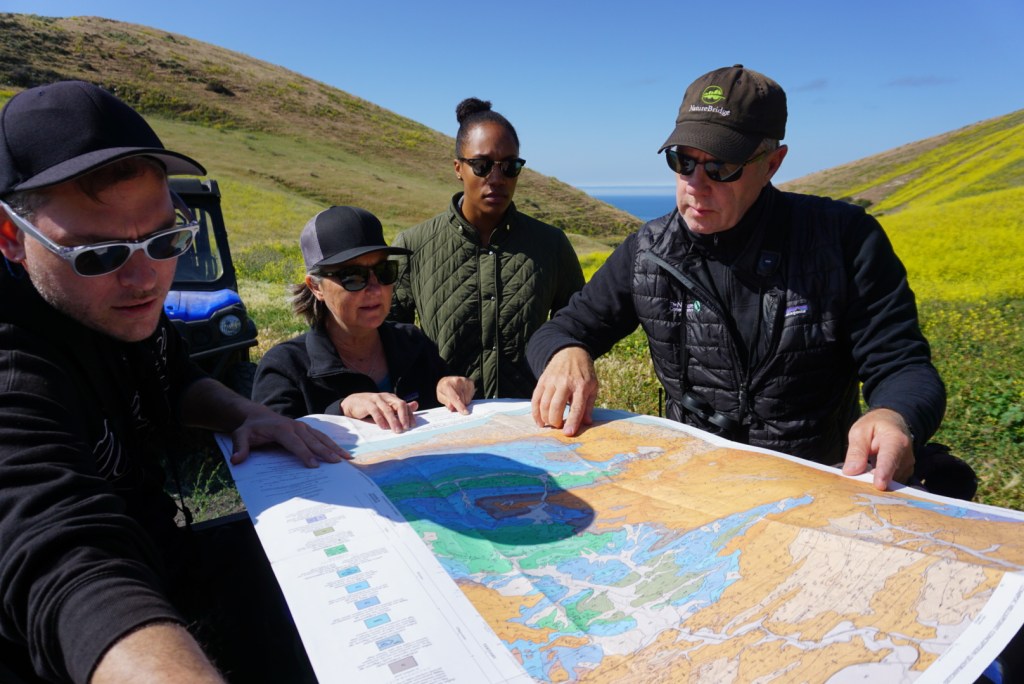
We develop research initiatives for conservation and facilitate collaborations, data collection and management, and information systems to help address pressing conservation issues. The preserve’s intact coastal ecosystems and exceptional geography create an ideal setting for a “living laboratory” and enables PCI to work with partners to demonstrate how science, technology, and data systems can foster collaboration, accelerate learning, and improve the efficiency and effectiveness of conservation management.
The preserve is home to a diversity of land- and seascapes. What’s the range of research happening out there?
The Dangermond Preserve and Point Conception region are located at the ecological crossroads between Northern and Southern California, both on land and in nearshore and marine ecosystems. It’s a global biodiversity hotspot and comprises one of the last and best conserved wild coasts in Southern California. The diversity and intactness of seascapes and landscapes support an unusually broad and integrated range of research.
Let’s go through some of them.
The preserve sits adjacent to protected offshore waters, including the 14,400-acre Point Conception State Marine Reserve, and conserves more than eight miles of largely undisturbed coastline. Scientists examine intertidal ecology, including rocky shores and sandy beaches, marine–terrestrial food webs, and coastal wildlife. These systems also provide opportunities to study migratory species, land–sea connectivity across local and global scales, and better understand habitat protection.
For example, working with Peter Raimondi’s lab at UC Santa Cruz and Channel Islands National Park and many other partners, we were able to translocate black abalone to the preserve, where they had been largely absent for 30 years.
UCSB’s Jenny Dugan has been monitoring marine protected areas, revealing healthy populations of surf perch in the protected waters.
And our inaugural Anthony LaFetra Point Conception Institute Research Fellow, Dr. Erica Nielsen, leads our work to restore rockweed, a foundational species of intertidal algae that provides habitat, protection from desiccation, and is key to coastal resilience.
And the bluff and dune systems?
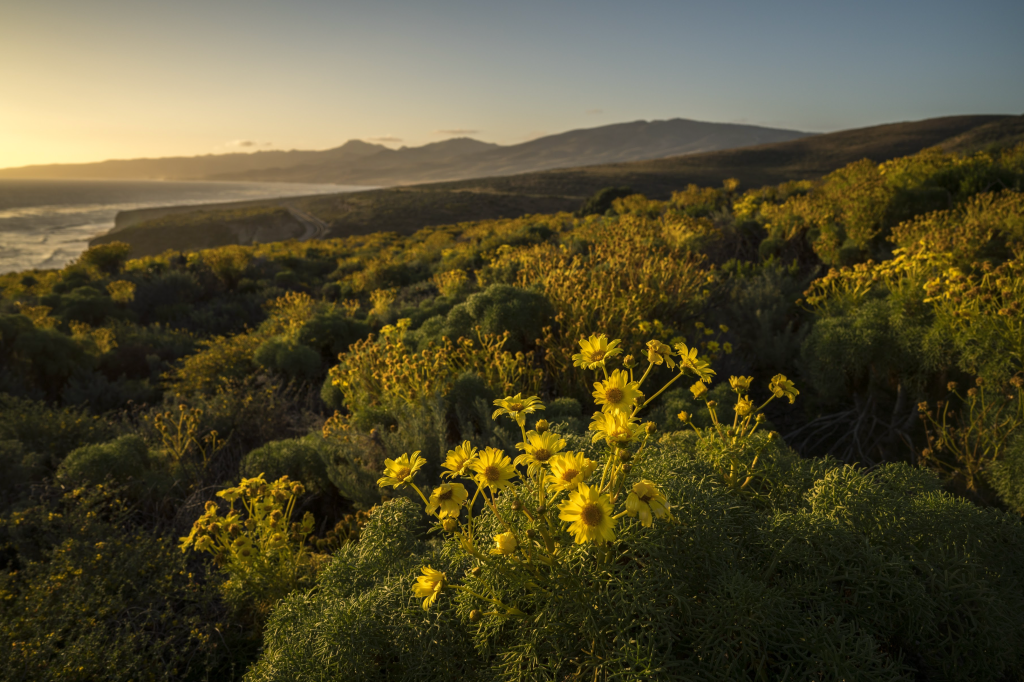
Those offer important platforms for dune ecology, plant community dynamics, and responses to restoration efforts, like the removal of invasive ice plant. Fog influences vegetation well inland, making this an ideal location to study climate buffering and ecohydrological processes in coastal grasslands and bluff habitats. For example, Gretchen LeBuhn of San Francisco State University is studying the effect of small-scale climate variation on flowering patterns in California poppies.
Moving inland?
Inland, we have extensive grasslands, oak woodlands, and forests supporting research on biodiversity, wildlife movement, fire ecology, and climate-driven range shifts. The preserve’s location at a major biogeographic transition zone gives scientists a rare opportunity to track changes in species distributions and ecological interactions along a climatic and evolutionary boundary. The scale and intactness of these habitats also make the site ideal for long-term wildlife monitoring and connectivity studies, particularly for wide-ranging species like coyotes and other carnivores.
What else?
The preserve’s freshwater and groundwater systems — including more than 50 miles of streams, wetlands, and multiple coastal drainages — enable research on hydrology, groundwater–surface water interactions, and species that move between freshwater, estuarine, and marine environments. Groundwater research at the preserve is helping us understand the role of atmospheric rivers in groundwater recharge and, in turn, the role of groundwater in stream health and biodiversity.
Species such as steelhead [trout] — which were found in Jalama Creek until the mid-1990s — and tidewater goby illustrate how these systems connect mountains to the sea, offering a natural laboratory for studying watershed-scale ecological processes and restoration potential — such as bringing back steelhead.
The Santa Ynez Band of Chumash Indians (SYBCI) have an agreement with TNC to work together on cultural resource management and programming.
We work with SYBCI, various Chumash-led organizations, and individuals on regular and ongoing opportunities for the Chumash people to engage with their ancestral territory. We also co-developed a cultural resource management plan with the SYBCI to guide all cultural management work at the preserve. The preserve also hosts a range of programming, from public tours to environmental education, that connects people to the landscape and its cultural and ecological significance.
Connected to technology from Jack Dangermond’s company, Esri, what is a “digital twin” of the preserve?
The digital twin is a dynamic, virtual representation of a real-world system — in this case, a protected landscape and seascape. It brings together data from land and sea — from sensors, satellites, weather stations, wildlife cameras, field studies, and ecological models, allowing scientists and land managers to visualize current conditions, track change over time, and test whatif scenarios to support more informed, adaptive decisionmaking.
Recent progress includes the development of our publicfacing Dangermond Geospatial Hub that makes data and insights more accessible to researchers, managers, and the public.
Big picture, what are you learning? Any surprises?
We’re learning a lot! Some things we expected, like that the scientific community would be excited to work on the preserve, and that we could leverage research to accelerate conservation impact and opportunities for collaboration.
It’s been surprising how investigations keep revealing how precious and important this region of the coast is. It’s also been gratifying how it’s enhanced TNC’s leadership on the importance of living laboratories — places of learning and innovation embedded in conservation landscapes and intact ecosystems.
Anything you’d like to add?
Yes! PCI “by the numbers” over the past five years — we’ve led, collaborated on, or facilitated 122 research projects partnering with 55 institutions, producing 236 datasets, more than 16 peer-reviewed research publications and over 200 career-development opportunities for students.
Get Involved
The Dangermond is a nature preserve. It’s not a campground or a trail network or a recreational beach park. Public access is limited. There are, however, several inroads for adventurous volunteers to sign up for habitat restoration, coastal cleanups, and “bioblitzing” alongside ecologists to photograph and document flora, fauna, and fungi. Docent-led tours are also popular; the next one is on May 16. For more information, visit dangermondpreserve.org.
Related Posts


Premier Events

Wed, Aug 26
6:00 PM
Santa Barbara
Death over Drafts at the Brass Bear Uptown

Wed, Aug 26
6:30 PM
Goleta
Get Home Safe Seminar/Parking Lots & Garage Safety
Thu, Aug 27
5:00 PM
Santa Barbara
Alzheimer’s Association Town Hall

Fri, Aug 28
3:00 PM
SANTA BARBARA
Family Movie Night at the Eastside Library: “Lilo & Stitch”
Fri, Aug 28
7:00 PM
Buellton
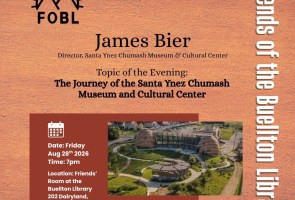
Speaker Series -James Bier, Director of the Chumash

Sat, Aug 29
10:00 AM
Santa Barbara
Wag, Play & Title Day

Sat, Aug 29
11:00 AM
Santa Barbara
🎉 INDY40 Fest 🎉
Sat, Aug 29
2:00 PM
Los Olivos
Reggae In The Vines

Sat, Aug 29
7:00 PM
Los Alamos
Carr + Kaena Winemaker Dinner – Full of Life

Sat, Aug 29
7:00 PM
Ojai, CA
Mavis Staples at the Libbey Bowl
Wed, Aug 26 6:00 PM
Santa Barbara
Death over Drafts at the Brass Bear Uptown
Wed, Aug 26 6:30 PM
Goleta
Get Home Safe Seminar/Parking Lots & Garage Safety
Thu, Aug 27 5:00 PM
Santa Barbara
Alzheimer’s Association Town Hall
Fri, Aug 28 3:00 PM
SANTA BARBARA
Family Movie Night at the Eastside Library: “Lilo & Stitch”
Fri, Aug 28 7:00 PM
Buellton
Speaker Series -James Bier, Director of the Chumash
Sat, Aug 29 10:00 AM
Santa Barbara
Wag, Play & Title Day
Sat, Aug 29 11:00 AM
Santa Barbara
🎉 INDY40 Fest 🎉
Sat, Aug 29 2:00 PM
Los Olivos
Reggae In The Vines
Sat, Aug 29 7:00 PM
Los Alamos
Carr + Kaena Winemaker Dinner – Full of Life
Sat, Aug 29 7:00 PM
Ojai, CA



You must be logged in to post a comment.