
Wikipedia plagiarism is old-school. Now, students have a more modern workaround: Just ask ChatGPT.
While artificial intelligence can be a powerful tool, many parents say it poses serious risks to students’ learning, safety, and privacy. In the Santa Barbara Unified School District (SBUSD), some are calling for a temporary moratorium on AI in schools until stricter safeguards are in place.
There is already a lack of trust among parents that the district is “doing the right thing for students in regard to tech,” said parent Nick Burwell, who works in the AI industry.
Parents argue that district-issued devices are not secure enough to support responsible AI use. Students can already bypass content filters, access AI platforms, and spend hours on social media or other apps, they say.
“AI is moving so fast, and it’s far more powerful than previous technology tools,” Burwell told the Independent. “We are concerned the district is moving way too slow on establishing proper guardrails, restrictions, and understanding the harms.”
A growing body of research has shown that students can “offload” critical thinking onto AI systems. Parents also pointed to concerns about chatbots suggesting self-harm, encouraging violence, or being used to generate sexualized images of minors.
District officials say some safeguards already exist, including interim AI guidance distributed to staff in 2024. A new AI Task Force will soon work on developing recommendations in areas such as academic integrity and data privacy, with proposed guidelines expected later this year.
Still, parents’ concerns are not abated. With kids receiving their own school-issued iPad starting in 3rd grade, these devices have become embedded in students’ daily lives.
Potential Harms
Parents’ AI concerns are tied into a broader discussion around tech use in schools — which involves much more than academics.
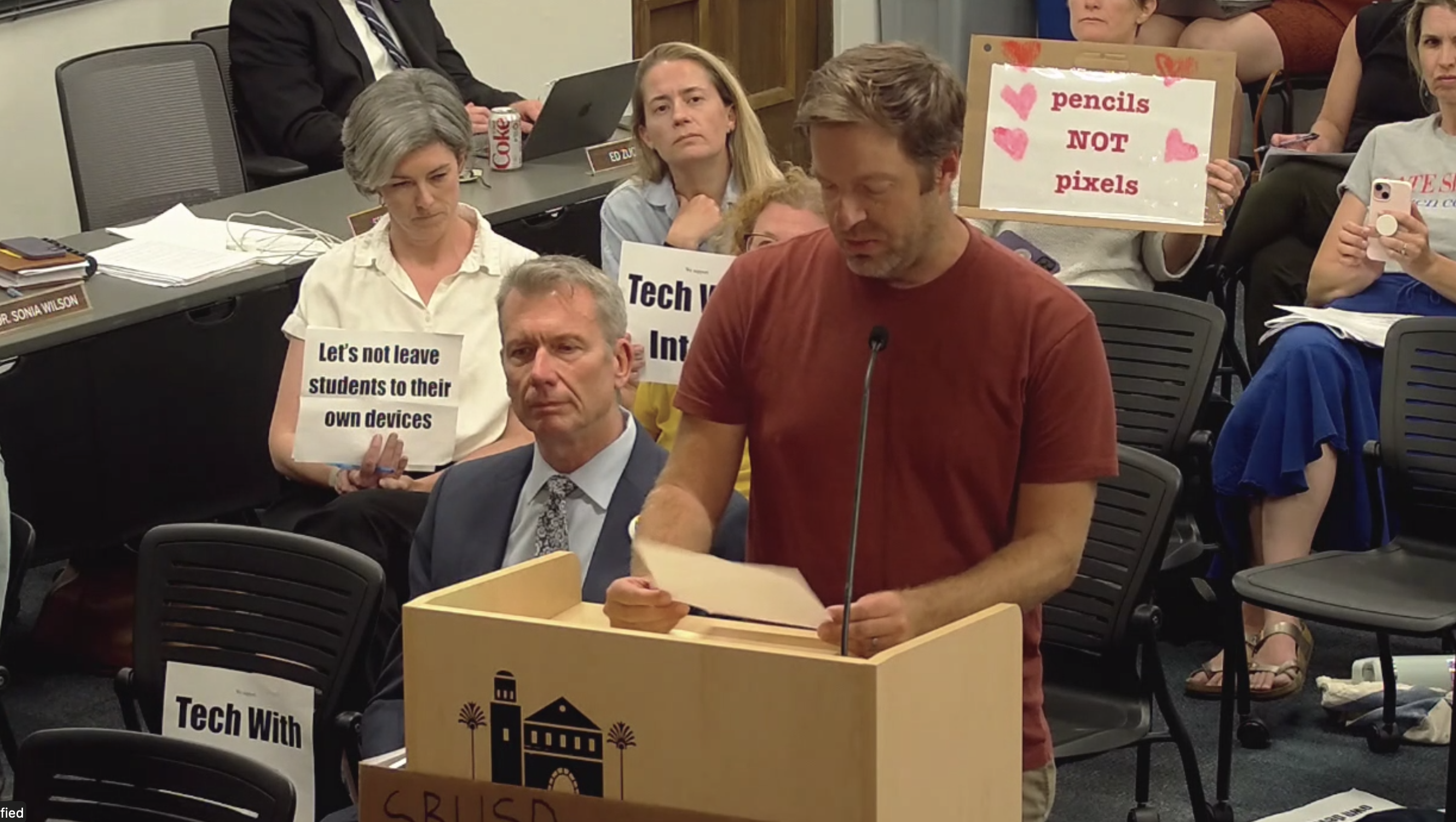
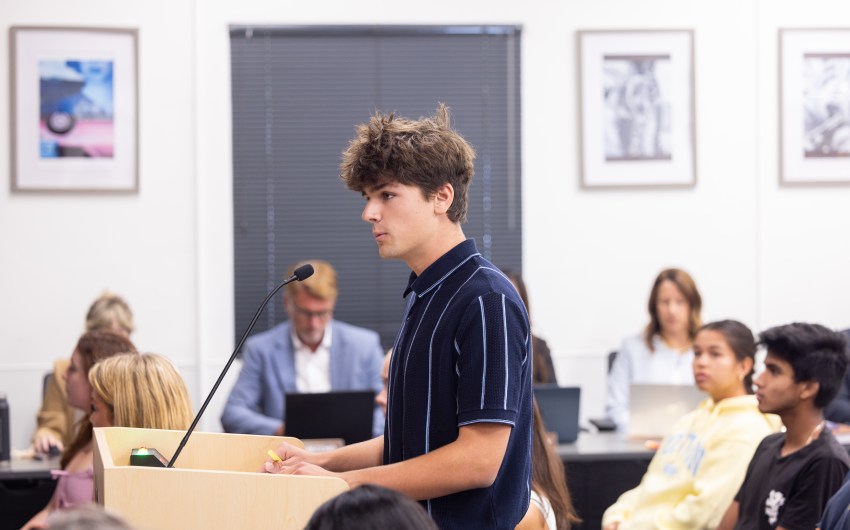
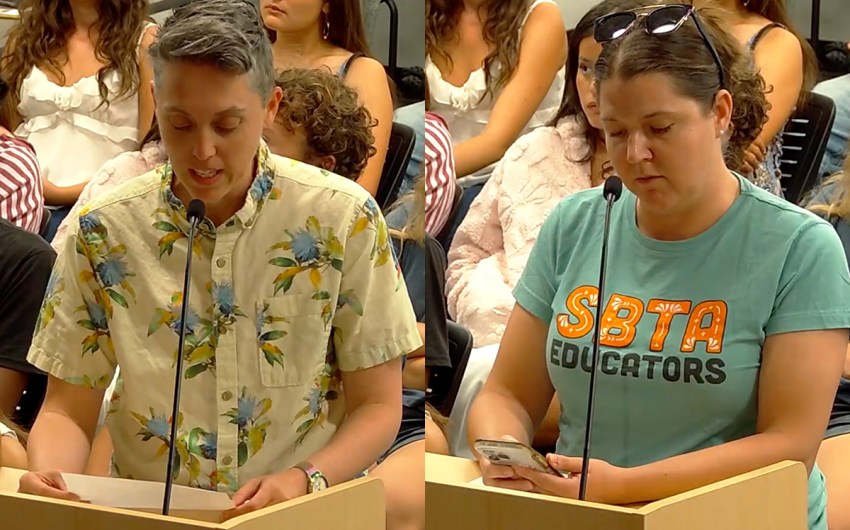
At a packed school board meeting on May 19, dozens of parents urged the district to adopt stricter tech policies, modeled after those recently approved by the Los Angeles Unified School District (LAUSD), directing “technology with intention.”
Their recommendations included eliminating devices for the youngest students, limiting screen time, banning devices during lunch and breaks, restricting YouTube and AI platforms, and allowing families to opt out of district-issued iPads altogether.
“A child with access to an iPad that includes YouTube and ChatGPT with no adult oversight is empirically at risk for serious harms, through cognition, attention, executive function, and wellness,” said Mona Damluji, a parent and associate professor at UC Santa Barbara. “The burden should not be on individual parents or the individual children to defend against the potential harms of school-issued iPads.”
Kids have almost unfettered access to the internet and other distractions, parents say. Parents described students using school devices to play horror games, browse social media, bully classmates, and access inappropriate content during class.
Ali Bjerke, a parent who works in tech, said that a student searched, “can I give blood if I’m on Lexotan” (an anxiety medication), “use paper soaked with drugs to pass in prison,” and “Japanese anime of S&M male-on-male abusive fatal relationships.”
“This must stop,” she said.
Many parents also worry about their children’s data privacy.
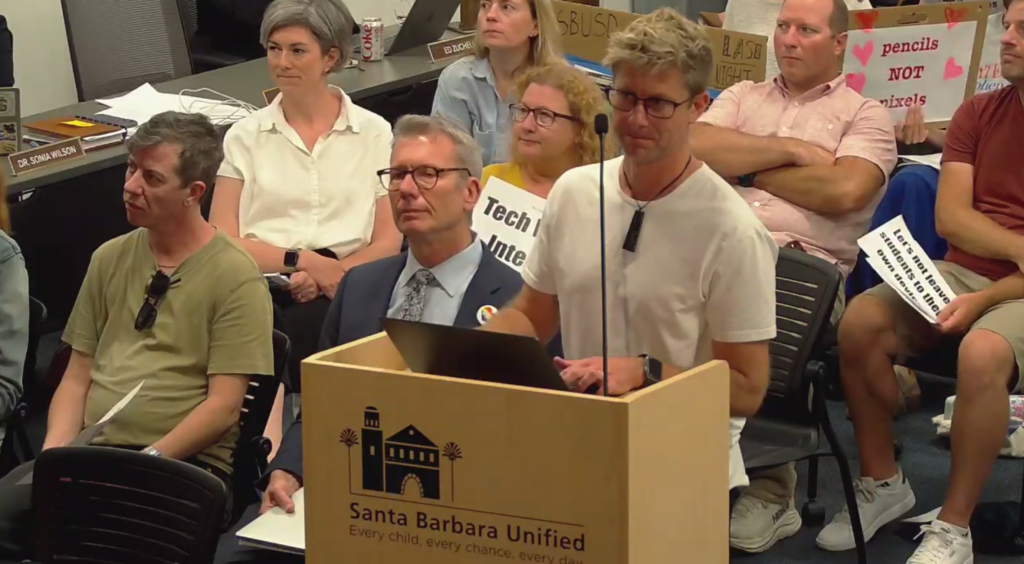
Simon Bentley, a parent and IT consultant, said he has observed students accessing consumer-facing ChatGPT on district iPads — without parental consent or California Data Privacy agreements.
Bentley compiled a report of these security flaws in school-issued devices — students can also log in to their own personal Apple ID, for example — and sent it to the board. He submitted a public records act request for privacy agreements with vendors like ChatGPT that access student data.
He included some recommendations, including hiring an outsourced, part-time Chief Information Officer, to strengthen oversight of district technology.
A parent petition asking for tighter restrictions on tech, called “Pencils not Pixels,” has already racked up more than 500 signatures. It lists parents’ demands and calls on SBUSD to “rethink and reign [sic] in the rampant use of screens inside the classroom.”
“These investments are harder than downloading an app, but they’re what works,” said parent Tristan Peter. “We should not be tailoring our teaching around technology. We should be tailoring our technology around our teaching.”
According to a survey from the Santa Barbara Teachers Association, many educators also want more tech-free curriculum options. While phone distractions have been down after the district implemented an “off and away” policy for personal devices, teachers said iPads have been taking their place as the primary “screen distractions,” particularly at the high school level.
Potential Reforms
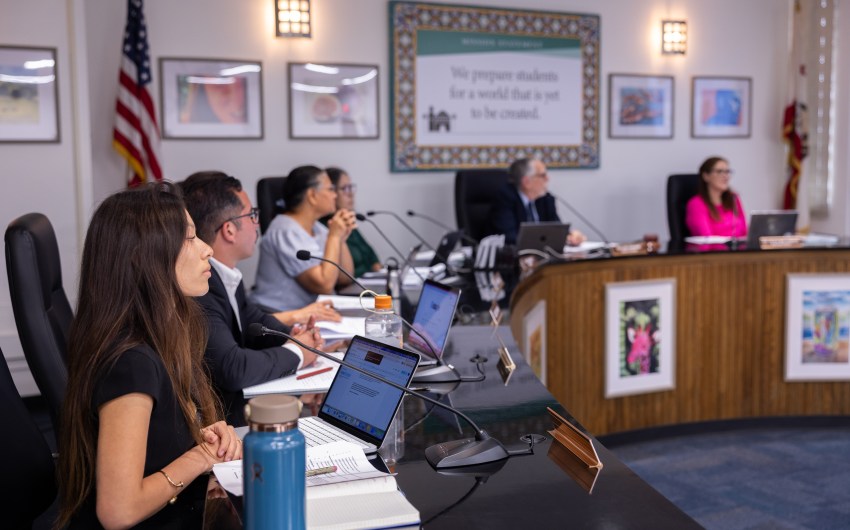
At the May 19 meeting, Chief Operating Officer Steve Venz presented proposed reforms from the district’s Balanced Learning and Technology Task Force — composed of Venz, district staff, school boardmembers, and parents — including blocking YouTube access, restricting personal Apple ID logins, banning devices during breaks, blocking cameras, blocking AI, and limiting “constant use” of iPads.
His report also included surveys of students and teachers, many of whom expressed support for iPad use. Parents, such as Burwell, took issue with this.
Burwell said the report focused more on student survey results rather than “evidence that technology increases learning or leads to better outcomes for the students.”
“Why are they asking the kids about this?” Burwell asked. “We don’t have them vote on whether candy and soda should be available for free at school.”
Boardmembers seemed open and eager to adopt stronger tech policies, but they also raised concerns about maintaining equitable technology access for low-income students.
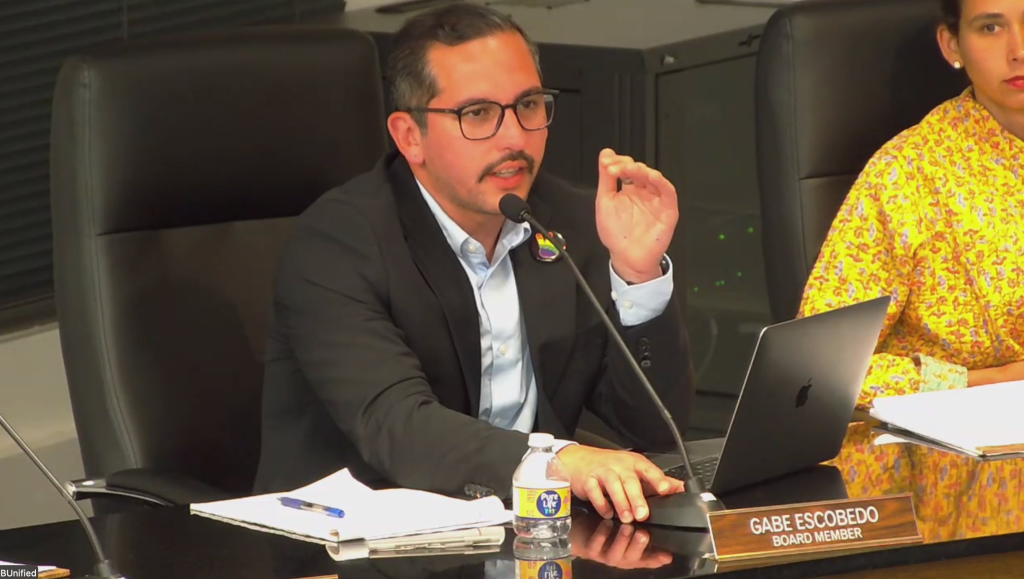
“Not everybody needs to get the same thing, but they should have access to what they need to succeed,” said Boardmember Gabe Escobedo.
Boardmember Celeste Kafri said the district should use LAUSD’s framework “as a starting point” for a policy with “actual teeth.”
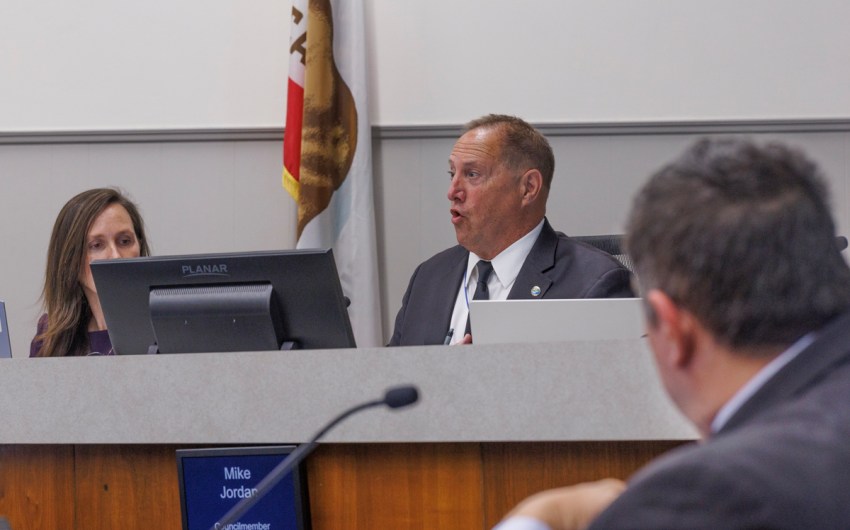
At the end of the discussion, Board President William Banning acknowledged that the room seemed to be in agreement, even if policy details were not yet fleshed out.
“I think we all have the same concerns and fears and desires for our kids,” he said. “No single response that we’ve talked about here today will get us to where we want to be. It has to be unified, and it has to start with people.”
On May 26, the Balanced Learning and Technology Task Force met again, working toward a new tech policy. “Members reviewed draft board resolution language, examined alignment with existing guidance, recently approved frameworks for other districts, and discussed next steps for implementation,” said district spokesperson Ed Zuchelli.
Security Measures
District officials have already begun strengthening device security. During spring break, IT staff reconfigured elementary school iPads with stronger filters, and secondary schools are currently testing a new content filter. The district is also working with Apple and device management company Jamf on additional controls.
Rob Cooper, the district’s director of Educational Technology Services, insisted that technology itself is not inherently the problem.
“As AI becomes more prevalent, school districts are going to need strong responses and very clear guardrails,” Cooper said. He noted students are already using AI as a “tutor in your pocket” for brainstorming, organization, and college preparation — but acknowledged concerns around cheating, bias, misinformation, and privacy.
Venz framed AI as the latest “flavor” of a long-standing issue.
“If you’re using your device to harm someone or to cheat, it doesn’t matter what that is,” he said. “That’s still against the rules.”
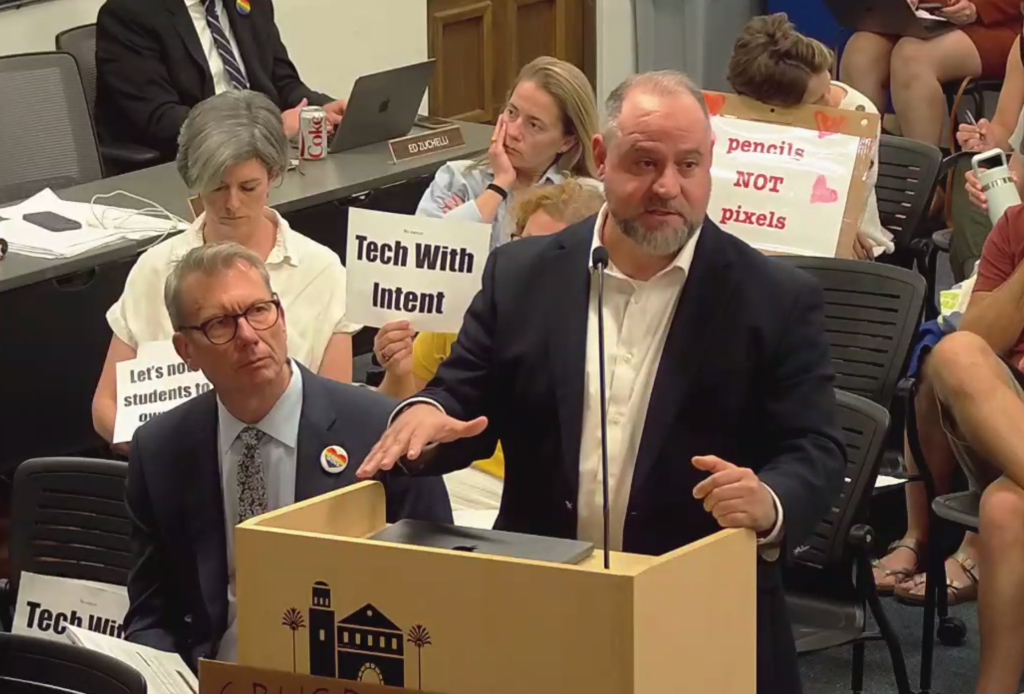
Cooper said the newly formed “AI Task Force and focus groups are going to really take it to the next level as far as what our district believes and values about technology use, in particular in the AI future that we are in.”
Applications for the focus groups closed on May 20.
While the initial intent was to form small working groups to tackle different AI-related issues, strong interest led the district to expand the focus group structure and invite all 66 applicants to participate.
“We are committed to a process that is collaborative, transparent, and representative of the voices across our district,” said Zuchelli.
For many parents, however, the district is moving too slowly while AI evolves rapidly around students. They still want the district to put on the brakes.
Sarita Bott, a mother of two in the district, told the board, “I don’t want my children — or any of our community’s children — being the guinea pig for what we think we might need to do but still need to figure out.”
Related Posts






Premier Events

Fri, Sep 18
12:00 AM
Santa Barbara
Yesterday: A Tribute to The Beatles at SOhO

Fri, Sep 18
All day
Solvang
Solvang Danish Days

Fri, Sep 18
7:00 PM
Carpinteria
West Coast Premier: “Gloria’s Old Haunt”
Sat, Sep 19
All day
Solvang
Solvang Danish Days
Sat, Sep 19
9:00 AM
Santa Barbara County
Coastal Cleanup Day

Sat, Sep 19
10:00 AM
Santa Barbara
8th Annual Santa Barbara County Farm Day

Sat, Sep 19
6:30 PM
Santa Barbara
Feng E – Teen Ukulele Sensation at SOhO

Mon, Sep 21
5:30 PM
Santa Barbara
S.B. Independent: Santa Barbara City Council District 6 Forum

Tue, Sep 22
1:00 PM
Santa Barbara
“The Lost Weekend” – The Photography of May Pang

Wed, Sep 23
7:30 PM
Ojai, CA
Laurie Anderson at the Libbey Bowl
Fri, Sep 18 12:00 AM
Santa Barbara
Yesterday: A Tribute to The Beatles at SOhO
Fri, Sep 18 All day
Solvang
Solvang Danish Days
Fri, Sep 18 7:00 PM
Carpinteria
West Coast Premier: “Gloria’s Old Haunt”
Sat, Sep 19 All day
Solvang
Solvang Danish Days
Sat, Sep 19 9:00 AM
Santa Barbara County
Coastal Cleanup Day
Sat, Sep 19 10:00 AM
Santa Barbara
8th Annual Santa Barbara County Farm Day
Sat, Sep 19 6:30 PM
Santa Barbara
Feng E – Teen Ukulele Sensation at SOhO
Mon, Sep 21 5:30 PM
Santa Barbara
S.B. Independent: Santa Barbara City Council District 6 Forum
Tue, Sep 22 1:00 PM
Santa Barbara
“The Lost Weekend” – The Photography of May Pang
Wed, Sep 23 7:30 PM
Ojai, CA


You must be logged in to post a comment.