
At a June 10 town hall in Santa Barbara, conservationists warned of the potential consequences of trading trees for pavement. It centered on the Trump administration’s ongoing efforts to repeal the Roadless Area Conservation Rule.
The Roadless Rule, created in 2001, protects 59 million acres of National Forest land from logging and roadbuilding. That includes 635,000 acres in Los Padres National Forest — harboring some of its most remote and ecologically intact areas.
Los Padres contains 37 “inventoried roadless areas,” spanning much of Santa Barbara and other nearby counties, which would be at risk to commercial logging, vegetation management, and possible infrastructure development, should the rule be rescinded, conservationists warn.
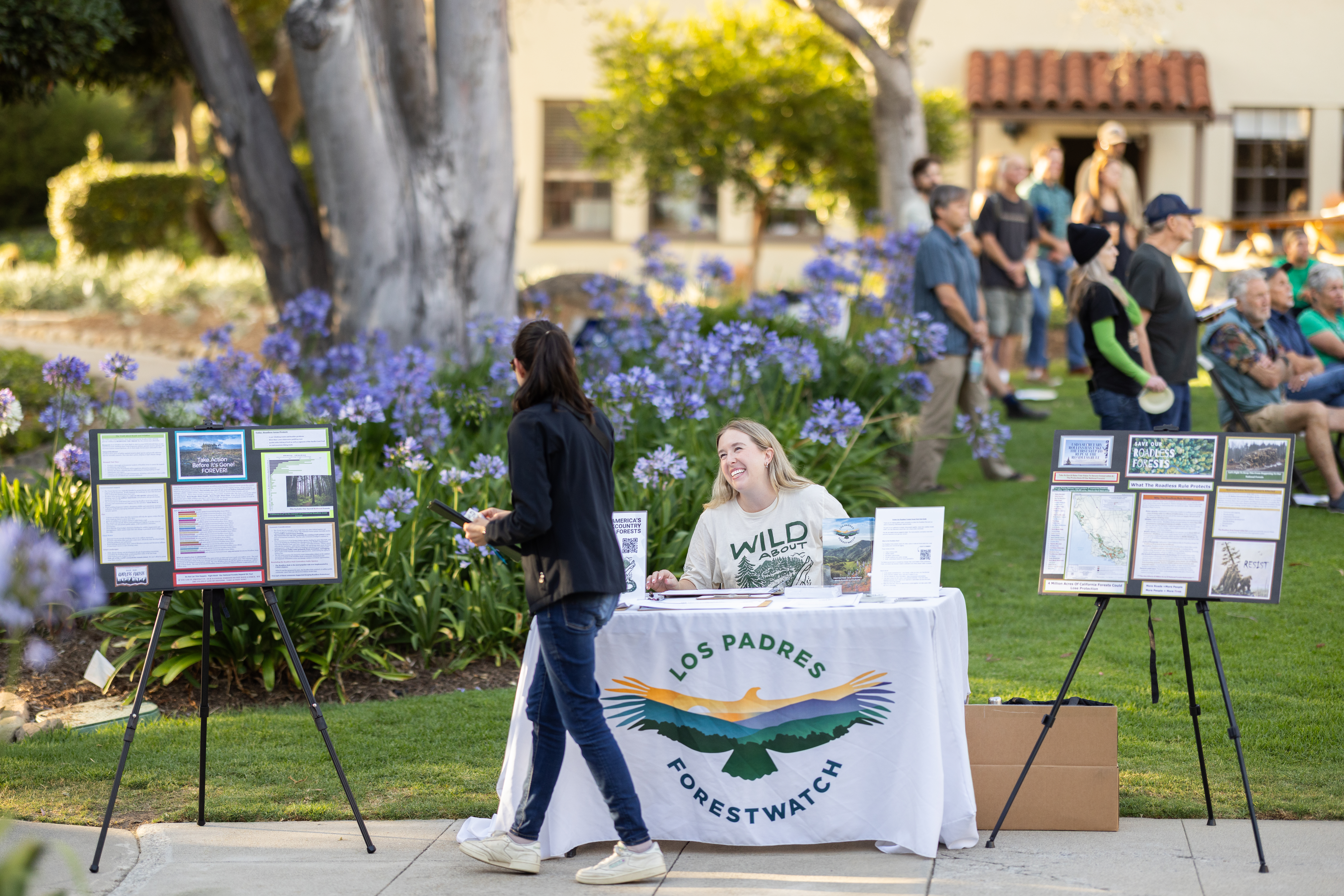
Hosted by nonprofit Los Padres ForestWatch at Toad & Co.’s outdoor courtyard, the town hall’s roughly 50 attendees got caught up on the story so far.
That morning, Utah Senator Mike Lee slipped in a last-minute repeal of the Roadless Rule to a previously bipartisan wildfire bill, which passed 11 to 9 (split along party lines) out of the U.S. Senate Energy and Natural Resources Committee.
“The Roadless Rule was a bad idea in 2001, and it remains a bad idea today, a quarter of a century later,” said Lee, who chairs the committee. “The rule has wreaked havoc on a lot of western communities.”

The Roadless Area Conservation Rule protects 59 million acres of National Forest from logging and roadbuilding, including 635,000 acres in Los Padres National Forest. | Credit: Ingrid Bostrom
Democrats unsuccessfully tried to strike the repeal from the bill. California Senator Alex Padilla said Republicans are pushing a “poison pill in what is a tremendous bipartisan opportunity.”
It now moves on to the full Senate for a vote.
Meanwhile, for the past year, the U.S. Department of Agriculture (USDA) has been working to rescind the Roadless Rule through an administrative process. The environmental review is currently underway and a decision is expected later this year.
USDA Secretary Brooke Rollins has called the rule “outdated” and “overly restrictive” and said that rolling it back will allow for fire prevention, “responsible timber production,” and economic development in the forestry sector.
However, ForestWatch argues that roadless areas provide vital habitat for endangered species, safeguard watersheds, support forests that regulate the climate, and offer opportunities for backcountry recreation — including 349 miles of trails for hiking and other activities in Los Padres.
More than 99 percent of public comments submitted during the process opposed the administration’s efforts to rescind the Roadless Rule, according to an analysis by the Center for Western Priorities.


Around 50 people attended ForestWatch’s town hall on June 10 to learn about the Trump administration’s efforts to rescind the Roadless Area Conservation Rule. | Credit: Ingrid Bostrom
Roads and Wildfire
The administration claims that rescinding the Roadless Rule will open remote areas to allow firefighters to better fight and prevent wildfires.

Western states, including California, face significant wildfire risk this year after an abnormally hot and dry winter, according to the National Interagency Fire Center.
Additionally, there are now fewer resources to fight fires, as federal agencies, such as the Forest Service, have faced federal restructuring and downsizing. According to the Center for Western Priorities, the Forest Service treated roughly 35 percent fewer acres of hazardous fuels in 2025 than in 2024.
For firefighters, more roads in the backcountry would make remote areas easier to access. Reaching areas by vehicle is much easier than walking — which is often the only way to access remote forest, if not by plane or helicopter. But they do still get there.
“Every wildfire is different and suppression techniques vary depending on terrain, fuels, weather and available resources,” said Andrew Madsen, the public affairs officer for Los Padres National Forest, in an email. “Fires in wilderness areas are fought using aerial retardant, smokejumpers (if prudent), and spike camps where firefighters and supplies are flown in.”
He said that half of Los Padres is wilderness, which, by definition, means that it does not have roads nor allows for the operation of mechanized equipment, “nor do our fire crews do preventative work (fuels reduction/thinning) in wilderness areas.”
The question is: Would new roads be used only for fire access or would they be public? That is an important distinction, because, historically, more humans equals more fire.
Activists say that wildfire prevention is a false pretext for the administration to cut the red tape standing in the way of resource extraction. Roads increase wildfire risk and the Roadless Rule does nothing to hinder fire prevention efforts, they argue.
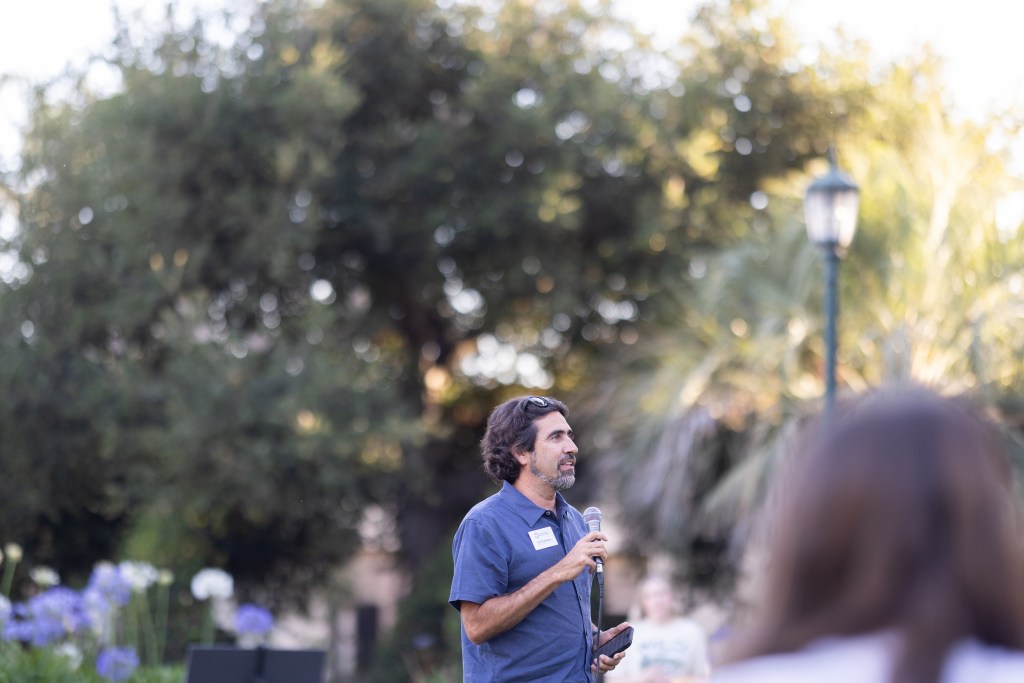
“Where roads go, people follow — fires follow,” noted Eric Cárdenas, the director of impact and advocacy at Santa Barbara Botanic Garden, during Wednesday’s town hall.
A majority of wildfires are human-caused, and studies show that more than 50 percent of fires start within the first 700 feet of roads.
“Speculation that eliminating road prohibitions would improve forest health is not supported by nearly twenty years of monitoring data,” according to a 2020 study by the Forest Service. It also found that the Roadless Rule had not prevented wildfire prevention activities in roadless areas.
Another environmental research study from 2021 found no difference in wildfire severity across roadless and roaded areas of national forest in the West. But it also found that fires did spread to a greater extent in roadless areas because of the challenges in reaching remote areas.
However, no specific details about how a repeal of the Roadless Rule may be rolled out or implemented have yet been provided to the Forest Service, or at least have not reached its regional offices, according to Madsen.
“Additional roads would not necessarily improve response time,” he said. “Our crews have extensive experience fighting fires in remote, inaccessible areas of the forest. We have the helicopter capacity to transport firefighters to these areas when needed. Roadways are a major source of ignitions for wildfires.”
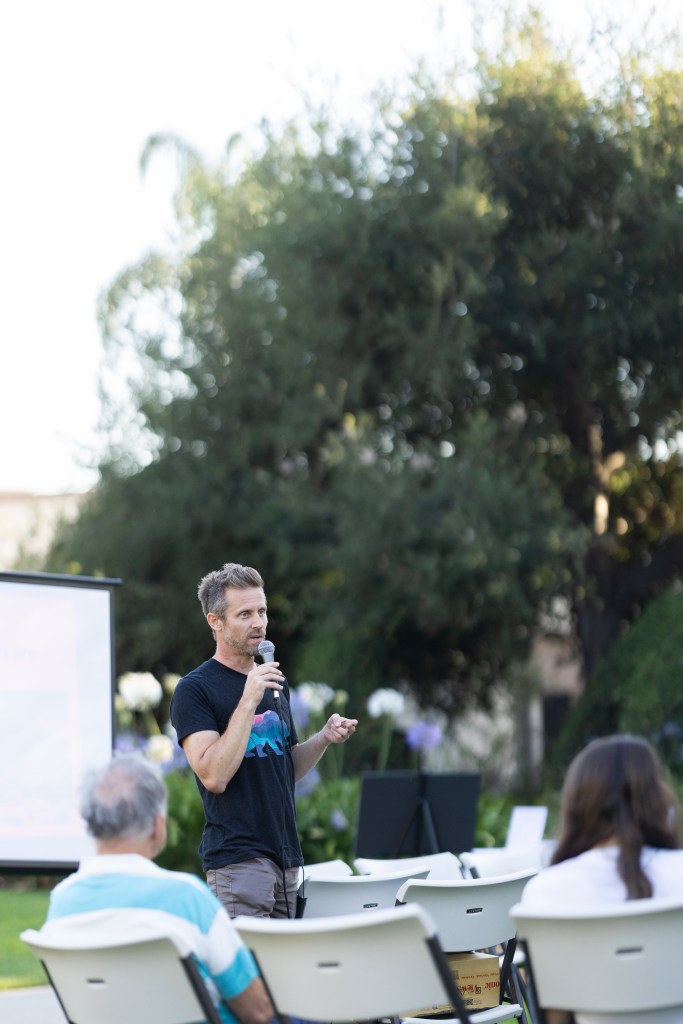
Benjamin Pitterle, director of advocacy for ForestWatch, said that the Roadless Rule has a track record of robust bipartisan public support. He noted that there are already almost 350 miles of existing roadways and designated and non-designated trails in the forest, and “the problem is we don’t maintain the roads and trails we already have,” citing a recent budget decision to cut trail maintenance by 64 percent.
“I wish more people knew exactly what was at stake,” he told the Independent. “There’s so much misinformation out there. The broader community would strongly oppose this if they actually knew the facts.”
The town hall included a court reporter who transcribed attendees’ public comments to have on record. Jeff Kuyper, executive director of ForestWatch, said that since the USDA is not holding public hearings, “we decided we can.”
The next public comment period is imminent, he said, but has been delayed longer than expected as the USDA prepares a draft environmental impact statement.
Additionally, a bill to permanently codify protections for roadless areas into law, called the Roadless Area Conservation Act and co-sponsored by Santa Barbara Congressmember Salud Carbajal, is still making its way through Congress.
Activists with the Sierra Club said it will take an army to battle the decision, but people across the country have skin in the game.
“Once protections are gone,” warned Maureen Ellenberger, the Sierra Club’s Santa Barbara-Ventura chair, “they do not come back easily.”
Once opened, public comment will be accessible through the National Register or ForestWatch’s website here.
Related Posts

Premier Events
Sat, Oct 24
2:00 PM
Santa Barbara
Japanese Sacred Architecture: Shinto and Buddhism

Sat, Oct 24
10:30 AM
Santa Barbara
Picnic in the Cemetery: A Live Historical Event

Sat, Oct 24
11:00 AM
Goleta
2nd Annual Charger Cup to Benefit DP High Golfers

Sat, Oct 24
12:00 PM
Santa Barbara
Makers Hive Market
Sat, Oct 24
2:00 PM
Santa Barbara
Japanese Sacred Architecture: Shinto and Buddhism

Sat, Oct 24
2:00 PM
Santa Barbara
Thriller 2026 – Get Scary for Charity!

Sat, Oct 24
3:00 PM
Santa Barbara
Downtown Santa Barbara Trick-or-Treat

Sat, Oct 24
5:00 PM
Santa Barbara
15th Annual DSASBC Halloween Hoedown

Sat, Oct 24
5:30 PM
Solvang
Solvang Haunted House and Street Fair

Sat, Oct 24
7:00 PM
Santa Barbara
Anima: Theater of the Feminine Underground

Sun, Oct 25
11:00 AM
Santa Barbara
Free Family Day: Día de los Muertos
Sat, Oct 24 2:00 PM
Santa Barbara
Japanese Sacred Architecture: Shinto and Buddhism
Sat, Oct 24 10:30 AM
Santa Barbara
Picnic in the Cemetery: A Live Historical Event
Sat, Oct 24 11:00 AM
Goleta
2nd Annual Charger Cup to Benefit DP High Golfers
Sat, Oct 24 12:00 PM
Santa Barbara
Makers Hive Market
Sat, Oct 24 2:00 PM
Santa Barbara
Japanese Sacred Architecture: Shinto and Buddhism
Sat, Oct 24 2:00 PM
Santa Barbara
Thriller 2026 – Get Scary for Charity!
Sat, Oct 24 3:00 PM
Santa Barbara
Downtown Santa Barbara Trick-or-Treat
Sat, Oct 24 5:00 PM
Santa Barbara
15th Annual DSASBC Halloween Hoedown
Sat, Oct 24 5:30 PM
Solvang
Solvang Haunted House and Street Fair
Sat, Oct 24 7:00 PM
Santa Barbara
Anima: Theater of the Feminine Underground
Sun, Oct 25 11:00 AM
Santa Barbara


You must be logged in to post a comment.