
This article was underwritten in part by the Mickey Flacks Journalism Fund for Social Justice, a proud, innovative supporter of local news. To make a contribution go to sbcan.org/journalism_fund.
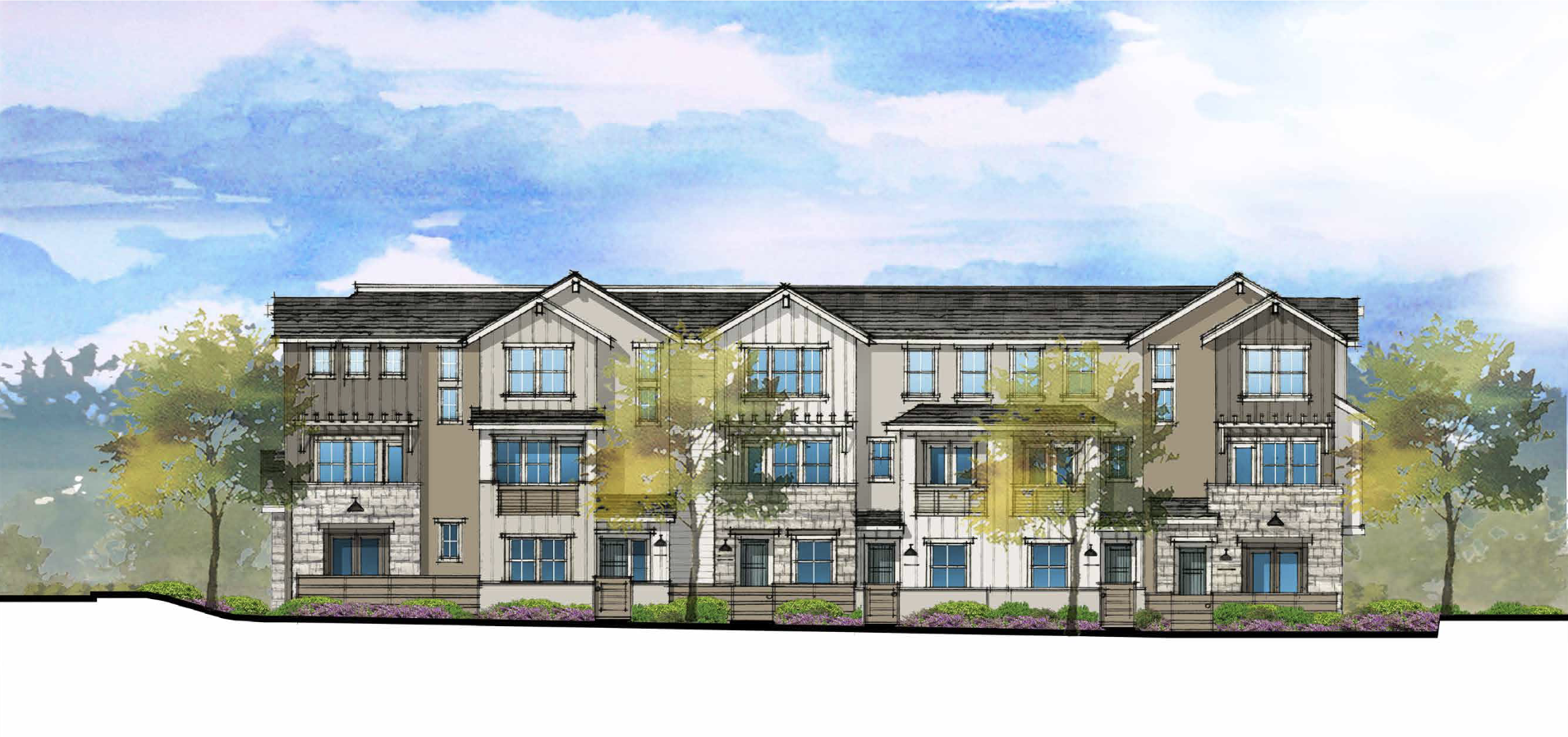
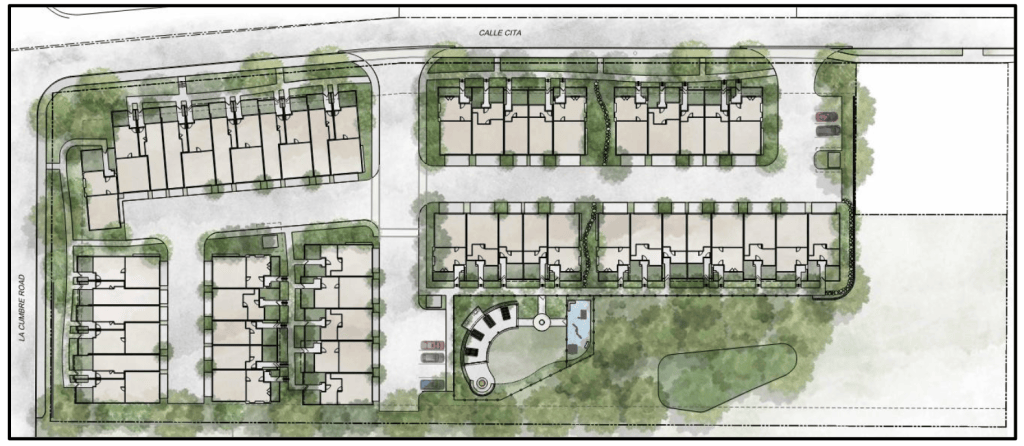
Fifty new condominiums are on their way to the La Cumbre area. On Wednesday, the Santa Barbara County Planning Commission okayed a tract map change, allowing the project’s developers to sell its units as condos. The project is known as Hope Villas in county paperwork but the development team, Franciscan Real Estate LLC, has since named it Marisol. Ten of its condos will be sold to people who qualify as low income.
Unlike many housing projects that came before it, Franciscan Real Estate wasn’t seeking the Planning Commission’s approval for the project at Wednesday’s meeting. The project, which will be located at the intersection of North La Cumbre Road and Calle Cita, where the former Hope Community Church building is located, gained approval from the county’s planning department in October.
This path to approval is called use-by-right, and it comes out of state housing requirements. The project on North La Cumbre is the fourth housing project to gain use-by-right approval, after the San Marcos Ranch project on Hollister Avenue, the Tatum project at Calle Real, and the county Housing Authority’s Hollister Lofts project.
Here’s how use-by-right came about. In 2021, the California’s Department of Housing and Community Development (HCD) tasked Santa Barbara County with building 5,664 housing units in unincorporated county by 2031, 3,853 of which needed to be considered “affordable” under state formulas. The county needed to include how it would build these units in its housing element, a state-certified housing plan. It also was required to identify sites where the housing could go, and create a “use-by-right” method of approving housing that met certain requirements on those sites.
County staff began to work to identify where the county could build these 5,664 units (including the affordable units). They located sites that could be suitable for housing development throughout the unincorporated county.
In 2024, over two marathon hearings, the board chose 27 sites, along with nine county-owned sites, to “rezone,” including the Marisol project’s site, which was upzoned. As part of the rezone process, parcels of land underwent environmental review.
If a developer wants to build on one of these rezoned properties, and if they meet the county’s pre-set requirements (at least 20 units per acre, at least 16 units, and at least 20 percent affordable units), they don’t have to undergo the traditional process for approval. Rather than a public hearing with the Planning Commission, the planning department staff can evaluate the project for compliance for land-use and development requirements.
John Mullen, a developer for the Marisol project, said county long-range planning approached the church and asked whether it would allow the church property to be a housing rezone site. Mullen said the development team submitted a letter supporting the rezoning and committing to the 20 percent of affordable units slated for the site.
Once built, eight three-story buildings will hold two-, three-, and four-bedroom units. Ten of those units will be deed restricted for low-income people. The property will also include a barbeque area, picnic tables, and a playground for residents. The site is owned by the Missionary Church of Santa Barbara.
Mullen said that condos were always the plan for Marisol and included on the application. He said coming before the Planning Commission on Wednesday for the tract map change was a necessary, procedural step.
“Most housing element projects, out of the 17 [South County rezone sites], provide rental housing,” he said. “[The project] provides something deeply important: attainable ownership.”
The project’s 10 affordable units, units which allow the project to make use of state density bonus laws and build to three stories, will be deed-restricted for the next 99 years. That means that if a person living in a low-income unit sells their condo, they cannot sell it for more than what the state determines is affordable for low-income people. These units will be mixed in with market-rate units, Mullen said.
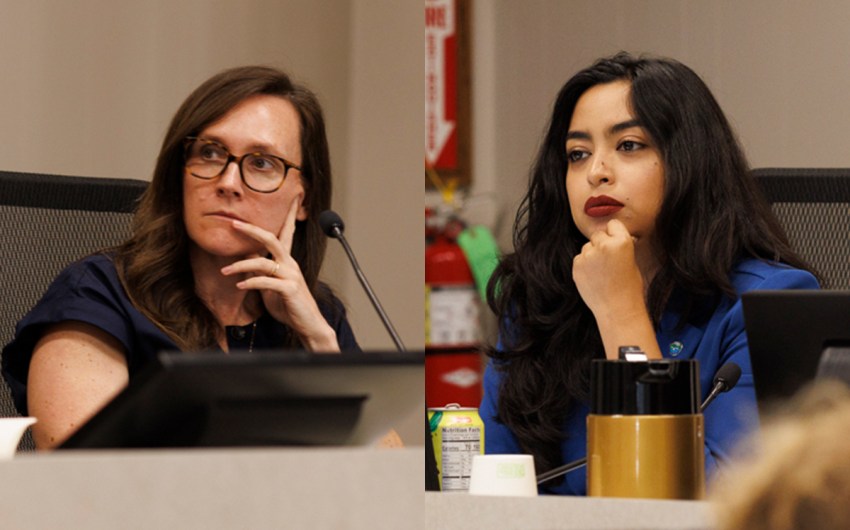
The planning commissioners unanimously approved the tract map change, and Commissioner John Parke commented that adding affordable condos to the county’s affordable housing stock provided needed diversity in housing options.
Public comment on the item largely surrounded communication on the project itself, not the tract map change. Four of five public commenters who spoke at the meeting said they did not know about the project until recently.
“It was a shock to come down and find out what was being built,” one public commenter said.
Five commenters raised concerns about how the new homes would impact traffic, especially given the amount of children who walk and bike on the roads. One public commenter recommended lowering the speed limit. The project is located near La Colina Junior High School and Hope Elementary.
County staff said that the project underwent a traffic study which showed the total trips in the area would increase, but that peak hour trips would decrease. Calle Cita, where traffic to the project will enter and exit, is actually a City of Santa Barbara road; the county said concerns regarding “calming traffic” would need to go to the city.
Related Posts


Premier Events
Sat, Oct 10
9:00 AM
Santa Barbara
Treble Clef Chorus Fall Treasure Sale
Sun, Oct 11
5:00 PM
Santa Barbara
Trinity Choir: Choral Evensong

Fri, Oct 09
7:00 PM
Santa Barbara
Paseo Nuevo Spooky Movie Nights

Sat, Oct 10
9:00 AM
Santa Barbara
SBNC 1st Annual Health & Wellness Fair

Sat, Oct 10
1:30 PM
Goleta
🌴 Another Day in Paradise at S.B’s Premier Ice Rink

Sun, Oct 11
7:00 AM
Ojai
Flamenco Guitarist Tony Ybarra

Sun, Oct 11
10:00 AM
Santa Barbara
18th Annual Domestic Violence Solutions Brunch
Sun, Oct 11
10:00 AM
Santa Barbara
Free Community Day at S.B. Botanic Garden
Sun, Oct 11
10:00 AM
Santa Barbara
Downtown Classic Car Show Santa Barbara
Sun, Oct 11
11:00 AM
Santa Barbara
Raíces y Sueños: Bilingual Storytime at Santa Barbara Museum of Art

Sun, Oct 11
2:00 PM
Santa Barbara
The Theatre Group at SBCC Presents: “CLUE”
Sun, Oct 11
10:00 PM
Santa Ynez
Inaugural Santa Ynez Art Walk
Sat, Oct 10 9:00 AM
Santa Barbara
Treble Clef Chorus Fall Treasure Sale
Sun, Oct 11 5:00 PM
Santa Barbara
Trinity Choir: Choral Evensong
Fri, Oct 09 7:00 PM
Santa Barbara
Paseo Nuevo Spooky Movie Nights
Sat, Oct 10 9:00 AM
Santa Barbara
SBNC 1st Annual Health & Wellness Fair
Sat, Oct 10 1:30 PM
Goleta
🌴 Another Day in Paradise at S.B’s Premier Ice Rink
Sun, Oct 11 7:00 AM
Ojai
Flamenco Guitarist Tony Ybarra
Sun, Oct 11 10:00 AM
Santa Barbara
18th Annual Domestic Violence Solutions Brunch
Sun, Oct 11 10:00 AM
Santa Barbara
Free Community Day at S.B. Botanic Garden
Sun, Oct 11 10:00 AM
Santa Barbara
Downtown Classic Car Show Santa Barbara
Sun, Oct 11 11:00 AM
Santa Barbara
Raíces y Sueños: Bilingual Storytime at Santa Barbara Museum of Art
Sun, Oct 11 2:00 PM
Santa Barbara
The Theatre Group at SBCC Presents: “CLUE”
Sun, Oct 11 10:00 PM
Santa Ynez


You must be logged in to post a comment.