WHY DO I HAVE TO FIGURE EVERYTHING OUT?: Those who can’t do, teach. We all heard that a trillion times. What you never heard is that those who can’t teach, go into journalism. And those who can’t do hack reporting — it’s harder than it looks on TV ― become columnists. That pretty much checks all the boxes of my own career trajectory.
By some perverse twist of logic, my authority as a know-it-all columnist is rooted in those fields at which I most horrifically stank. You learn most from your mistakes. Or at least that’s another one of those things they like to say.
In previous incarnations, I was a budget analyst paid by the state government of Wisconsin. That the Cheese-Head state remains fiscally afloat is further evidence of God’s infinite mercy. A little later, I worked as a paid organizer for the local tenants union. Joe Hill I most definitely was not. In hindsight, I like to say I was “pragmatic.” But sometimes there’s a physical limit as to how much lipstick one can put on the lips of any unsuspecting pig.
I mention this to establish my unparalleled bona fides on the subjects of municipal finance, housing affordability, and tenant activism. In all due respect, you guys working the salt mines of rent stabilization are pissing in the wind. Likewise, for you mayoral candidates bragging how you created the “Local Housing Trust Fund.” You get an A for effort. But from a financial point of view, you guys settled for the capillary when the jugular was hiding in plain sight. What the hell? Where’s the leadership? Where’s the vision?
If people really want affordable housing built — by that I mean lower than market rent — we need a steady income stream with which to do the building. Reliability is key. That, it turns out, is not necessarily easy but it is right within our grasp. Only we have chosen not to reach.
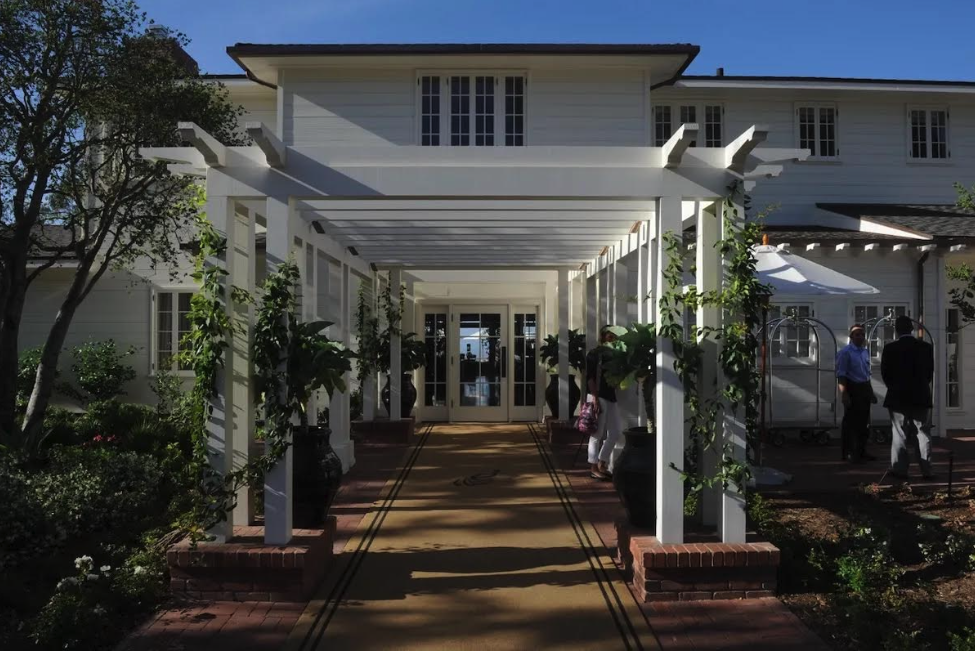
I am talking about the bed tax, aka, the Transient Occupancy Tax or TOT for people who insist on reducing all life forms to acronyms. Right now, the City of Santa Barbara takes 12 percent off the top of whatever our hotel-motel visitors get charged at the front desk. The County of Santa Barbara, by contrast, charges 14 percent. We’re talking 14 percent of the Miramar where even broom closets go for $2,000 a night. If the city were to increase its bed tax to what the county government is already charging, that would bring in about $5 million a year.
Four years ago, the head of the city’s Housing Authority, Rob Fredericks, irritated the hell out of a lot of folks, suggesting that a bed tax bump be put on the ballot, and that for every buck given to his agency, he could leverage another $10 to build Capital A “Affordable” housing.
Rob does not take no for an answer, nor does he go quietly into the good long night of City Hall apparatchiks who think, maybe one day, they’d like to tap into those possible bed tax revenues themselves. Some people think this makes Rob unreasonable. I say he was right then and he’s right now, and time’s a-wasting.
If we want to build affordable housing, you do not set out to build market-rate housing with one or two token below-market-rate units and think you’ve done anything. And in all due deference to the Local Housing Slush Fund — the new kid on the block when it comes to housing quick fixes ― it is built on a house of sand with a big wave coming. It depends on the mercy of city council votes every time the council approves a budget.
What happens when the council is deep into a deficit hole, as it has been the past couple years? Can councilmembers responsibly set aside a meaningful amount of money when we’re already way past the “Danger-Will-Roger” point of no return?
Good intentions and ingenuity ain’t enough.
Obviously, it would require a vote of the people if we were to bump our bed tax to what the county charges. And if we were to designate that money to the construction of affordable housing, that too would have to be part of that vote. I can’t think of a more hallowed cause. Yes, it might make the hospitality industry squirm, but the county already broke spades and the sky did not fall. And besides, we’d be taxing tourists.
Depending how you did it, such a vote could need a two-thirds majority to pass. But there’s also a way it could pass with just a simple majority. But I should mention that the most retrograde political minds of the 1970s are hard at work trying to deep-six this latter option. In fact, they qualified a statewide ballot initiative for the November election to make this impossible. That’s known as Prop. 43. The most important thing you need to know about Prop. 43 is to vote against it.
More on that later.
I know it might sound outlandish. Perhaps even pie in the sky.
But for eons, the state of California had something called Redevelopment Agencies that captured a certain slice of the property tax pie that would otherwise have gone to the county government or the school districts to fight “blight” and to build affordable housing. By law, these agencies were required to spend no less than 20 percent of their revenue on affordable housing. If I remember correctly, that was about $5 million bucks a year in Santa Barbara. That we have as much affordable housing built in this city — and nice stuff too — is all about this money.
Back in 2011, then Governor Jerry Brown — aggressively aided and abetted in this enterprise by Das Williams, then our representative in Sacramento — passed a bill banning the existence of Redevelopment Agencies. The state budget was in a spiral and by killing Redevelopment Agencies, Brown and Williams thought they could free up funds for education. It was one of those Sophie’s Choice kind of deals.
They, of course, pledged at the time to come up with a plan to find some alternative funding stream for affordable housing. Fifteen years later and we’re still waiting. Is the check in the mail? Will we ever do lunch?
Don’t hold your breath.
The impact was instantaneous and violent. What do you think happens when $1 billion a year spent on real-deal affordable housing just disappears? For all you Milton Friedman bootlickers out there, what do you think happens when all of a sudden 4,500 to 6,500 units of affordable housing — real affordable, not this pretend stuff — disappears? What does that do to the dynamics of supply and demand?
When the plug got pulled on all that Redevelopment Agency money, 40,000 units of permitted, shovel-ready affordable housing was raring to jump off the drawing boards and become reality. But with the decapitation of Redevelopment funding, a lot of financing dots could no longer get connected.
What difference did all this make? Back in 2012, 56 percent of all California households could afford to buy a median-income priced home. In the first two years after its demise, housing prices in Santa Barbara shot up 41 percent. Could that be a coincidence? Absolutely. But it’s probably not.
Am I hearing word one about any of this from mayoral candidates Kristen Sneddon or Eric Friedman? I am still waiting. Right now the silence is deafening. Rent stabilization? For all my dubiousness about some of the key details, it can help keep the housing fever down. But still, I think the tonic effect of a steady income stream would be infinitely more beneficial.
And that’s not the only revenue stream that could be tapped. The city could increase what’s known as the real estate transfer tax, which most of us have little to no idea about. It’s a bite off the top every time a real estate title changes hands. According to the city’s finance director Keith DeMartini, it’s a volatile funding source depending upon the vagaries of the real estate market. But in a good year, it could generate as much as $7 million a year. That’s not chump change. For reasons I don’t pretend to understand, the council opted to stop looking at that.
Maybe it’s time to look again.
OK, here’s the wrinkle. If the City Council were to vote to put either of these taxes on the ballot for the specified purpose of providing Capital A Affordable Housing, it would require a two-thirds supermajority to pass. City Hall did some polling, and it didn’t come close. Dead on arrival.
But here’s the light at the end of the tunnel: if some citizens’ group were to collect the signatures needed to put either of these tax increases on the ballot for purposes of housing, it would need only 50 percent plus one. That begs the $5 to $7 million a year question: what group of citizen activists might be able to handle a campaign like that? If I wasn’t such an obnoxious know-it-all, I might say the tenants union should jump on it. I might also say the landlords who are collecting signatures to put the city’s rent stabilization ordinance to the voters in the form of a referendum should too.
But just remember, Prop. 43 would destroy this option. So whoever you are and whatever you think, please vote no on that one. It’s an electoral bulletproof vest conjured by the billionaire class worried that the Great Unwashed might want them to share the wealth a little more equitably.
In the meantime, Eric and Kristen—you want to be mayor? Do something. Talk is cheap. Housing isn’t. The Local Housing Slush Fund is great, but only as far as it goes. It’s an intermittent stream. Still, that’s not nothing. Reportedly 155 housing units are on the way, We need more than that and better than that.
No doubt, it’s all way more complicated. It always is. There are other pressing needs for all the pent-up tax potential. There always is.
But with all the authority vested in me as an incompetent former tenant union organizer and an even worse former part-time budget analyst for the Cheese-Head State, I can say this: The emergency is now.
Pull lever and break glass.
Related Posts







Premier Events
Fri, Oct 23
2:00 PM
Santa Barbara
Music & Meditation: Clarinetist Nancy Mathison & Pianist Antonio Artese

Wed, Oct 21
6:30 PM
Santa Barbara
Teflon Comedy/Non-Schtick – Evening of Comedy

Thu, Oct 22
5:30 PM
Santa Barbara
Best Fest: A Celebration of the Best of Santa Barbara® Readers’ Poll 2026 – Rain or Shine

Thu, Oct 22
6:00 PM
Santa Barbara
Chaucer’s Books Author Talk & Signing- Daniel M. Jaffe “Russian Silhouette: A Memoir of Activism and Identity”

Fri, Oct 23
5:30 PM
Solvang
Solvang Haunted House and Street Fair
Fri, Oct 23
7:00 PM
Santa Barbara
This & That Performs at Roy

Fri, Oct 23
7:00 PM
Santa Barbara
Beth Amine’s 20th Anniversary Wildcat Dance Variety Show

Fri, Oct 23
9:00 PM
Santa Barbara
Casa de la Raza Fundraiser: Brasscals! with DJ Darla Bea
Sat, Oct 24
10:30 AM
Santa Barbara
Picnic in the Cemetery: A Live Historical Event

Sat, Oct 24
11:00 AM
Goleta
2nd Annual Charger Cup to Benefit DP High Golfers

Sat, Oct 24
12:00 PM
Santa Barbara
Makers Hive Market
Fri, Oct 23 2:00 PM
Santa Barbara
Music & Meditation: Clarinetist Nancy Mathison & Pianist Antonio Artese
Wed, Oct 21 6:30 PM
Santa Barbara
Teflon Comedy/Non-Schtick – Evening of Comedy
Thu, Oct 22 5:30 PM
Santa Barbara
Best Fest: A Celebration of the Best of Santa Barbara® Readers’ Poll 2026 – Rain or Shine
Thu, Oct 22 6:00 PM
Santa Barbara
Chaucer’s Books Author Talk & Signing- Daniel M. Jaffe “Russian Silhouette: A Memoir of Activism and Identity”
Fri, Oct 23 5:30 PM
Solvang
Solvang Haunted House and Street Fair
Fri, Oct 23 7:00 PM
Santa Barbara
This & That Performs at Roy
Fri, Oct 23 7:00 PM
Santa Barbara
Beth Amine’s 20th Anniversary Wildcat Dance Variety Show
Fri, Oct 23 9:00 PM
Santa Barbara
Casa de la Raza Fundraiser: Brasscals! with DJ Darla Bea
Sat, Oct 24 10:30 AM
Santa Barbara
Picnic in the Cemetery: A Live Historical Event
Sat, Oct 24 11:00 AM
Goleta
2nd Annual Charger Cup to Benefit DP High Golfers
Sat, Oct 24 12:00 PM
Santa Barbara