
When looking at a wind turbine, the giant blades appear to spin slowly. A professional football player, one might guess, could successfully make a pass through the gap in the blades.
But because the blades are so long, the outer edges travel much faster, reaching 100 to 200 miles per hour.
“That’s pretty hard for a bird to avoid,” said Steve Ferry, longtime member and former president of the Santa Barbara Audubon Society, an independent local chapter of the national bird-loving organization. “By the time they see it, it’s too late.”
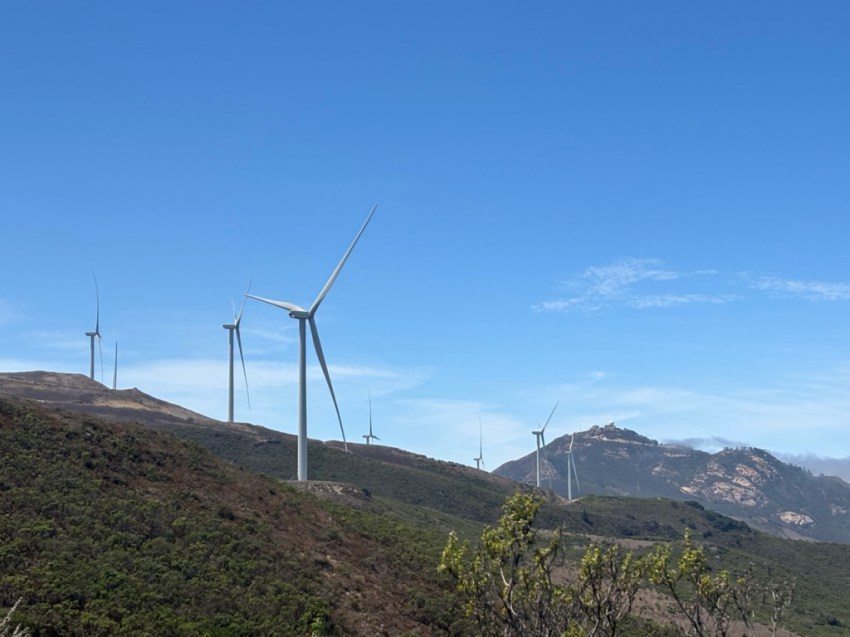
That’s a problem, he said. The turbines at the Strauss Wind Energy Project, dotting a 5,887-acre coastal ridge southwest of Lompoc, are killing birds — including endangered golden eagles.
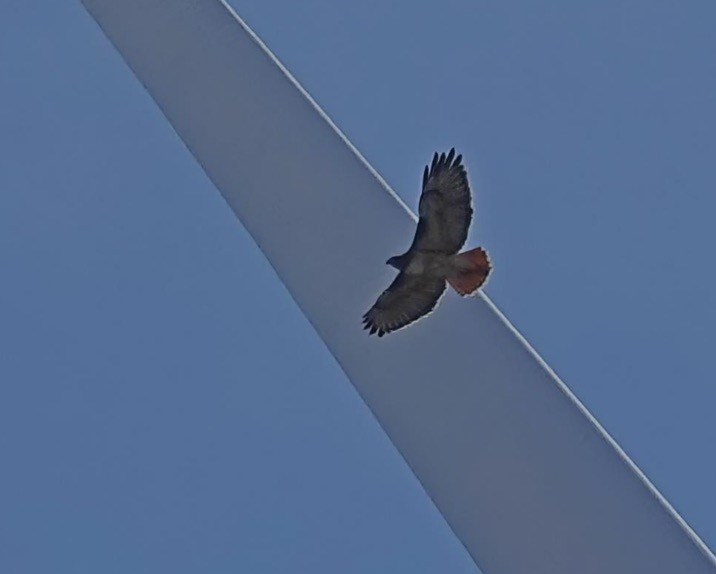
The region has the highest raptor concentrations in Santa Barbara County, according to the Audubon Society. Red-tailed hawks are abundant, and golden eagles are seen nearly every day, alongside other raptor species, such as falcons, that navigate the airspace.
Strikes by the blades are taking them out. Strauss has found a total of five golden eagle carcasses attributed to wind farm operations since it started up in November 2023, according to the quarterly reports on bird and bat deaths submitted to the county as a condition of its operation.
Reports cover several bird species, mostly raptors, as well as bats (which sometimes die due to the drop in air pressure around turbines, causing their lungs to explode).
“The real number of eagle deaths is likely much higher than the cited five, since not every carcass is found,” the Audubon Society claims. The nonprofit estimates the true toll could be as high as 29 eagles. “In addition, an independent consultant has estimated that over 350 birds of all types will be killed annually at Strauss.”
While Strauss’s county permit does not require it to remain under a certain number of fatalities, if it exceeds mortality thresholds — measured every 12 months — it is subject to incorporating additional mitigation measures to try and reduce fatalities or make up for it in some other way (such as compensatory mitigation for impacts that can’t be further reduced).
Strauss has exceeded that 12-month threshold — one fatality for fully protected species; two fatalities for other sensitive species — for a second year in a row, the county said. In its most recent mortality survey, through June 30, 2026, thresholds were exceeded for fully protected species (golden eagles) and non-sensitive raptors (American kestrels and red-tailed hawks).
Strauss does, also, have to answer to the U.S. Fish and Wildlife Service, which holds them to specific limits for golden eagle fatalities under an Incidental Take Permit.
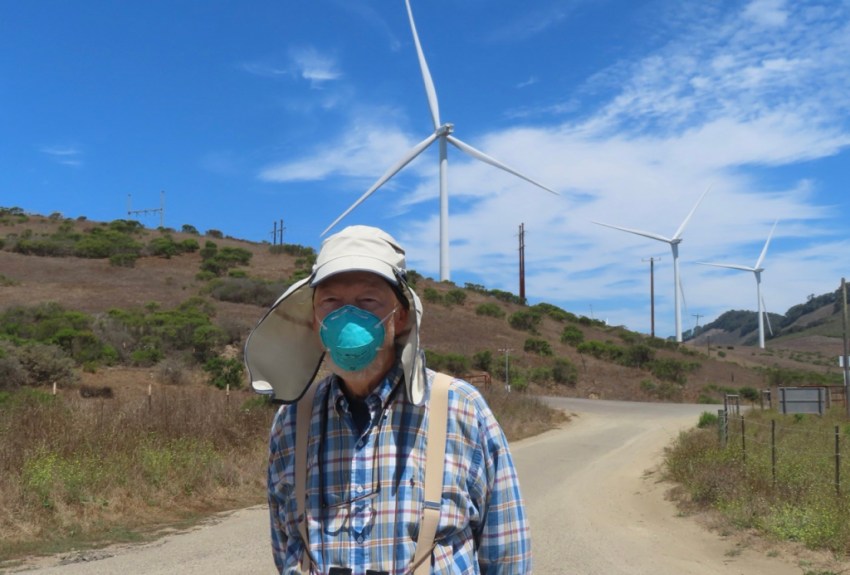
“They have gone past the levels, but we are not aware of any action that’s been taken to mitigate the harm,” said Marina Suh, the Santa Barbara Audubon Society’s (SBAS) communications chair.
Since the company has exceeded county thresholds for a second 12-month period,
Jacquelynn Ybarra, the project’s supervising planner, said the county is planning a Planning Commission hearing to “consider the effectiveness of existing adaptive management measures and to potentially direct Strauss to implement more.”
The hearing date is still to be determined.
Ybarra said the associated staff report will take into consideration Audubon’s recommendations, as well as possible measures identified by the California Department of Fish and Wildlife (CDFW).
Audubon recommends the farm do more to curb bird fatalities, citing a number of techniques employed by other wind farms that either make the blades easier to see or otherwise prevent birds from flying into them. It sent a letter to county staff with these suggestions, after working with the developer and the county for 20 years, Ferry said.
“SBAS … wants to see Strauss succeed as a financially viable renewable energy project — just not at this cost to local wildlife,” Suh explained.
First and foremost, the nonprofit recommends convening a working group to devise and implement solutions to reduce eagle mortality, considering system improvements and investigating other protection measures.
Additional protections could include shutting down the turbines most linked to eagle deaths during nesting season, and testing “visual deterrents” that worked for other wind farms.
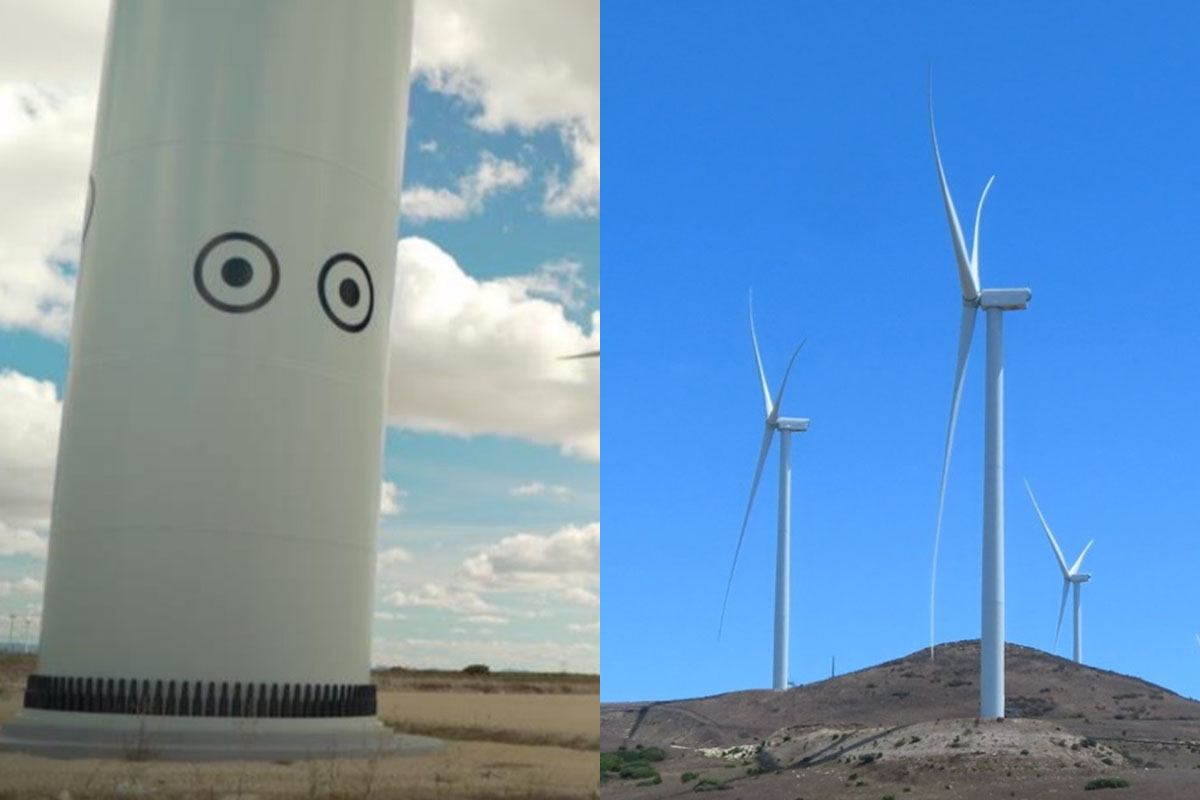
Decoration is one potential solution. A Spanish utility company, for example, stuck eyes on its towers to deter eagles and other birds from coming close — like a giant scarecrow. In Norway, a company painted one blade on each turbine black to make them easier to see.
It is, however, very expensive to do this, especially after the fact — the blades are huge, and the turbines at Strauss are almost 500 feet tall (taller than the Statue of Liberty).
BayWa r.e. (pronounced Bay-Wah), the international company that owns Strauss, is doing a study on what techniques may be helpful, and cost-effective, for Strauss. But that’s still in the works.
Strauss already has camera systems, known as IdentiFlight, in place to recognize birds flying too close to the wind farm — specifically eagles — and shut off the turbines on a dime (half a minute) to prevent strikes.
But Audubon says they have blind spots.
“BayWa r.e., in my opinion, cheaped out on this thing,” claimed Ferry, a retired engineer who worked for Raytheon before dedicating his life to protecting birds. He said that 10 of the 27 turbines are not covered by the IdentiFlight sensors. For reference, one system can cover multiple turbines. Only 17 turbines are covered by the site’s three IdentiFlight monitoring towers. They cost about $150,000 per unit.
Three of the five eagle deaths, Ferry noted, occurred at turbines with no coverage. Audubon wants the county to require BayWa r.e to improve IdentiFlight coverage, closing gaps in bird detection.
However, per information provided by BayWa r.e. Americas, approximately 95,000 animal deaths have been curtailed using IdentiFlight since operations began. Only one golden eagle fatality was recorded at Strauss in 2026, and it occurred on April 15, with no additional fatalities documented since that time. Strauss’s avian fatality rates “compare favorably with regional and national wind energy benchmarks,” according to the company.
“The project maintains ongoing wildlife monitoring and reporting programs and continues to implement mitigation measures required under its permits,” it said. “This includes avian monitoring, habitat conservation, and restoration activities, and collaboration with local, state, and federal agencies regarding adaptive management and future mitigation requirements.”
The Planning Commission hearing, which was previously scheduled for September, has been postponed while discussions continue between BayWa r.e., the county, and the CDFW regarding mitigation requirements and permit-related matters, the company said. A date in early 2027 is being discussed.
“Strauss remains committed to responsible operations, regulatory compliance, and continuous improvement of wildlife protection measures while providing renewable energy to California communities,” it said.
So, why does the Audubon Society care so much? While they do acknowledge the benefits of wind energy — it is clean, renewable energy that is cost-effective and requires no fuel — they say bird deaths are a significant drawback.
“We, of course, like birds,” Ferry said. “Given that it’s a wind farm, there’s going to be some birds killed. But we think there’s a tradeoff between protecting the environment by reducing greenhouse gas emissions and by reducing the number of birds killed.”
He brought up Jackie, the 14-year-old bald eagle from Big Bear Lake, who achieved fame from a live-streaming nest camera managed by the nonprofit Friends of Big Bear Valley. Over her lifetime, she publicly mothered many chicks with her partner, Shadow. When she died on August 10, fans around the world mourned her.
It’s proof people care about birds, Ferry said. “We’re trying to protect birds in their habitat in Santa Barbara County,” he said. Notably, there is a new golden eagle nest near the wind farm.
“We’re also recommending that they look at the possibility of protecting other large bird species, specifically red-tail hawks and turkey vultures,” which are protected by the Migratory Bird Treaty Act, he said.
Despite these avian fatalities, the county has been highly supportive of the wind farm since its proposal, considering the plethora of benefits associated with onshore wind.
Strauss, California’s first coastal wind farm, is an important energy provider to the region. It is leased from five local landowners, with cattle cohabitating much of the acreage. The farm powers approximately 36,000 homes and feeds power into the electric grid, increasing energy resilience for Lompoc, according to BayWa r.e.
The company says Strauss is an economic generator, providing an estimated $47 million in tax revenue to the county during the wind farm’s life cycle, hundreds of jobs, as well as income for farmers and ranchers and increased activity for restaurants and hotels.
Further, BayWa r.e. estimates that the clean electricity produced by Strauss will eliminate 105,570 tons of carbon pollution every year, supporting the county’s goals to reduce carbon pollution by 50 percent by 2030.
Nevertheless, SBAS wants to see fewer birds sacrificed for the project.
“Santa Barbara Audubon supports wind energy when it is designed and operated to have the minimum negative impact feasible on birds and other wildlife,” said Dr. Katherine Emery, SBAS’s Executive Director. “This wind farm was supposed to be built in a way to keep eagle deaths to a minimum.”
Related Posts





Premier Events
Fri, Oct 23
5:30 PM
Solvang
Solvang Haunted House and Street Fair

Fri, Oct 23
7:00 PM
Santa Barbara
Beth Amine’s 20th Anniversary Wildcat Dance Variety Show
Fri, Oct 23
7:00 PM
Santa Barbara
This & That Performs at Roy

Fri, Oct 23
9:00 PM
Santa Barbara
Casa de la Raza Fundraiser: Brasscals! with DJ Darla Bea
Sat, Oct 24
10:30 AM
Santa Barbara
Picnic in the Cemetery: A Live Historical Event
Sat, Oct 24
11:00 AM
Goleta
2nd Annual Charger Cup to Benefit DP High Golfers

Sat, Oct 24
12:00 PM
Santa Barbara
Makers Hive Market

Sat, Oct 24
2:00 PM
Santa Barbara
Japanese Sacred Architecture: Shinto and Buddhism

Sat, Oct 24
2:00 PM
Santa Barbara
Thriller 2026 – Get Scary for Charity!

Sat, Oct 24
3:00 PM
Santa Barbara
Downtown Santa Barbara Trick-or-Treat
Fri, Oct 23 5:30 PM
Solvang
Solvang Haunted House and Street Fair
Fri, Oct 23 7:00 PM
Santa Barbara
Beth Amine’s 20th Anniversary Wildcat Dance Variety Show
Fri, Oct 23 7:00 PM
Santa Barbara
This & That Performs at Roy
Fri, Oct 23 9:00 PM
Santa Barbara
Casa de la Raza Fundraiser: Brasscals! with DJ Darla Bea
Sat, Oct 24 10:30 AM
Santa Barbara
Picnic in the Cemetery: A Live Historical Event
Sat, Oct 24 11:00 AM
Goleta
2nd Annual Charger Cup to Benefit DP High Golfers
Sat, Oct 24 12:00 PM
Santa Barbara
Makers Hive Market
Sat, Oct 24 2:00 PM
Santa Barbara
Japanese Sacred Architecture: Shinto and Buddhism
Sat, Oct 24 2:00 PM
Santa Barbara
Thriller 2026 – Get Scary for Charity!
Sat, Oct 24 3:00 PM
Santa Barbara


You must be logged in to post a comment.