
Field Notes is a four-part podcast series. Listen to new episodes here or anywhere you get your podcasts.
On the morning of April 26, 2007, the Santa Barbara Independent released its weekly print edition, like it had every Thursday since the day before Thanksgiving, 1986. Every Thursday, rain or shine, fire or flood, a newspaper with a cover image appeared on newsstands across the South coast.
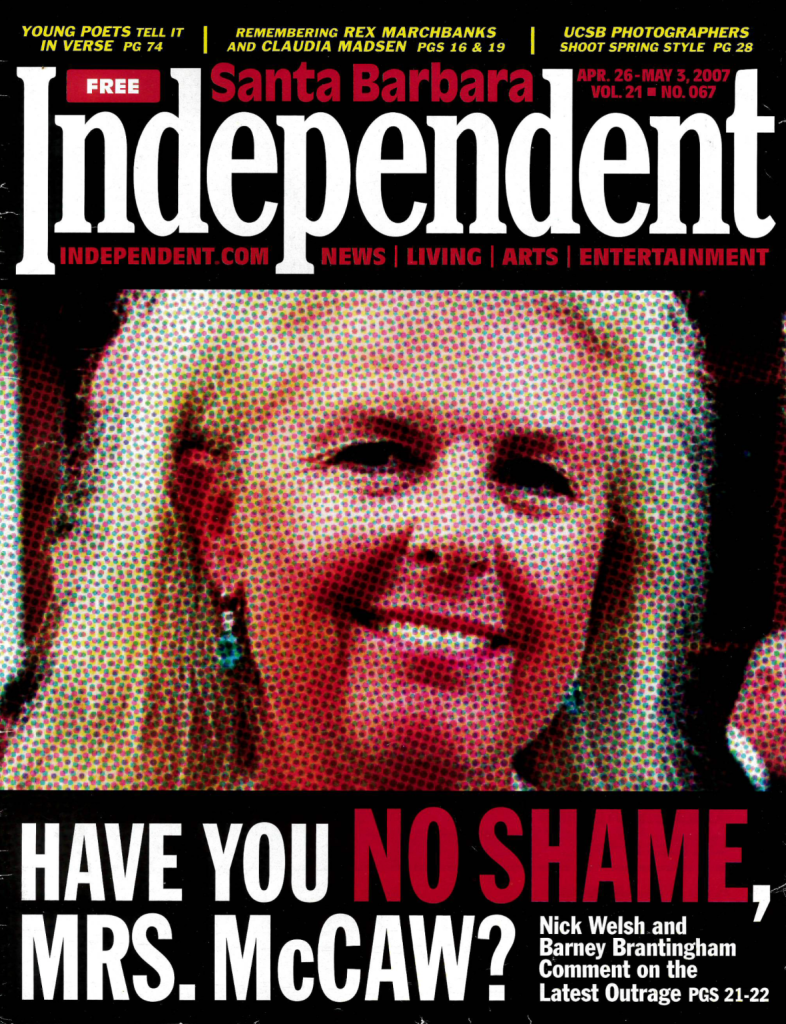
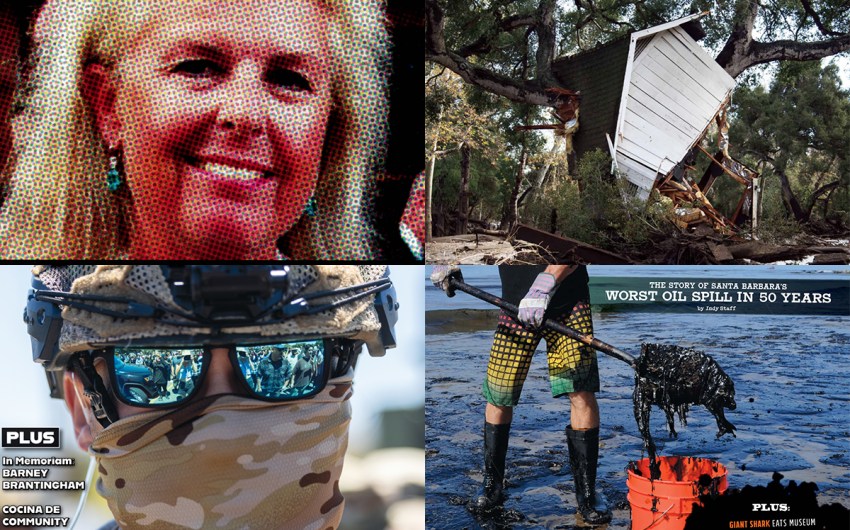
On that Thursday, on that cover, the owner of the Santa Barbara News-Press, the community’s daily print publication, stared out. Underneath the image of her face, big block letters declared, “Have You No Shame, Mrs. McCaw?”
Four days earlier, the Santa Barbara News-Press published an article without a byline (that means without a listed author) on its front page. It alleged that child pornography was discovered on the hard drive of an office computer.
The article ended on page 16 of the first section, where it said that several people could have used that computer in years passed. But that front-page headline and first paragraph highlighted the paper’s former executive editor, Jerry Roberts, a man who had quit the paper over ethics concerns about 10 months earlier.
By then, Santa Barbara Independent journalist Nick Welsh was familiar with covering the goings-on at the News-Press.
“For most people, just the accusation alone is enough to totally destroy you, whether it’s false or not — you’re down for the count,” he said. “But in Jerry’s case, it was such an egregious slime job … that they would put that on the cover without a byline, without any quotes from him….”
Welsh hadn’t planned to write the main story for that week’s edition — we call it the cover story.
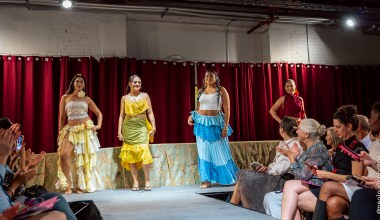
“It was supposed to be a fashion cover, and Jerry Roberts had a press conference on a Sunday afternoon,” he said.
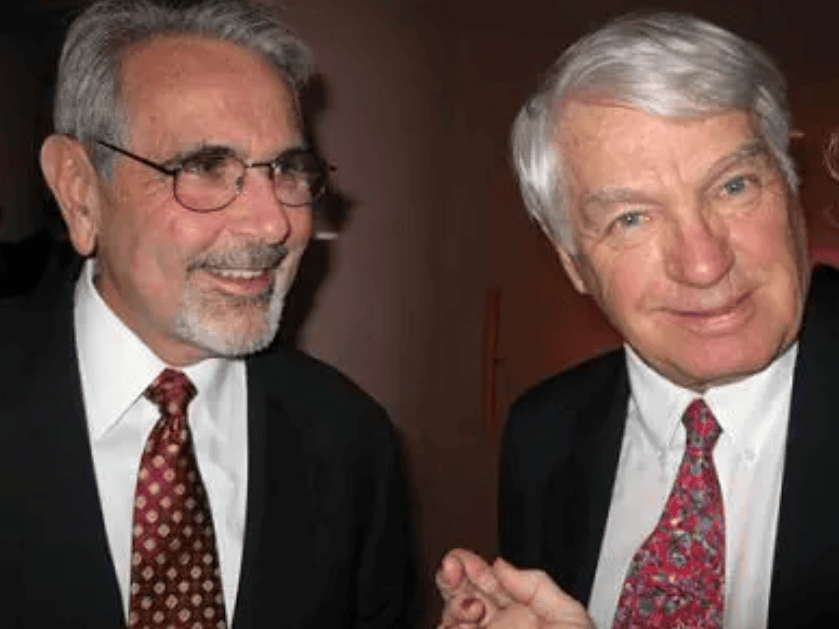
After Roberts called the article false and malicious and highlighted that he didn’t have a chance to comment in his press conference, the Independent changed its plans. Welsh, alongside columnist Barney Brantingham, wrote two opinion pieces on the author-less allegation, and how it fit into the bigger picture of what was going on at the daily.
The headline itself nods to a moment in history during the era of McCarthyism in the federal government. Editor-in-Chief Marianne Partridge came up with it.
“Have you no sense of decency, sir?” The reference starts. “At long last, have you left no sense of decency?”
In the early 1950s, McCarthy fueled fear of communism in the United States, brandishing lists of government workers accused of being disloyal to the U.S. and fabricating evidence against them. Those words, spoken by attorney Joseph Welch on TV, effectively ended McCarthy’s political career.
But what does it have to do with Santa Barbara in 2007?
By that point, Welsh, Barney Brantingham and others at the Independent had published dozens of stories on the News-Press. We covered when the paper’s owner, billionaire Wendy McCaw, and her romantic partner took over as the paper’s publishers the year prior, and how things started to change.
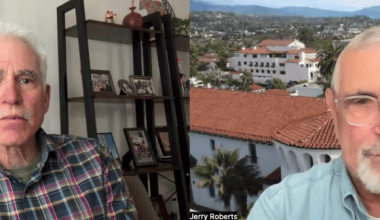
“When I came, well, one of the conditions that I wanted to have met was that the owner/publisher was not going to interfere in the newsroom,” said longtime journalist Jerry Roberts.
He said that over time, McCaw did.
“She began to go back on that commitment and that pledge and interfere more and more in the news. There were several incidents, widely publicized. Several more that were not widely publicized, where that interference became kind of overbearing,” he said. “And she wanted to exercise control, not only over the editorial part of the paper, but over the news as well.”
Shortly after he resigned from the News-Press, prompting a wave of resignations from experienced and respected journalists, McCaw, through her company, sued Roberts for $25 million. Her lawsuit alleged Roberts violated his contract by talking about her involvement in the newsroom. And that lawsuit was going on when the News-Press published its piece.
In a 2006 letter to the Society of Professional Journalists, McCaw said that the allegations about her involvement in the newsroom were out of context and inaccurate.
Eventually, a judge ruled against McCaw’s company and awarded Roberts more than $900,000 in damages.
And as far as the front-page article went, the police found no evidence that Roberts was responsible for the pornography. Later that year, he received a national award for journalism ethics from the international writer’s group PEN. PEN said the award also honored the other journalists at the News-Press who stood up for what’s right. Because by 2007, things had really soured.
Journalist and columnist Starshine Roshell worked at the News-Press for 11 years before leaving in 2006.
“We couldn’t report anything negative about friends of hers and we couldn’t report anything positive about enemies of hers,” she said. “It was a very strange way to go about the news. It doesn’t work like that, and so people started leaving.”
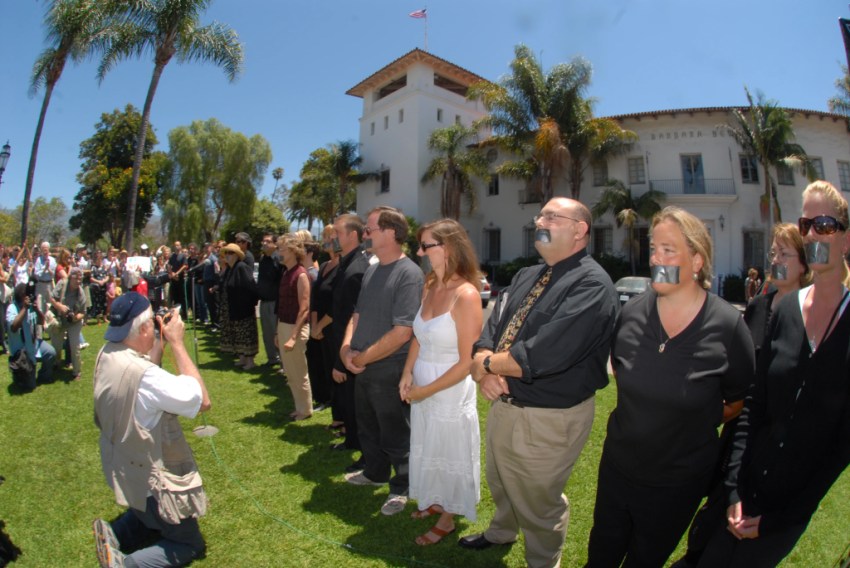
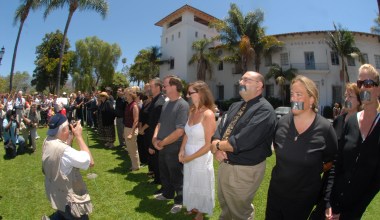
She was one of the reporters who participated in a walkout shortly after Roberts resigned. Journalists wearing black left their desks and gathered onto De la Guerra plaza downtown, where they placed duct tape over their mouths.
It was a symbol. News-Press employees were also not allowed to talk to other media outlets, like the Independent.
“Which is a very strange thing to tell reporters, whose only job is to share information with the community,” Roshell said. “So we were clandestine-style slipping information to the Independent, dropping off unsigned notes under the door, just to let them know so they could report about this stuff.”
The Independent was left to report, to be the news outlet accounting for what was going on with, well, the other news outlet.
As people left the News-Press, the Independent began to hire some of that talent, like Roshell. She had started at the Independent several months before we released the Wendy McCaw cover.
“I was so proud,” Roshell said. And it was bold. It was so bold, and it was from the heart and it was right.”
Roshell was one of several News-Pressers that came to the Independent, including veteran columnist Barney Brantingham and sportswriter John Zant. Jerry Roberts even wrote a column for the Independent after a while. Other journalists regularly contributed as freelancers.
Over time, the Independent became the biggest news room on the South Coast.
But as longtime reporter Nick Welsh said, quitting for many reporters was a risk, or even a sacrifice. The Independent couldn’t hire everybody, and across the country, the newspaper business was shrinking.
“The economics of journalism was not great, and so for people in that line of work to be quitting over ethics was really against any economic self-interest,” he said. “There was no assurance that they would get jobs anywhere else in their line of work. And in fact, many of the people that we knew never did.”
“And where were they going to go? There was a really sudden start to the whole thing, but then over dribs and drabs, everybody was gone,” said Pat McElroy.
McElroy spent decades as a firefighter here in Santa Barbara County and worked in management for the city’s fire department. Through his work with the department’s labor group and political action committee, he got to know our city’s reporters. He said seeing how the News-Press changed was painful to watch.
“They were community figures, and it was not quite like a death in the family, but pretty close,” he said.
There’s much more to the story of what happened at the News-Press: union fights and firings, lawsuits, and protests as the daily lost thousands of subscribers as well as advertisers and its product grew shorter and shorter. But it’s also a well-covered story, with articles from people who lived it and a documentary. For this reason, from here on out, we’re asking two different questions: What happened to the Independent, and what was happening to news?
Because by 2007, more and more people had access to the internet every day. Blogging was growing in popularity.
“One in particular I remember was Blog-a-Barbara,” said McElroy.
Detailed reporting on the News-Press controversies came from, along with the Independent, a blog called Blog-a-Barbara. The author went by the pseudonym Sara De La Guerra.
It wasn’t just blogs. By 2007, social media, sites like Facebook and MySpace, had millions of people using them. And a couple months after the Independent‘s McCaw cover, Apple released the first iPhone.
Having a handheld computer changed how information could spread — that impacted information delivery beyond journalism.
In 2009, McElroy was Battalion Chief when the Jesusita Fire ignited. People started talking about it, giving tips about where the fire was.
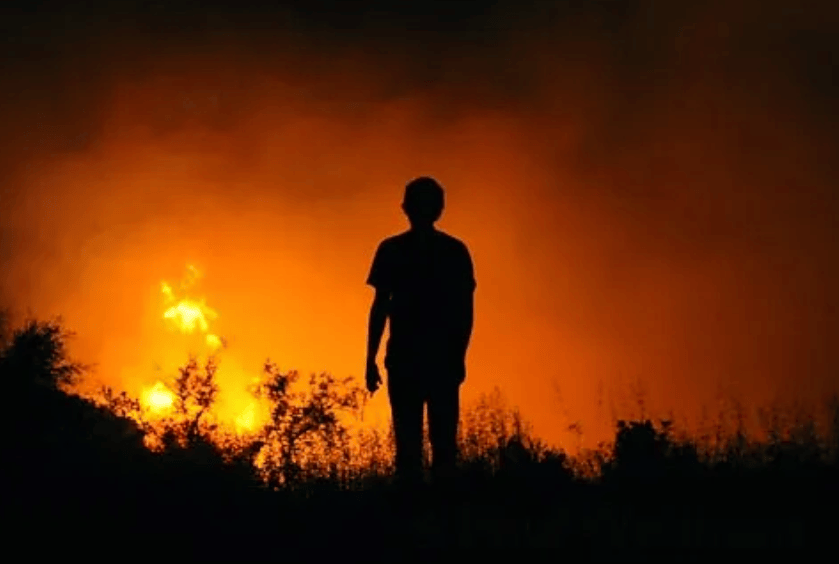
“[Saying] ‘the Mission’s about to go up; the Natural History Museum may already be involved; it’s threatening Marymount,” he recalled.
Those tips, it turned out, weren’t accurate, even as the department diverted resources to those areas. The situation was one of several driving factors that helped McElroy’s push for the fire department to establish its own social media page, so it could post its own updates.
“The other people are still going to post what they’re going to post anyway. You’re not going to stop people from posting whatever they want to do, well-meaning and conspiracy laden, they’re going to do it,” McElroy said. “But if you gave people an alternative, we felt that they would go to that, and that’s proved true.”
The Independent wasn’t sitting on its laurels; it posted about the fires, too, on its website. That included detailed updates on stories as fires and fire fighting progressed, and tons of photos. But the Independent’s website, at least as a daily, was fairly new.
Let’s back up in time a little bit: Just one week prior to its Wendy McCaw cover in 2007, the Independent launched its new website.
“We didn’t have much of an internet presence at all. Occasionally we would post things, but it was super sporadic really all the way until 2005 or 2006,” said Matt Kettmann.
Today, Matt Kettmann is a senior writer for the Independent. But back in 2007, Kettmann helped launch the website’s development team. He said the Independent had bought its domain name back in the early ’90s.
“So Independent.com existed, but the most attention we got from it back in the early 2000s was that other companies wanted to buy it from us,” he said.
Come 2007, there was a daily reporting void as the News-Press lost subscribers and reporters.
“When the News-Press lost all the trust in the community, people came to us and said, ‘You should be a daily newspaper,’ which, economically and everything else, would have been a disaster,” Kettmann said.
To this day, though it’s a lesser extent than before, the Independent cycles around a weekly schedule. Transitioning to a daily paper would require changes to the business’s structure, not to mention increasing the cost of printing and circulation.
“We all recognized that immediately, but we did realize that we could make Independent.com a daily newspaper, and now it very much is,” he said.
It wasn’t an easy change, Kettmann said. People lived on that weekly cycle. It was how they conducted their work. Now, stories had to go up faster. The rhythm of Independent itself shifted.
“Back then, it was a massive uphill battle for I would say almost 10 years to really make it into the daily monster it is today,” he said. “[A] good monster.”
And at the same time, as more and more people bought smartphones, how people found and told stories transformed.
“The ability to publish used to be what separated the reporters and the journalists from the regular people, and now everyone was in a sense a journalist because anybody could publish from their pocket,” Starshine Roshell said.
That wasn’t all bad, Roshell said. Now, the world could get glimpses into places where before, journalists couldn’t reach, like war zones and natural disaster sites.
But it also meant anyone could say, well, anything.
Paradoxically, with an ever-increasing number of people posting information, posting opinions, the scope of the information people consumed could narrow. Now, you had the content to surround yourself with stories you agreed with, regardless of their truth. Websites could look reputable and still contain lies.
“The problem now is that bad actors are taking advantage of that pocket publisher, right, to try to confuse people,” she said. “They’re making sites that look like news sites, but they’re full of partisan information or trying to sell you something.”
With partisan information making a profit, true local news sites today are actually less common, Roshell said.
“There are more of those kinds of fake news websites, which are called pink slime sites. There are more of them in the U.S. today than there are actual local news websites, which is wild,” she said.
Meanwhile, the internet was threatening the economic existence of newspapers, across the country which for decades, if not centuries, had relied on the printed advertisement to pay the bills.
Sarah Sinclair is the Independent’s Advertising Director. She started in newspaper advertising back in 1986 for the News-Press. We met in Alice Keck Park on a quiet bench.
“I started as a classified advertising representative and in those days, that meant that the phone was ringing all day,” she said.
Sinclair worked for the News-Press for just over 20 years, making her way up to the Director of Advertising role before she left in 2007 over how the paper’s publishers conducted themselves.
In her final years at the News-Press, she saw how the internet, from online ads to websites themselves, began to impact print advertising. For papers like the Independent, ads make up a bulk of the paper’s revenue even today. And for the News-Press, Sinclair said, they were a major moneymaker, too.
“Up until then, the newspaper had been one of the only ways to reach the whole community, and when Craigslist came along, and it was free, of course, that was a brand-new way for people to reach each other with the things they had to buy, sell, and find and that sort of thing,” she said.
And then there was Craigslist, a new way to sell items, and even find a job. The website Craigslist cut into newsroom profits across the country, including in Santa Barbara. A 2025 study published in the Review of Economics found that in the decade or so following Craigslist’s launch, local print publications that relied on classifieds for revenue saw significant declines in newsroom staff, which reduced readership.
And then on top of all that, the Great Recession meant people — and businesses — across the country were tightening their belts. We don’t have time in this episode to get into the particulars of how the recession changed Santa Barbara, but it’s worth remembering that it happened. Santa Barbara was not spared: Stores went out of business, people faced foreclosures, and the economy slowed. All of that impacted advertising and therefore the Independent, too.
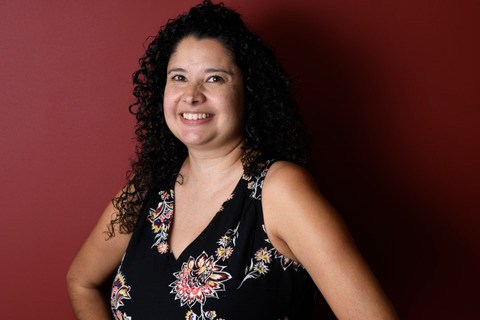
Today, Brandi Rivera is the Santa Barbara Independent’s publisher. But in 2007, as a recent college graduate, she worked at a retail store in Goleta. When the store announced it was closing, Rivera started looking for a new job.
“The job for the Independent came up, and it was for — it was actually probably on Craigslist, honestly, is where I found it,” she said.
The Independent was looking for a human resources manager and accounting administrator, and Rivera had those administrative skills. She applied and got the job.
When she started in 2008, she said the paper still published a robust section of classified ads.
“For the Independent, 2006, 2007 was probably peak revenue-wise, and so when I come in in 2008, there’s already some changes,” she said.
Ads still are a big part of how the print edition makes money. But today, our classifieds section is a lot smaller.
It didn’t happen right away, but after a few years of losing classifieds and weathering the recession, the Independent began to find new revenue sources. It created a new marketing role for events. It hosted its first Best Fest to celebrate the Best of Santa Barbara® winners in 2016, and eventually it started food-themed weeks that grabbed readers’ attention and put the paper into the community.

And although the Independent.com is a daily, the Independent still delivers a physical weekly paper every Thursday.
“One of the strongest things that has sustained the Independent even today is the fact that we get to go out on stands on Thursday with this cover story,” Rivera said.
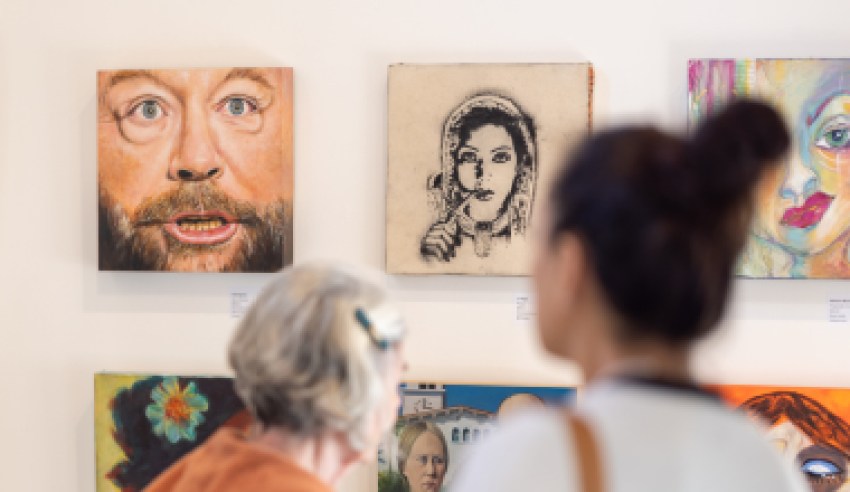
It appears — the way it did on that day in April 2007, with the McCaw cover, and like it did in 1986 — on newsstands in the county. People pick it up. They drink it in with their morning coffee, or they browse its pages while waiting in line for a table at a restaurant. They frame covers on their walls and use them in protests and cut out articles that are important to them. In a digital world, it’s tangible. It’s out there.
“You have to reflect the community. You have to be out in this community. You have to. You have to be interested,” said longtime journalist Nick Welsh.
I asked him what the most important thing about being a reporter is.
“I think people talk to me because they know I care, and you can’t fake caring,” he said. “You can’t. You either do or you don’t. You’re either serious or you’re not.”
So, thanks for listening to us reporters.
I’m Christina McDermott, and this is Field Notes.
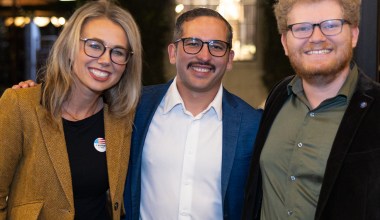
This episode was written and produced by me, Christina McDermott, with script editing by Senior Writer Matt Kettmann. Our music was created by our very own Ryan P. Cruz and our logo was made by our Art Director Xavier Pereyra. Thank you to the rest of the Indy team that helped bring this podcast to life. And cheers to 40 years of the Independent.



You must be logged in to post a comment.