
Field Notes is a four-part podcast series. Listen to new episodes here or anywhere you get your podcasts.
Let’s go back to the end of 2017, Santa Barbarans and Venturans are recovering from the devastation caused by the Thomas Fire, which broke the record for largest fire in California history. Weeks of collecting important documents and sentimental things in go bags, checking in on family and friends in evacuation zones, anxiety, and then grief. We all were hoping for a break in the fire weather.
And then as we rang in the new year, rain appeared on the forecast. In the days leading up to the storm, emergency officials warned that Montecito was at risk of severe flooding and landslides.

On the night of January 8, 2018, Montecito got over half an inch of rain in just five minutes. The fire-scarred land could not hold all that water. And then, at about 3:45 a.m. on the ninth, disaster struck.
The hillside above Montecito had given way. It was more than just a mudslide; it was a debris flow.
“It looked like it looked like someone had taken a handful of the mountain and just and just hucked it down street,” said Tyler Hayden, senior editor at the Independent.
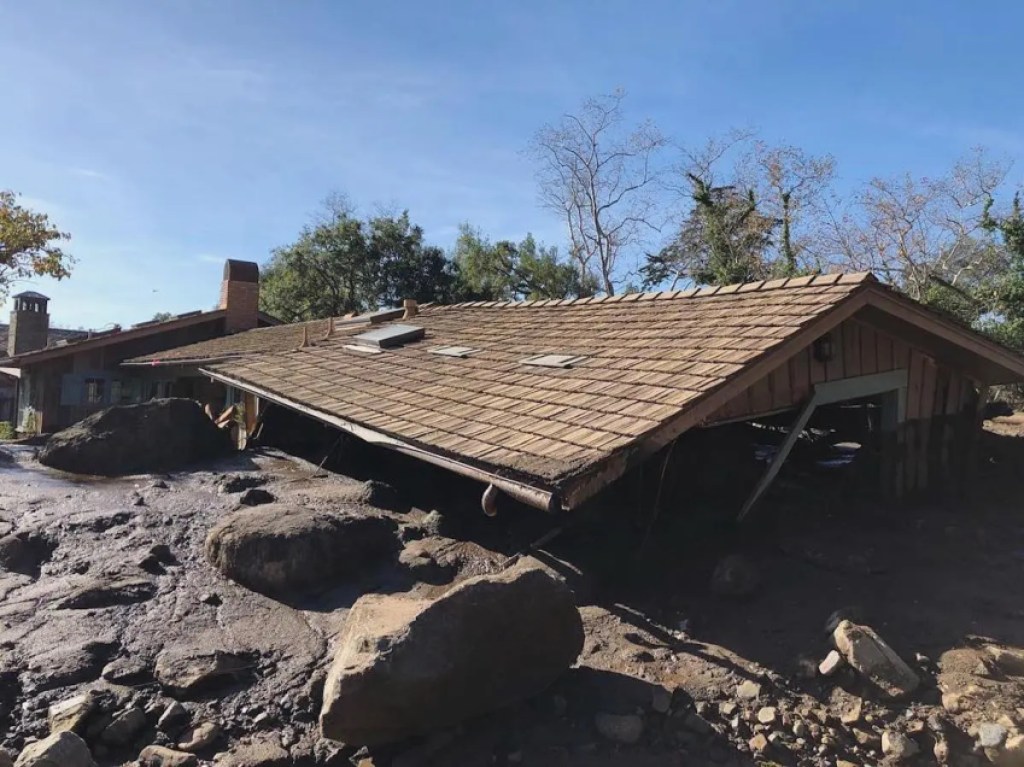
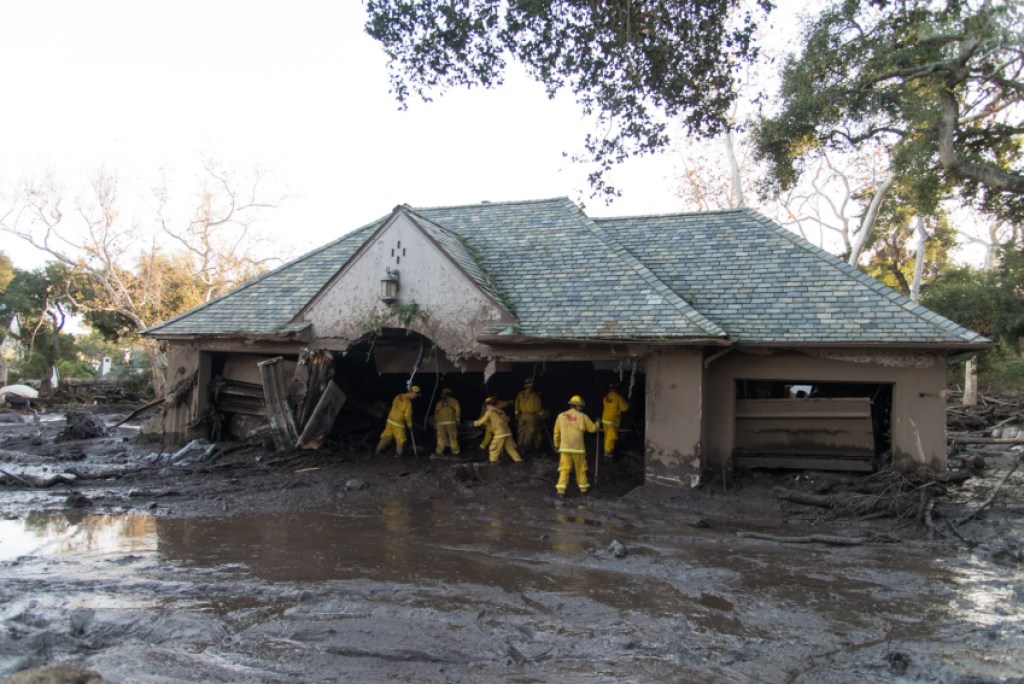
That morning and in the coming days, 23 people died, over 150 people were injured, and almost 500 homes were lost. And as the team would start to uncover, many of those deaths were in the voluntary evacuation zone.
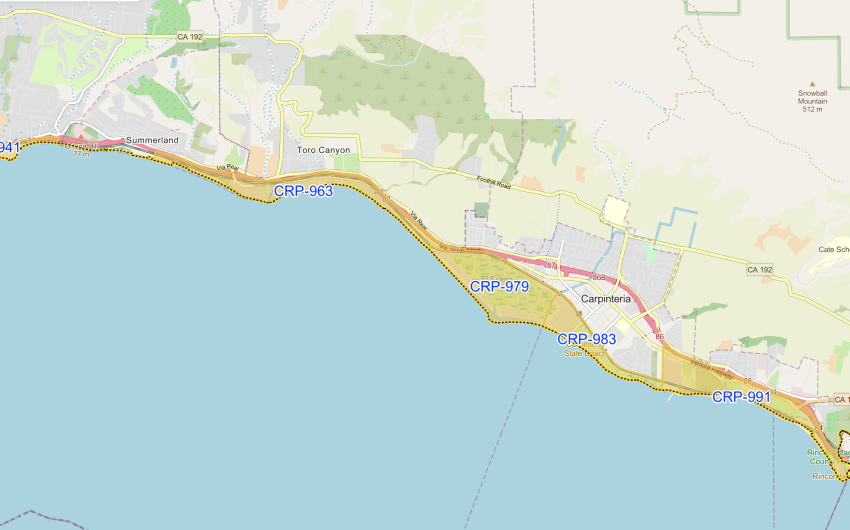
In the days before the storm, Santa Barbara County’s Office of Emergency Management decided to use Highway 192, the two-lane road that cuts east-west through the foothills of the Santa Ynez Mountains, to determine who needed to evacuate. All homes above the highway were mandated to leave, while those below could stay.
Hayden said, “They did their best to convey to us and to the public how dangerous this could be, but I don’t think anyone really understood, including us, not from lack of trying or lack of focus on that. We didn’t have any concept of what a debris flow was.”
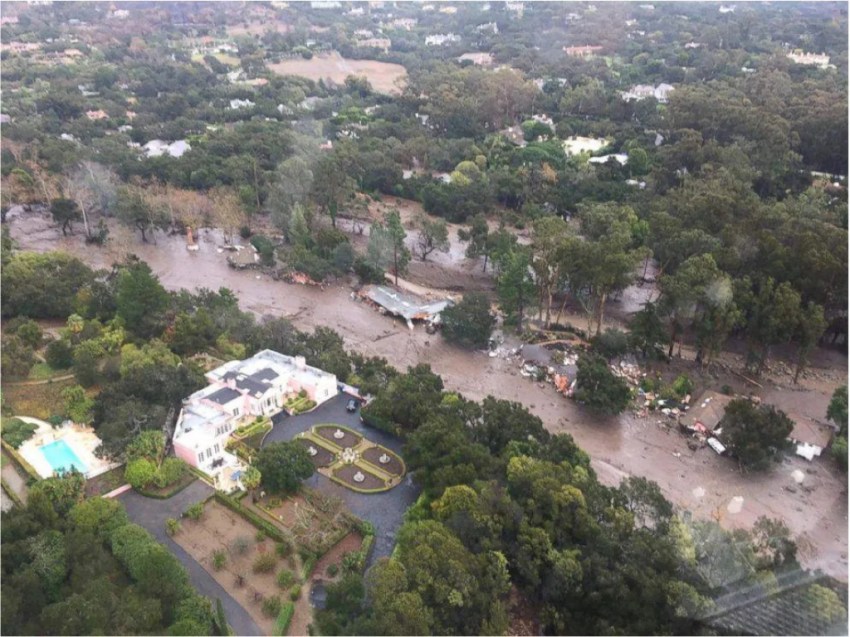
Debris flows are a fast-moving landslide, sometimes reaching speeds up to 35 miles per hour. They carry trees, boulders, rocks, sometimes for miles. In this case, debris was carried all the way from the mountains to the ocean, completely consuming a section of Highway 101 near San Ysidro Ranch.
When Hayden got a call from a colleague who knew someone living in Montecito, he knew that the event was catastrophic. Hayden and the team immediately jumped into action.
“Kelsey Brugger was a reporter at the time, and she did a ton of, like, on-the-ground stuff, and went to like, the, you know, evacuation centers and talked to people there.”
Brugger is now a congress reporter for Politico, but at the time of the debris flow, she was a news reporter for the Independent. She visited Vons Pavilions on Coast Village Road, where members of the community were gathering and being assessed by the Red Cross and emergency services.
“Listening to people come together with with their neighbors or strangers, and just kind of have this like collective grief experience, you know, at at a Vons where you know people, employees there had had been impacted or had family members who you know had tragically died in in recent days,” said Brugger.
While Brugger was at the evacuation centers, Hayden and digital editor Brandon Yadegari started to trek through the neighborhoods, demolished.
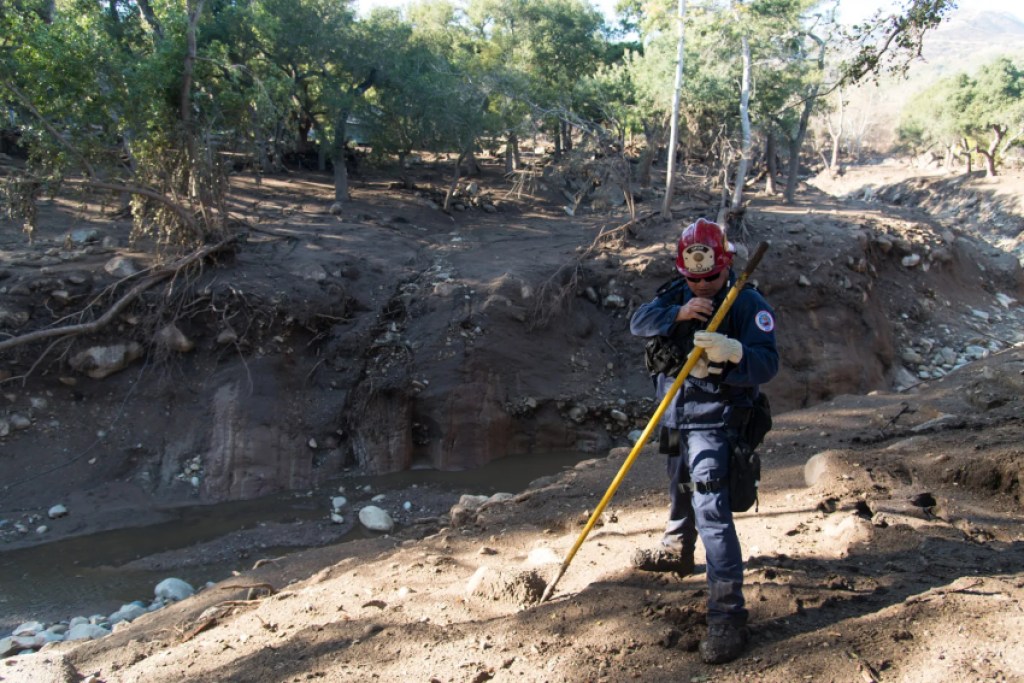
“I stepped in, like, that super sticky, squishy, cement mud, and and didn’t know how deep it was, and lifted my foot up, and it just had sucked my shoe all the way down.”
Hayden said homes had been “basically like sheared in half, and it was almost like a cross-section. You could see the individual bedrooms and the staircase going up. You could see like where the kids’ room was and where the the TV room, and just it was, yeah, just like really harrowing.”
“As reporters were really trained to rush to the front lines, and that was certainly true with with a lot of the fires that we had just been covering that in the months preceded this, and this was just different in a way that because it was just so sad,” said Brugger.
Hayden said, “To see stuff on on paper, to see it on TV, or even to be at these press conferences or on site. There’s just there’s a real separation from the human beings who actually experienced it.”
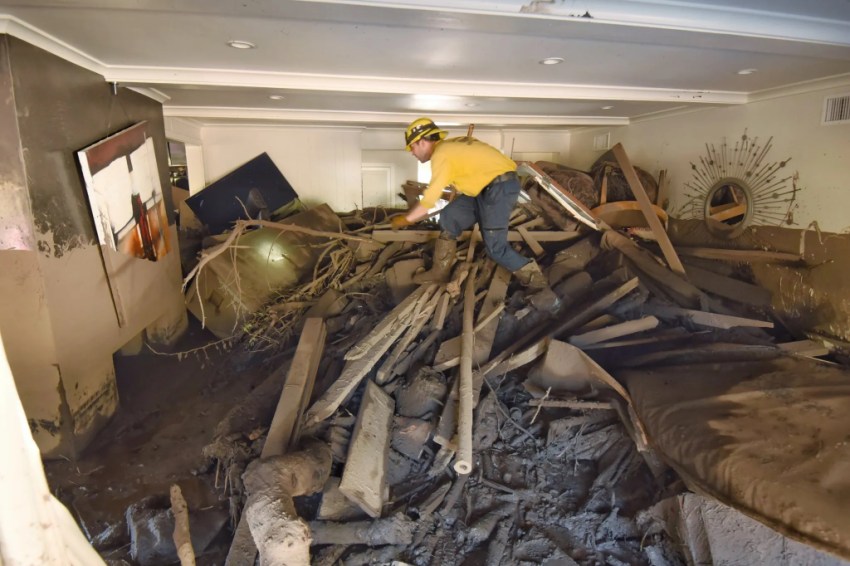
At first, coverage was bare bones and reported the basic facts.
Bruger said, “It took a little bit of time for all this information to kind of come out, and so, you know, it was kind of just this awful waiting game of like, ‘Okay, what else?’ You know, how many people have been impacted and harmed by this?”
As more time passed, more stories started to emerge. Brugger, Hayden, and the rest of the team were able to find more and more sources.
“It was just that good old local news reporting and having relationships and connections to people who actually live in the community,” said Hayden.
He remembers interviewing one man in who had experienced some of the worst: “He literally was holding on to his partner outside of their doorway while she was swept away; it was heartbreaking,”
When interviewing a source who had been through so much trauma, the last thing Hayden wanted to do was cause more harm. He remembered asking very few questions, and simply allowing his source to speak as little or as much as he wanted.
”But as the conversation went on, he got more comfortable and realized he was doing something important by speaking out,“ Hayden said.
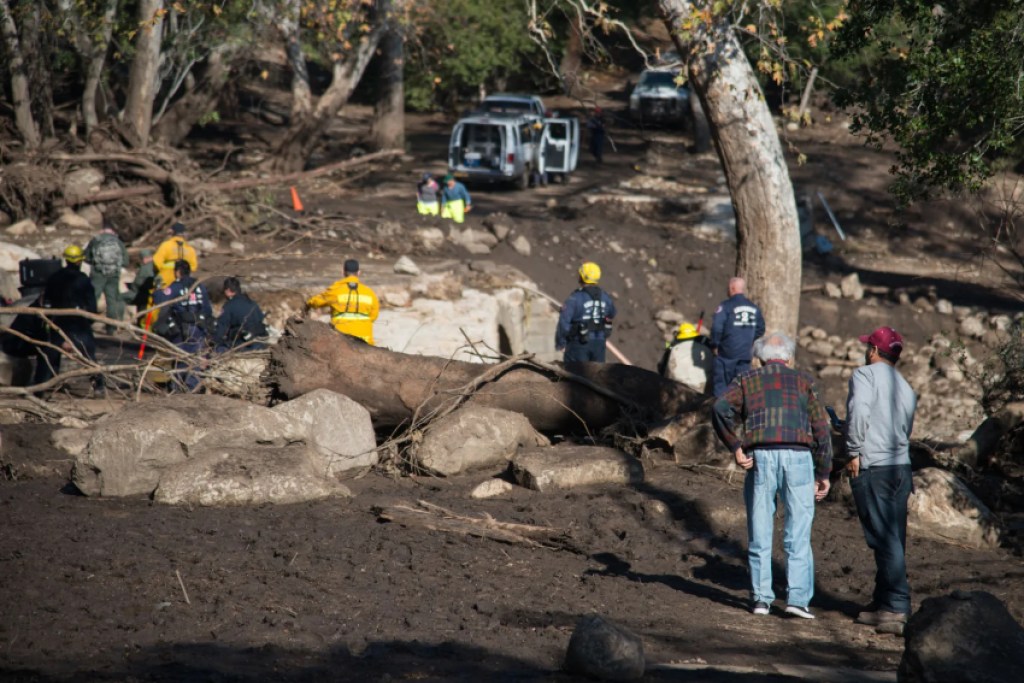
Brugger said, “I think that’s something that like reporters have to always have to kind of grapple with, where you know, on one hand they have to do their job and and report out a story and and ask people uncomfortable questions at times, and then on the other, think about you know the human aspect of it and just kind of be a human being and try to think about how they would want a reporter to approach them.”
These interviews, despite being harrowing, allowed Hayden and Brugger to invite readers into the lives of those who experienced extreme tragedy in the community.
“It felt like I got a little bit closer to the reality of the horror and trauma that some of these people went through,” said Hayden.
This wasn’t the first time the Independent had covered flood and destruction. Just over the Ventura County line in La Conchita, our reporters covered the deadly landslides in 2005 that claimed 10 lives. In 2017, almost a year to date prior to the Montecito Debris Flow, the Sherpa Fire and following rains caused a debris flow in a less-populated pocket of the county, along Gaviota’s coastline.
But this debris flow was particularly devastating. And as natural disasters tend to be, It was a media sensation. The L.A. Times, NBC, Reuters and other national and international outlets sent teams of reporters to cover the tragedy.
“They were able to fan out and get maybe even more than than we could as a smaller local paper in those initial hours and and first few days, but then they leave, and and then it’s up to local journalists to keep keep pestering and keep trying to find answers to the questions that people still have,” said Hayden.
And that is exactly what the Independent team did. The community was left in shock and anger. How could so many die in a tragedy like this when officials knew the rain was coming?

“It was it was challenging and and interesting to try to get those answers, which we knew existed and we knew were pretty clear and obvious. But it was just as clear and obvious that the county didn’t really want to talk about how those decisions were made and who made them and at what point,” Hayden said.
Brugger said, “They established a unified command pretty quickly, which is just like a lot of different agencies, like the fire department, sheriff’s department, emergency services coming together and creating this emergency response operation that has a lot of public information officers. So they would have been dealing with like fielding questions and coming up with these casualty reports.”
Like all the media outlets, Hayden and Independent staff were at those press briefings to try and get some answers. He asked whether or not the authorities believed that the evacuation zones and warnings were effective.
Hayden said that Das Williams, the county supervisor overseeing Montecito at the time, “was standing right in front of me, and he kind of whipped around and looked at me and said, ‘We did everything we could. We did everything right. There was no way to predict this. This was this was an act of God.’”
But as the team started digging, it became more and more apparent that maybe this wasn’t the case.
“I remember going to the to the Montecito Library and going through their press clips and seeing the black-and-white photos of the last debris flow in Montecito, and houses sheared in half, and cars turned over, and so that that defense of we could have never possibly known this could have happened just was either disingenuous or or misinformed,” said Hayden.

And then there was the issue of the evacuation zones. County officials had used Highway 192 to delineate who had to evacuate and who did not. Anyone above the highway had to leave, but those living below were allowed to choose.
But through plotting destroyed homes and confirmed fatalities on a map, it was clear to Independent reporters that much of the destruction was in the voluntary evacuation zones, and clustered around the creek beds.
Then, Hayden started hearing rumors of a map that predicted that the flow would follow existing watersheds.
He said, “First we didn’t know if that map actually did exist. You know, we had heard that it did, and we trusted the people who told us as much, but I didn’t know if it was going to be exactly how they described it, or if it was going to be as definitive as it wound up being.”
Hayden and the team got to work filing public records act requests. He asked for all communications between those involved in emergency planning in the lead up to the storm.
And after pestering, sources dodging questions, and many unreturned calls, about two weeks later, Hayden had a log of texts and emails in the lead-up to the storm.
Hayden said it “painted the picture of county leaders struggling and grappling with how to approach this, how much warning to give, so that people actually listen, but not overdo it, so that people thought that they were being over dramatic or overly cautious.”
They were also worried about the “cry wolf” effect, “where if they told everybody to evacuate before the storm, and that it didn’t hit, that it would be even less of a chance people would leave the next time.”
Included in these conversations were scientists who were tasked to help county officials understand the geology of the area, particularly in the burn scars left by the Thomas Fire.
“The geologists were saying this is going to, if this happens, this is going to follow creeks because it’s going to start up in the mountains, and it’s going to loosen gravel and dirt and boulders, and it’s going to be a gravity-fed flow that’s going to shoot down these these channels at 25-30 miles an hour, and it has the potential to reach to the all the way to the ocean,” Hayden said.
And then the map that Hayden had been hearing about appeared.
Hayden said, “I remember finally getting it and understanding why it wasn’t released.”

Hayden recalled one section of the map where geologists predicted that water and debris would pool if a major rain event were to occur, and “if you overlay where victims lived, there was four or five or six people in that little pocket,” said Hayden.
That pocket was in the voluntary evacuation zone.
This is the power of the local paper. By the time the team had discovered the flaws in the evacuation zones, the national outlets were gone. The Independent team was able to shed light on a particularly opaque moment in Santa Barbara’s history.
“Even if you work your ass off on a story or series of stories you might not ever know if it moved the needle or not, and knowing that we did our job as best we could, it might be, you know, makes make an impression somewhere that we never know about,” said Hayden.
“As horrifying and just painful as it was, the Indy is is such a wonderful place to do real boots-on-the-ground journalism that that people care about and read about, I feel very fortunate to have been part of that, you know, during stories like this one that were very tragic,” said Brugger. “I think that it was definitely a a moment for the Indy to kind of step up and everyone to really, you know, strive to to do their best work.”
And that is what the Independent still does today.
Hayden said, “We have that luxury, in a way, of being so intertwined with the community that we wouldn’t sort of let the leaders, decision makers, forget about it in maybe ways they wanted us to.”








You must be logged in to post a comment.