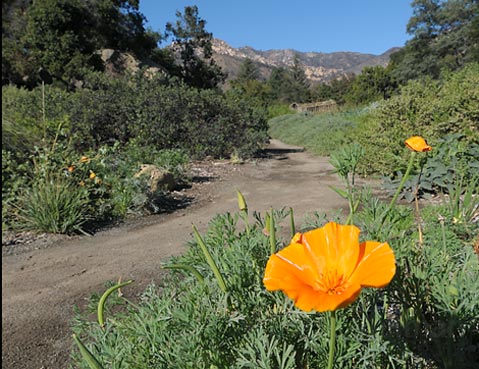
Two weeks ago, for the first time in a decade of reporting in Santa Barbara, I briefly – albeit hysterically – considered the possibility of being poisoned on the job. After more than six months of trying to sort out the nasty charges and nastier countercharges swirling around the internationally renowned Santa Barbara Botanic Garden, I’d finally been granted an audience with the Board of Trustees.
As proponents of the direly named “Vital Mission Plan”- a controversial 25,000-square-foot development project that would demolish six of the 78-acre property’s 30 buildings, remodel two, and erect 16 more, among other “improvements,” with a total price tag likely to eclipse $20 million when all is said and done – the trustees are fighting a hotly contested battle over the future of the garden, once the most serene place in Santa Barbara. They would like the garden to grow into a modern research campus with plenty of special events, but others – many of whom agree that some expansion is necessary – would rather see the garden continue to reflect a more natural heritage and retain its park-like setting. Passions are running so high over this matter that my “invitation” to speak with the trustees explained that they were “deeply troubled” by my “extremely biased” reporting and publishing of “witch-hunt stories against a local nonprofit and ever-escalating attacks upon our board and leadership as opposed to honest journalism that is interested in the truth.” I was ready for anything.
There was, of course, nothing to worry about. The seven trustees I met – including a later coffee-shop chat with board chair Fife Symington III, best known elsewhere for resigning as governor of Arizona amid a bank fraud scandal only to later be pardoned by President Bill Clinton – proved more charming than intimidating, more conciliatory than contrarian. Certainly, they could have been putting on their nicest faces for a visiting reporter, but they answered all of my questions and even posed for a group portrait.
What tied the trustees together – indeed, what unites the nearly three-dozen people contacted over the course of reporting this article – was their unflinching passion for the Botanic Garden, which was founded in the 1920s and survives as one of the finest institutions of its type, both for the tranquil pleasures promised by a simple walk along the trails and for the enduring legacy of native California plant conservation, propagation, and education. In many ways, the Botanic Garden is at the heart of what it means to be Santa Barbara – its founding in our city’s formative years fostered an appreciation for open space, a fondness for flora, and a regard for nonprofit organizations as being integral players in a vibrant modern community.
Today, after close to a decade of plotting, the Vital Mission Plan is finally clearing some of the necessary government hurdles to become a reality. But rather than cracking open the Champagne, the trustees are more apt to wallow in their whiskey, as they find themselves under attack from multiple fronts at all times. In the past seven months alone, the Botanic Garden has been scorched by the Jesusita Fire; been financially hammered by the recession; laid off nearly 20 percent of an already lean staff, including several longtime and beloved employees; endured an ongoing strike by more than 60 volunteers, whose free labor used to be the garden’s day-to-day lifeblood; clashed with history buffs who are fighting to undo changes made to the landmark-protected meadow; witnessed three trustees resign before their terms were up; and confronted attacks from Mission Canyon neighbors over the scope of the development plans, which critics say are unsafe and incongruous with the garden’s stated objectives of research, education, and conservation.
Meanwhile, the collective chorus of critics is singing loudly that the Board of Trustees is, via recent amendments to the garden’s bylaws, consciously conspiring to endow the controversial executive director and his administration with more powers while making the Board of Trustees less transparent and less liable for wrongdoing. That, the critics claim, is antithetical to what a not-for-profit public benefit organization should be about. Throw in some charges of low staff morale, overpaid executives, and more whispered rumors of scandal than Santa Barbara has heard in a long time, and you just might see why the trustees would be reluctant to talk to anybody.
But talk they did and, in so doing, both defended themselves against this tidal wave of accusations – they see every affront as a blatant or veiled assault on the Vital Mission Plan, and thus an attack on the garden’s future – and shone a brighter light on the bottom-line effects of these current controversies. “When a not-for-profit is under fire in the press, that damage is substantial,” said trustee Gary Robinson, explaining that the negative attention inhibits fundraising and stalls recruitment of trustees, among other impacts. “Every [nonprofit] has their turn in the barrel, and it sets them back years.”
Whether the garden’s “turn in the barrel” could have been avoided is a matter of debate. Detractors believe a more scaled-back, neighborhood-friendly development plan would have saved money – thereby not requiring layoffs – and stayed in line with the garden’s low-impact history, thereby not alienating anyone. They also say that the Vital Mission Plan is just one symptom of a greater disease spawned by misguided leadership. But supporters of the administration see the ongoing brouhaha as an inevitable result of the competing visions unearthed by the Vital Mission Plan’s public process. What’s not debatable, however, is that the Botanic Garden’s ongoing controversies are tarnishing this otherwise illustrious Santa Barbara icon, and no one is entirely sure what that means for the future.

Ed the E.D.
Depending on which camp you claim, the Santa Barbara Botanic Garden’s problems may have started this past April with the layoffs, or in early 2008 when parts of the historic meadow were repaved into a terrace, or years before when the first Vital Mission Plan was introduced – to the community’s collective horror – with plans calling for so many prominent buildings that one planning official said he “almost tossed my cookies” and even current board chair Symington shockingly recalled it to be “breathtaking in scope.”
For many, however, the garden’s troubles started in 1992 when executive director Edward Schneider was hired, for the Vital Mission Plan is his baby. Even if your beef didn’t technically start when Schneider’s reign began, the executive director and president finds himself – whether fairly or not – the eventual antagonist of every critic because he’s the garden’s most prominent face.
Despite early and more recent attempts to reach out to Schneider – whose official title is CEO/President – I’ve yet to meet the executive director in person. That’s not a surprise to many who know him. “Well,” surmised one former employee, “he’s no Bill Clinton.” Schneider has, however, responded thoughtfully more than once to questions emailed his way through the garden’s spokesperson Nancy Johnson, who’s ever-ready to comment in a timely manner.
Schneider, an expert on water lilies, is presiding over a critical time in the garden’s history. Almost everyone agrees that the garden needs to be updated – it has run out of space in the herbarium, for instance – and there’s a need for increased income, which usually comes from special events. With modernizing necessary, it’s likely that anyone in Schneider’s position was destined to take a lot of heat, because the options are limitless and it’s pretty easy to question why a garden needs to rip out plants to erect buildings. And with properly paranoid neighbors surrounding the garden in fire-prone, only-one-road-out Mission Canyon, there was almost certain to be opposition to any plan, no matter how downsized.
It didn’t help that the first, toss-your-cookies incarnation of the Vital Mission Plan proposed so much development, enraging neighbors and the rest of Santa Barbara from the get-go. And there have been other snafus under Schneider’s leadership, including the Japanese Tea House (“How’s that native?” laugh detractors repeatedly) and a short-lived campaign to purchase property in Ojai, which included the brief, what-were-they-thinking name change to “The Botanic Gardens of Santa Barbara and Ojai.”
But for those who don’t like Ed, the real kicker is his salary – in 2007, it was $214,000 including benefits, plus a residence on the property. (He lost that home and many of his possessions during the Jesusita Fire in May, but has been put up elsewhere since.) Surprisingly, Schneider’s salary is not wildly out-of-line with other nonprofits in Santa Barbara, though when compared proportionally to the $33 million budget he oversees, his pay does seem to take the cake, as the few directors in town who do make more also sustain much higher budgets.
To the trustees, it’s money well spent. “We feel he’s paid fairly,” said Gary Robinson. “Ed has the most seniority out of any executive director in town.” Symington called him the “top tier of botanic garden directors in the world,” explaining, “He’s made good decisions, he’s raised tremendous amounts of money, and he’s been good for the garden. I believe he’s right about the Vital Mission Plan and about moving the garden into a new era.” Schneider has also been offered more lucrative contracts elsewhere, but repeatedly decides to stay. “It’s a critical time for the garden, and his departure would negatively impact the future,” said Robinson. “That’s not to say he’s perfect. We don’t rubber-stamp everything he wants.”
There is, however, a cast of characters who wholeheartedly believe that the board’s leadership – namely Robinson and Symington – are indeed rubber-stampers. Bill Lewis, one of the volunteers who went on strike to protest the administration’s trajectory, explained, “Ed has bungled this job from day one by force-feeding his vision on architects, neighbors, and the board. The garden is fighting battles that it should never have had to because Ed only sees his vision.” Echoed Lewis’s cohort Christine Riesenfeld, “Ed’s plan is to keep us from the trustees, keep the members in the dark, and keep in the community in the dark. That’s the opposite of what nonprofits should be doing.”
Among other demands, the volunteers asked that the trustees comply with their bylaws. “So what do they do?” asked Riesenfeld. “They change their bylaws.” The trustees, who say the bylaw changes were a long time coming, believe that the volunteers simply want Schneider fired. Riesenfeld denies that is necessary to win them back, but does admit, “It would be a start.”
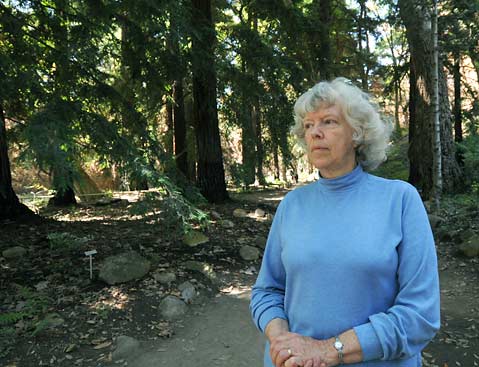
Allied with the striking volunteers is history buff Paulina Conn, who six years ago got the garden’s historic meadow – a 23-acre swath that was designed in 1938 by legendary landscape artist Lockwood de Forrest – designated a county landmark. “The current administration came in with a totally different idea of what a botanic garden is supposed to be,” said Conn. “They emphasize the word ‘institution’ rather than ‘garden.'” Conn’s landmark designation was essentially an end around to protect the parts of the garden she felt might be trampled by Schneider’s vision. “The curator of an art museum wouldn’t put a mustache on the Mona Lisa,” said Conn. “That’s what they’re doing to the Botanic Garden.” Conn’s campaign was validated last week when the county Historic Landmarks Advisory Commission mandated that the meadow terrace be completely removed. The garden has not decided whether to appeal that decision or not.
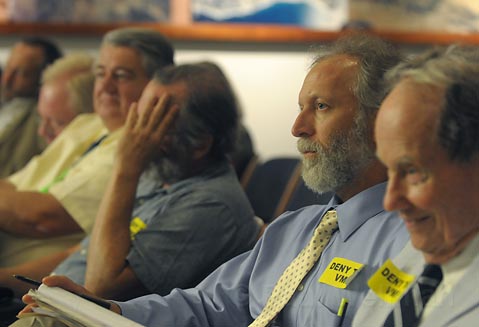
As the attorney representing the anti-Vital Mission Plan group Friends of Mission Canyon – who feel that the plan defies the constraints of the box canyon – Marc Chytilo is probably the loudest of Schneider’s critics. “When you are managing an organization like this, it’s really part of your responsibility : to maintain relations with their neighbors as well as with elected officials and the larger community,” said Chytilo. “They have rejected that concept, I think, and certainly rejected our overtures to work amicably and come up with something we could all support. They’ve intentionally put themselves into this very adversarial position.” He recalled a road project that the garden completed about three years ago, in which Schneider promised not to shut off Mission Canyon Road, but it happened anyway. “There was a real breach of trust there,” said Chytilo.
An Insider Speaks
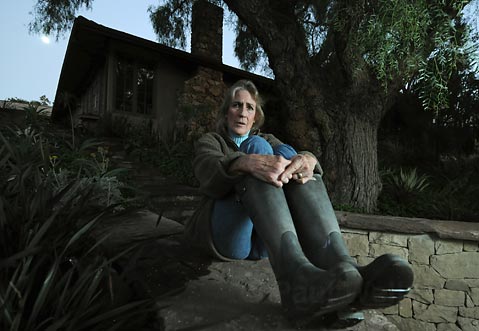
Even the most passionate potshots from outside an organization only carry so much water. So when the striking volunteers were able to convince trustee Karen Davidson that it was time to talk, I was all ears. A developmental pediatrician who’s been working in Santa Barbara for more than 30 years, Davidson was asked to join the board in March 2009, and attended her first meeting in May.
Once on the board, Davidson started ruffling feathers by suggesting that the volunteers’ concerns should be taken more seriously. But she said that Schneider told her “absolutely not – the board stays together and we will have no such meetings.” Davidson was “floored” and “appalled,” especially because the volunteers have nothing personal to gain by their actions. “They are community stalwarts, a very mixed group with a sense of loyalty to the garden,” she explained. “Instead, they’ve been decimated and slandered.” Something similar occurred when eight staff members sent an unsigned letter to the board in May complaining about leadership. “I was amazed that it was never discussed,” Davidson recalled, “never given any credibility.”
In both instances, the current trustees claim they did all they could to facilitate a solution. “We really, in good faith, sought to focus on their needs and the future, but they kept wanting to focus on the past – there’s not much we could do about the past,” said Robinson of the volunteers, who he said were presented with options that were immediately rejected. “There was essentially no compromise – just a restatement of demands.” As to the letter from staff, “An anonymous petition in any organization is very difficult to deal with,” said Robinson, but he assured, “It was considered.”
To help alleviate the ongoing struggle to attract trustees, Davidson submitted four nominations for what she believed were qualified candidates. But Symington replied that they don’t want to bring on trustees who aren’t supportive of Schneider or the Vital Mission Plan or who are supportive of the volunteers’ moratorium. The trustees now say that there is no such blanket ban on trustees and that these candidates are still being considered. “Concerns were raised when some of the trustees suggested had written very vitriolic letters against the garden. As a board, we saw this as a red flag,” said Robinson. “That’s coming in with a pre-set agenda. We want open minds.”
From the get-go, Davidson said she felt overwhelming pressure to fall in line with what Schneider, Symington, and Robinson wanted and that she would get “hateful looks” from people when she was critical of decisions. “I am sure that individual people on the board are just as ethical and caring and empathetic and kind as any person can be,” said Davidson. “The problem is that those who are leading it set the tone and it becomes unanimous.”
Of her second board meeting ever, which she attended with four other brand-new trustees, Davidson said, “It was announced that the bylaws had been rewritten and they wanted to vote on them.” She was concerned that, rather than addressing the complaints from volunteers that the trustees were not upholding the bylaws, the trustees were rewriting the bylaws to fit the status quo, and she worried such a tactic was “fundamentally undermining.” When she spoke up and opined that maybe the new trustees didn’t have a grasp on the issues yet, she recalled, “They were furious at me.”
Due to these troubles, Davidson was set to resign at the September board hearing, but relented because two current staff members called her with pleas to stay on. “I was very taken aback by those,” she said. Davidson stayed on through that meeting and watched the bylaw changes get approved without much debate. Unable to take it anymore, Davidson resigned a couple days later. “I have a very hard time feeling like I have let people down,” she said, “but I can’t continue to hit my head against the wall until I have no head left.”
While sitting in my office one September afternoon wearing her cleanest knee-high gardening boots, Davidson explained, “I want the way this board functions to be understood. That is what I quit about. I don’t want to be on a board that says who I can talk to and who I couldn’t. I’m a professional. I know the rules of ethical conduct.”
When asked about Davidson, all of the trustees I met seemed genuine when they said they were sad to see her go. Even Symington seemed sorry that she resigned. “I think she did the right thing for her,” he said. “I don’t think she was happy.”
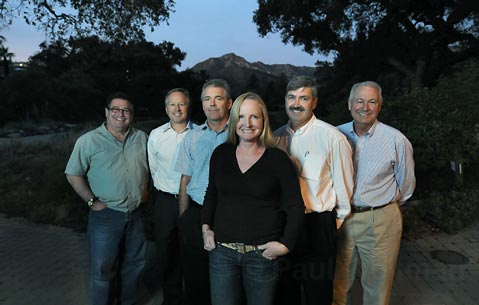
is an assault on the controversial Vital Mission Plan. "When they're publicly attacking the institution, the board, and the administration, that's just an attack on the Vital Mission Plan," said trustee Gary Robinson (far right). "The public can't separate those." Also pictured are (from left) Chuck Rennie, Jim Koopmans, Bill Koonce, Elizabeth Keate, and Bill Jackson.
The Trustees Talk
After getting Davidson’s frightening perspective, I was ready for the trustees – and based on their rather insulting invitation, they were more than ready for me. I showed up to the garden as the sun was setting on November 5, and found trustees Gary Robinson and Bill Koonce waiting outside. As we walked down toward the Arroyo Room, Koonce, a physician by trade, stopped to show me a Pacific yew and explain how successful the native plant was in fighting ovarian cancer. It seemed, at first, to a be a slightly forced interaction – as if I would be convinced of his pure intentions because of his affection for a shrub – but I later realized that Koonce was a wide-eyed plant lover, and these sorts of diversions were par for the course.
That love for plants – especially the rare and native Californian variety – was iterated over and over again by the seven trustees, who see their affection best embodied by the Vital Mission Plan. Through that lens, every critique becomes an attack on the plan, and that’s led to a with-us-or-against-us mentality that seems to be the accepted order of the day until the to-be-determined groundbreaking. “When they’re publicly attacking the institution, the board, and the administration, that’s just an attack on the Vital Mission Plan,” said Robinson. “The public can’t separate those.”
With more than $4.5 million invested already and damage from the Jesusita Fire to boot, the trustees see the Vital Mission Plan’s success to be more vital than ever. “If we give up again, the capital investment becomes an expense,” said Symington. “Then all of the time and money will have been wasted.” So this time around, Symington pledged, “We’re committed to going the entire way.”
Though they say a welcome mat awaits volunteers who’d like to return, the trustees otherwise feel handcuffed by them. “It’s very difficult to deal with a group whose agendas are multiple and boil down to fire the director, scrap the Vital Mission Plan, bring back everyone who was fired, and leave the garden as a park,” said trustee Chuck Rennie. Trustee Connie Harvie, who observed that the trustees are volunteers, too, said that it “hurt a lot” when the volunteers did not return after the fire to help out. But the volunteers say that they tried to come back – Bill Lewis even pledged up to $1,000 in support – but that roadblocks were put in their way. Nonetheless, Harvie was still wondering what their intentions are. “I never understood why they wanted so much information about the running of the garden,” she explained, “which is not what they’re charged with.”
As to the bylaw changes and charges that the trustees are simply followers of the administration, the trustees chuckled. “I don’t think anyone has a problem with dissension,” said Rennie, a veteran of many nonprofit boards. “We’re anything but homogeneous. We get the feeling that the volunteers see the board as a monolithic cabal. Our decisions are not all unanimous.”
The neighbors are also a sore spot for the trustees. Harvie, a former real estate agent, said she once did the math and realized that, instead of the garden, there could be 200 homes on the property. And all involved are quick to point out that the neighbors vehemently opposed the installation of six fire hydrants on the property, which saved the garden from total destruction during the Jesusita Fire. (The neighbors, meanwhile, say that version of the story is a thorough misrepresentation.) Had the neighbors had their way, Schneider explained via email, “There would have been no hydrants on Mission Canyon adjacent to the garden when the Jesusita Fire hit. The firefighters who worked side-by-side with me as we worked to protect everything we could – yet watched nearly two thirds of the garden burn – told me that without the hydrants, they would not have been able to save so many historic buildings, and that the fire could have spread down the canyon consuming even more homes.” To Schneider and his supporters, that’s evidence that the Friends of Mission Canyon are simply obstructionists. “If you’re in the mood to be opposed to the garden,” said Symington, “you’re in the mood to be in opposition to everything the garden does.”
The trustees maintain that they’ve proceeded “judiciously and sensitively” with respect to the Vital Mission Plan. “You finally reach a point where you’ve changed significantly, and you do your best to meet everyone and get down to what really makes sense and what the garden needs to retain its status both nationally and internationally,” said Symington. “You get to that point and say, ‘Okay, here it is.’ But the opposition says, ‘Oh, we’d like you to change a little more.'”
Critics have also warned that the garden’s finances are dangerously low, but Symington blamed the recent losses on the recession. “The layoffs weren’t even on the radar screen until the market collapsed,” he said, explaining that, overall, “We’re in good financial shape.” The trustees also defended the monies spent on attorneys and marketing campaigns related to the Vital Mission Plan, such as paying Davies Communications large amounts of money even after the layoffs. Said trustee Elizabeth Keate, who’s donated to Friends of Mission Canyon in the past, “That was a priority goal at that point – to get the Vital Mission Plan through.” Though no one would answer the admittedly unfair question of whether they’d have gone through with this knowing how much time and money it would take, Robinson did admit, “We’ve certainly spent more than we hoped, but I guess that’s the experience in Santa Barbara.”
With so many controversies swirling, it would make sense that employee morale could be low, especially if, as some have suggested, a culture of intimidation and retaliation exists. But that’s not entirely the case, at least according to staff accountant Gayle Kopitzke, who’s worked there a little more than five years. “I very much freely speak my mind,” said Kopitzke. But she also agreed that, earlier this year, morale was depressingly low following the layoffs and the Jesusita Fire. “Those two things in combination would put anybody over the edge,” she explained.
Her comments were corroborated by Cherie Welsh, manager of human resources and volunteers. “In my position, I hear a fair amount of what goes on, and I don’t see the fear of retaliation being an issue,” said Welsh, stating that it’s actually illegal to retaliate against whistleblowers. “If I saw management doing something that looked like retaliation, I would certainly be counseling them against that and making sure that didn’t happen.”
Though no fearful employee was willing to speak on the record – or really speak much at all – I did receive confirmation from a handful of current staffers who said that the charge of intimidation was not fictional. More accurate, though, they say that there is a prevailing sense of top-down rule, in which everyday employees’ opinions don’t matter and that they feel expendable rather than valued.
Where Do We Go Now?
So is this, as the trustees believe, just another loud Santa Barbara County fight over development or, as the striking volunteers and worried community members posit, a much deeper philosophical battle whose spoils boil down to the fate of the Botanic Garden’s legacy? After more than six months of following the issue, I’d say that it seems to be a bit of both. But more critically, it would be best for everyone not to confuse disgust with one aspect of the garden as a reason for dropping support altogether.
As a veteran of many nasty campaigns for public office, Symington, for one, isn’t at all shocked that this is what it’s come down to. “It’s an inevitable part of competing visions. None of this really surprises me,” he said. “My job has been to let everyone know what it’s like to be in a political race. : As it gets close to a final vote, things will ratchet up and emotions will run high.” He does, however, now understand that the path toward getting a final vote takes a while in Santa Barbara. “It’s probably one of the most thorough and difficult public processes in the country,” he said. “I’m not saying that’s a bad thing, but it is a challenge. Hopefully good will come from it.”
That vote will fall on the Board of Supervisors, and isn’t likely to happen until sometime in 2010. Until then, the trustees – and, presumably, everyone who cares about the Santa Barbara Botanic Garden – are hoping that these current skirmishes don’t leave indelible scars. “There comes a point when resistance like this can have a profoundly deleterious long-term effect on the institution,” explained Rennie. “A small group can and will create long-term damage.”
That makes former employees and longtime garden supporters a bit nervous. Former director of education Mary Carroll, who left the garden in 1998 and penned the definitive history on it in 2004, has remained “nonpartisan” and sees the current debate as something along the lines of the national political clash of left versus right. She’s not sure where it will all end up, but she does hope the Botanic Garden emerges unscathed. Because, in the meantime, Carroll explained, “We’ve lost the bigger view of how lucky we are it’s there.”