

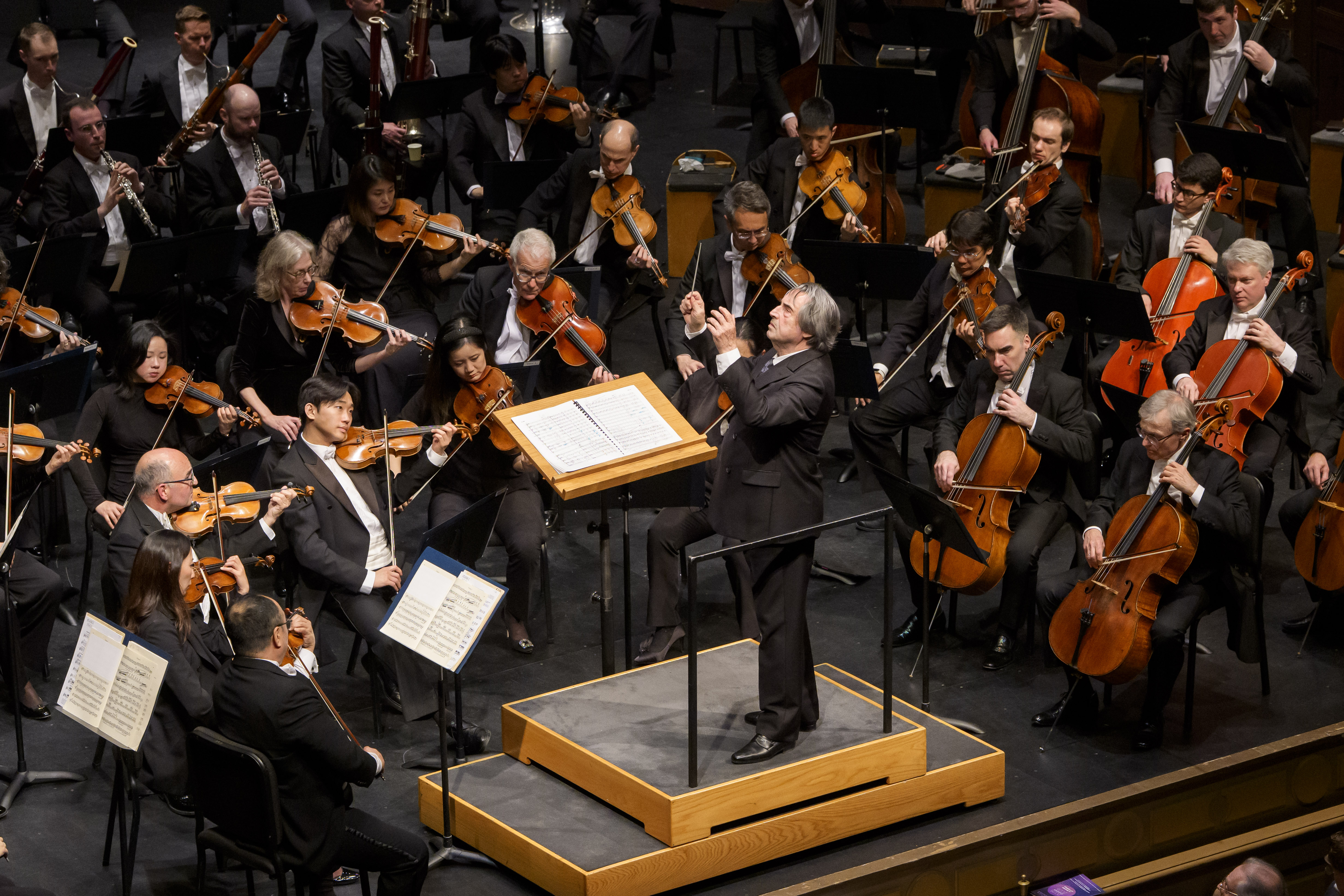
Brahms’s Symphony No. 4 is one of those works that wastes no time stating its melodic case, from a square one, measure one. The warm familiar strains of the opening melody in the opening movement serves as a welcoming theme, with no need for a preamble.
Similarly, as that infectious theme filled The Granada Theatre last Friday, courtesy of the mighty Chicago Symphony, the ensemble wasted no time stating its case — and demonstrating its prowess — as one of the world’s great orchestras. Maestro Riccardo Muti led the symphonic charges in the lucid and luscious collective sound the orchestra has paved its legacy with and displayed for Santa Barbara audiences three times in the past decade, through the hosting aegis of the CAMA presenting organization.
On paper, things seemed a bit tame in the program department, with a hefty sweep of symphonic Brahms-iana in the first half, Stravinsky’s Divertimento, Suite from The Fairy’s Kiss and that old barnstormer of Ravel’s Boléro to finish things off with its built-in grand finale machinery. But as soon as the orchestra summoned its first gust of symphonic sound, magic was in the house: They have the persuasive power to make even Brahms skeptics into something at least akin to believers.
Drama ensues in various directions in the Fourth Symphony, bounding out of the gate in the second movement and veering into a brooding spirit before slipping in and out of structural knots. Muti and company were eloquent tour guides.
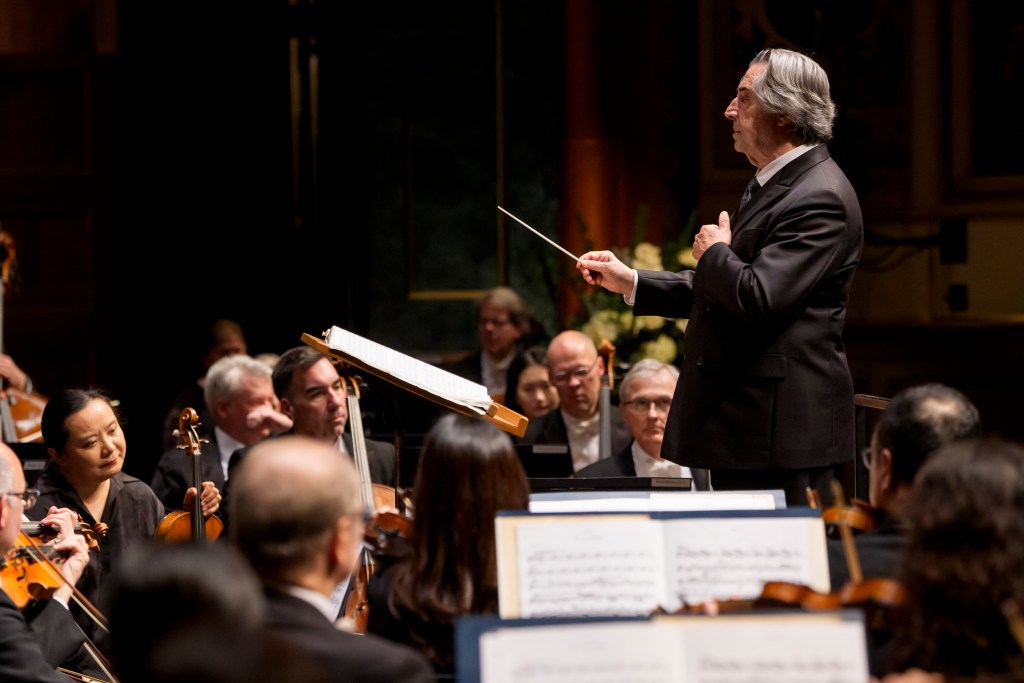
In a sense, Stravinsky saved the day/evening, with the highlight of the concert. The composer’s charming and too rarely performed ballet, The Fairy’s Kiss, written in 1928 and based on the Hans Christian Andersen tale, is coated in his neo-classical style with liberal nods to Tchaikovsky and 19th-century musical manners. And yet, the music is well salted with Stravinsky-esque harmonic and rhythmic jabs and detours. The Chicago Symphony navigated and illuminated the score, and it sprang to life with persuasive force and focus.
Boléro can seem like a crowd-baiting orchestral parlor trick, a long ride on a slow-mo crescendo shtick. For unorthodox orchestral diversions, Ravel’s drunken waltz study La Valse is vastly more interesting, varied and crazed, as heard performed by the Santa Barbara Symphony in this space in 2023. But again, the score sprang to life in the hands of the Chicago Symphony. When performed with such precision and measured “what for it” cunning, who can complain?
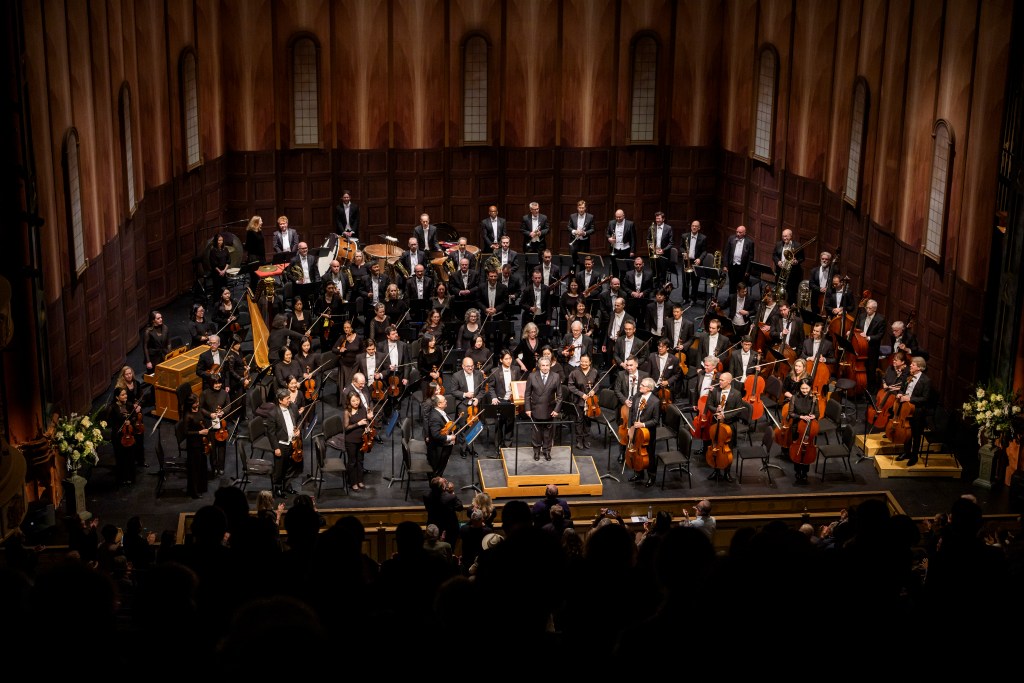
One of its virtues is its democratic gesture of passing melodic themes around to many different instruments in the orchestral ranks (allowing for the munificent Muti’s generous showcasing of individual musicians at music’s end). By the final dense, fortissimo blast of sound, we were properly pummeled, in the sweetest way.
Whatever Chicago touches seems to turn golden.
But wait, Muti et al. were not finished yet. In a rarity for orchestral concerts in the CAMA series, the ensemble mustered up some lusty operatic heat for an encore, on the turf of Verdi’s Overture to Nabucco.
Related Posts






Premier Events

Thu, Feb 26
11:00 AM
Montecito
La Casa de Maria – Lunch and Learn
Fri, Mar 06
2:00 PM
Santa Barbara
Music & Meditation SB – Concert March 6, 2026

Sun, Mar 08
6:30 PM
Santa Barbara
6th Eco Hero Award Brock Dolman & Kate Lundquist

Tue, Feb 24
7:00 PM
Santa Barbara
Banff Mountain Film Festival World Tour: 2 Nights!

Wed, Feb 25
4:00 PM
SANTA BARBARA
Career Exploration Fair: For Teens & Young Adults

Wed, Feb 25
5:00 PM
Isla Vista
Forward Ever Backward Never
Wed, Feb 25
6:30 PM
Santa Barbara
Creative Exploration
Wed, Feb 25
8:00 PM
Santa Barbara
Salvidoria, Orangepit!, & Magnetize at SOhO

Thu, Feb 26
1:00 PM
SANTA BARBARA
Shocking History of Electricity in Santa Barbara

Thu, Feb 26
7:00 PM
Santa Barbara
Anniversary Screening – Connectivity: “Chulas Fronteras”

Thu, Feb 26
7:00 PM
Santa Barbara
Beautiful Borders: Texas-Mexico Crossings in Film
Thu, Feb 26
7:30 PM
Santa Barbara
An Evening with The Mends & Redfish at SOhO
Fri, Feb 27
2:30 PM
Santa Barbara
Opera Santa Barbara presents “Caesar and Cleopatra
Thu, Feb 26 11:00 AM
Montecito
La Casa de Maria – Lunch and Learn
Fri, Mar 06 2:00 PM
Santa Barbara
Music & Meditation SB – Concert March 6, 2026
Sun, Mar 08 6:30 PM
Santa Barbara
6th Eco Hero Award Brock Dolman & Kate Lundquist
Tue, Feb 24 7:00 PM
Santa Barbara
Banff Mountain Film Festival World Tour: 2 Nights!
Wed, Feb 25 4:00 PM
SANTA BARBARA
Career Exploration Fair: For Teens & Young Adults
Wed, Feb 25 5:00 PM
Isla Vista
Forward Ever Backward Never
Wed, Feb 25 6:30 PM
Santa Barbara
Creative Exploration
Wed, Feb 25 8:00 PM
Santa Barbara
Salvidoria, Orangepit!, & Magnetize at SOhO
Thu, Feb 26 1:00 PM
SANTA BARBARA
Shocking History of Electricity in Santa Barbara
Thu, Feb 26 7:00 PM
Santa Barbara
Anniversary Screening – Connectivity: “Chulas Fronteras”
Thu, Feb 26 7:00 PM
Santa Barbara
Beautiful Borders: Texas-Mexico Crossings in Film
Thu, Feb 26 7:30 PM
Santa Barbara
An Evening with The Mends & Redfish at SOhO
Fri, Feb 27 2:30 PM
Santa Barbara


You must be logged in to post a comment.