

This article was underwritten in part by the Mickey Flacks Journalism Fund for Social Justice, a proud, innovative supporter of local news. To make a contribution go to sbcan.org/journalism_fund.
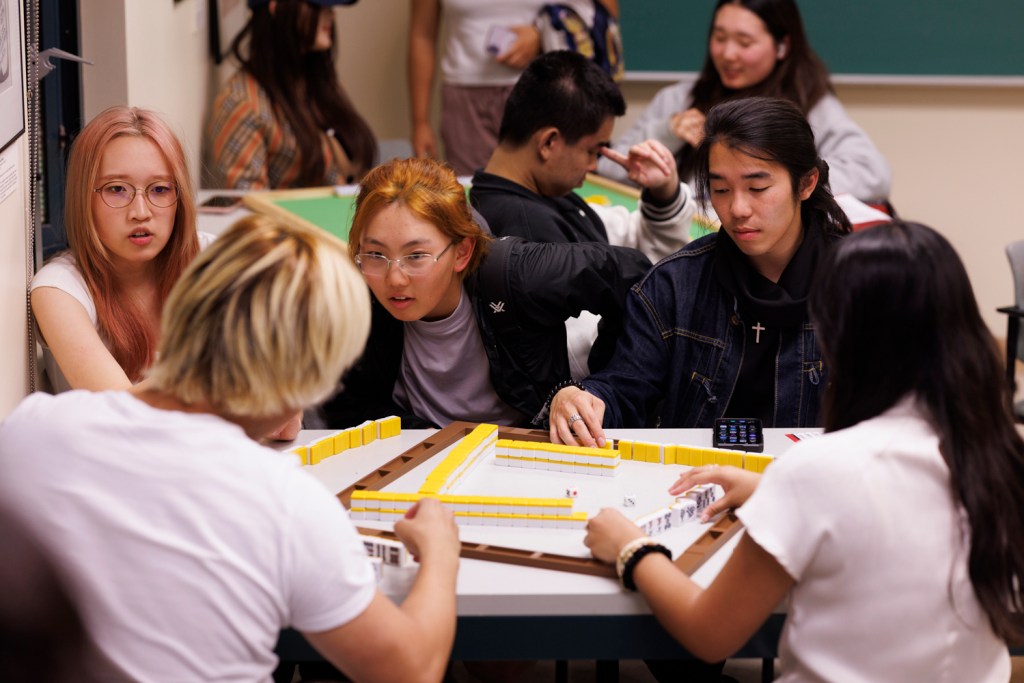
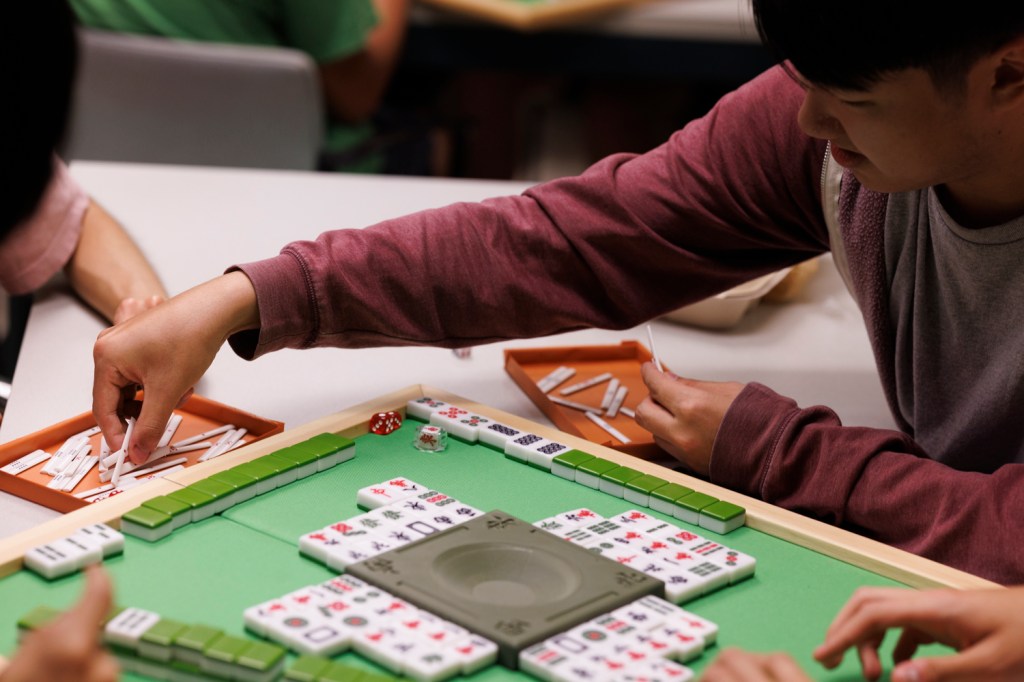
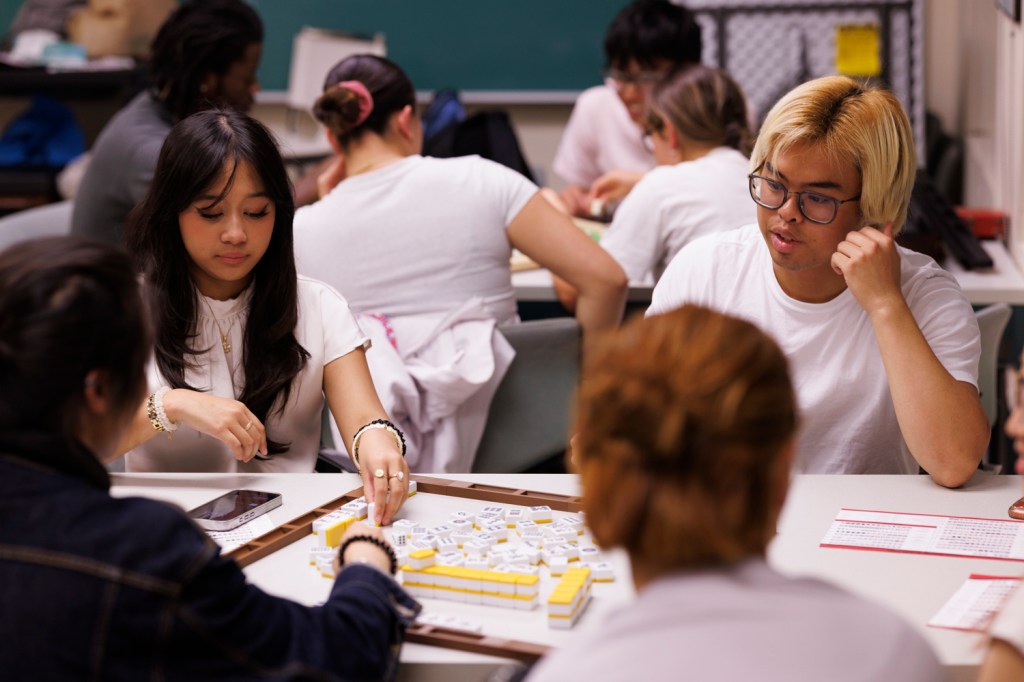
On a warm Thursday night, members of the Asian Board Games Association at UC Santa Barbara taught me to play mahjong. I hadn’t planned on sitting down for a game, but when club cofounder Austin Wong offered me his spot at a table, I set my notebook aside and agreed.
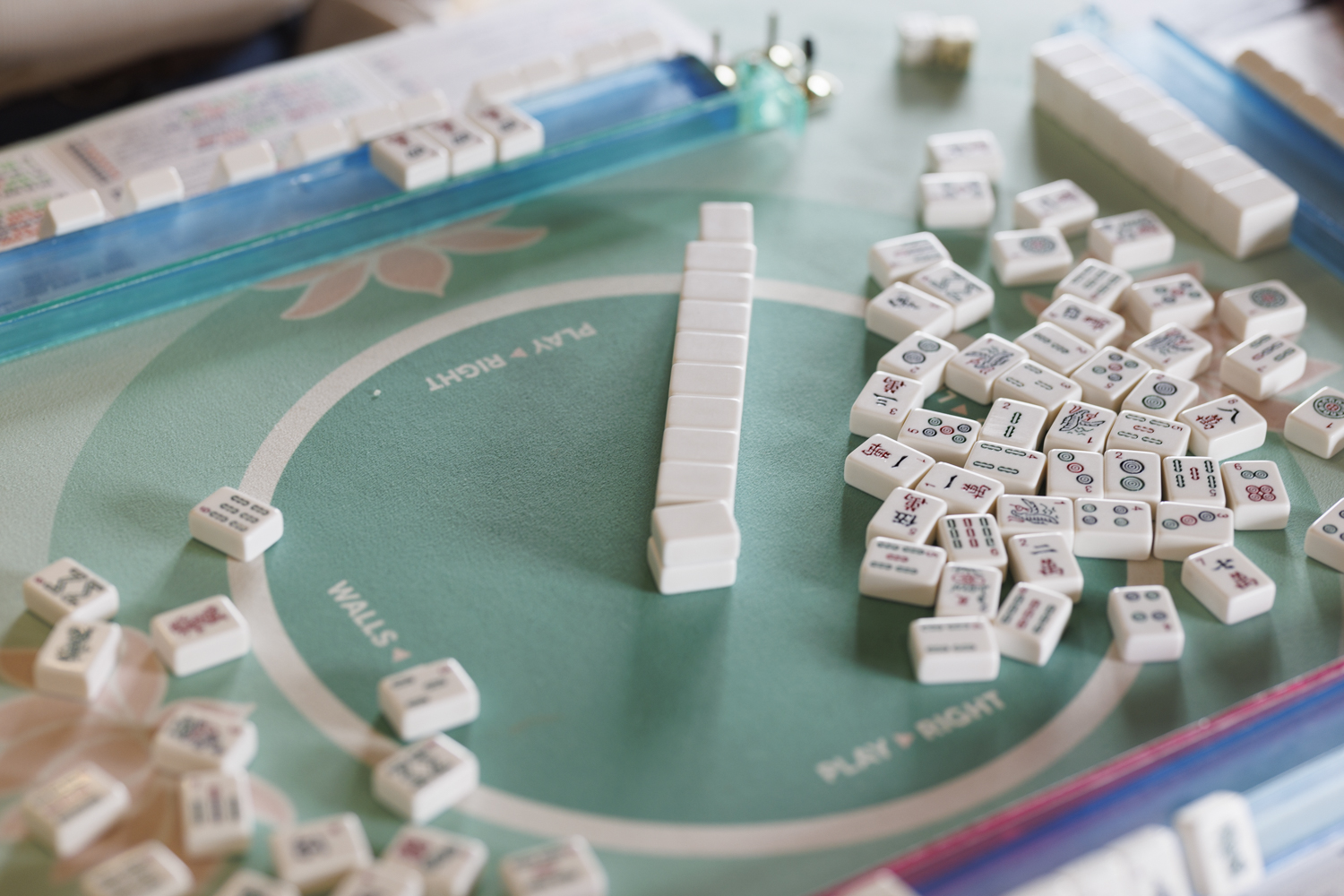
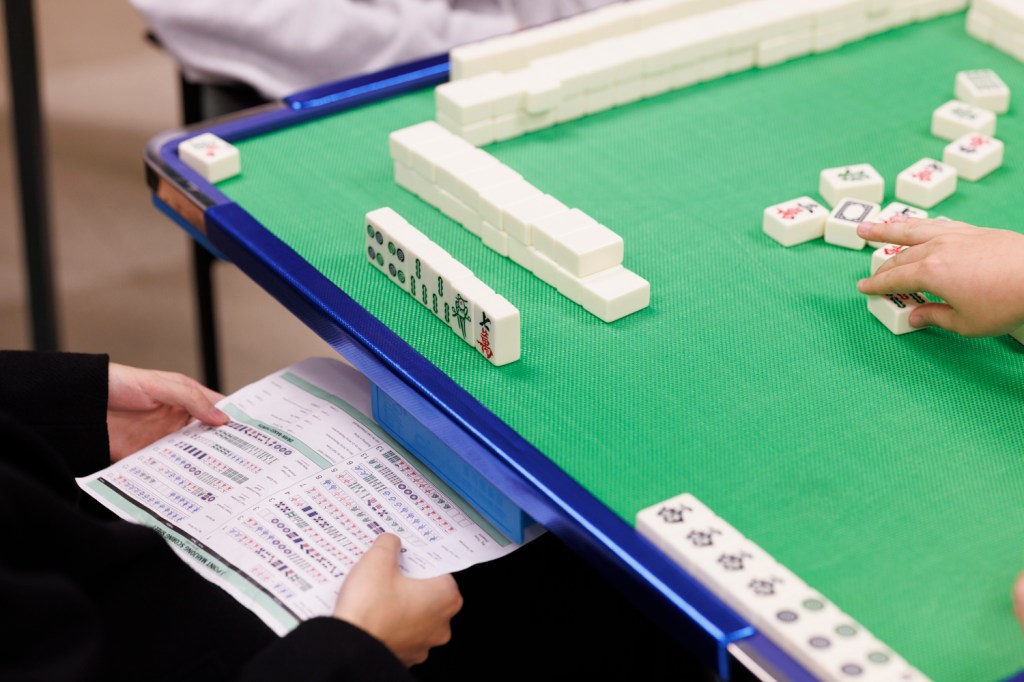
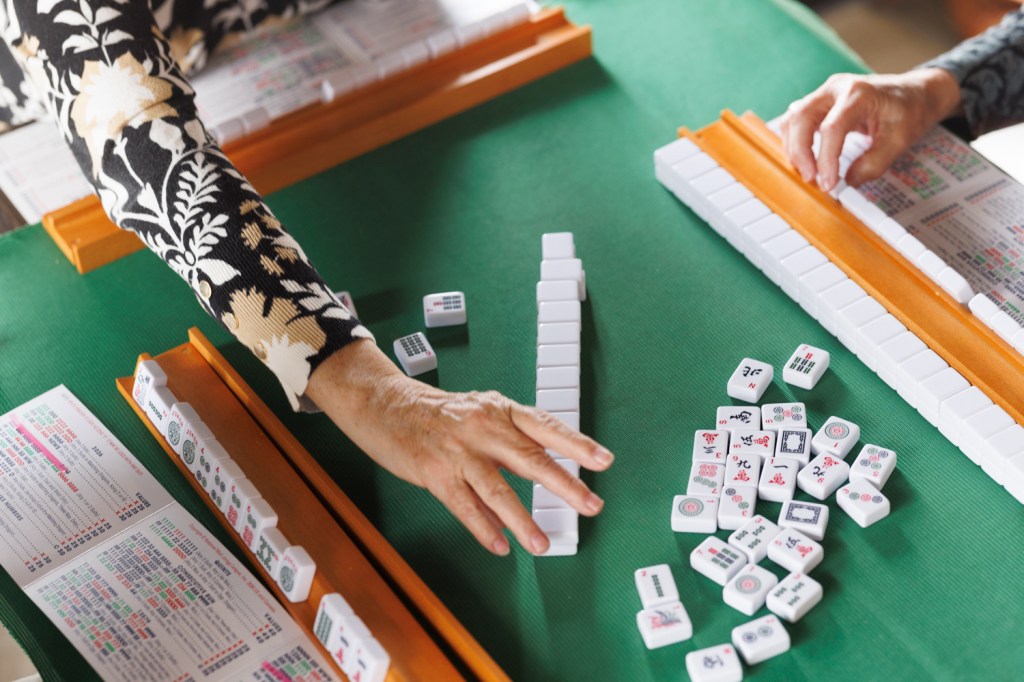
The players, all UCSB students, showed me the dots, dragons, seasons, and flowers on the bright white tiles and helped me select which ones to discard. Soon, we had a game going. The room filled with the sound of clacking tiles and chatter.
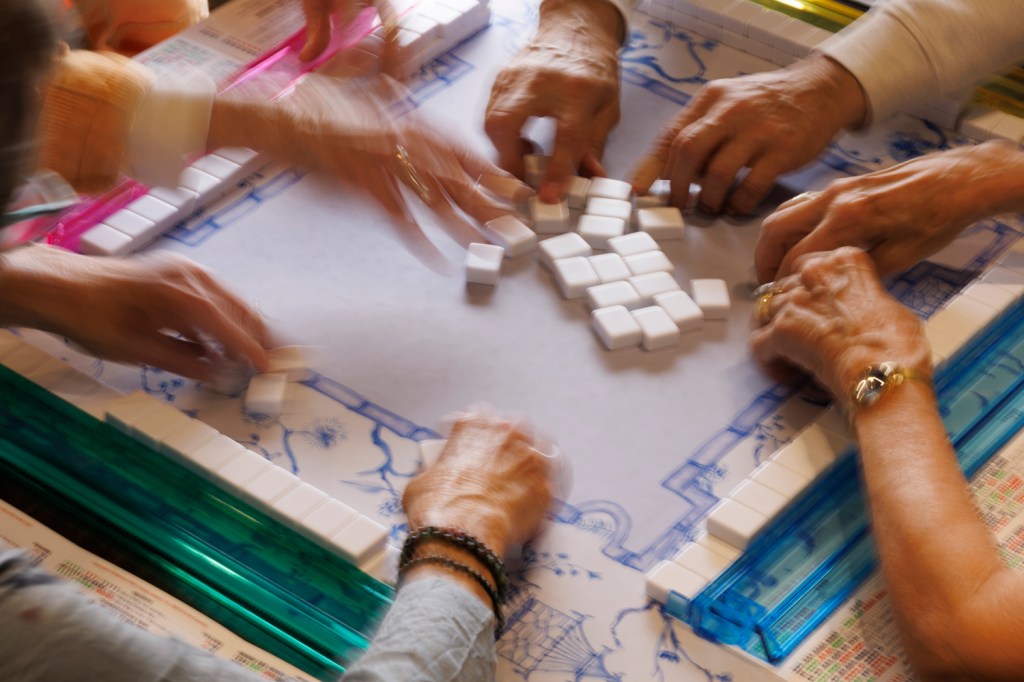
Mahjong isn’t hard to find on the South Coast if you know where to look. From an open group in Carpinteria to informal gatherings of friends and neighbors to the Asian Board Game Association, on any given day you can find folks ready for some friendly ― and sometimes serious ― competition.
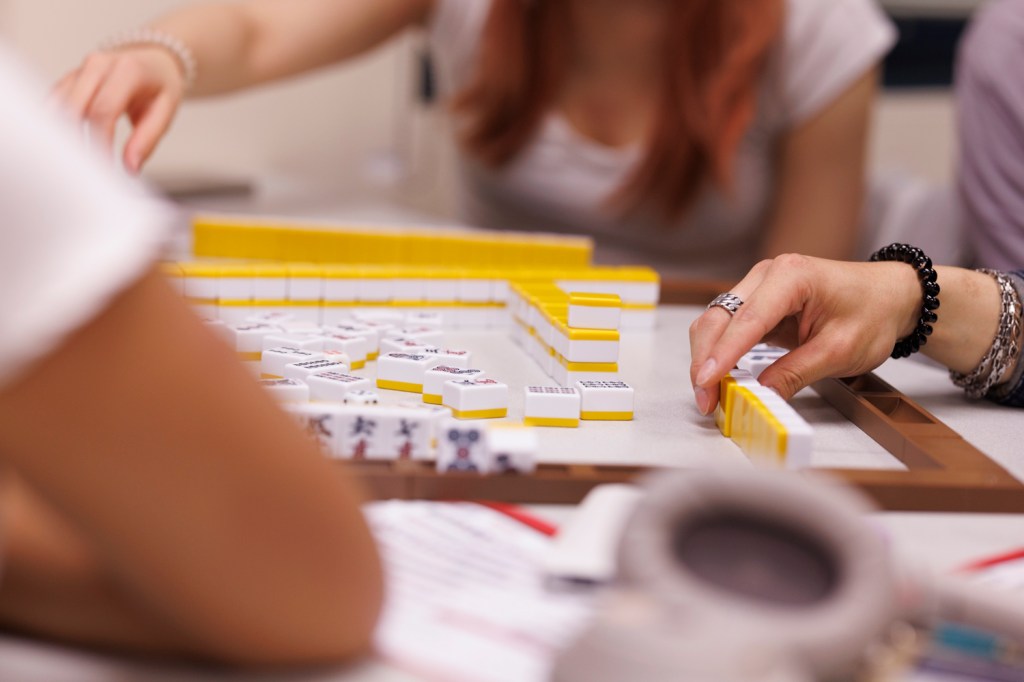
The game’s basic goal is to create a series of runs and pairs in a 14-tile hand. Different hands can correspond to different points. Depending on the style you’re playing (there are versions from China, Japan, the Philippines, the United States, and more), the rules may differ.
Wong’s advice for getting started? Find or form a community, learn from others, and play.
UCSB’s Asian Board Games Association
Wong and association cofounder Kai Shimoyama said they met at a mahjong night put on by UCSB’s Nikkei Student Union last year. “There were 10 tables that night,” Wong said. “It was a very crowded event, but in the center of it all, there was one table that was very serious.”
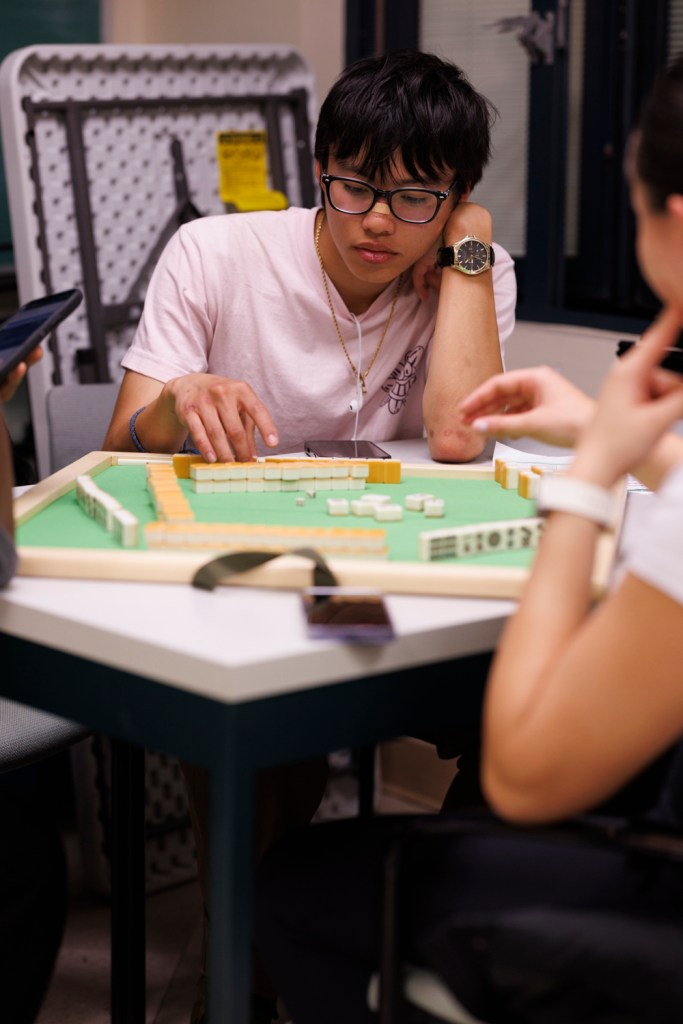
From there, they found two other students who played the game, and the four grew close. They also noticed an interest from other students. “Naturally, we were like, ‘Let’s do something with this,’” Shimoyama said.
Both Wong and Shimoyama learned from their grandmothers. “My grandmother used to host mahjong nights at her place all the time,” Wong said, adding that his family plays “Cantonese-style.” “Occasionally she would go and prepare food for everyone. So, then I would sub in for her and play for her, and that’s how I learned how to play.”
“It’s like a family thing,” Shimoyama said. “You get together, play mahjong. In my case, I learned Japanese style.” Riichi, or Japanese style, Shimoyama said, is more complex that Cantonese style; as someone who likes complex puzzles, he said, he really got into the game.
The association has grown over the past 18 months, with students coming in to learn and teaching each other. Wong, Shimoyama, and other club leaders take advantage of the natural landscape around UCSB.
“We realize mahjong can be a very indoor game, but for the weekends, we try to be more active. So, we played mahjong on the beach. We played mahjong in a park. We played mahjong on rooftops,” he said.
Community is a central component. Shimoyama said that the club has been able to reach students who aren’t interested in big, boozy parties, but still want to get out and socialize each week. “There are people that are more low-key,” he said.
Next up for the association? Mahjong on a boat.
Open Play at Pizza Man Dan’s
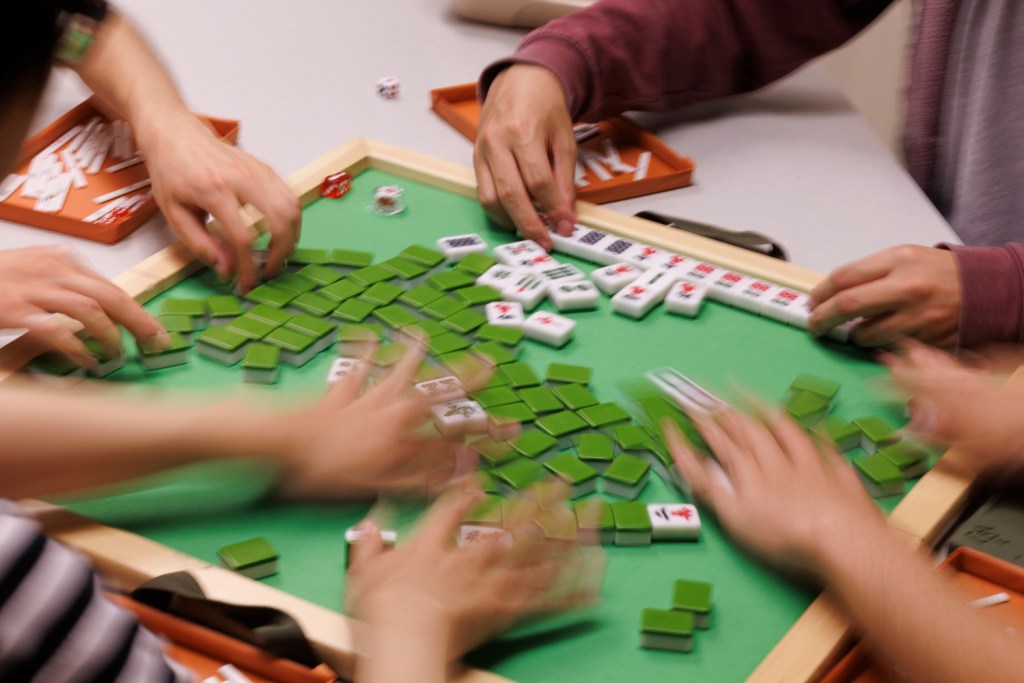
Down the coast in Carpinteria, about two dozen people gather every Monday, ready to spend the next few hours with their mahjong sets, coin purses, cards, and each other.
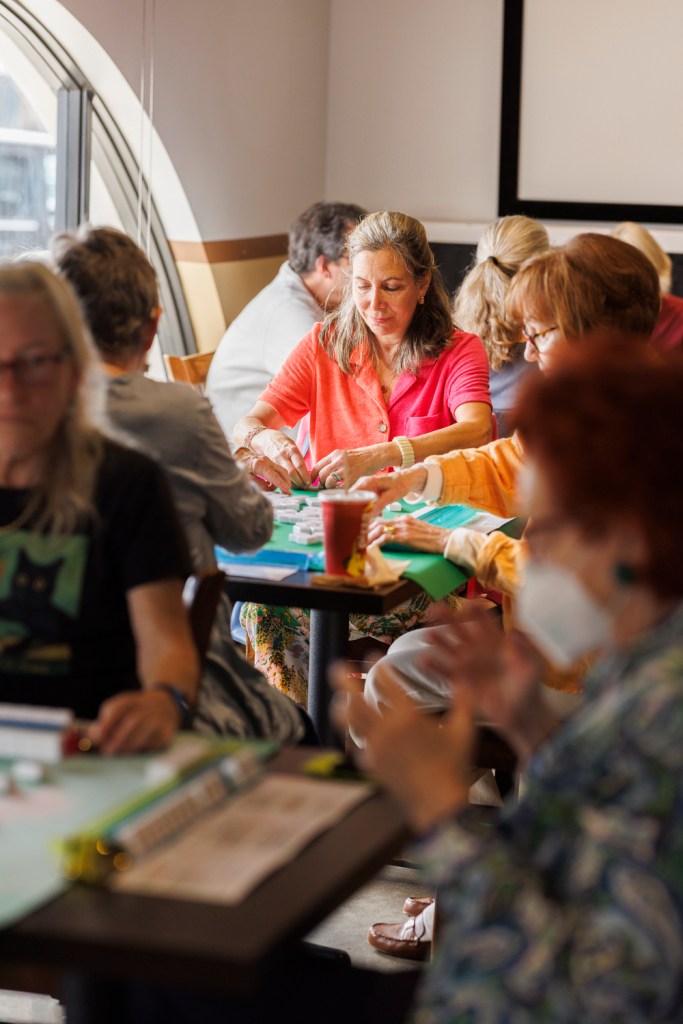
The group, which includes many seniors but is open to all, has existed for more than 16 years. It started with two women: Lisa Guravitz and Rosalyn Kohute. Kohute said she put an ad in the Carpinteria Coastal View News, looking for players.
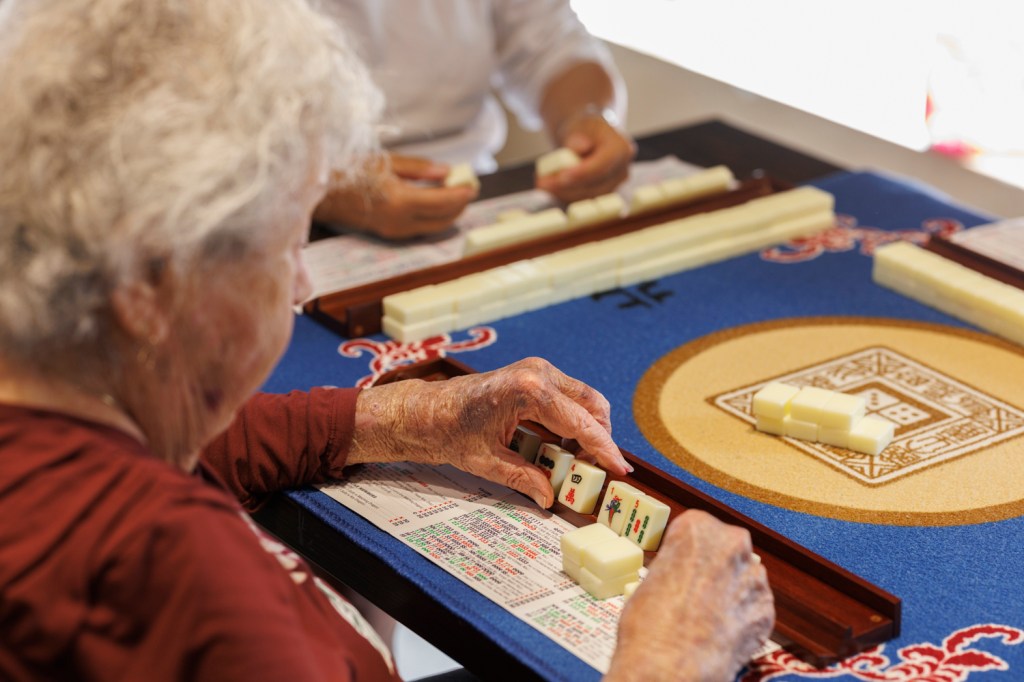
As Guravitz remembers it, about 15 people showed up, and most didn’t know how to play. So, she started teaching them. “I love teaching,” Guravitz said. “And I just love the game,” which requires strategy and constant planning. “It keeps my brain going,” she said.
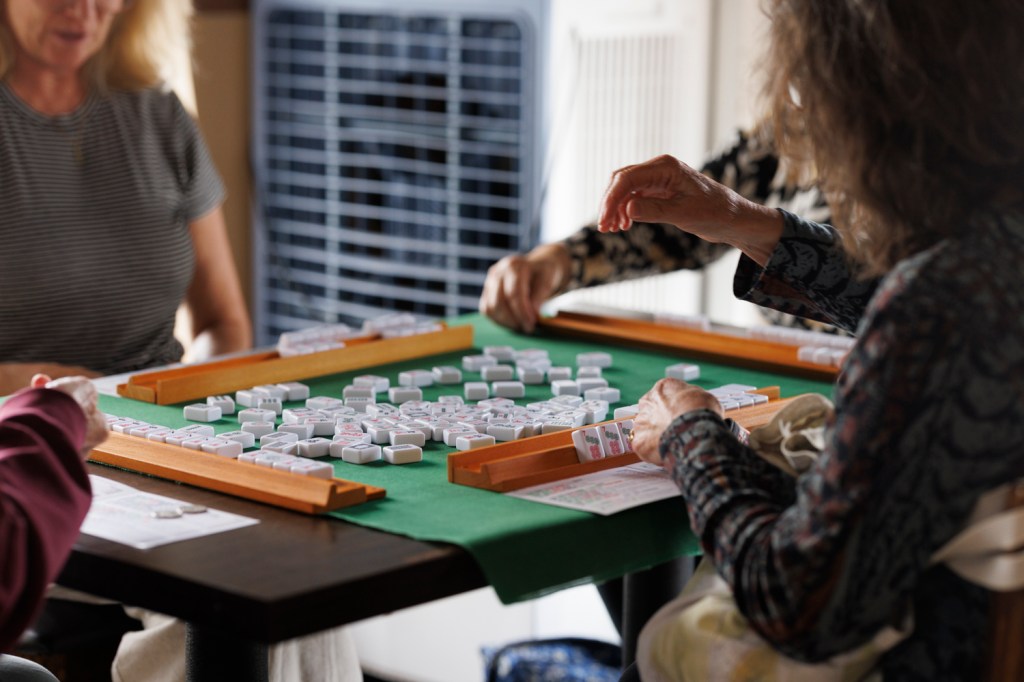
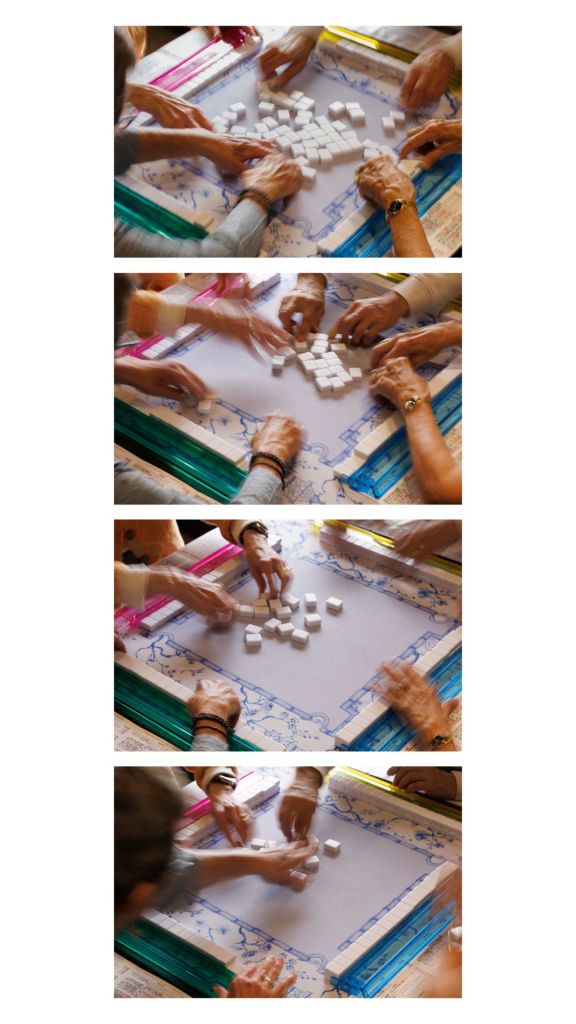
When I arrived, the street-side alcove of Pizza Man Dan’s was already full. Women (and one friendly guy) passed tiles in a shuffling method called “the Charleston.” The play here is American mahjong — a different style from both Cantonese and Riichi — which includes jokers and a point card that is released annually by the National Mah-Jongg League.
Kohute said that Pizza Man Dan’s allows the group to use the space for free as a community courtesy. “It’s been wonderful,” she said. She said new players still come after seeing the ad.
Shortly before I left, Kohute got mahjong. “Mahj,” she said with a small smile.
Home Games
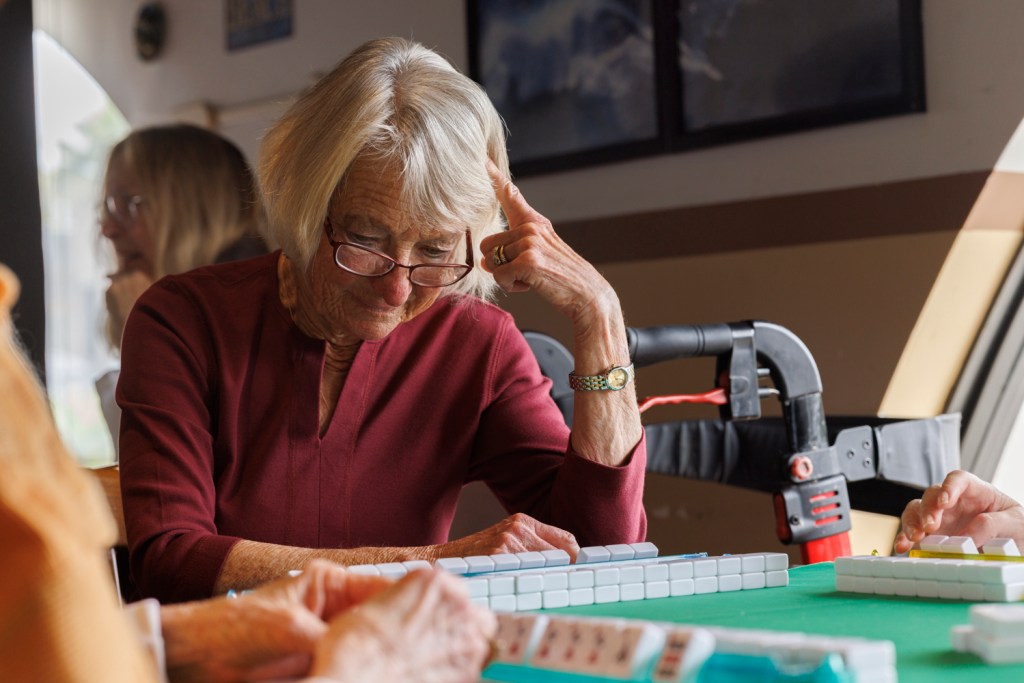
The chatter of several tables can fill a room, but a smaller group has its own appeal. Deborah Johnson’s dog greeted me at her front door before I joined Johnson and her three mahjong partners — Linda Gardy, Bobbie Offen, and Lois Mitchell ― at their table.
Johnson has several mahjong sets. As I sat down, the group showed me an antique ox-bone and bamboo set with delicate, colorful carved lines. Johnson learned to play with a friend back in 2011; the friend gifted her this set before her death.
Three of the members have met for years, and they’re helping a new(er) player, Lois Mitchell, as she learns the game.
Gardy said she grew up with mahjong. “We went to bed at night listening to the tiles,” she said. Johnson learned in 2011. In one game, I watched Gardy try to anticipate what tiles Johnson tried to collect.
“When you start the game, you can only play offense,” Johnson said. “But half the game is defense,” she said. The work is to anticipate what other tiles an opponent is trying to collect.
The women play each week for a few hours, breaking for lunch. Luck may change after lunch, they told me.
Folks don’t just play with friends — mahjong can be in the family. It is for Dr. Alex Tang.
Tang said he’s Philippines-born and ethnically Chinese. Both cultures, he said, play mahjong. Growing up, he said, the Chinese business community in his hometown, Manila, would play on weekends — a way to keep kids safe in the house. It also means, he said, to build connections within the family.
Today, Tang said, his family and members of the Filipino community in Santa Barbara still gather to play a few times a year.
From Its History … to Today
Scholars think mahjong likely came about in China in the second half of the 19th century and was based on earlier card and tile games. About 100 years ago, American businessmen brought mahjong to the United States, and the game took off here. Mahjong sets were actually the sixth-biggest export from Shanghai in 1924.
Sellers advertised the game to white Americans as ancient and exotic, divorcing it from the Asian immigrants that U.S. law at the time continued to bar. (The Johnson Reed Act of 1924 effectively banned immigration from Asia.)
Eventually, the mahjong craze in the United States started to fade. But it remained a staple in Asian communities across America.
As the 20th century progressed, the game grew in popularity among Jewish Americans. In 1937, a group of women, many of whom were Jewish, formed the National Mah-Jongg League, providing a standard set of rules that would become American mahjong.
Wong and Shimoyama told me they’ve seen a growing interest in the game, and outside of the UCSB bubble, other community members have also noticed a jump. “It’s like everybody playing pickleball,” Dr. Alex Tang said.
At retirement homes, mahjong groups now exist alongside bridge groups. And then, there’s the game’s popularity on cruises. A cruise, Tang said, is a chance to play with people from all over the world.
Deborah Johnson said that mahjong creates a sort of common ground. “You can walk into a room, not know anybody, and sit down and play,” she said.
This year, the Lunar New Year celebration at El Presidio de Santa Bárbara filled the presidio’s chapel with mahjong lessons — more than 100 people attended, and Santa Barbara’s public library is offering its own lessons this month.
Related Posts





Premier Events
Fri, Oct 23
2:00 PM
Santa Barbara
Music & Meditation: Clarinetist Nancy Mathison & Pianist Antonio Artese

Mon, Oct 19
7:00 PM
Santa Barbara
PFLAG Santa Barbara October Meeting: “Schools and Inclusive Practices – What creates a safe and inclusive school?”

Tue, Oct 20
7:00 PM
Santa Barbara
Get Out the Vote Night @ SOHO, Music Performance by Loyal Defense Workers

Wed, Oct 21
6:30 PM
Santa Barbara
Teflon Comedy/Non-Schtick – Evening of Comedy

Thu, Oct 22
5:30 PM
Santa Barbara
Best Fest: A Celebration of the Best of Santa Barbara® Readers’ Poll 2026

Thu, Oct 22
6:00 PM
Santa Barbara
Chaucer’s Books Author Talk & Signing- Daniel M. Jaffe “Russian Silhouette: A Memoir of Activism and Identity”
Fri, Oct 23
5:30 PM
Solvang
Solvang Haunted House and Street Fair

Fri, Oct 23
7:00 PM
Santa Barbara
Beth Amine’s 20th Anniversary Wildcat Dance Variety Show

Fri, Oct 23
9:00 PM
Santa Barbara
Casa de la Raza Fundraiser: Brasscals! with DJ Darla Bea

Sat, Oct 24
10:30 AM
Santa Barbara
Picnic in the Cemetery: A Live Historical Event
Fri, Oct 23 2:00 PM
Santa Barbara
Music & Meditation: Clarinetist Nancy Mathison & Pianist Antonio Artese

Mon, Oct 19 7:00 PM
Santa Barbara
PFLAG Santa Barbara October Meeting: “Schools and Inclusive Practices – What creates a safe and inclusive school?”
Tue, Oct 20 7:00 PM
Santa Barbara
Get Out the Vote Night @ SOHO, Music Performance by Loyal Defense Workers
Wed, Oct 21 6:30 PM
Santa Barbara
Teflon Comedy/Non-Schtick – Evening of Comedy
Thu, Oct 22 5:30 PM
Santa Barbara
Best Fest: A Celebration of the Best of Santa Barbara® Readers’ Poll 2026
Thu, Oct 22 6:00 PM
Santa Barbara
Chaucer’s Books Author Talk & Signing- Daniel M. Jaffe “Russian Silhouette: A Memoir of Activism and Identity”
Fri, Oct 23 5:30 PM
Solvang
Solvang Haunted House and Street Fair
Fri, Oct 23 7:00 PM
Santa Barbara
Beth Amine’s 20th Anniversary Wildcat Dance Variety Show
Fri, Oct 23 9:00 PM
Santa Barbara
Casa de la Raza Fundraiser: Brasscals! with DJ Darla Bea
Sat, Oct 24 10:30 AM
Santa Barbara



You must be logged in to post a comment.