

“Sustainable.” “Green.” “Environmentally friendly.”
The words get used a lot. At Explore Ecology’s Environmental Stewardship Awards on Thursday at Cabrillo Pavilion, the focus was on what those words actually mean in action.
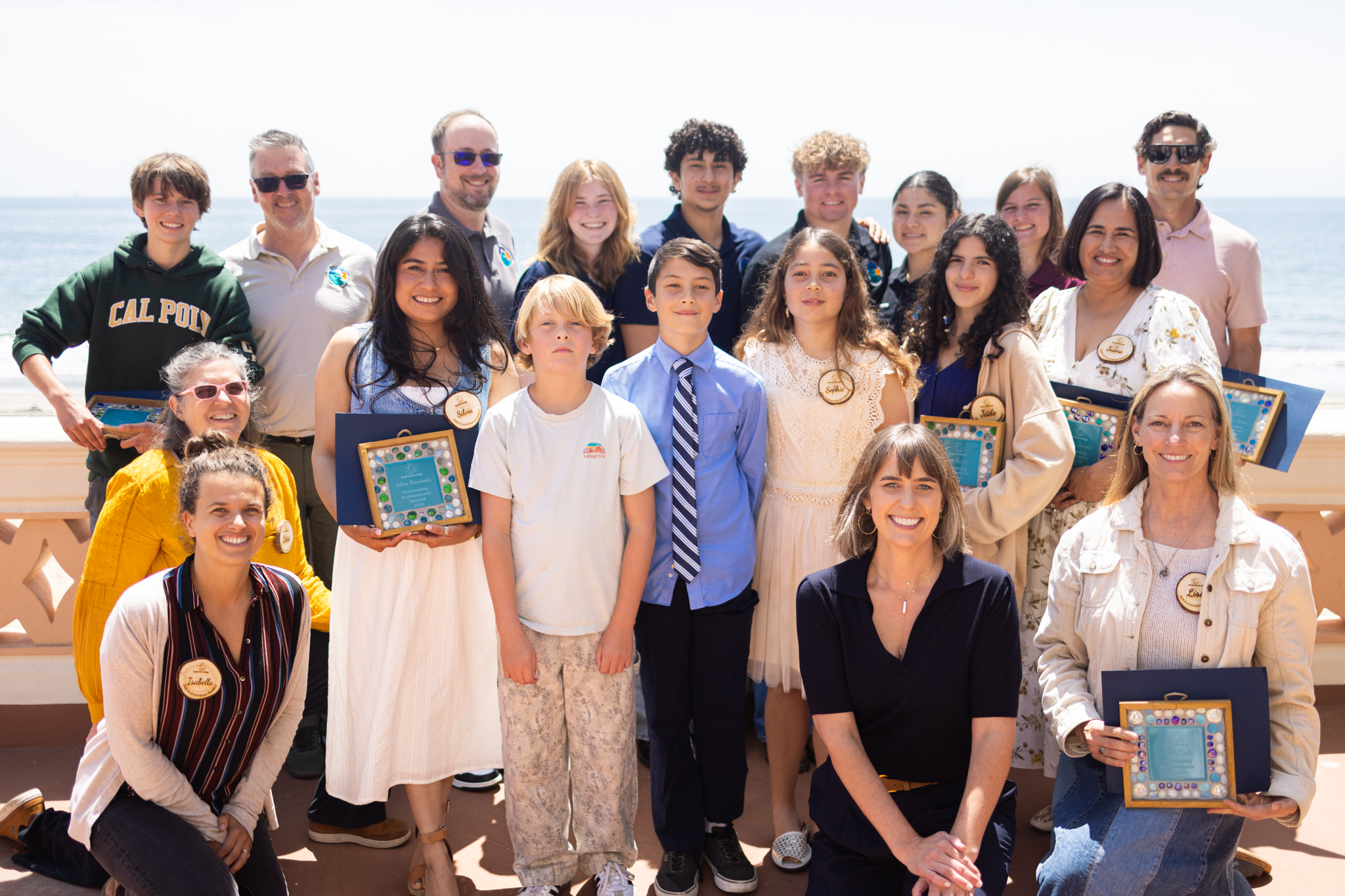
The awards — part of a program dating back to 2016 — recognized 15 students, teachers, and school programs across Santa Barbara County.
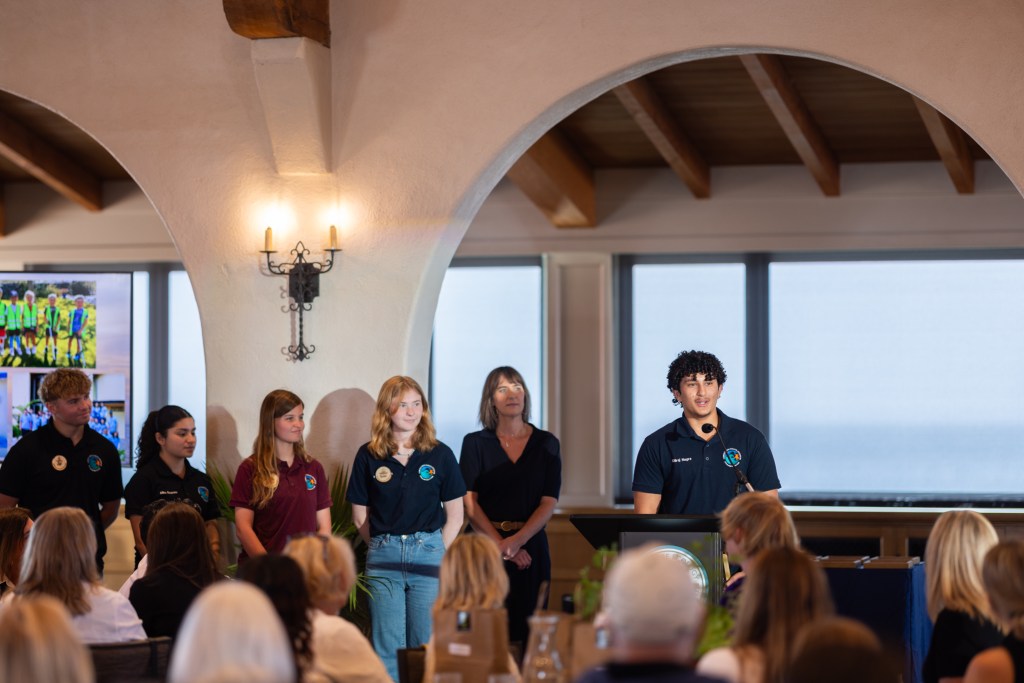
Kicking off the luncheon, 2025 awardee and Dos Pueblos High School student Jackson Simmons-Furlati spoke about his hydroponic towers, which have produced more than 7,000 meals while saving 37,000 gallons of water. Simmons-Furlati is also part of a United Nations–accredited, student-led group raising awareness about the harms of single-use plastics. Who are unsurprisingly not at these group forums, he notes, are the corporations producing these plastics.
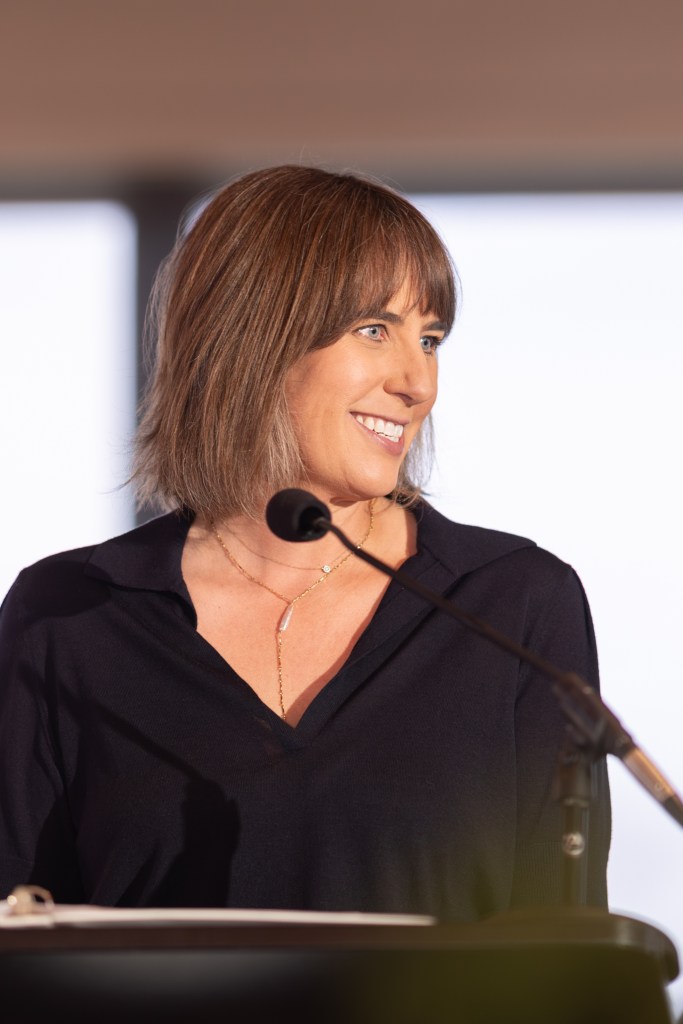
“The system is still the system, and we need policy that’s strong enough to change it. But that’s not where we’re at right now,” he said. Instead, he suggested, “we can build smaller systems … and invite others to join them.”
The takeaway: If enough small systems are built outside the larger system causing harm, the larger system can eventually be forced to change. Explore Ecology’s Executive Director Lindsay Johnson went on to introduce 15 examples of such small systems.
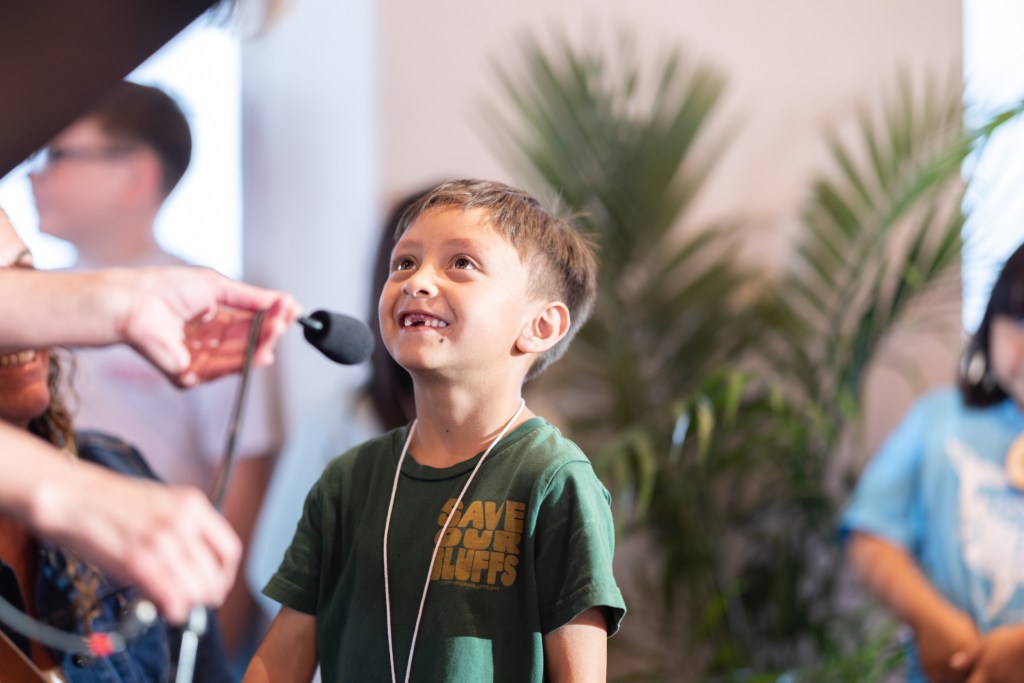
First were the event’s smallest — but mighty — awardees: a K-1 group from Carpinteria’s Canalino Elementary known as the Planet Protectors, who clean up their campus each week. They even arrived early to the venue to do a beach cleanup.
Asked how that went: “A lot of trash, cool fish things,” said student Enzo. His favorite part: “picking up trash.” Reese, another student who
could not quite reach the microphone, put it simply as “helping the ‘erf.’”
At the Cabrillo High School Aquarium in Lompoc, it’s the same philosophy, just taller students. What began as a single tank is now a 5,000-square-foot, student-run aquarium with more than 25 exhibits, roughly 200 students involved, and about 10,000 annual visitors, according to aquarium director Greg Eisen.
“Our motto is partnership with the Earth, and we would just love to further work and to bring positive change,” said Dilraj Nagra, a student and head curator.
Also in Lompoc, at Just for Kids Preschool, teachers Juana Zarate, Silvia Hernandez, and Rosa Herrera have built garden-based learning into their classrooms, getting students to care for plants and engage with nature early.
Jacob Pepper of Santa Barbara’s Anacapa School has a similar approach with his middle schoolers. “Raise your hand if you are in a relationship,” he said to the crowd. “You actually are — with Earth.” Pepper is working with students to cut campus waste by 30 percent, which translates to “what a family of four would have on a consistent basis.”
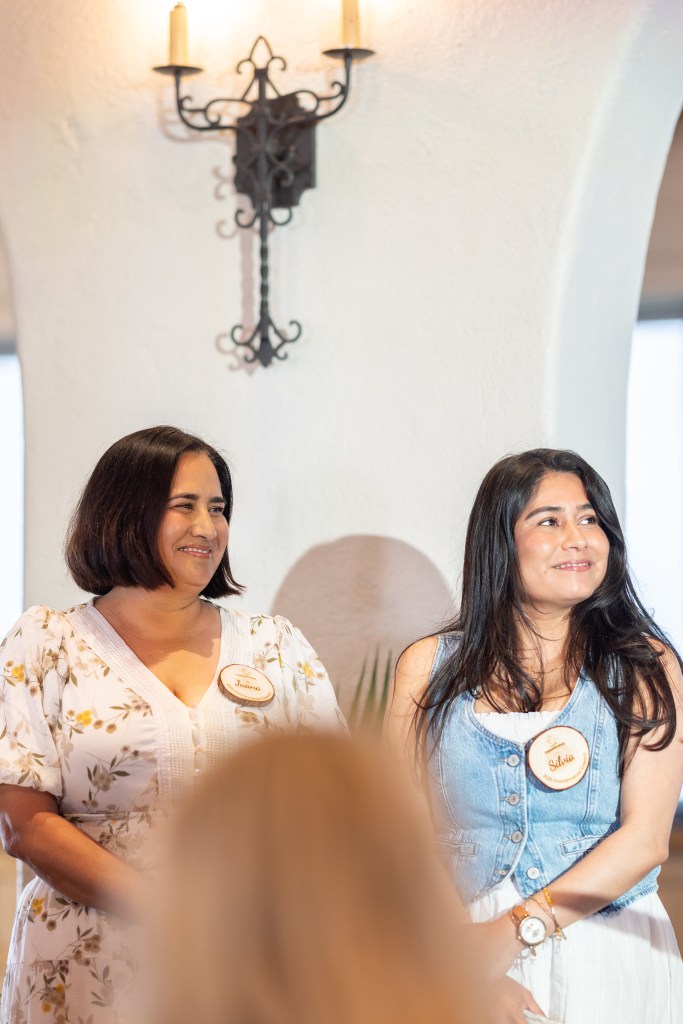
Silvia Hernandez and Juana Zarate, two of three educators (third being Rosa Herrera) recognized for integrating garden-based learning at Just For Kids Preschool in Lompoc. | Credit: Ingrid Bostrom 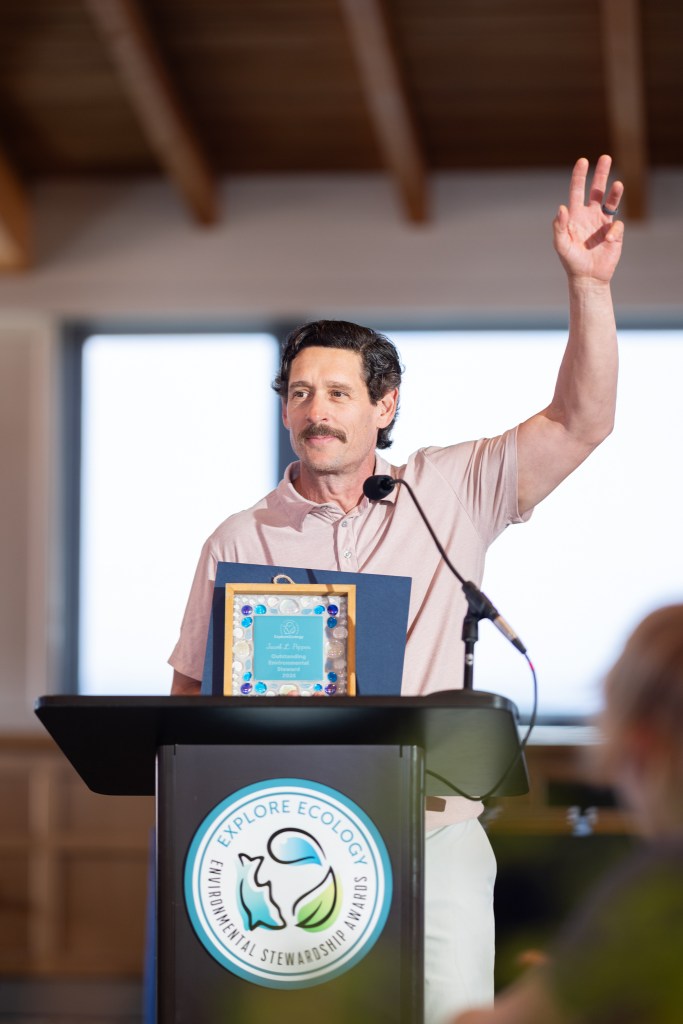
Jacob Pepper addresses the role of behavior change in reducing campus waste during the Environmental Stewardship Awards. | Credit: Ingrid Bostrom
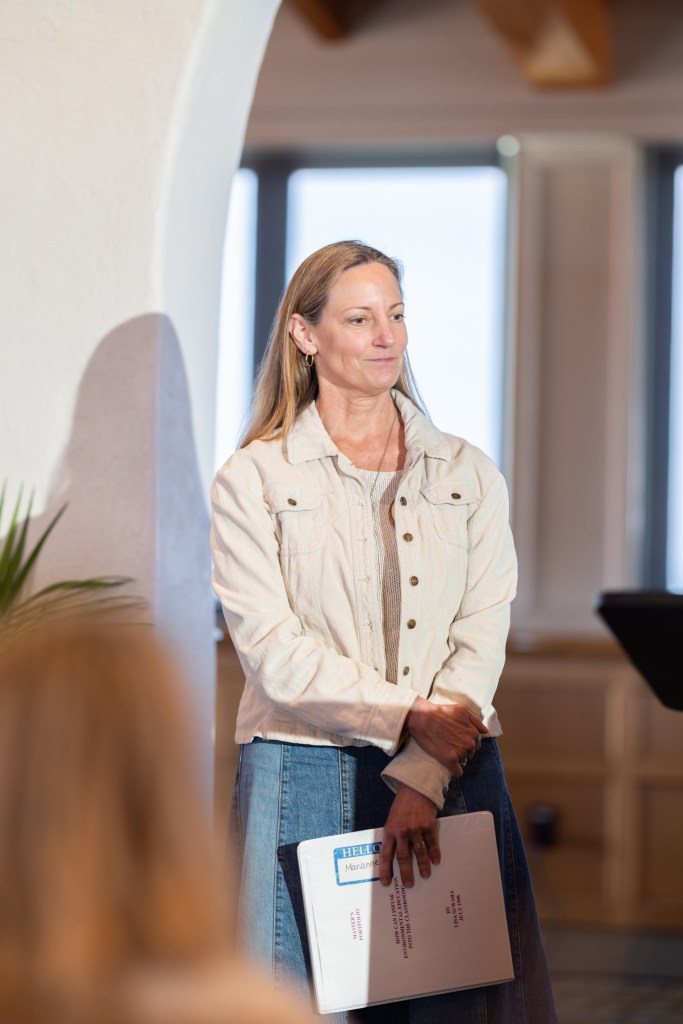
At Brandon Elementary School in Goleta, 5th-grade teacher Lisa Lisle’s goal was to keep plastic utensils out of the trash cans entirely by replacing them with reusable sporks. Brandon Elementary’s principal dubbed the Star Wars–inspired campaign “May the Sporks Stay with You.”
Lisle’s incorporation of environmental education and action had been a long-time goal. She pulled out a binder from 1998 — her master’s thesis titled “How Do I Fuse Environmental Education into the Classroom?” — and ended her speech with a thank-you to Explore Ecology, noting that “I am able to do this because they make it possible.”
Dr. Bree Valla, who could not make it, is principal of Vista del Mar Union School District in Gaviota and is guiding the district’s transition to the Vista Institute of Environmental Studies.
At Midland School, teacher Isabella Marill is building a campus-wide environmental plan. But before she starts with that, she works with her students to “connect and love the environment first before we start talking about protecting it,” she said. At Midland — a 3,000-acre campus in Los Olivos bordering Los Padres National Forest — Marill has set up an environmental club, conducted an environmental audit, and is formalizing an environmental stewardship plan.
Marill also shares the award with her students, both figuratively and literally, as one of her own, River Peace, also earned an award. Peace, a senior at Midland, has spent his time there transitioning the school farm to climate-resilient, perennial native plant species.
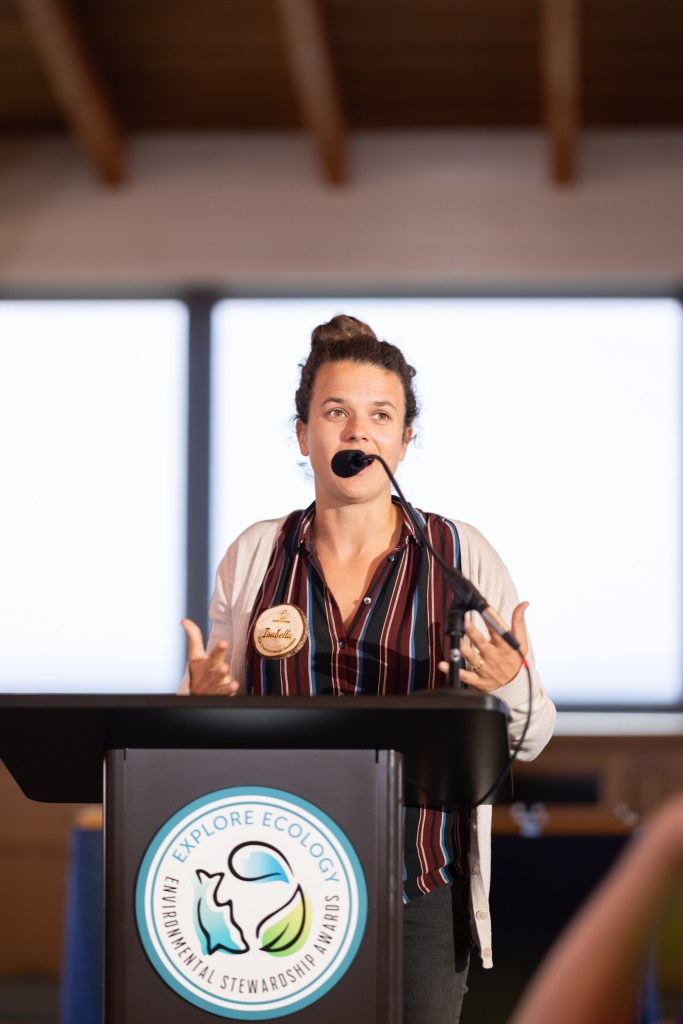
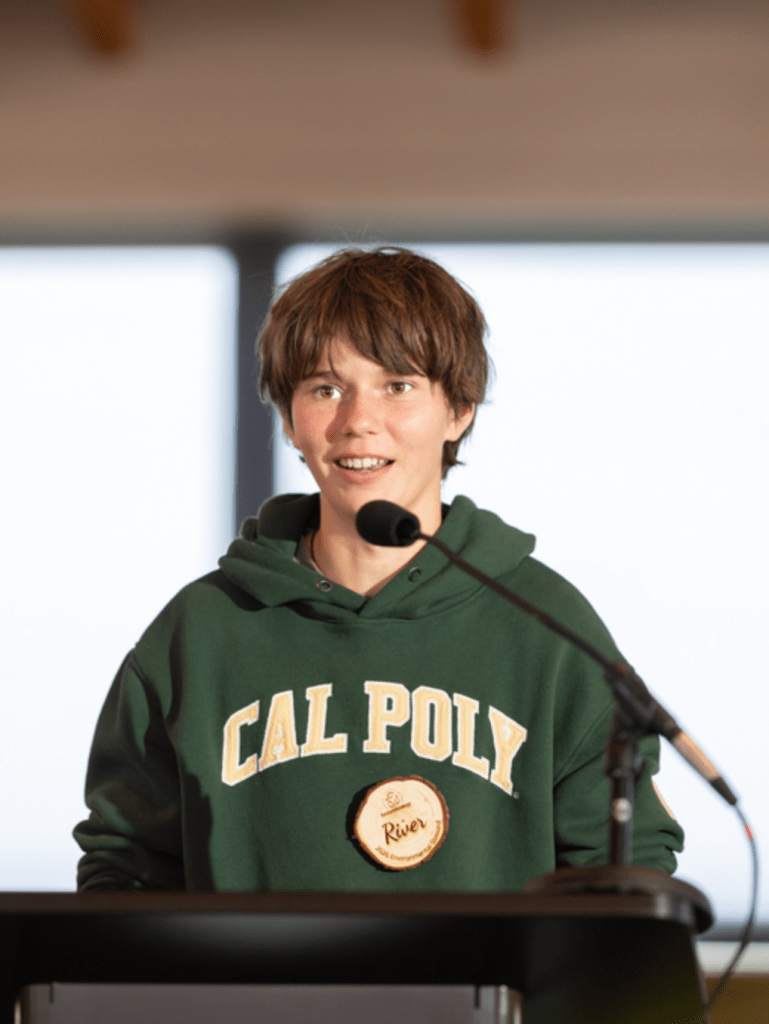
“Thank you to Bella,” he said, referring to Marill, “who taught me chemistry and biology and gave me so many opportunities,” pointing to his Cal Poly sweatshirt, where he will attend next year.
At another high school, Santa Barbara High student Jade Garcia organized the “Make Polluters Pay” walkout. “I hold onto the comfort that we are making a change for my future and the generations to come,” she said.
Sophie and Hunter — a brother-sister duo described as “school garden dynamos” — were also recognized. “I like to mulch and weed and also pick vegetables,” said Hunter Costa of Santa Barbara’s La Colina Junior High. “I think it’s nice to know I am making a change,” said his sister Sophie of Monte Vista Elementary.
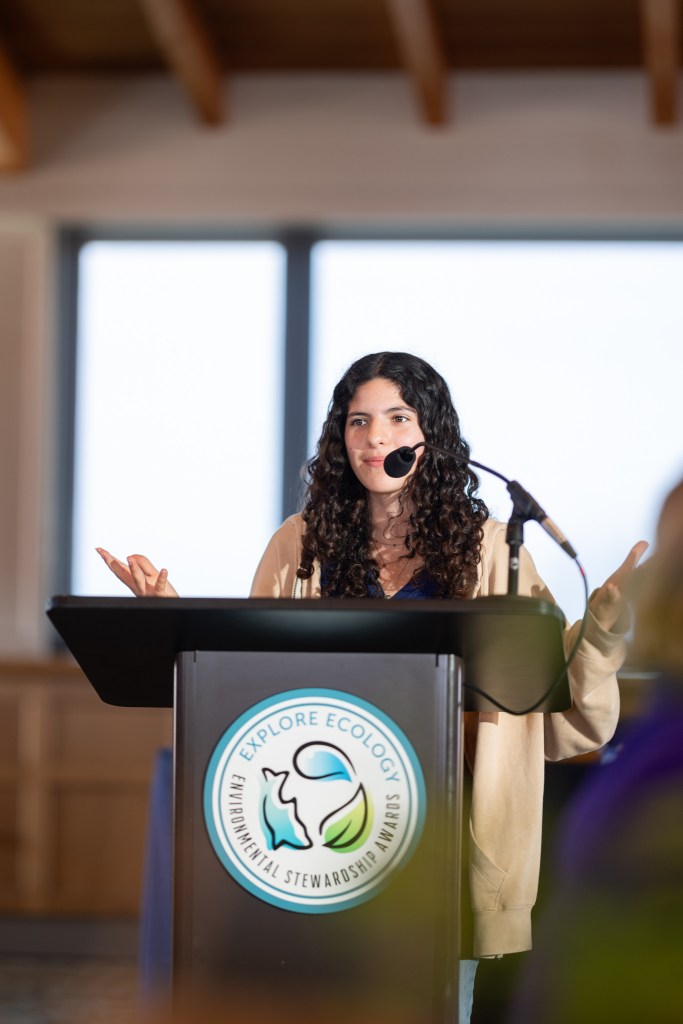
Jade Garcia speaks about organizing student climate activism efforts. | Credit: Ingrid Bostrom 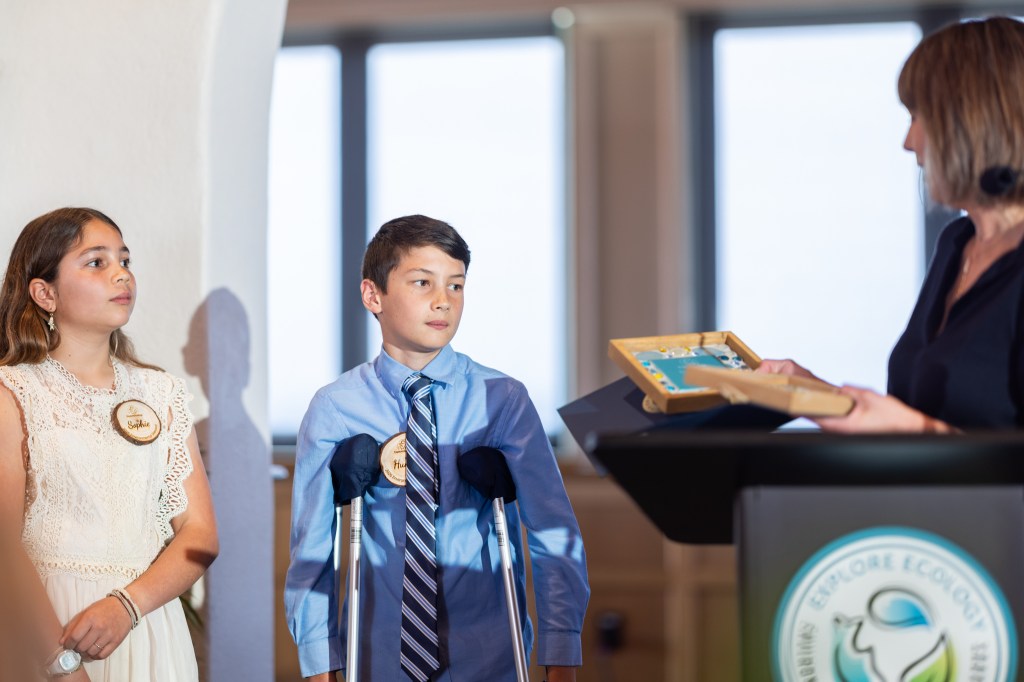
Hunter Costa and Sophie Costa accept their awards for their work in school gardens. | Credit: Ingrid Bostrom 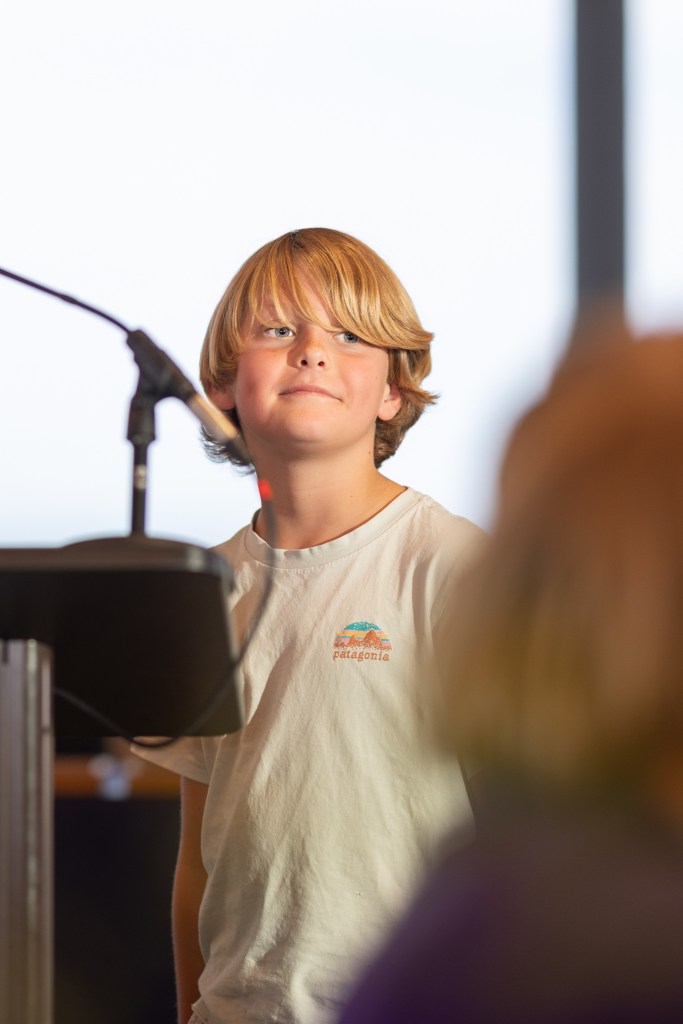
West Lang shares his experience relocating a swarm of bees safely from his school campus. | Credit: Ingrid Bostrom
Then there was 4th grader West Lang, wise beyond his years, who handled a swarm of bees after recess at Santa Ynez Valley Charter School, safely relocating them with the help of his father, Jason. “Being in nature is a great reset to your mind and body,” he said.
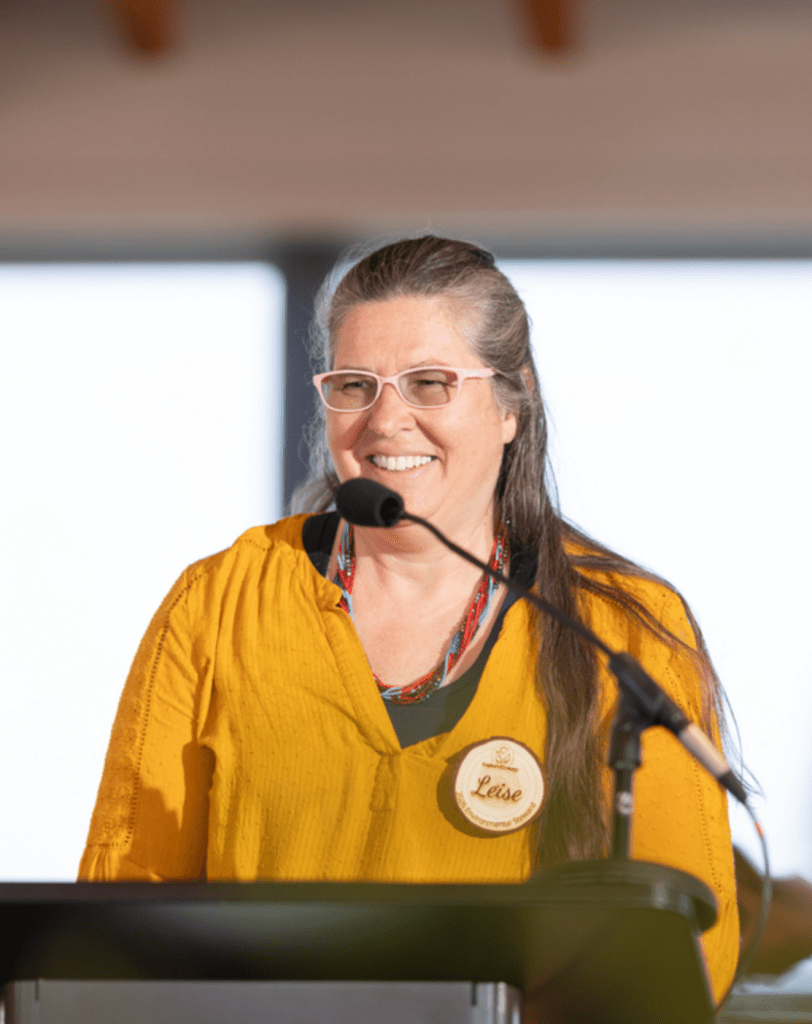
Leise Thomason, a science specialist at Santa Barbara Charter School, has taken action in a multitude of ways — gardens, composting, and a mini reuse station inspired by Art from Scrap — and, as she put it, “brought props” as examples.
Her advice to the audience: “Have gratitude … love the planet and love what you do. The environmental movement has many needs, and we all have our own strengths.”
The 15 awardees were evidence of that — bringing meaning to the word “environmental steward.”
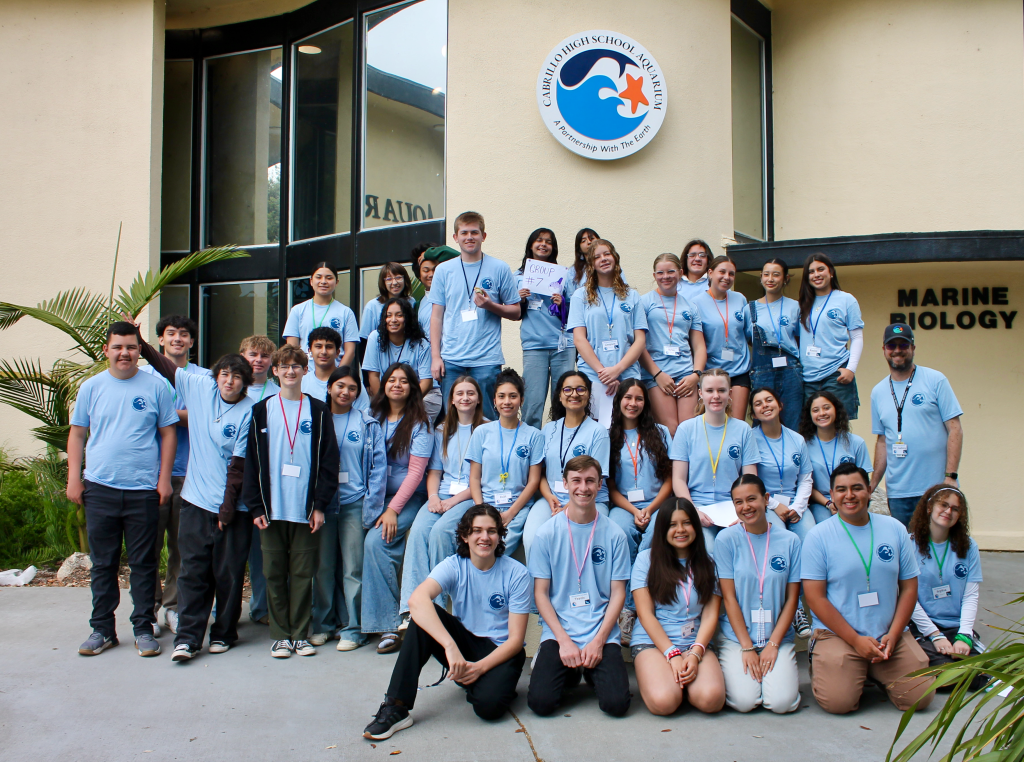
Cabrillo Aquarium | Credit: Courtesy Explore Ecology 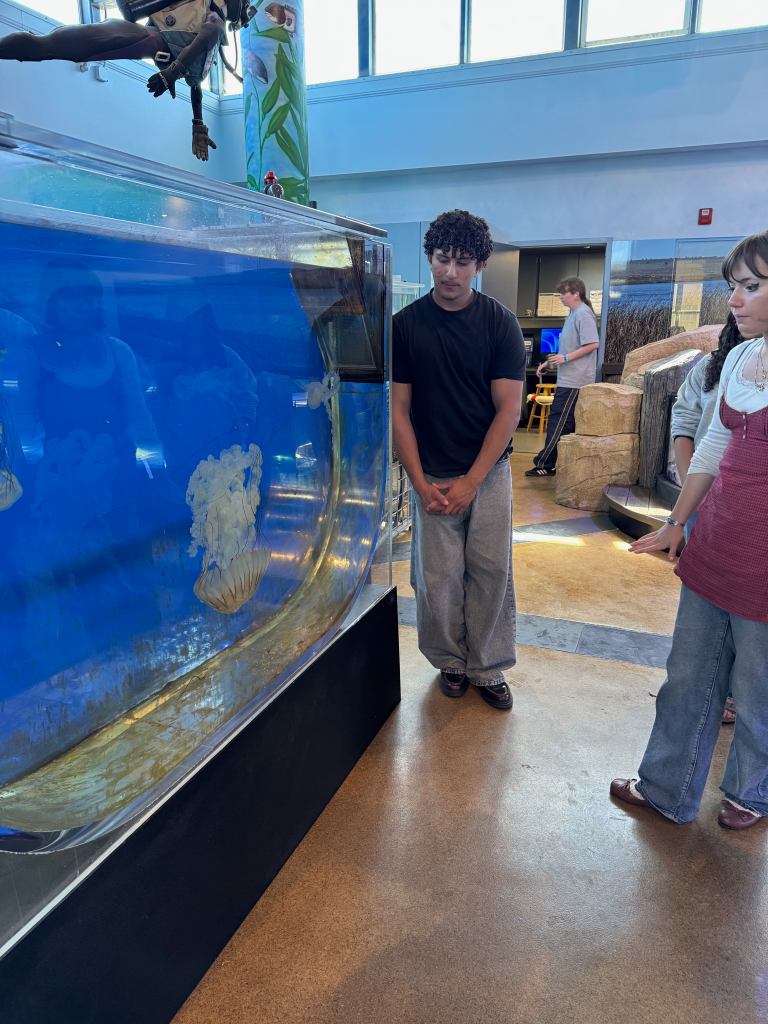
Cabrillo Aquarium | Credit: Courtesy Explore Ecology 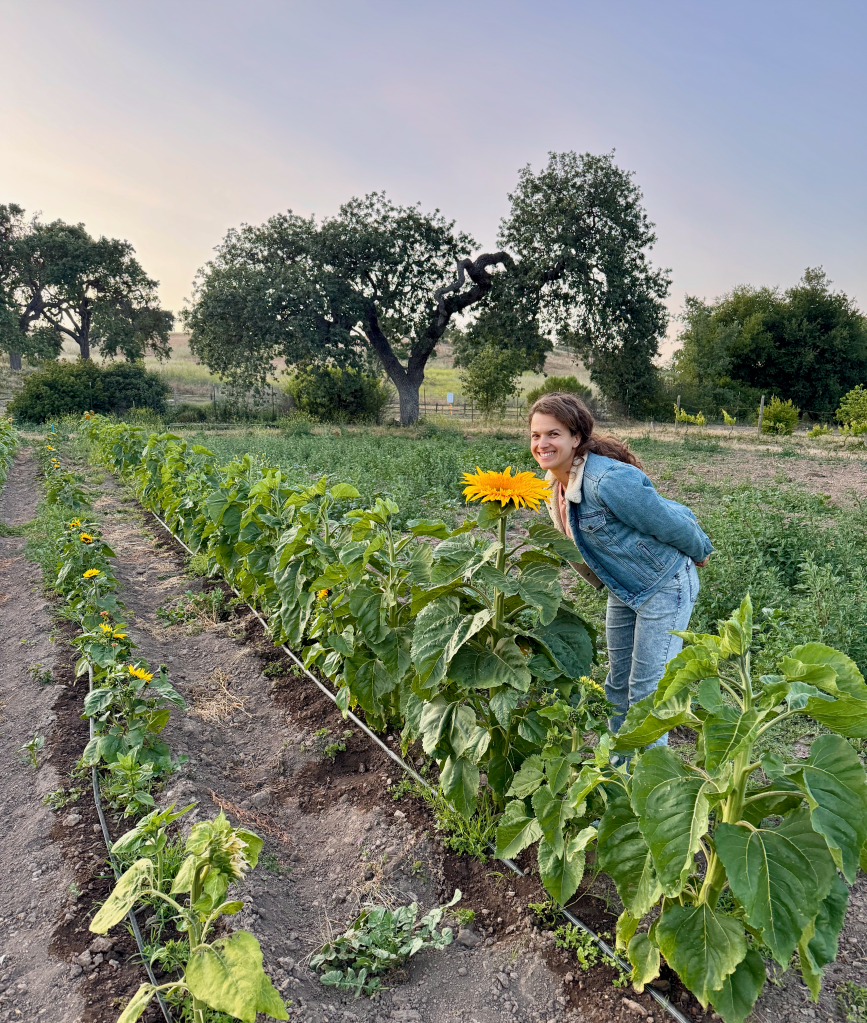
Isabella Marill | Credit: Courtesy Explore Ecology 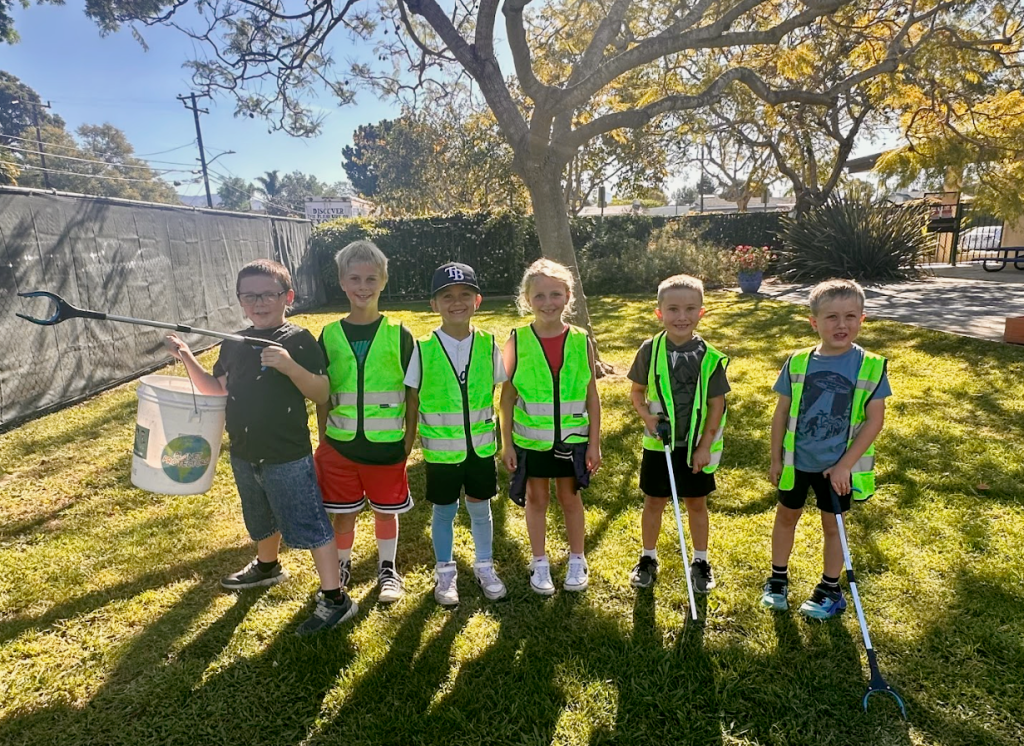
Planet Protectors | Credit: Courtesy Explore Ecology 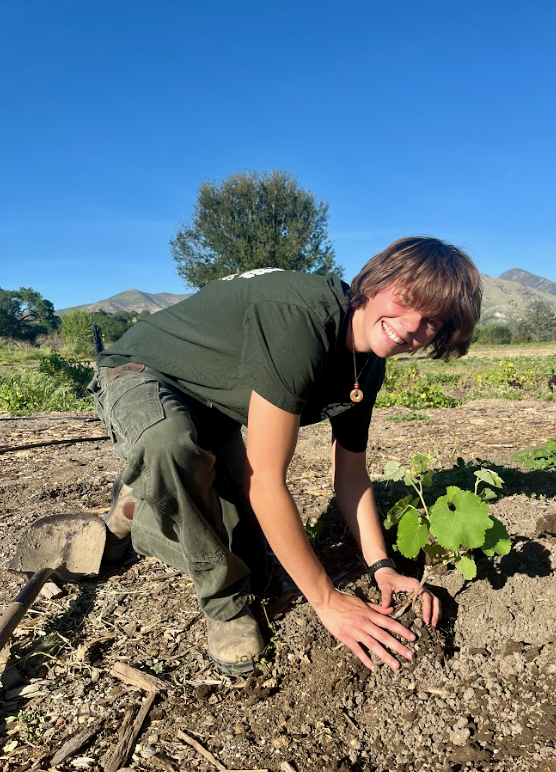
River Peace | Credit: Courtesy Explore Ecology 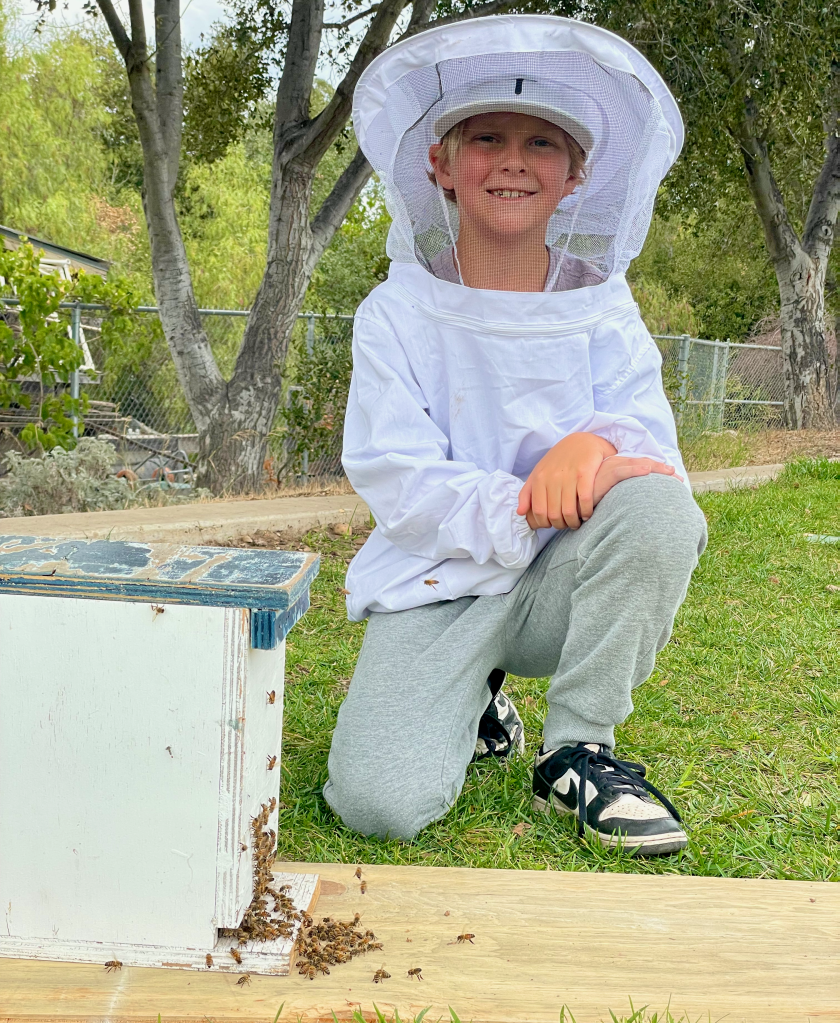
West Lang | Credit: Courtesy Explore Ecology 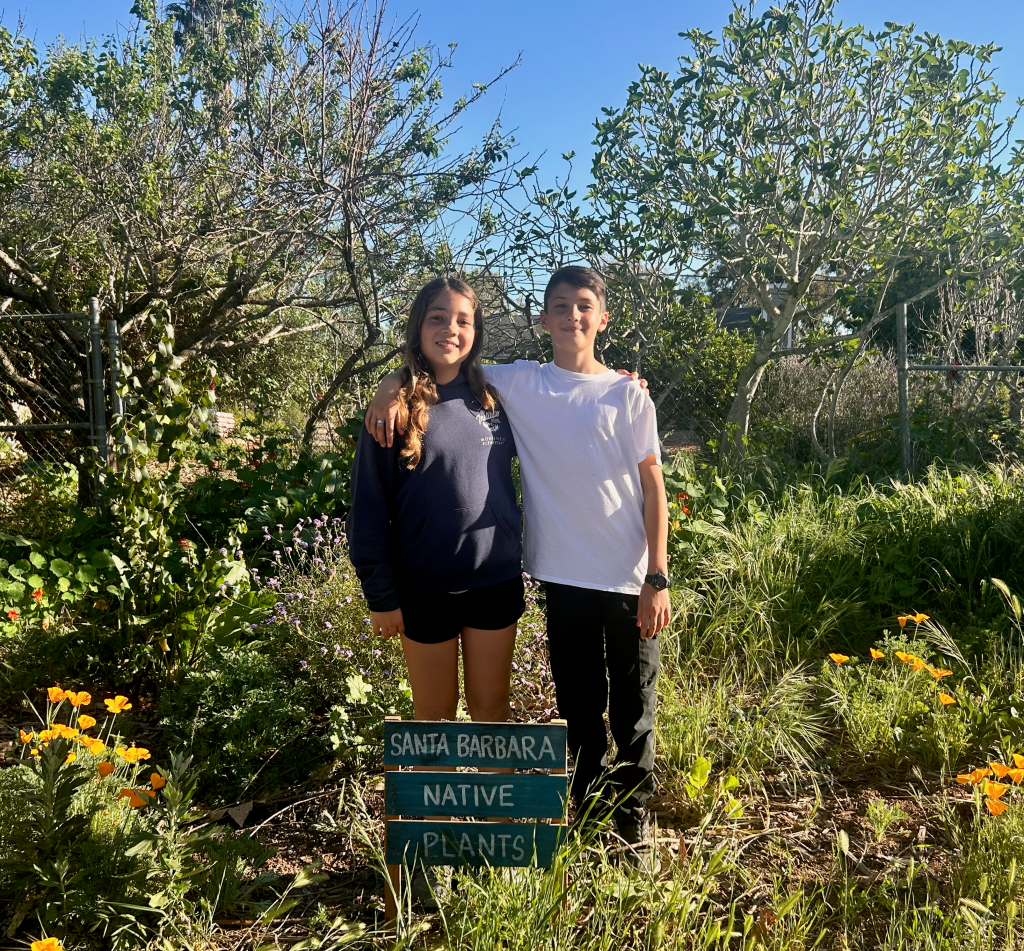
Sophie and Hunter Costa | Credit: Courtesy Explore Ecology 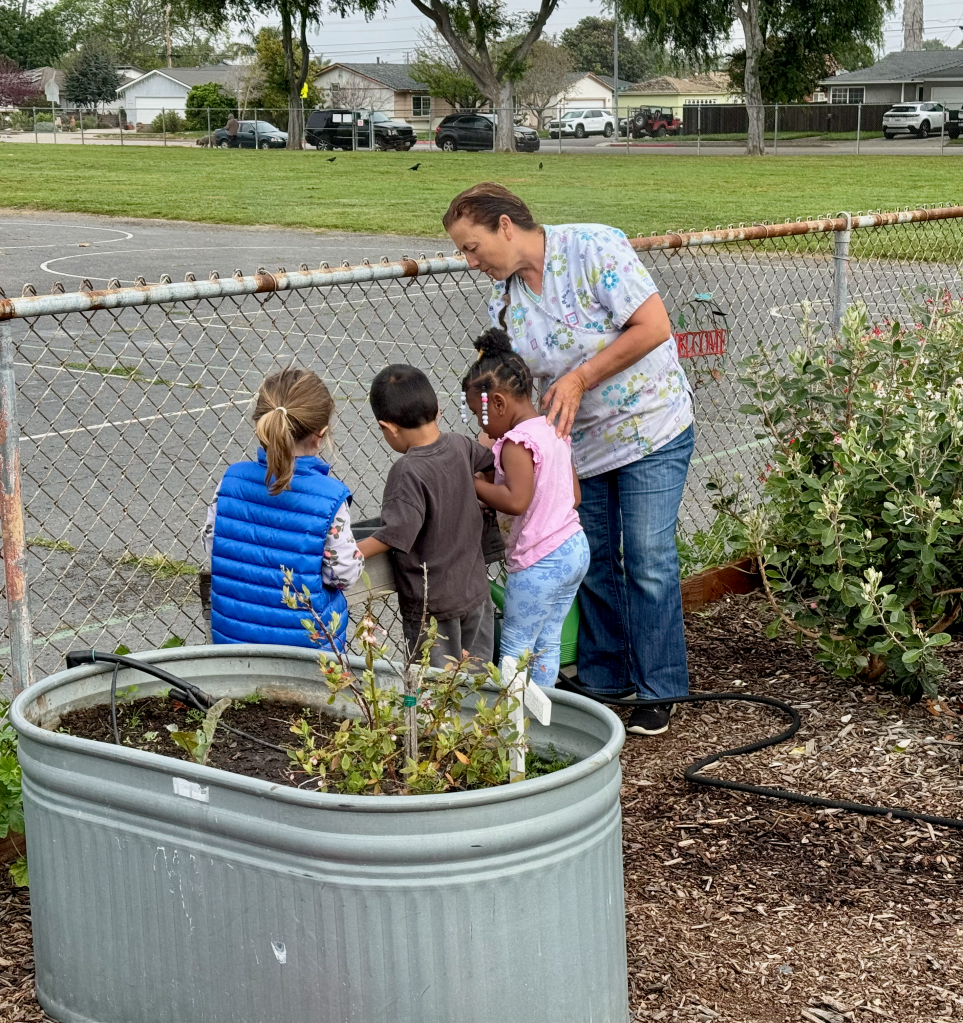
Rosa Herrera | Credit: Courtesy Explore Ecology
Related Posts


Premier Events
Sat, Oct 10
9:00 AM
Santa Barbara
Treble Clef Chorus Fall Treasure Sale
Sun, Oct 11
5:00 PM
Santa Barbara
Trinity Choir: Choral Evensong

Fri, Oct 09
7:00 PM
Santa Barbara
Paseo Nuevo Spooky Movie Nights

Sat, Oct 10
9:00 AM
Santa Barbara
SBNC 1st Annual Health & Wellness Fair

Sat, Oct 10
1:30 PM
Goleta
🌴 Another Day in Paradise at S.B’s Premier Ice Rink

Sun, Oct 11
7:00 AM
Ojai
Flamenco Guitarist Tony Ybarra

Sun, Oct 11
10:00 AM
Santa Barbara
18th Annual Domestic Violence Solutions Brunch
Sun, Oct 11
10:00 AM
Santa Barbara
Free Community Day at S.B. Botanic Garden
Sun, Oct 11
10:00 AM
Santa Barbara
Downtown Classic Car Show Santa Barbara
Sun, Oct 11
11:00 AM
Santa Barbara
Raíces y Sueños: Bilingual Storytime at Santa Barbara Museum of Art

Sun, Oct 11
2:00 PM
Santa Barbara
The Theatre Group at SBCC Presents: “CLUE”
Sun, Oct 11
10:00 PM
Santa Ynez
Inaugural Santa Ynez Art Walk
Sat, Oct 10 9:00 AM
Santa Barbara
Treble Clef Chorus Fall Treasure Sale
Sun, Oct 11 5:00 PM
Santa Barbara
Trinity Choir: Choral Evensong
Fri, Oct 09 7:00 PM
Santa Barbara
Paseo Nuevo Spooky Movie Nights
Sat, Oct 10 9:00 AM
Santa Barbara
SBNC 1st Annual Health & Wellness Fair
Sat, Oct 10 1:30 PM
Goleta
🌴 Another Day in Paradise at S.B’s Premier Ice Rink
Sun, Oct 11 7:00 AM
Ojai
Flamenco Guitarist Tony Ybarra
Sun, Oct 11 10:00 AM
Santa Barbara
18th Annual Domestic Violence Solutions Brunch
Sun, Oct 11 10:00 AM
Santa Barbara
Free Community Day at S.B. Botanic Garden
Sun, Oct 11 10:00 AM
Santa Barbara
Downtown Classic Car Show Santa Barbara
Sun, Oct 11 11:00 AM
Santa Barbara
Raíces y Sueños: Bilingual Storytime at Santa Barbara Museum of Art
Sun, Oct 11 2:00 PM
Santa Barbara
The Theatre Group at SBCC Presents: “CLUE”
Sun, Oct 11 10:00 PM
Santa Ynez


You must be logged in to post a comment.