


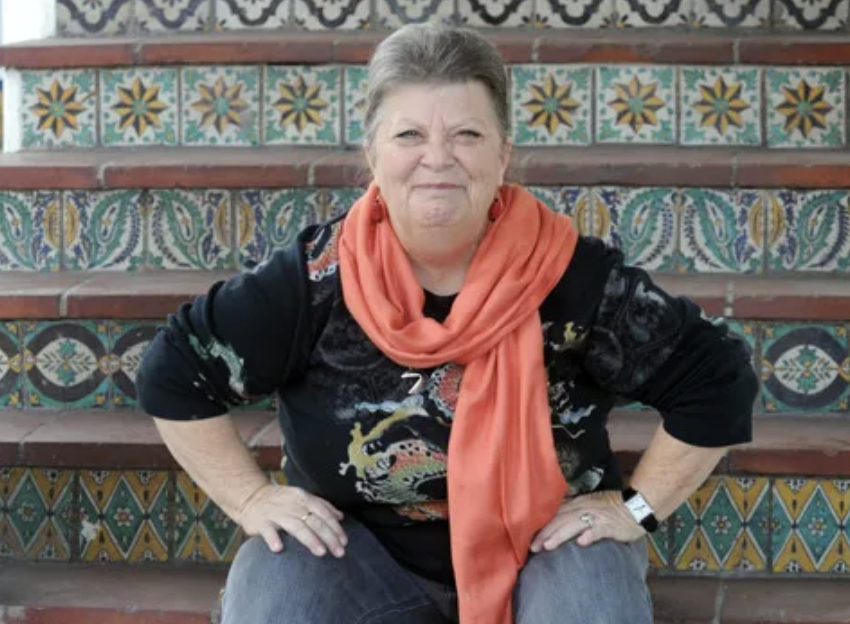
Though small in stature, longtime public relations consultant Maureen “Mo” McFadden is known for being one of Santa Barbara’s loudest marketing voices for decades.
After moving to Santa Barbara in 1990, her firm McFadden & McFadden PR represented the Santa Barbara International Film Festival in its formative years as well as the Lobero Theatre, where her eclectically decorated office was located next door for years. Though mostly retired now, she contributes to get the word out for friends like Three Pickles and the Pickle Room, and handles marketing for Miss Daisy’s consignment stores and the city’s Martin Luther King Jr. Committee.
But before she ever landed in Santa Barbara, McFadden lived a rather wild life, including more than a year at High Times. The marijuana-focused magazine was founded in 1974 and published monthly until 2024, and then came back into print earlier this year.
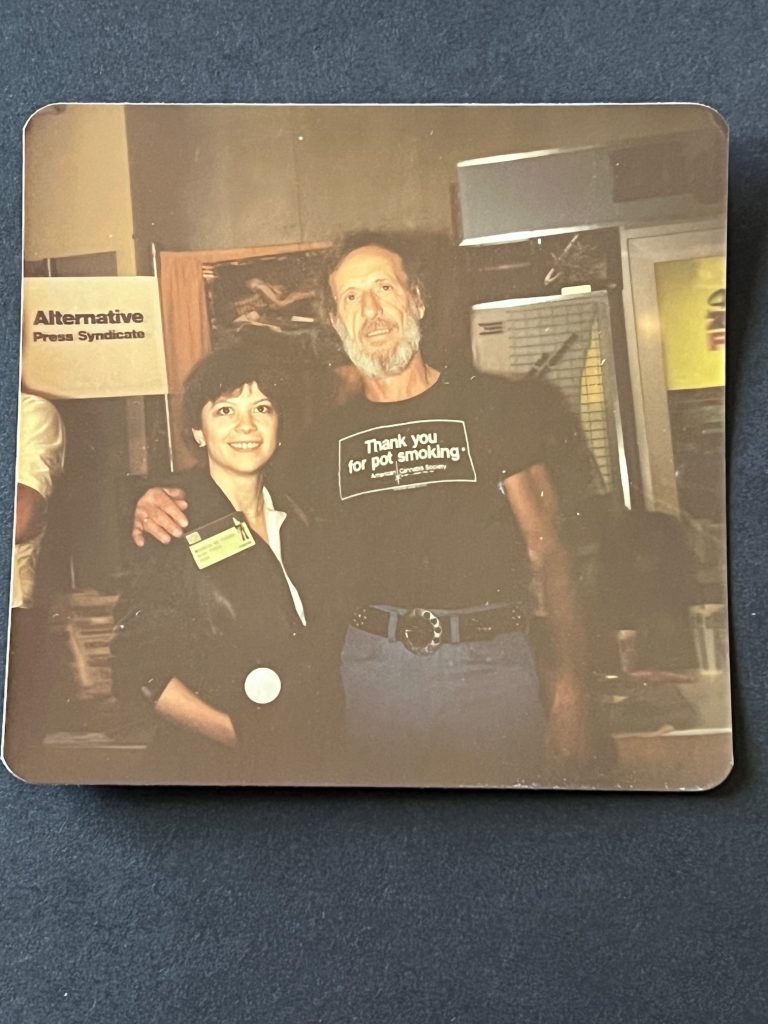
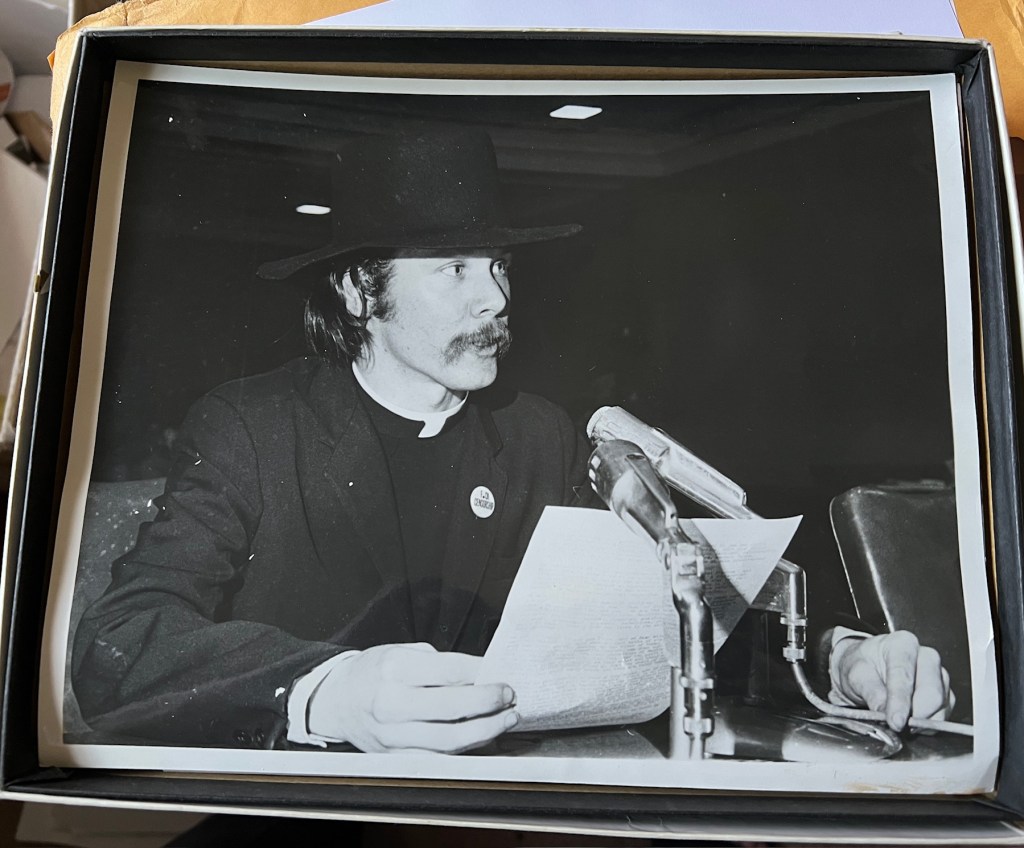
She was hired directly by founder Tom Forçade in September 1977, and named the secretary of TransHigh Corp (THC), “the mother ship” for all the High Times businesses, including Trans High Records, a bookstore, TransHigh Media, and TransHigh Films. McFadden only remained a few months after Forçade committed suicide in November 1978.
She rarely shares this period of her life publicly, aside from regaling close friends with tales of that era. But that’s changing a bit today on April 20, which is affectionately known as 4/20 and treated as a holiday of sorts by marijuana aficionados.
McFadden provided her memories and archives to the creators of a documentary collection just released on Hulu called 4X20: Quick Hits, featuring four 20-minute films about various corners of cannabis culture. (Watch the trailer here.)
One is called “High Times,” which covers the life and impact of Forçade, which is where she kicked in her contributions. The other films, which were developed by Jimmy Kimmel’s production company, are about the making of Harold & Kumar Go to White Castle, the cult film The Legend of Ganjasaurus Rex, and about hand-blown glass artist, aka bong maker, Jason Harris.
McFadden offered to tell us more about her time at High Times and how her role in the project came to be.
What was the path to working at High Times?
In my early years, I was a great secretary and executive assistant to some cool folks in New York City. After I realized I wouldn’t be getting hired for Broadway — that was my big dream — I figured I’d work in pop culture since that was everything to me.
I got a job with The Monty Pythons for their U.S. manager in 1975 and at a very cool night club in the Village, The Bottom Line, where I waitressed a few months and then got a job working for the owners of the club. When I got laid off, a week later I was interviewing at High Times. From The Bottom Line to High Times, that’s my book title!
When and how did you start working for High Times?
September 1977. It consisted of three interviews: two with the managing editors and then finally with Tom. No one told me he founded the magazine. I was told he was “one of the editors.”
During my interview is where he asked me the one question I could only answer truthfully to him. He asked if I knew about the magazine’s focus on drugs and if I did any. My reply: “Oh, I do them as often as I can.”
The whole time he was holding a Thai stick in his left hand and there was a little brass scale for cocaine on the right side of his desk.
Tom asked me if I’d mind not having my name on the masthead, and I said that’s fine with me. He was protecting me from the fuzz, the DEA, and those government agencies who hated everything High Times stood for.
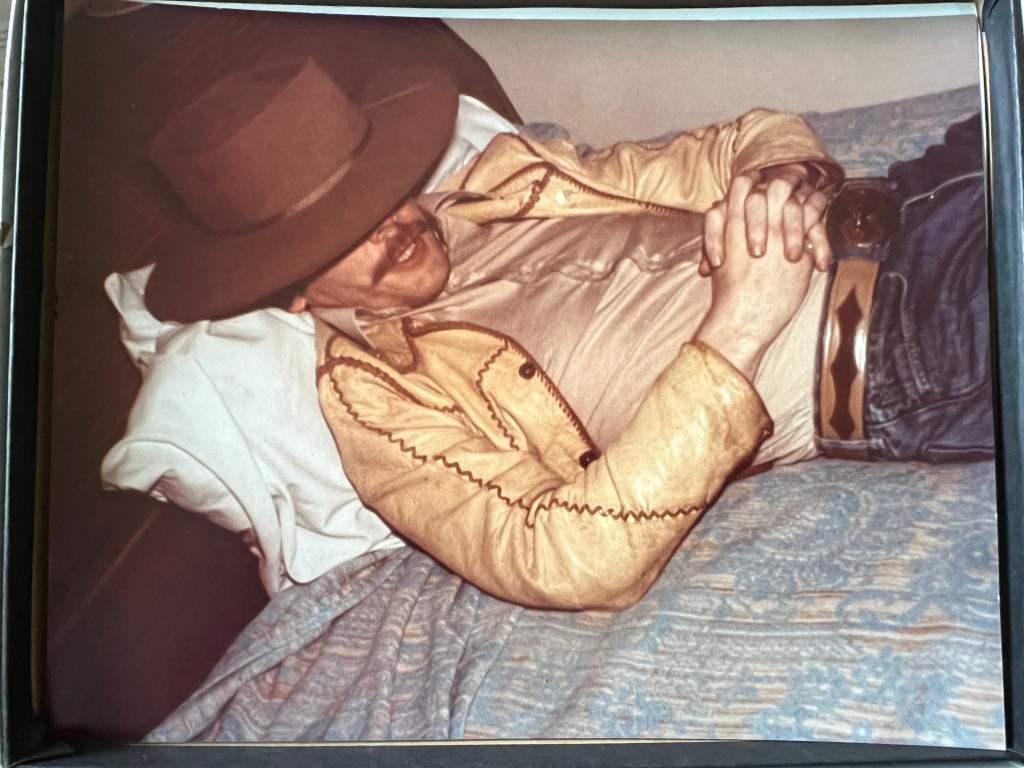
I worked for him just over a year. I miss him still. He was such a unique character, an outlaw and a fighter for truth in journalism and the facts about marijuana. I really respected him.
What was it like working at High Times? Was it scary at all?
It was a dream come true. My friends from D.C. were up visiting me and we had all been reading High Times at the bar we worked at on Capitol Hill, Mr. Henry’s. They encouraged me to take the job.
It was total fun, meaningful in so many ways. We were at the center of the movement. We really could smell the tides of change coming when Jimmy Carter was President. My god, can you imagine if weed had been legalized then?
I met some fascinating people like Bill Kunstler, Hunter Thompson, Andy Warhol, and Keith Stroup, who started up NORML.
Scary happened sometimes as we could hear the clicks on the phones since the phones at High Times were being tapped. I never heard them on my home phone because my name wasn’t on the masthead.
Why did you leave?
Tom committed suicide in November 1978. I lasted about six more months and then left. It was a shit show with the lawyers breaking the trust Tom had created for the magazine.
When did you move to Santa Barbara?
It was years later. I moved to L.A. with my ex-husband, hopped in his 44-foot semi, and off we rolled. I didn’t tell many friends I was leaving.
I met my ex in August of 1980, and he was a rock ‘n’ roll truck driver going out on the Stevie Wonder tour. My last act in New York City on November 2 was to vote for Jimmy Carter for a second term. We all know what happened instead.
How did you get involved in this film project?
One of the producers got in touch with me. Maybe because I was in the book on Tom by Sean Howe called Agents of Chaos or perhaps one of the folks I stay in touch with gave them my name.
Are you on screen, or what can we see that you contributed?
I’m not on screen, but you might hear my voice. And then there are all the props I had from my working days at High Times. I put together a box of swag along with lots of other stuff from there and they were used in the film. I’m really interested in seeing how and what they use.
Are you surprised at how far cannabis culture has come into the mainstream?
Actually, it’s about time. By creating High Times, Tom Forçade was trying to normalize cannabis under all its monikers — marijuana, pot, weed. And at the same time, NORML was starting up. 1974 was an incredible year.
I know Tom would have rolled out a different kind of legalization — smarter than what happened. No one asked the dealers how they would do it. They’d been at it for decades.
4X20: Quick Hits is now out on Hulu. Click here to watch.
Related Posts

Premier Events
Mon, Oct 26
7:00 PM
Santa Barbara
Beauty and the Origins of Electrophysiology, Telecommunications & the Global Theater

Wed, Oct 28
5:30 PM
Santa Barbara
Coastal Well Woman SB: “Own Your Menopause Journey”
Mon, Oct 26
5:00 PM
Montecito
Halloween at The Speakeasy at San Ysidro Ranch

Mon, Oct 26
6:00 PM
Santa Barbara
Chaucer’s Book Talk & Signing with Jennifer Chassman Browne “See Us, Know Us: Profiles of Disability”

Wed, Oct 28
5:00 PM
Santa Barbara
Fundraiser for Domestic Violence Solutions
Wed, Oct 28
5:30 PM
Santa Barbara
Coastal Well Woman SB: “Own Your Menopause Journey”
Wed, Oct 28
6:30 PM
Carpinteria
Carpinteria Community Spotlight – El Niño Disaster

Wed, Oct 28
7:00 PM
Santa Barbara
Reel Rock 20 Climbing Film Tour
Wed, Oct 28
7:00 PM
Goleta
IVRPD Presents : Halloween Pumpkin Patch

Thu, Oct 29
12:00 PM
Santa Barbara
Spook Fest at Loubud Wines Halloween Experience
Thu, Oct 29
5:30 PM
Santa Barbara
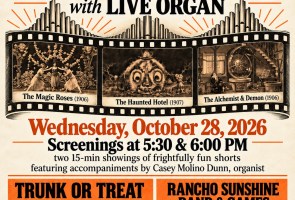
Silent Movies + Live Organ, Trunk or Treat & More

Thu, Oct 29
6:00 PM
Santa Barbara
Halloween Paint & Sip at Goodland Wine Shop
Mon, Oct 26 7:00 PM
Santa Barbara
Beauty and the Origins of Electrophysiology, Telecommunications & the Global Theater
Wed, Oct 28 5:30 PM
Santa Barbara
Coastal Well Woman SB: “Own Your Menopause Journey”
Mon, Oct 26 5:00 PM
Montecito
Halloween at The Speakeasy at San Ysidro Ranch
Mon, Oct 26 6:00 PM
Santa Barbara
Chaucer’s Book Talk & Signing with Jennifer Chassman Browne “See Us, Know Us: Profiles of Disability”
Wed, Oct 28 5:00 PM
Santa Barbara
Fundraiser for Domestic Violence Solutions
Wed, Oct 28 5:30 PM
Santa Barbara
Coastal Well Woman SB: “Own Your Menopause Journey”
Wed, Oct 28 6:30 PM
Carpinteria
Carpinteria Community Spotlight – El Niño Disaster
Wed, Oct 28 7:00 PM
Santa Barbara
Reel Rock 20 Climbing Film Tour
Wed, Oct 28 7:00 PM
Goleta
IVRPD Presents : Halloween Pumpkin Patch
Thu, Oct 29 12:00 PM
Santa Barbara
Spook Fest at Loubud Wines Halloween Experience
Thu, Oct 29 5:30 PM
Santa Barbara
Silent Movies + Live Organ, Trunk or Treat & More
Thu, Oct 29 6:00 PM
Santa Barbara



You must be logged in to post a comment.