

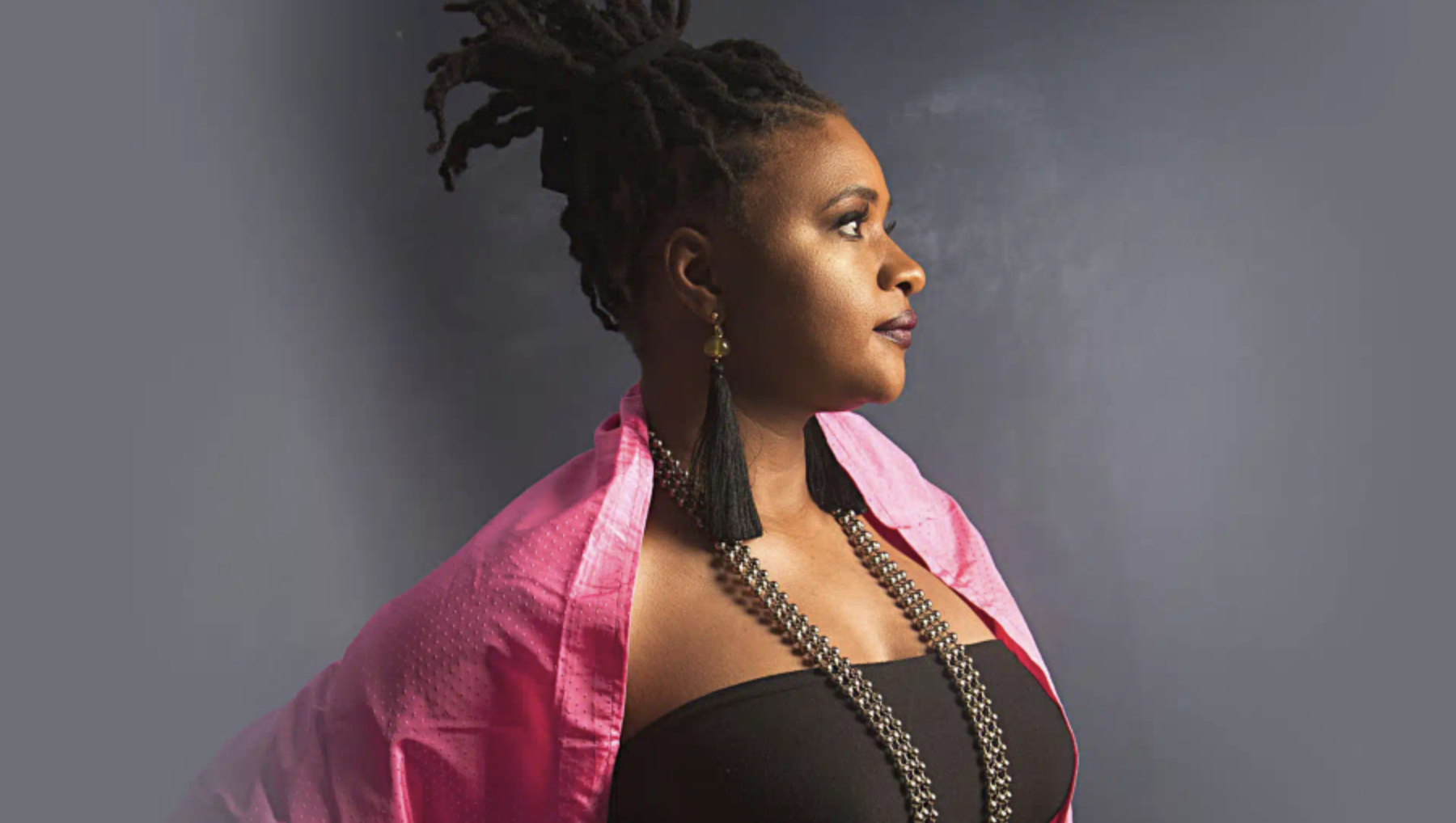
Lizz Wright, the warm and wondrous purveyor of songs with a gospel-soul-jazz-pop pedigree all her own, has scored some of her career-lubing coups on the contemporary jazz (a k a “smooth jazz”) format. But don’t hold that against her: the “smooth vocals” subchannel of that watered-down musical world was always its strongest suit.
A Georgia-born product of the church, with a minister father, Wright came out swinging in her refreshingly tasteful and subtle way with her breakout albums Salt (2003) and Dreaming Wide Awake (2005). She continued her unique way with reframed covers — including Ike Turner’s “I Idolize You” and Led Zeppelin’s “Thank You” on The Orchard (2008) and leaned into her gospel roots, with lived-in cred, on Fellowship (2010).
Subsequently, Wright has plunged into the epicurean world, studying at the New York–based Natural Gourmet Institute and launching her own Carver47 restaurant in Chicago. But her music life continues, thankfully. She released the fine album Shadow (hear here) on her own Blues and Greens label in 2024. A highlight on the song list is her duskily glowing rendition of literally timeless classic “Who Knows Where the Time Goes?”
Catch Wright in live, soulful action at the Lobero Theatre on Thursday, May 14.
Looking over your work, I found a Santa Barbara connection, once removed: The first track of your breakout album Salt is “Open Your Eyes, You Can Fly,” made famous by Flora Purim, who lived with Airto in Santa Barbara for many years. Was she one of the singers you admired starting out back then, and who else would be on that list?
“Open Your Eyes, You Can Fly” was one of the first songs that I saw in a jazz book. I was overwhelmed by the title and where it found me in my life at the time. I’m so glad that it led me to discover Flora Purim and Chick Corea. Soon after, I also started studying Abby Lincoln, Shirley Horn, Nancy Wilson, and Betty Carter. I would ask musicians about the singers that they respected most, and they’d tell me who to listen to and what to listen for. Shirley had incredible technique in her use of space, I was told.
Abby Lincoln was a majestic storyteller. Betty Carter could speak as part of the rhythm section through the way that she phrased. These are the kinds of things that musicians on the Atlanta Jazz scene shared with me in those early years.
In a way, the musical menu on that album, with creative arrangements of jazz, elements of R&B, and a strong gospel spirit, has come to define your musical “voice” ever since. Did you have in mind from the beginning to touch on those and other bases, rather than sticking to a stricter definition of who you would be, musically?
My voice and my style sound like my life. From the swampy woods of South Georgia where I was born to the small storefront churches where my dad would preach to the Atlanta jazz scene and my deep love of the radio and storytelling that came from the fact that I couldn’t watch television growing up. When I had enough freedom and a little bit of cash, I went out to the mountains of Western North Carolina and fell in love with the sound of the Celtic influence on bluegrass and country music.
The music helped me understand the land and my neighbors. These life experiences are like elements because they have created the sound and style that the audience has heard and seen from me for the past 25 years. For me to strictly represent a genre or tradition as defined by others would be for me to not represent the path I’ve walked.
Perhaps my music can be defined as deeply American because it sits in a pivotal place inside of the influences rather than dashing from one to the other in an attempt to be eclectic. I understand that it may sound that way to others, though.
Is live performing something you cherish, more or less than other aspects of the music life, such as getting in the studio and planning records?
Rehearsal is my favorite part of my whole career. Your bandmates can be the most beautiful listeners that you ever get to play for. In general, I find performing deeply relaxing. I enjoy deep focus and taxing physical labor when I’m not on stage so by the time I get to put on a dress and breathe deeply, I feel calm and grateful.
After about a quarter-century and various turns in your life and musical saga, you have a large body of work to draw from in a concert. Do you view a setlist as a kind of time trip, through various phases of your musical life?
I have been blessed to cover a lot of ground and share a beautiful relationship with the world through music. I’m thankful for practice that reminds me to hope and to love deeply. As far as writing set lists, I write a preliminary kind of general song list for the band about a week before the gig and then I’ll write the exact set list after I get a chance to come into the city or the theater. I try to write it as a response to the feeling of a place and the people. Every set is an unrepeated letter.
I love the way you sometimes change up songs we thought we knew, with creative new twists in arrangement — with “A Taste of Honey” or “Old Man,” for example. It’s a process of musical reawakening somewhat reminiscent of what Cassandra Wilson has done. Is that something that appeals to you, rethinking and reshaping songs in yours and our heads?
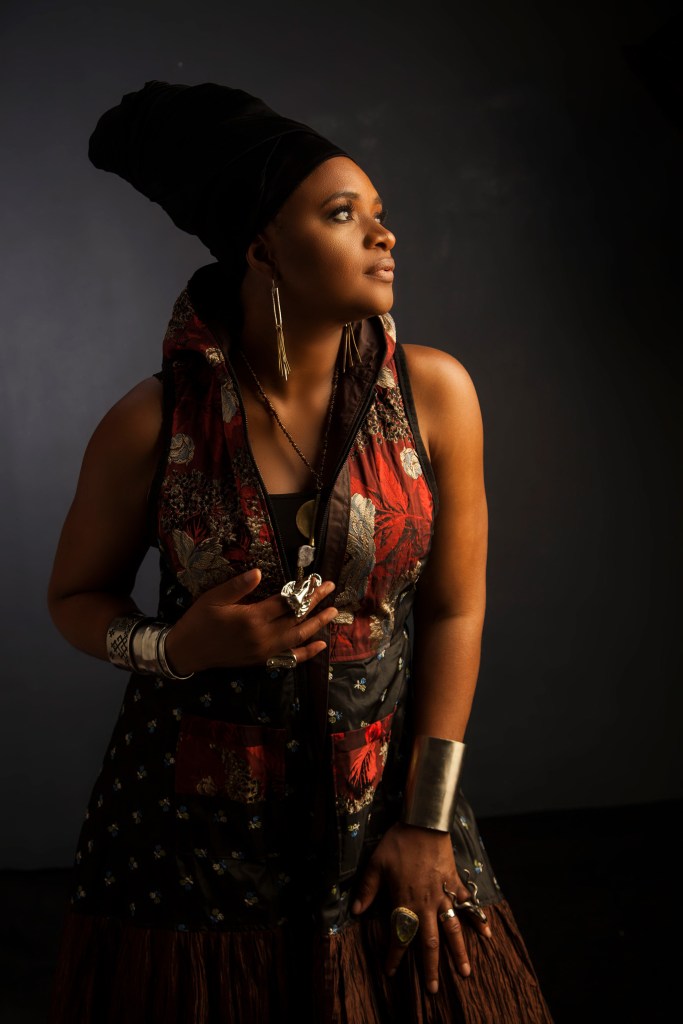
The musicians that I’ve played with over the years deserve much of the credit for the arrangements. A conversation about how much I loved guitarist Bill Frisell turned into an invitation to have him play on the record and one of the last songs left to record was “A Taste of Honey.” That’s how I met him — tracking that song together with Jeff Haynes on percussion.
David Piltch [who has been based in Santa Barbara for many years] is a bass player who’s worked with KD Lang for many years and he was on the session in upstate New York when I was working with [producer] Craig Street. The way that Dave laid into the upright bass in that tiny room where we rehearsed became the basis for the arrangement for “Old Man.”
I’m loving your 2024 album, Shadow, which also represents a moment of liberation, in terms of starting your own label, Blues & Greens. Is having that kind of creative control of your work and direction something that feels liberating to you in this phase?
I do feel more freedom and with it a tremendous amount of responsibility. Picking up the weight of all the decision-making and aspects of management I feel even more grateful to everyone who has helped me along the way because I really understand what they did. When someone has been carrying a weight for you when you pick it up, you can look at them with more understanding and say thank you.
The best thing about being more independent is that I went back across my career and pulled some of my favorite working relationships closer and just pulled together a bouquet of some of my favorite people.
Just curious: Are you a fan of the Bill Evans tune “Blue in Green?” Was that a reference in naming your label?
The name Blues & Greens actually came from bass player Ben Williams. My friend and incredible singer Somi Kakoma arranged a beautiful long table of artists, academics, and professionals because so many of her friends who were in town that year had birthdays that were close together.
We had a great time that night and Ben said jokingly at the end of dinner that we had shared “blues and greens.” The phrase stayed with me and then I reached out to him and Somi and asked them if I could use it for a project. It helps that I am also a culinary school graduate and professional cook.
Speaking of gospel, you literally were weaned on that music and have returned to it, directly and otherwise, over the years. Is that music and culture a kind of a musical and maybe also spiritual pilot light in your life?
It can be said that gospel is at the base of my musical expression because it’s the earliest sound I heard and way of communicating with my family that I have known.
My father also shared with me one day that when my mother was told by several doctors that she could not have children, they did a lot of praying and singing. He told me that I am made up of many prayers and songs.
Looking back on your musical journey, has it taken you by surprise, and does it feel now that you are in a new and energizing chapter in the larger arc of your story in music?
I’m very thankful for my musical journey. It has been so long and winding that I feel as though I’m living more than one journey. Perhaps more than an eclectic sound people are really just hearing the changing terrain of a lot of mileage.
See Lizz Wright at the Lobero Theatre (33 E. Canon Perdido St.) on May 14 at 7:30 p.m. See lobero.org/events/lizz-wright.
Related Posts


Premier Events

Wed, Oct 14
5:30 PM
Santa Barbara
Free Home Hardening & Firescaping Workshop
Fri, Oct 16
7:00 PM
Santa Barbara
Divine Within: A Sufi Exploration of Love & Unity
Sat, Oct 17
9:30 AM
Santa Barbara
Divine Within: A Sufi Exploration of Love & Unity
Sun, Oct 18
9:30 AM
Santa Barbara
Divine Within: A Sufi Exploration of Love & Unity
Fri, Nov 13
7:00 PM
Santa Barbara
Divine Within: A Sufi Exploration of Love & Unity
Sat, Nov 14
9:30 AM
Santa Barbara
Divine Within: A Sufi Exploration of Love & Unity
Sun, Nov 15
9:30 AM
Santa Barbara
Divine Within: A Sufi Exploration of Love & Unity
Fri, Dec 11
7:00 PM
Santa Barbara
Divine Within: A Sufi Exploration of Love & Unity
Sat, Dec 12
9:30 AM
Santa Barbara
Divine Within: A Sufi Exploration of Love & Unity
Sun, Dec 13
9:30 AM
Santa Barbara
Divine Within: A Sufi Exploration of Love & Unity
Wed, Oct 14 5:30 PM
Santa Barbara
Free Home Hardening & Firescaping Workshop
Fri, Oct 16 7:00 PM
Santa Barbara
Divine Within: A Sufi Exploration of Love & Unity
Sat, Oct 17 9:30 AM
Santa Barbara
Divine Within: A Sufi Exploration of Love & Unity
Sun, Oct 18 9:30 AM
Santa Barbara
Divine Within: A Sufi Exploration of Love & Unity
Fri, Nov 13 7:00 PM
Santa Barbara
Divine Within: A Sufi Exploration of Love & Unity
Sat, Nov 14 9:30 AM
Santa Barbara
Divine Within: A Sufi Exploration of Love & Unity
Sun, Nov 15 9:30 AM
Santa Barbara
Divine Within: A Sufi Exploration of Love & Unity
Fri, Dec 11 7:00 PM
Santa Barbara
Divine Within: A Sufi Exploration of Love & Unity
Sat, Dec 12 9:30 AM
Santa Barbara
Divine Within: A Sufi Exploration of Love & Unity
Sun, Dec 13 9:30 AM
Santa Barbara



You must be logged in to post a comment.