
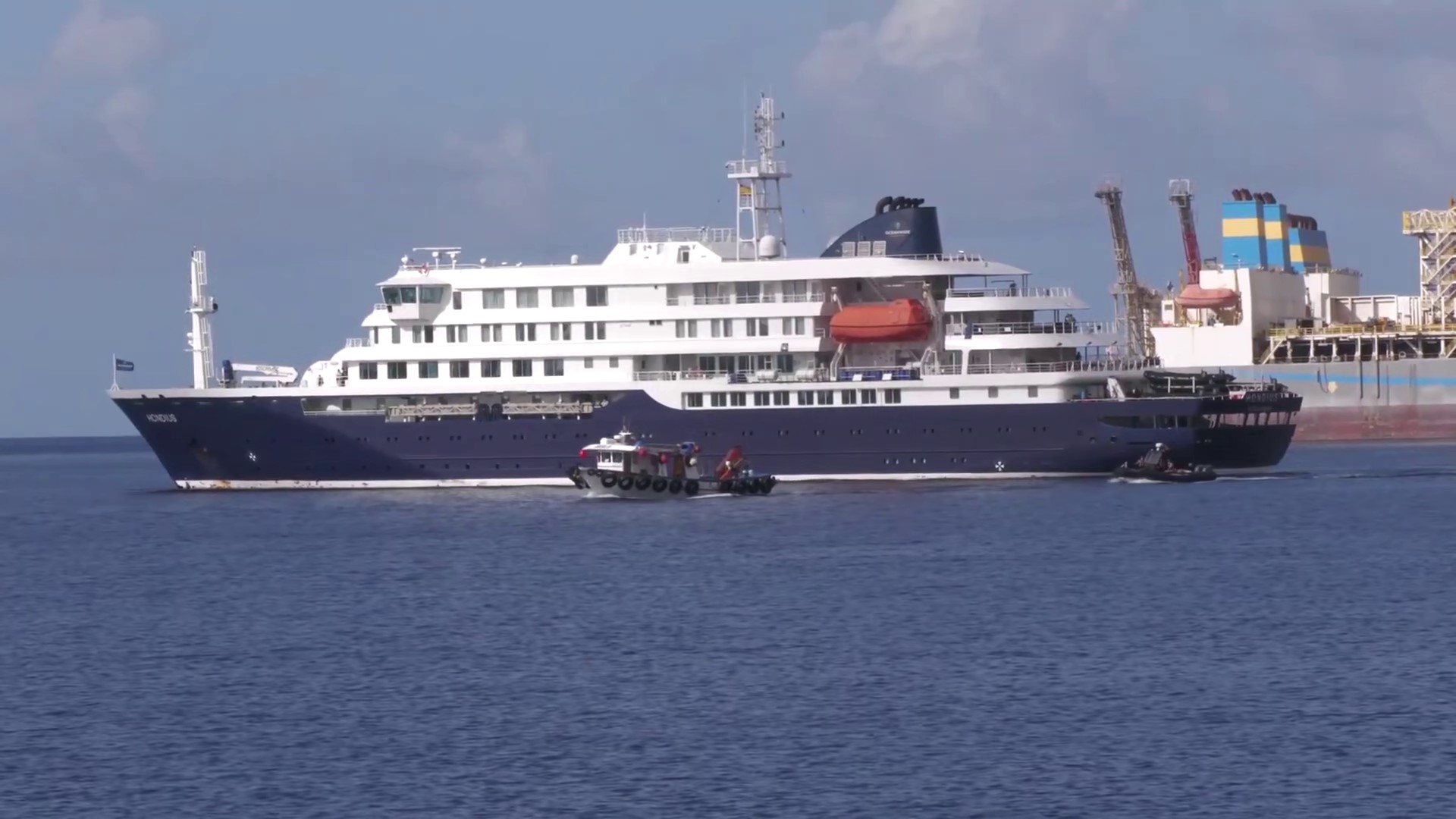
Preparing for freezing-cold weather and equatorial temperatures should have been the biggest challenge for 175 passengers and crew aboard a cruise ship that left Argentina’s Tierra del Fuego on April 1 to travel through sub-Antarctic waters, taking passengers to birdwatch in the remote South Georgia and Tristan da Cunha islands on their way to the Canaries. Instead, one Dutch passenger became ill about a week into the voyage and died on April 11. His wife left the ship on April 24 at the island of Saint Helena off the coast of Angola, as did 30 others; she flew to South Africa and died in a hospital there on April 26. It wasn’t until May 2, after the death of a third victim, a German woman, that South African authorities identified Andes hantavirus as the viral agent responsible.
On board the MV Hondius were people from 23 different nations who have now been either quarantined by their governments or asked to quarantine at home. In the case of 15 U.S. passengers from the ship, they are at the National Quarantine Unit in Nebraska, which was last used to house COVID patients from the Diamond Princess cruise ship at the beginning of that outbreak in 2020.

Doctors are being asked if there are parallels in the two infectious virus outbreaks.
“COVID-19 was a brand-new virus that we were all still learning rapidly about,” said Dr. Erica Pan, head of California’s Department of Public Health during a press conference on May 11. “This virus, hantavirus, there’s decades of experience in South America.”
Five Californians are known to have come into contact with the ship or its passengers. Three were aboard the Hondius. Two of them left the ship early, one returning to California and now quarantining at home under the care of Santa Clara public health. The other is now at the Pitcairn Islands. Another person is being monitored in Sacramento after sitting within a couple of seats of a Hondius passenger who was ill on an airplane in South Africa; the Hondius passenger left the airplane after about 15 minutes, said California’s health officer, Dr. Pan. Two Californians are at the Nebraska facility. Four are said to be healthy; the status of the individual on Pitcairn Island was unknown.
Hantavirus is a large group of viruses in the family Bunyavirales; more than 60 species are identified, including a hemorrhagic “Old World” variety in Asia and Europe that can cause kidney syndromes and a tendency to bleed. The variety in South America contracted by the Hondius passengers, called the Andes hantavirus, produces pulmonary symptoms from fluids leaking into the lungs, which is why patients go downhill quickly without ventilation, said Dr. Boghuma Titanji of Emory University School of Medicine. Human Andes hantavirus infections are relatively rare with few known clusters of cases, but it is also a very lethal virus as it transmits from person to person, she said during a webinar organized by MedPage Today on May 12. A case fatality rate of 27 percent was calculated for the Hondius as of May 13 — 11 total cases, including three deaths — by the World Health Organization (WHO), a group from which the United States withdrew by executive order on January 20, 2025.

As with COVID, however, detection of a virus reproducing in a patient isn’t possible immediately after exposure, Dr. Titanji explained. It can take one to eight weeks before someone shows symptoms of Andes hantavirus, which is when they become contagious.
The Dutch passenger is believed to have contracted Andes hantavirus from rodent feces or urine while birdwatching with his wife in Chile, Uruguay, and Argentina before boarding the Hondius, the WHO stated. Could one mouse on the ship have infected multiple people? Dr. Titanji was asked. No, she answered, tests showed the infected passengers each had what was essentially a clone of the first virus detected; this was in a male German passenger taken to a South African hospital. Also, unlike the COVID virus, the hantavirus was unlikely to get many mutations going since it had few infected humans in which to replicate into a more contagious disease.
Questions have arisen about cruise-ship passengers taking commercial flights. During an update by the Centers for Disease Control on Wednesday, Dr. Brendan Jackson, who is at the Nebraska quarantine center, said that some passengers took airliners before the virus had been diagnosed. Passengers taken to Nebraska from the Canary Islands flew on a private plane, he said, while cruise-ship passengers on shared flights were seated apart from other passengers. The CDC’s incident manager, Dr. David Fitter, declined to say how many patients were involved around the United States, citing privacy, or when the Nebraska patients could quarantine at their homes.
Asked why dispersing the passengers was preferred to keeping them on the ship, Dr. Titanji replied, “Cruise ships are notoriously horrible environments to think of containing any infection.” No testing exists on a ship or ICU respirators, and every airlift involves more people in moving the patient. Countries can enforce quarantines, she noted, keep the patient in a controlled environment, surveil them, check temperatures, and maybe arrange food delivery if they’re at home. For those who become ill, there’s no vaccine; the only treatment is supportive care.
Dr. Pan assured that people without symptoms could not transmit the disease. “So there’s no concern that a contact of a contact without symptoms could infect other people.” She also called the risk to the public to be “extremely low.”
Santa Barbara County’s rodents carry a different type of hantavirus — one that does not transmit from person to person — first identified in the 1980s. The North American version, commonly called Sin Nombre virus, causes a pulmonary syndrome like the Andes strain. It too has a mortality rate of 30-40 percent, according to the county’s Vector Management District. The route of contamination is known to be inhaling dust contaminated with rodent urine or feces, or by handling infected mice; the solution is to wet the area down before wiping up, not vacuuming, rodent droppings or nests.
The last diagnosed case in the county was in August 2020, of a man in Santa Ynez Valley lived in a trailer infested with deer mice, said Brian Cabrera of Vector Management. The last known death was in 1992 of a man who lived in a mobile home at a cattle ranch in Santa Ynez who hunted squirrels and handled dead rodents caught in traps. His death occurred before hantavirus was widely known, but his tissue samples had been preserved on a suspicion of plague.
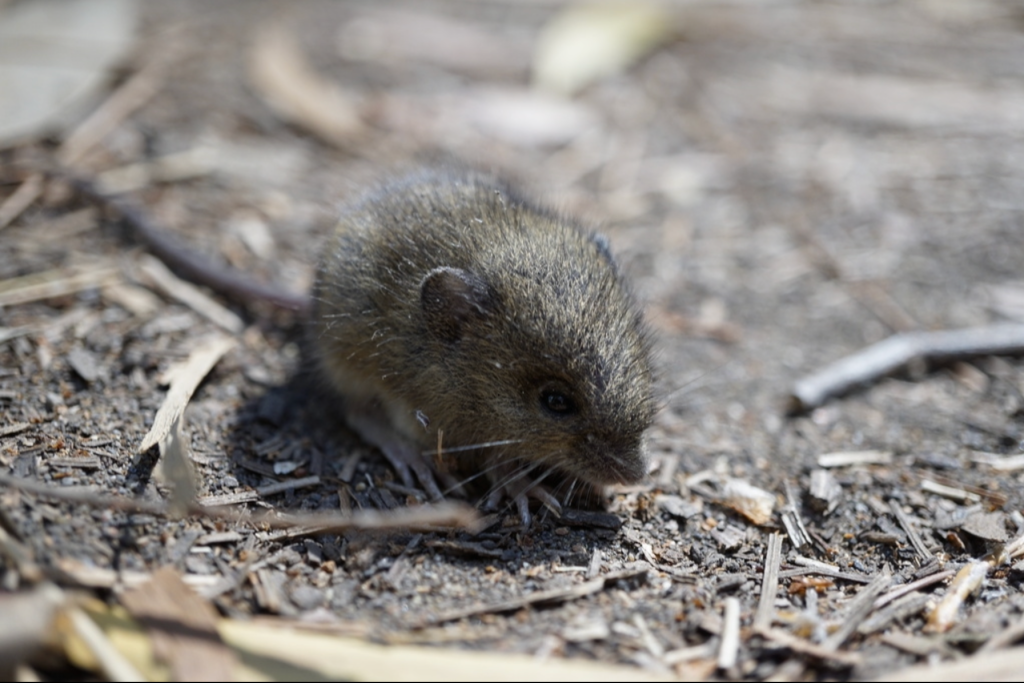
The North American hantavirus, which exists in 32 U.S. states, causes flu-like symptoms: cough, fever, headache, nausea, vomiting, abdominal pain, shortness of breath, and aching muscles and joints. Like Andes, the onset period is long, up to six weeks after exposure. The Sin Nombre virus carried by deer mice caused most known cases, but an Isla Vista strain carried by the California golden vole and the meadow mouse was identified in 1994, and an El Moro Canyon strain was found on the South Coast, according to Vector Management.
The unique ability of the Andes hantavirus to spread from person to person is known among those who study the virus, including a well-documented case in an Argentina village in 2018 that affected about a dozen people. Kayla Kauffman, a doctoral student in disease ecology at UC Santa Barbara, researches an Old World hantavirus among black rats in Madagascar. To catch the Andes hantavirus from another person, you have to spend a long time being in close contact, she said. If you develop symptoms, that’s when you’re contagious and should quarantine yourself. “That’s what’s happened in previous outbreaks in Argentina,” she added.
The rodents are a host species for the virus, she noted, unaffected by hantavirus as they “go about their little mouse lives,” but the Sin Nombre virus can spill into humans in cleaning out a shed or a pile of rat feces. “You take precautions, especially when working around small animals,” Kauffman said. She wears a mask and gloves, being sure to never wipe her face with the gloves.
The exact number of people potentially exposed to Andes hantavirus is confusing but might be getting larger. The Dutch-flagged Hondius first reported 147 people on board to the World Health Organization on May 4, the day the virus was identified. By May 8, WHO reported that 34 people had left the ship earlier in St. Helena, later corrected to 30. Six people boarded the ship at Tristan da Cunha on April 15, and one crewmember left, tour operator Oceanwide Expeditions stated.
A total of 182 people were potentially exposed on the Hondius, though the initial exposure remains uncertain. Patient Zero developed symptoms on April 6, but that individual, who died on April 11, was apparently never tested. Most troubling are the 30 people who disembarked at St. Helena on April 24, before hantavirus was suspected, six Americans among them. They all scattered to other parts of the planet.
Health officials local, national, and worldwide uniformly say that contact tracing is ongoing among all the methods of travel taken once people left the Hondius. So far, no positive symptoms have been reported except among those aboard the cruise ship. Given hantavirus’s long incubation period of up to two months, it may take a while to understand the size of this outbreak.
Correction: This story was updated on May 17, 2026, to reflect passenger and crew numbers given by Oceanwide Expeditions.
Related Posts





Premier Events

Sat, Oct 24
2:00 PM
Santa Barbara
Japanese Sacred Architecture: Shinto and Buddhism

Sat, Oct 24
10:30 AM
Santa Barbara
Picnic in the Cemetery: A Live Historical Event

Sat, Oct 24
11:00 AM
Goleta
2nd Annual Charger Cup to Benefit DP High Golfers

Sat, Oct 24
12:00 PM
Santa Barbara
Makers Hive Market
Sat, Oct 24
2:00 PM
Santa Barbara
Japanese Sacred Architecture: Shinto and Buddhism

Sat, Oct 24
2:00 PM
Santa Barbara
Thriller 2026 – Get Scary for Charity!

Sat, Oct 24
3:00 PM
Santa Barbara
Downtown Santa Barbara Trick-or-Treat

Sat, Oct 24
5:00 PM
Santa Barbara
15th Annual DSASBC Halloween Hoedown

Sat, Oct 24
5:30 PM
Solvang
Solvang Haunted House and Street Fair

Sat, Oct 24
7:00 PM
Santa Barbara
Anima: Theater of the Feminine Underground

Sun, Oct 25
11:00 AM
Santa Barbara
Free Family Day: Día de los Muertos
Sat, Oct 24 2:00 PM
Santa Barbara
Japanese Sacred Architecture: Shinto and Buddhism
Sat, Oct 24 10:30 AM
Santa Barbara
Picnic in the Cemetery: A Live Historical Event
Sat, Oct 24 11:00 AM
Goleta
2nd Annual Charger Cup to Benefit DP High Golfers
Sat, Oct 24 12:00 PM
Santa Barbara
Makers Hive Market
Sat, Oct 24 2:00 PM
Santa Barbara
Japanese Sacred Architecture: Shinto and Buddhism
Sat, Oct 24 2:00 PM
Santa Barbara
Thriller 2026 – Get Scary for Charity!
Sat, Oct 24 3:00 PM
Santa Barbara
Downtown Santa Barbara Trick-or-Treat
Sat, Oct 24 5:00 PM
Santa Barbara
15th Annual DSASBC Halloween Hoedown
Sat, Oct 24 5:30 PM
Solvang
Solvang Haunted House and Street Fair
Sat, Oct 24 7:00 PM
Santa Barbara
Anima: Theater of the Feminine Underground
Sun, Oct 25 11:00 AM
Santa Barbara


You must be logged in to post a comment.