
This article was underwritten in part by the Mickey Flacks Journalism Fund for Social Justice, a proud, innovative supporter of local news. To make a contribution go to sbcan.org/journalism_fund.
Over the next 12 months, about 5,400 people in Santa Barbara County are at risk of losing access to the largest food assistance program in the country. On Monday, the federal government expanded the work requirements for able-bodied people to enroll in the Supplemental Nutrition Assistance Program, or SNAP. But county nonprofits and charities are working to help feed people impacted by the change, as well as what several say is a growing need in the wider community.
SNAP, called CalFresh in California, helps low-income people afford groceries. In Santa Barbara County, more than 55,000 people receive the help — assistance that pencils out to single-digit dollar support per person per day. Just under 40 percent of recipients are minors. About 62 percent of recipients were dual-enrolled in Medi-Cal, as of January.
The work requirement expansion, put forward by the Trump administration last July as part of the budget bill, impacts adults 55 to 64, parents and guardians with children between the ages of 14 and 17, veterans, unhoused people, and youth recently aged out of foster care. People in these groups are no longer exempt from the program’s 80-hour-per-month work requirement. Refugees and asylum seekers are no longer eligible for SNAP if they don’t have a green card, regardless of their work status.
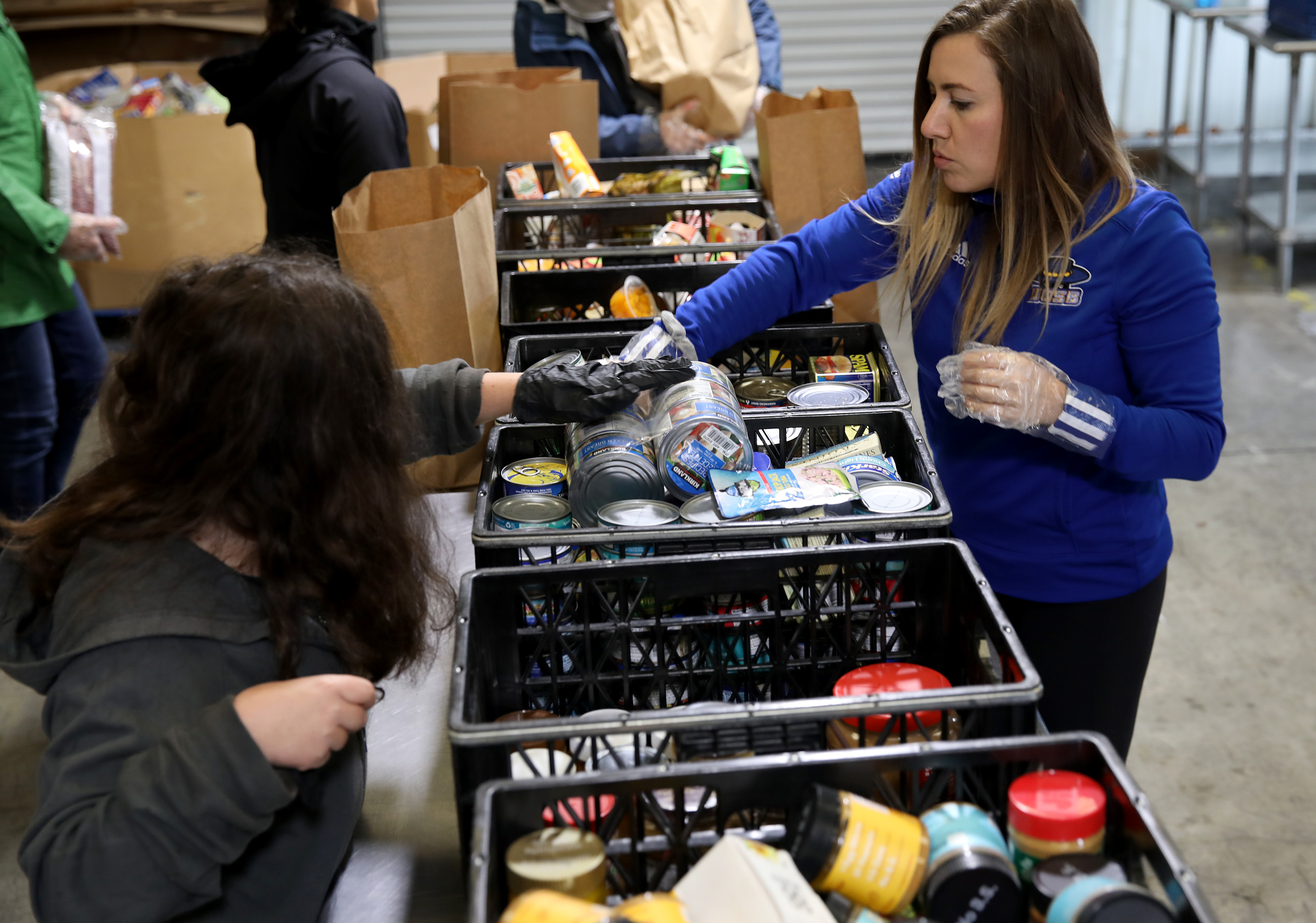
Small but mighty teams of people are working to make sure people in the county have access to food.
Foodbank, the county’s largest food assistance nonprofit, said in a statement to the Independent that it has budgeted $2.5 million for food purchases — the nonprofit’s biggest budget increase outside of COVID.. Foodbank not only helps people directly, but also supports other nonprofits in the area.
Route One Farmer’s Market, a Vandenberg Village–based nonprofit, connects people with produce and other food, while paying local farmers for their crops. The nonprofit not only accepts EBT (SNAP benefits) at farmers’ markets but also operates a mobile farmers’ market truck. In one year, Route One reported, it delivered more than 200,000 pounds of produce in addition to grass-fed beef and local eggs. Through its Market Match program, it matches SNAP benefits for folks looking to buy produce. The program compensates local farmers; Route One said it supports 14 local farms and generates $590,000 in revenue.
Route One is facing dire cuts. In 2025, the federal government ended the Local Food Purchase Assistance Program that helps make its work possible. It is currently advocating for state funding so it continues to help provide food for people in need.
Since last fall’s government shutdown temporarily halted the distribution of SNAP benefits, Veggie Rescue is working to increase its supply. Veggie Rescue picks up surplus produce and other food from 55 farms and farmers’ markets, grocery stores, and a bakery, as well as from people’s yards, and delivers it to 70 nonprofit food distributors in the county. Last year, Veggie Rescue delivered more than 750,000 pounds of food.
For folks with access to food that could go to waste — whether that’s a lemon tree in your yard or excess food from your restaurant — there’s an opportunity to sign up to work with the organization, which will pick up your surplus food.
Food insecurity is also a focus for the Santa Barbara Foundation — a nonprofit who, in 2024, reported more than $121 million in revenue (in the four years prior, the organization has reported revenue between $37 million and $65 million). Last fall, in response to disruptions in funding for local nonprofits and rising demand, the Santa Barbara Foundation launched a rolling grant program called the Critical Needs Response Fund. The fund provides up to $50,000 in grant money for nonprofits, with an eye toward nonprofits that keep people housed, fed, and provide needed medical care. It has already distributed $800,000.
The foundation is also collecting data on food insecurity in the county to better pinpoint communities where the need for affordable or free food is acute, how to best reach and provide resources to people in these areas, and what gaps in service currently exist. The goal is to guide the foundation’s future approach to addressing food insecurity.
Around the county, nonprofits work to address the needs of different groups of people who may struggle to access food. Catholic Charities Los Angeles has centers in Santa Barbara, Lompoc and Santa Maria. All operate food pantries. Unity Shoppe, headquartered in Santa Barbara, runs a free store with groceries, clothing and shoes, and other essentials. Unity Shoppe said it’s seen a steady increase in people using the store in the past few years. In 2024, the store served 46,000 people; in 2025, that number jumped to 56,000. For students across the county, Santa Barbara City College, UC Santa Barbara, and Allen Hancock College run food pantries.
There are organizations working to provide food to the ill and housebound. Organic Soup Kitchen, which operates in Santa Barbara, partners with CenCal Health to give an array of nutritious soups each week to about 800 in-need folks with chronic illnesses. Food from the Heart delivers meals to low-income people who live alone and with an illness, caring for 156 people weekly. Across the county, Meals on Wheels Santa Barbara delivers around 50,000 meals each year to homebound seniors.
And in the county there are efforts to grow access to food into rural communities. In Cuyama Valley, Blue Sky Center is empowering residents to create backyard gardens and grow their own food. The Jardines Victoria program, funded by grant money from the Fund for Santa Barbara and state grants, has created 85 backyard gardens, provides ongoing workshops on gardening and food preservation, and gives out starter plants to community members. The valley is a food desert, with the nearest large grocery store at least 30 minutes away. In 2022, the Department of Housing and Urban Development classified 81 percent of New Cuyama’s population as low income.
Related Posts



Premier Events
Fri, Oct 23
2:00 PM
Santa Barbara
Music & Meditation: Clarinetist Nancy Mathison & Pianist Antonio Artese

Tue, Oct 20
7:00 PM
Santa Barbara
Get Out the Vote Night @ SOHO, Music Performance by Loyal Defense Workers

Wed, Oct 21
6:30 PM
Santa Barbara
Teflon Comedy/Non-Schtick – Evening of Comedy

Thu, Oct 22
5:30 PM
Santa Barbara
Best Fest: A Celebration of the Best of Santa Barbara® Readers’ Poll 2026

Thu, Oct 22
6:00 PM
Santa Barbara
Chaucer’s Books Author Talk & Signing- Daniel M. Jaffe “Russian Silhouette: A Memoir of Activism and Identity”

Fri, Oct 23
5:30 PM
Solvang
Solvang Haunted House and Street Fair

Fri, Oct 23
7:00 PM
Santa Barbara
Beth Amine’s 20th Anniversary Wildcat Dance Variety Show

Fri, Oct 23
9:00 PM
Santa Barbara
Casa de la Raza Fundraiser: Brasscals! with DJ Darla Bea
Sat, Oct 24
10:30 AM
Santa Barbara
Picnic in the Cemetery: A Live Historical Event

Sat, Oct 24
11:00 AM
Goleta
2nd Annual Charger Cup to Benefit DP High Golfers

Sat, Oct 24
12:00 PM
Santa Barbara
Makers Hive Market
Fri, Oct 23 2:00 PM
Santa Barbara
Music & Meditation: Clarinetist Nancy Mathison & Pianist Antonio Artese
Tue, Oct 20 7:00 PM
Santa Barbara
Get Out the Vote Night @ SOHO, Music Performance by Loyal Defense Workers
Wed, Oct 21 6:30 PM
Santa Barbara
Teflon Comedy/Non-Schtick – Evening of Comedy
Thu, Oct 22 5:30 PM
Santa Barbara
Best Fest: A Celebration of the Best of Santa Barbara® Readers’ Poll 2026
Thu, Oct 22 6:00 PM
Santa Barbara
Chaucer’s Books Author Talk & Signing- Daniel M. Jaffe “Russian Silhouette: A Memoir of Activism and Identity”
Fri, Oct 23 5:30 PM
Solvang
Solvang Haunted House and Street Fair
Fri, Oct 23 7:00 PM
Santa Barbara
Beth Amine’s 20th Anniversary Wildcat Dance Variety Show
Fri, Oct 23 9:00 PM
Santa Barbara
Casa de la Raza Fundraiser: Brasscals! with DJ Darla Bea
Sat, Oct 24 10:30 AM
Santa Barbara
Picnic in the Cemetery: A Live Historical Event
Sat, Oct 24 11:00 AM
Goleta
2nd Annual Charger Cup to Benefit DP High Golfers
Sat, Oct 24 12:00 PM
Santa Barbara

