

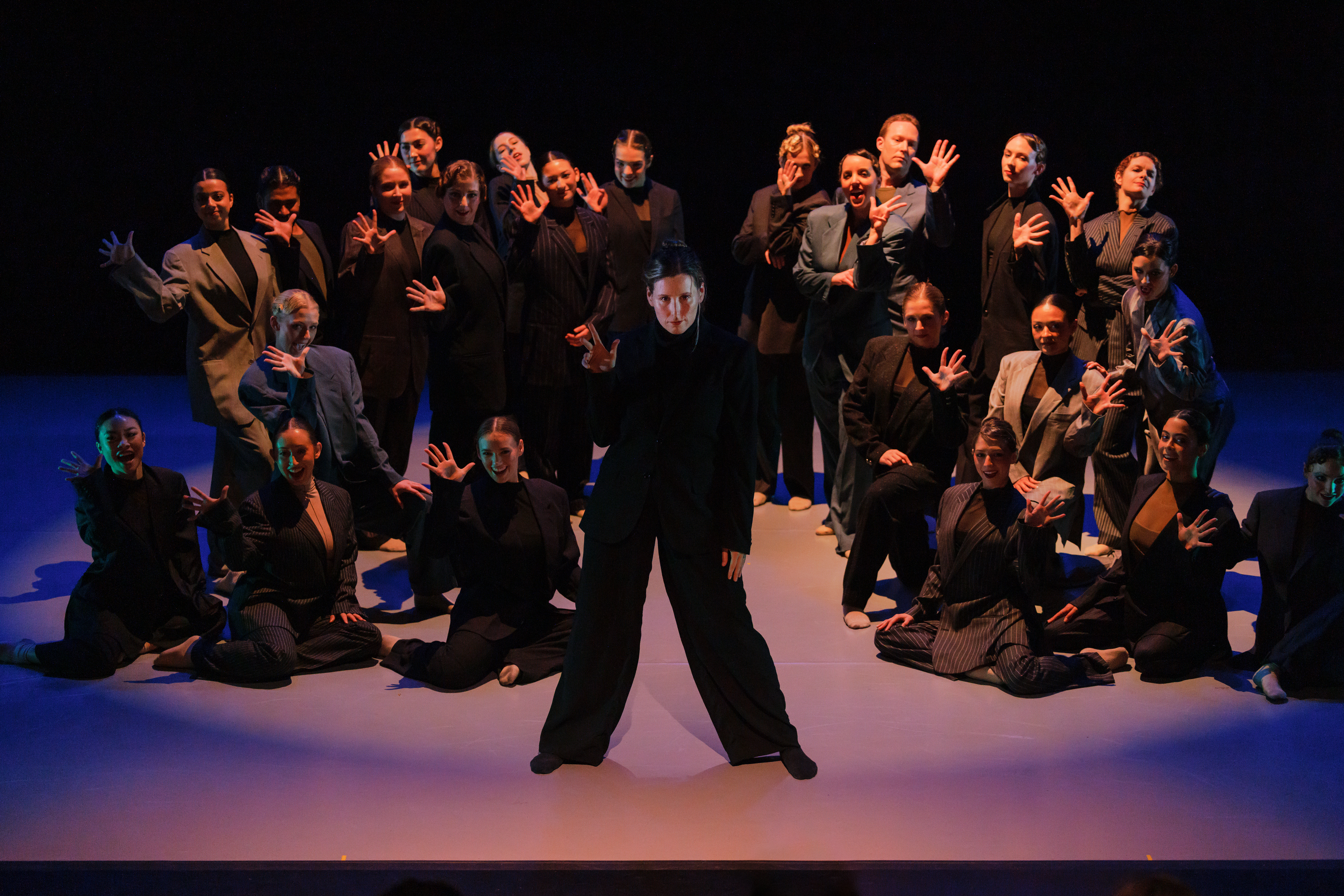
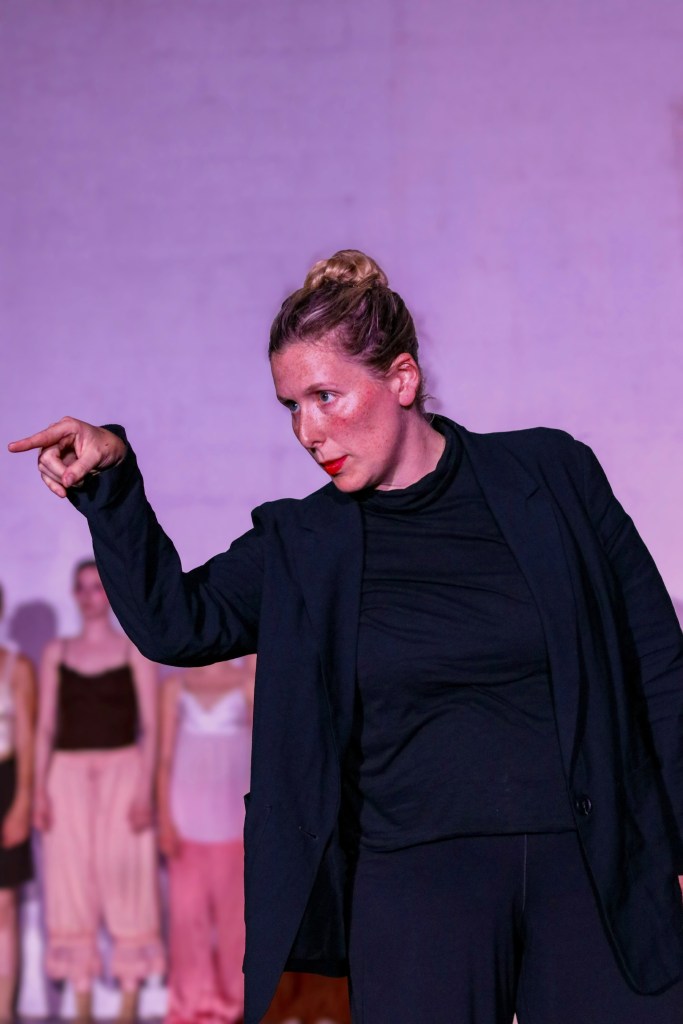
“Movement is never neutral,” writes choreographer-scholar Meredith Ventura in her exhibit Slide on the Razor. Ventura’s work is radical, rebellious, witty, and sarcastic, juxtaposing elegant, oh-so-difficult choreography with slapstick humor and tragicomic dialogue. She is nothing short of a genius. Like 20th century choreographers who changed the course of dance such as Martha Graham, George Balanchine, and Jerome Robbins, Ventura is changing 21st century dance to its very core.
With Disco Elysium, as with her other works, Ventura invites audiences to experience the underground world of Radical Cabaret, “breaking the boundaries between theater, dance, and popular spectacle.”
The performance opens with Ashley Kohler straddling a chair, wearing a slinky red dress, one leg exposed. She glares at the audience, slowly looking from side to side, as we hear the opening song of Cabaret: “Willkommen, bienvenue, welcome … in Cabaret, oh Cabaret, to Cabaret!” The singer continues in a thick accent, “In here, life is beautiful. Ze girls are beautiful. Even zee orchestra is beautiful!” The company appears behind Kohler, wearing dark suits. She stands up on the chair … we hear the end notes of Cabaret: “auf Wiedersehen, à bientôt.” Then, with a drumroll, Kohler falls backwards into the waiting arms of the company, (playing) dead. As a few dancers lay her limp body on the ground and proceed to tape her outline onto the floor, the rest dance to the unlikely sounds of Guy Lombardo. The dead girl’s outline remains on the floor for the rest of the show.

This spectacle is followed by Ventura dancing and lip-synching to Marlene Dietrich’s “Laziest Girl in Town.” Bizarre contrasts set the tone and pace of the show. Exquisite dance performances are interleaved with dialogues, monologues, and in-your-face skits that question the ideal of physical beauty and the way society — mostly male-oriented — judges women.
While the company dancers wore colorful costumes, Ventura remained in all black as she made periodic appearances, sometimes pantomiming to oddly placed songs (for example, “I Wanna be Loved by You” while a girl is dying), sometimes walking through the dancers, sometimes being applauded by them, sometimes appearing in unlikely cameos. Ventura’s black-clothed countenance reminded me of the way Alfred Hitchcock made guest appearances in his movies.
Disco Elysium is aptly described in the program as “a world suspended between celebration and ruin, comedy and melancholy.” The two-hour performance stopped time, as dance and dialogue alternated in bizarre-but-fascinating sequences, juxtaposing big band-era music with somber baroque sounds and a running commentary of incongruous vignettes.
Act I, originally Sound and Smoke, explores the “female dancing body as both a site of resistance and a spectacle shaped by the forces that seek to discipline, commodify, and contain it (program notes).” Each dancer represents a female character from history or fiction. The single male dancer, Vietor Davis, represents both the tragic Faust and the comedian Dick Cavett.
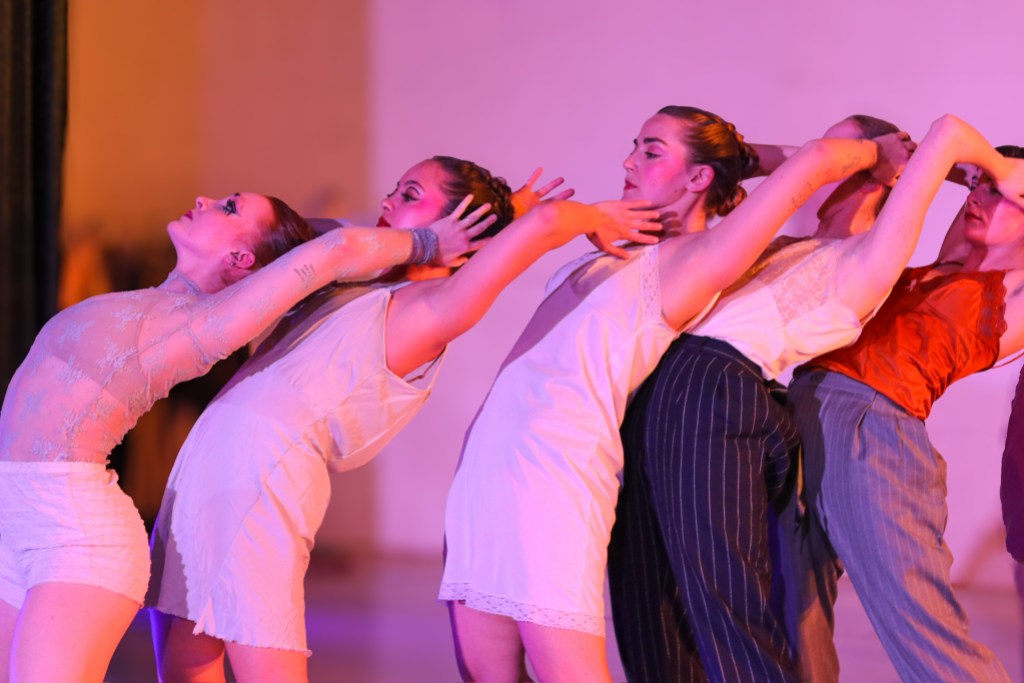
Act II, originally Palermo!, explores a world of “absurdity with equal parts wit and melancholy [program notes].” The opening, a reading from a World War I satirical newspaper, Are You a Victim to Optimism?, is followed by several clever dance sequences in which the dancers are dressed in trench coats. Eventually discarding their coats, they bury the smallest dancer, the talented Hailey Maynard, in a pile of coats. After they unbury her, she becomes the subject of a sarcastic monologue, “You Know Those Girls?” about how to properly apply makeup.
This sarcastic makeup-applying performance was followed by Rachyl Pines’s exquisite solo portraying St. Rosalia, whose bones were scattered to ward off the plague in Palermo in 1625. The music is the deeply moving section of Bach’s Mass in B Minor, “Et Incarnatus Est.” At the end of her solo, “St. Rosalia” dies in the arms of the company, as the scene proceeds to the Impossible Conversation about what it means to be beautiful.
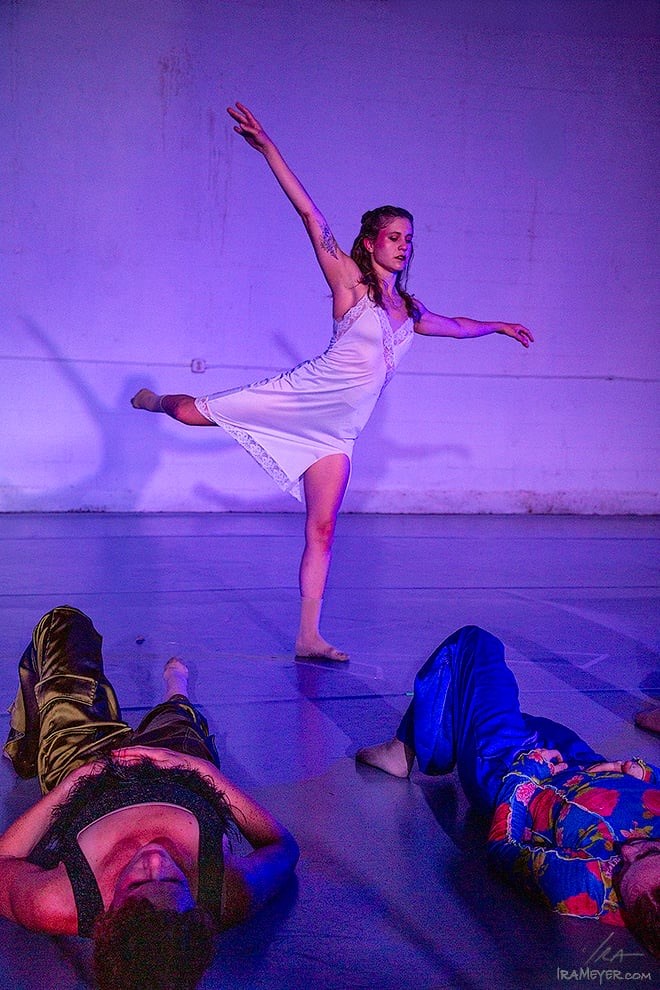

Disco Elysium confronts the audience with darkly humorous contradictions: The Dying Swan (Eliane Holt) must find a spot in which to die on a stage full of dead bodies; Anna Karenina (Brenna Chumacero), after a passionate solo that ends with her leaping into the strong arms of Davis, smokes a cigarette. Jarring refrains occur several times: “Come on! Snap out of it,” “I have nine times to die,” and hysterical laughter, followed by, “That’s stupid!”
Every choreographer depends on the skill of the dancers to execute their vision. The dancers of Selah, all from prestigious backgrounds, have the perfect combination of power, elegance, and flexibility to execute Ventura’s difficult technique, as well as the wit and wisdom to pull off her sarcastic nuances, bawdy, in-your-face humor, and impossible comparisons.
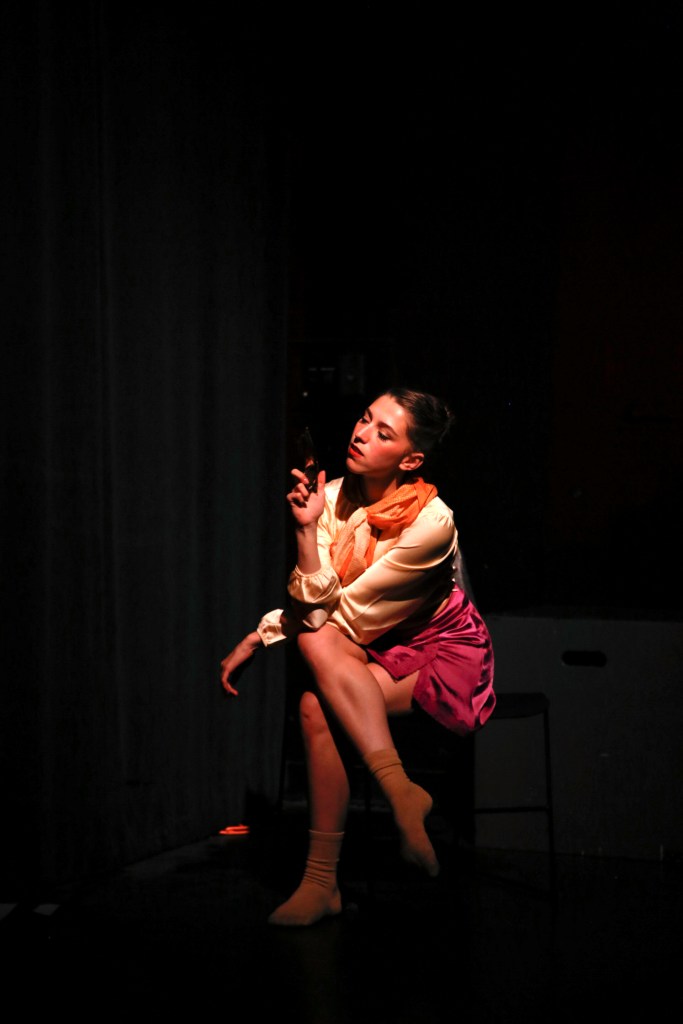

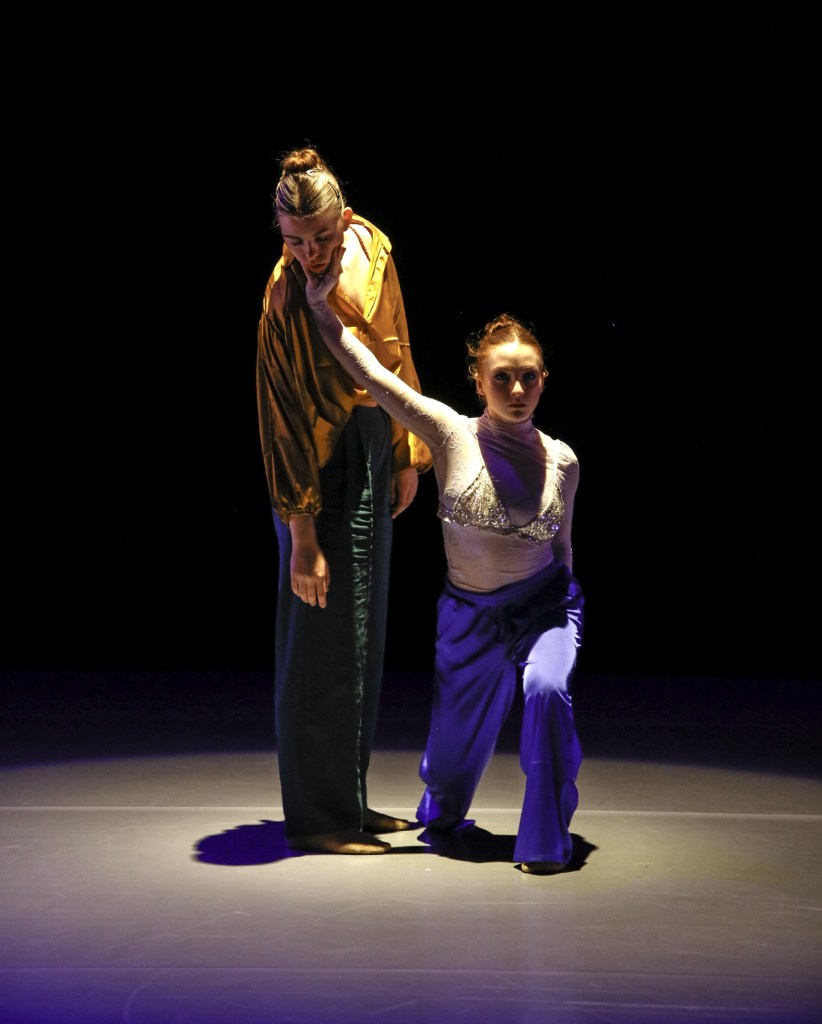
Several of the soloists deserve special mention for their tremendous performances, both technically and dramatically. Two current artists of State Street Ballet, Brenna Chumacero and Hailey Maynard, stood out for their passionate and technically difficult solos as well the wry humor with which they portrayed various social commentaries. Rachyl Pines, noted for her leading roles in Malena and Humanity, performed several difficult solos and an exquisite pas de deux with Davis, while at other times she flipped to tremendously funny, slapstick vignettes.
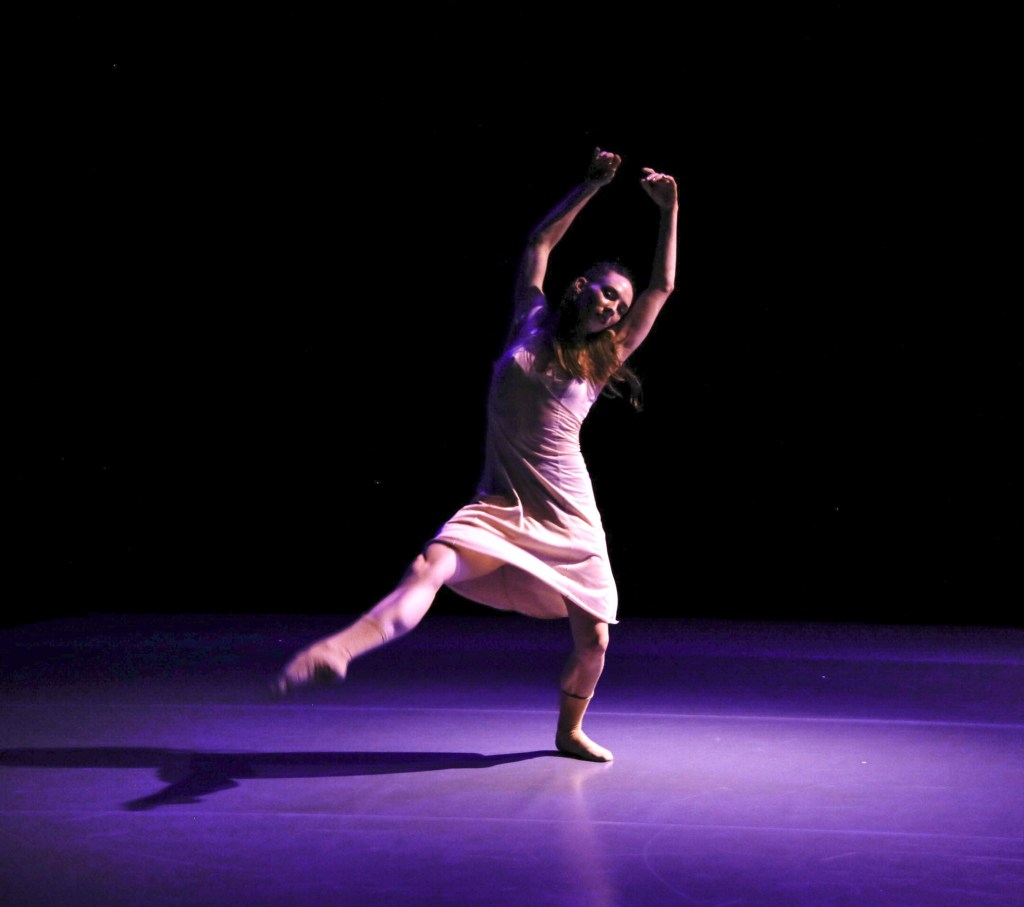
Arianna Hartanov, formerly of State Street Ballet, is a dance legend. Currently dancing in Germany, she returned for this concert, performing her poignant solo “Bésame Mucho,” and other highly technical pieces, as well as several absolutely hilarious dialogue-duets with Ventura.
And Vietor Davis — still the only male dancer in Selah — danced among the women as one of them, and also as a strong and sexy partner. His pas de deux with Pines, Dido’s Lament, included some spectacular, intricate, and breathtaking lifts. Wow!
The show ends with Ashley Kohler, in a red sequined dress, lip synching to Liza Minnelli’s heart-breaking “Maybe This Time” while the rest of the company, in sequined gowns and heels (except Ventura, who remained in black), circled her and threw flowers at her.
Humor and pain, pleasure and sarcasm: Disco Elysium shows us that we can’t have one without the other.
Congratulations to soon-to-be-Dr. Meredith Ventura and the Selah Dance Collective for another spectacular show!

Related Posts

Premier Events

Sat, Oct 17
9:00 AM
Santa Barbara
Mesa Harmony Garden Fall Plant Sale Continues…
Fri, Oct 23
2:00 PM
Santa Barbara
Music & Meditation: Clarinetist Nancy Mathison & Pianist Antonio Artese
Sat, Oct 24
9:00 AM
Santa Barbara
Mesa Harmony Garden Fall Plant Sale Continues…

Sun, Oct 18
9:00 AM
Santa Barbara
“Move with MADD” Santa Barbara 3K Community Walk & Fundraiser to Prevents Impaired Driving
Sun, Oct 18
11:00 AM
Santa Barbara
17th Annual Asian American Neighborhood Festival
Sun, Oct 18
1:00 PM
Santa Barbara
Lincoln Elementary School 150th All Year Reunion
Sun, Oct 18
3:00 PM
Santa Barbara
Seaworthy Author Talk -Will Sofrin
Sun, Oct 18
3:00 PM
Goleta
Free Concert Offers Journey Through Italian Music

Mon, Oct 19
7:00 PM
Santa Barbara
PFLAG Santa Barbara October Meeting: “Schools and Inclusive Practices – What creates a safe and inclusive school?”

Tue, Oct 20
7:00 PM
Santa Barbara
Get Out the Vote Night @ SOHO, Music Performance by Loyal Defense Workers

Wed, Oct 21
6:30 PM
Santa Barbara
Teflon Comedy/Non-Schtick – Evening of Comedy

Thu, Oct 22
5:30 PM
Santa Barbara
Best Fest: A Celebration of the Best of Santa Barbara® Readers’ Poll 2026
Sat, Oct 17 9:00 AM
Santa Barbara
Mesa Harmony Garden Fall Plant Sale Continues…
Fri, Oct 23 2:00 PM
Santa Barbara
Music & Meditation: Clarinetist Nancy Mathison & Pianist Antonio Artese
Sat, Oct 24 9:00 AM
Santa Barbara
Mesa Harmony Garden Fall Plant Sale Continues…
Sun, Oct 18 9:00 AM
Santa Barbara
“Move with MADD” Santa Barbara 3K Community Walk & Fundraiser to Prevents Impaired Driving
Sun, Oct 18 11:00 AM
Santa Barbara
17th Annual Asian American Neighborhood Festival
Sun, Oct 18 1:00 PM
Santa Barbara
Lincoln Elementary School 150th All Year Reunion
Sun, Oct 18 3:00 PM
Santa Barbara
Seaworthy Author Talk -Will Sofrin
Sun, Oct 18 3:00 PM
Goleta
Free Concert Offers Journey Through Italian Music

Mon, Oct 19 7:00 PM
Santa Barbara
PFLAG Santa Barbara October Meeting: “Schools and Inclusive Practices – What creates a safe and inclusive school?”
Tue, Oct 20 7:00 PM
Santa Barbara
Get Out the Vote Night @ SOHO, Music Performance by Loyal Defense Workers
Wed, Oct 21 6:30 PM
Santa Barbara
Teflon Comedy/Non-Schtick – Evening of Comedy
Thu, Oct 22 5:30 PM
Santa Barbara


You must be logged in to post a comment.