
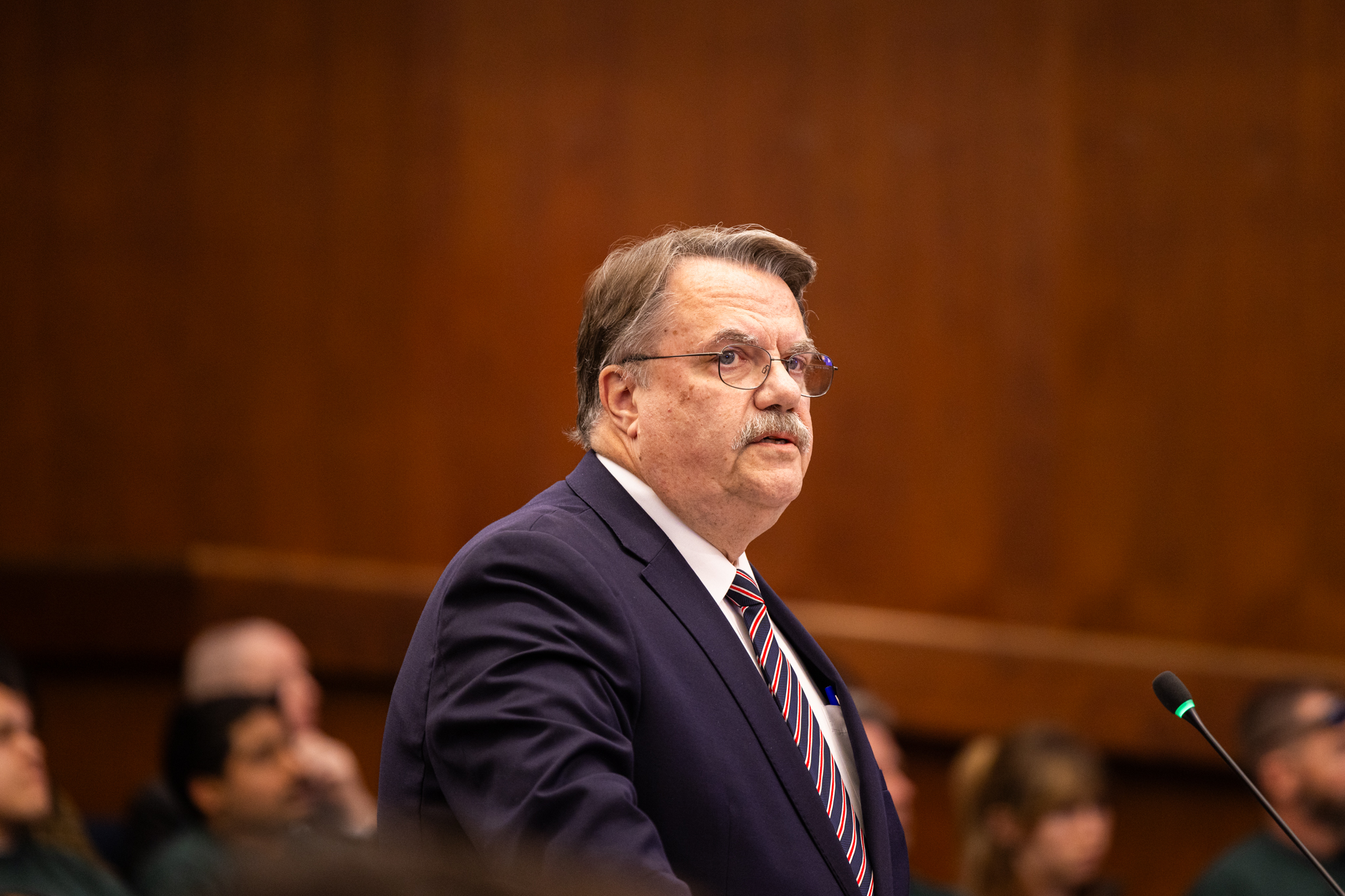
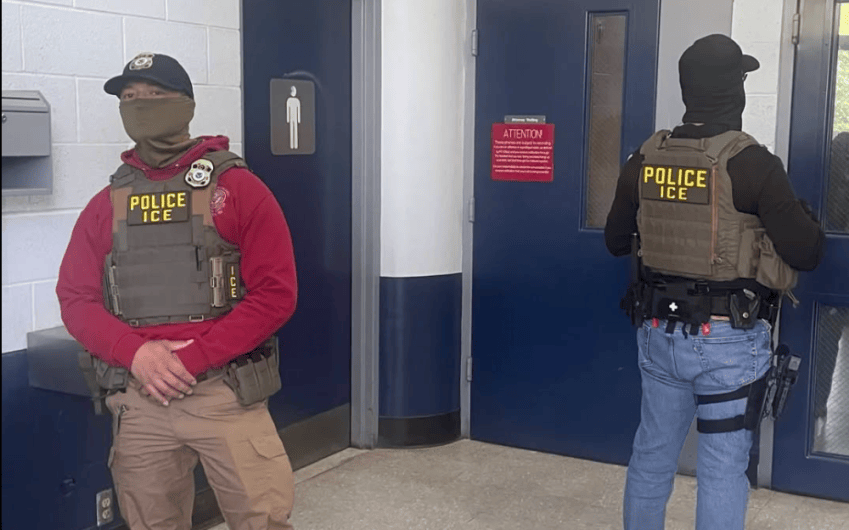
Santa Barbara County Sheriff Bill Brown was in the hot seat over immigration arrests in and around county jails, after the annual TRUTH Act report at the Santa Barbara County Board of Supervisors meeting turned into a public venting session about the Sheriff’s Office cooperating with ICE and the lack of transparency about arrests near jail property.
The yearly report outlines how many times the Sheriff’s Office shares information with the government about individuals held at county jails. According to state law, local law enforcement cannot use public resources for immigration enforcement, but local agencies have discretion about sharing information with ICE to coordinate arrests directly upon release for individuals whose crimes meet certain requirements.
According to Sheriff Brown’s report, the Sheriff’s Office received 221 requests from ICE in 2025. Of these requests, 28 led to ICE being notified, and 12 people were arrested directly out of Santa Barbara County custody. Another 33 were arrested by ICE inside jail facilities due to judicial warrants signed by a federal judge.
Brown pointed out that the numbers were actually lower than in 2024, when ICE made 229 requests and the Sheriff’s Office allowed for the transfer of 16 recently released individuals. Brown was adamant that the county did not have regular direct communication with ICE and said those who were turned over to federal enforcement represented those with violent felonies, some committed against women or children.
With the crowd packed full of community members holding signs saying “ICE OUT OF 805,” Brown downplayed the role of the local Sheriff’s Office, saying that ICE was going to make arrests in the county regardless of the level of local cooperation. When Brown suggested it was safer for these arrests to occur at the jail than in the community, the people in the crowd groaned and shook their heads in disappointment.
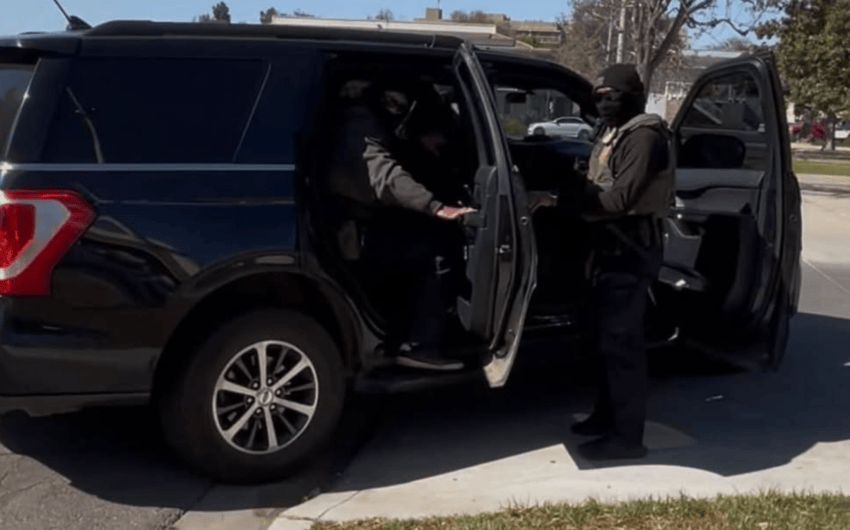
When asked about the discrepancy between the dozen arrests reported by the Sheriff’s Office and the real number of arrests near or around the jails, Brown pushed back and said his staff did not track the arrests made on public property such as jail lobbies, parking lots, or entrances.
“Their arrests are their business. They are really not our business,” Brown said. “They are a bona fide law enforcement agency — whether people like that or not — and they are authorized under federal law to make arrests, and they do make those arrests, all the time.”
He cast doubt on media reports claiming that up to 99 arrests were made in the area outside county jails in 2025. The data cited in these reports, collected in UCLA and UC Berkeley’s publicly accessible Data Deportation Project, comes from figures provided directly by ICE. The data shows that ICE made 99 arrests with a “landmark” listed as Santa Barbara County Jail. (The records do not differentiate between North County and the Main Jail.)
Supervisor Laura Capps expressed her frustration with the sheriff’s position, saying that the hands-off approach was dismissive of the impact on the county’s Latino and immigrant community.
“That’s 99 arrests on your property, Sheriff,” Capps said. “This is getting out of hand. This is not necessarily a situation that is going to go away anytime soon.… At what point will you be reconsidering a policy of, sort of, head in the sand?”
During a lengthy public comment session, Sheriff Brown sat in the front row as more than 60 community members, immigrant rights advocates, nonprofit organizers, and youth leaders shared passionate testimonies about the impact of ICE on the Central Coast. Some admonished the sheriff and demanded an end to cooperation with ICE; some gave firsthand accounts of witnessing arrests outside the jails; some tried to appeal to Brown’s humanity and asked for compassion.
Andrea Medina, associate director with Buen Vecino, asked Brown to consider the widespread impacts to “indifference” from local law enforcement.
“Sheriff Brown, your choices are a tragedy. They are causing pain, terror, and trauma,” Medina said, turning to look the sheriff in the eye. “Do you ever feel it? Could you recognize that your intentional choices are causing long-lasting pain and trauma?”
Maria Salguero, a senior attorney with the Immigrant Legal Defense Center, said the Sheriff’s Office cannot claim to be separate from federal enforcement while simultaneously accommodating the direct transfers of individuals who are in local custody.
“And you cannot emphasize that your department’s priority is public safety when the public is here today telling you that we don’t feel safe,” Salguero said. “As an immigration attorney, I can tell you that this agency is out of control and acting violently in our community.”
While Supervisor Capps acknowledged that Brown held the ultimate authority over policy decisions and how to respond to ICE requests, she pushed for the board to consider options that could help alleviate the fear and anxiety in the community. She suggested looking into a policy limiting cooperation to judicial warrants, as in other California counties such as Marin and Santa Clara.
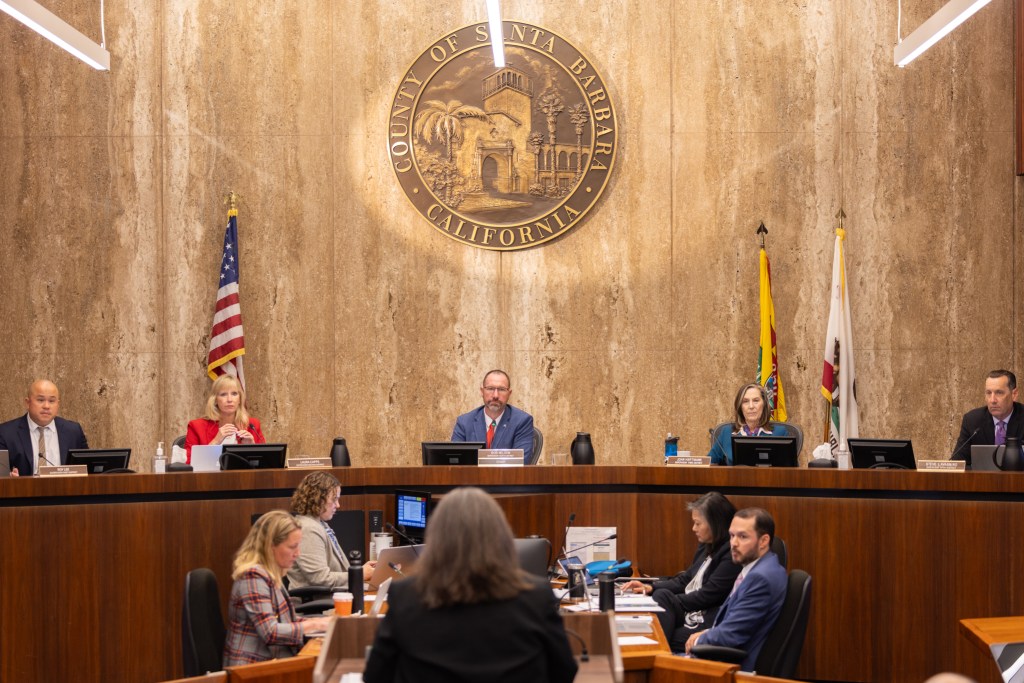
Capps asked Brown to consider tracking arrests outside the jail property, though the Sheriff gave no indication that he would begin documenting, recording, or reporting such arrests anytime soon.
“I find it offensive that there’s nothing we can do as a Board of Supervisors,” Capps said. “It defies logic.… Is there anything that this board can do beyond what we’ve done?”
Supervisor Bob Nelson was the only member of the board to speak in support of Brown and the transfer of those convicted of violent crimes. Nelson suggested that part of the reason Santa Barbara County was among the most highly targeted areas was due to the county’s previous anti-ICE actions.
“The reason that we’re getting disproportionate activity is partly because of the activity of our board,” Nelson said. “When the temperature rises, this president reacts.”
Brown said he would consider one specific policy request, which would allow for the public defender’s office to be notified prior to individuals being released into ICE custody. Currently, there is a delay in notification that prevents public defenders from providing assistance before re-arrest.
The board took no action, and as the meeting closed, Brown said he would continue to coordinate for the transfer of individuals who qualified under state law.
“I’m not happy about many of the things that are done by ICE,” Brown said. “But on the same token, I’m in the crime-fighting business.”
Capps said she hopes that the county can find some way to address the issue in the future: “The status quo is not sustainable. This is not how we can live for another two and a half years — it’s a nightmare.”
Related Posts

Premier Events

Sat, Oct 24
2:00 PM
Santa Barbara
Japanese Sacred Architecture: Shinto and Buddhism
Sat, Oct 24
10:30 AM
Santa Barbara
Picnic in the Cemetery: A Live Historical Event
Sat, Oct 24
11:00 AM
Goleta
2nd Annual Charger Cup to Benefit DP High Golfers

Sat, Oct 24
12:00 PM
Santa Barbara
Makers Hive Market
Sat, Oct 24
2:00 PM
Santa Barbara
Japanese Sacred Architecture: Shinto and Buddhism

Sat, Oct 24
2:00 PM
Santa Barbara
Thriller 2026 – Get Scary for Charity!

Sat, Oct 24
3:00 PM
Santa Barbara
Downtown Santa Barbara Trick-or-Treat
Sat, Oct 24
5:00 PM
Santa Barbara
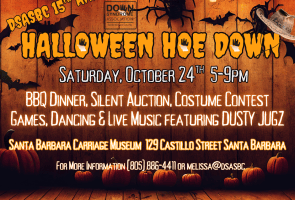
15th Annual DSASBC Halloween Hoedown

Sat, Oct 24
5:30 PM
Solvang
Solvang Haunted House and Street Fair

Sat, Oct 24
7:00 PM
Santa Barbara
Anima: Theater of the Feminine Underground
Sun, Oct 25
11:00 AM
Santa Barbara
Free Family Day: Día de los Muertos
Sat, Oct 24 2:00 PM
Santa Barbara
Japanese Sacred Architecture: Shinto and Buddhism
Sat, Oct 24 10:30 AM
Santa Barbara
Picnic in the Cemetery: A Live Historical Event
Sat, Oct 24 11:00 AM
Goleta
2nd Annual Charger Cup to Benefit DP High Golfers
Sat, Oct 24 12:00 PM
Santa Barbara
Makers Hive Market
Sat, Oct 24 2:00 PM
Santa Barbara
Japanese Sacred Architecture: Shinto and Buddhism
Sat, Oct 24 2:00 PM
Santa Barbara
Thriller 2026 – Get Scary for Charity!
Sat, Oct 24 3:00 PM
Santa Barbara
Downtown Santa Barbara Trick-or-Treat
Sat, Oct 24 5:00 PM
Santa Barbara
15th Annual DSASBC Halloween Hoedown
Sat, Oct 24 5:30 PM
Solvang
Solvang Haunted House and Street Fair
Sat, Oct 24 7:00 PM
Santa Barbara
Anima: Theater of the Feminine Underground
Sun, Oct 25 11:00 AM
Santa Barbara


You must be logged in to post a comment.