

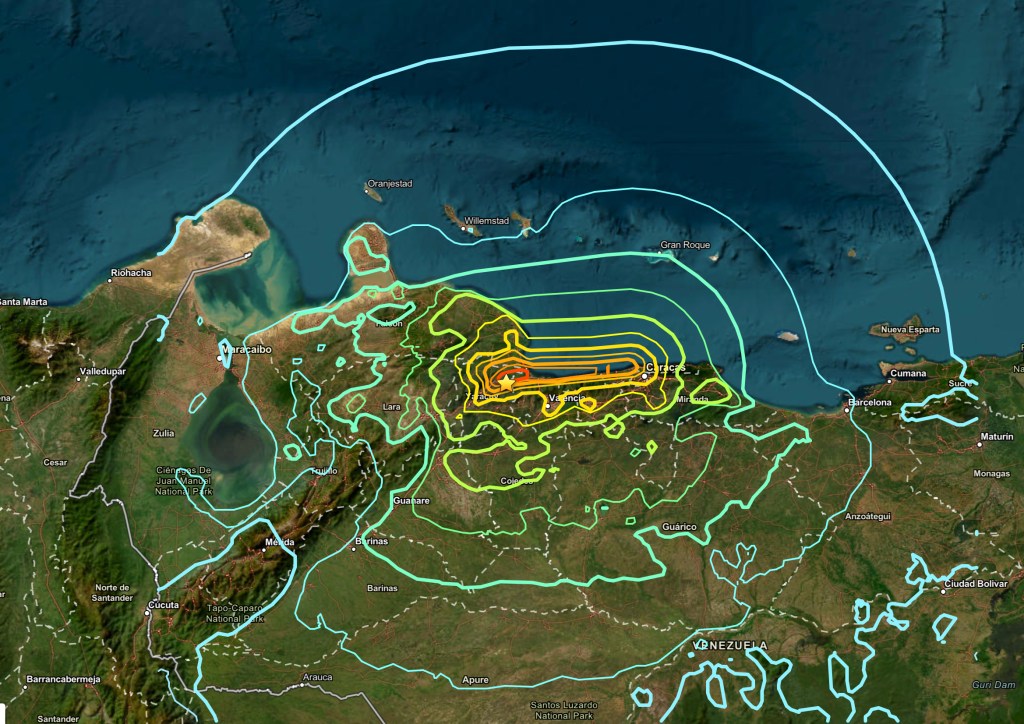
As of Friday morning, at least 920 people have died and more than 3,000 are injured in the aftermath of two earthquakes — just 39 seconds apart — that struck Northern Venezuela on Wednesday evening. Registering a 7.2 and 7.5 on the Richter scale, the quakes caused chaos in the nation’s capital Caracas, leaving search and rescue teams scouring through the rubble to find survivors.
The United States Geological Survey estimates that the death toll could climb to the tens, or even hundreds, of thousands as the search for life continues.
“Tens of thousands of people are likely to require emergency shelter and essential items,” said Paul Vercammen, ShelterBox’s communications director.
Santa Barbara’s own ShelterBox and Direct Relief immediately jumped into action, communicating with their local networks in the country to assess needs, mobilize funds, emergency supplies, and hands to help in the aftermath of the quakes.
“It’s logistically very complex to get aid into an area where the airport is closed, the communications are cut off, and there’s no power,” said ShelterBox U.S.A. President Kerri Murray. “But this is our sweet spot. This is what we do.”
Brea Burkholz, Direct Relief’s communications director, said that their teams “are already working through transportation routes.”
Currently, Venezuela’s government has restricted access to the area to just those who are actively participating in search-and-rescue efforts, meaning many aid organizations are not able to get on the ground to administer support just yet.
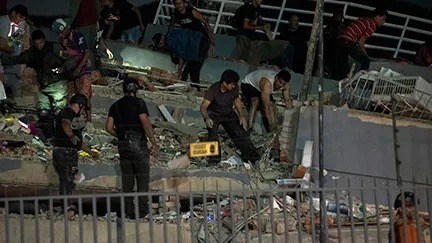
“The priority right now is reaching people who may still be trapped, supporting the teams working to rescue them, and ensuring that medical care is available as survivors are brought to safety,” said Amy Weaver, Direct Relief’s CEO, in a statement.
Direct Relief has already sent a $50,000 grant to Bomberos Unidos Sin Fronteras, an Ibero-American team of firefighters currently enroute to help with search-and-rescue efforts. As efforts continue, Direct Relief plans to send more funding to where it can be best utilized.
The organization is also in active communication with their network of longtime medical partners in the country — whose healthcare system was already under duress before the catastrophe — providing them with a menu of medicines and supplies that medical teams can order from.

Those who have survived an earthquake “don’t want to sleep in damaged buildings; they’ve already experienced so much trauma,” said Murray, reflecting on her experiences helping those affected by the 2023 Al Haouz earthquake that hit the high atlas mountains of Morocco, causing the destruction of 90 percent of the region’s infrastructure and building.
ShelterBox already has tents and other temporary structures prepositioned in Barbados and Panama, enough to house a total of 7,500 people, and more in other parts of the world, being prepared to send when authorities and transportation allows.
They also have shelter kits ready to deploy, which are equipped with solar lanterns, water filters, cookware, water storage, blankets, and more, for families to set up their temporary homes.
Both organizations are committed to aid in long-term response efforts — Direct Relief plans to provide extended medical and mental-health care for both survivors and first responders, and ShelterBox will provide housing as the region rebuilds.



You must be logged in to post a comment.