

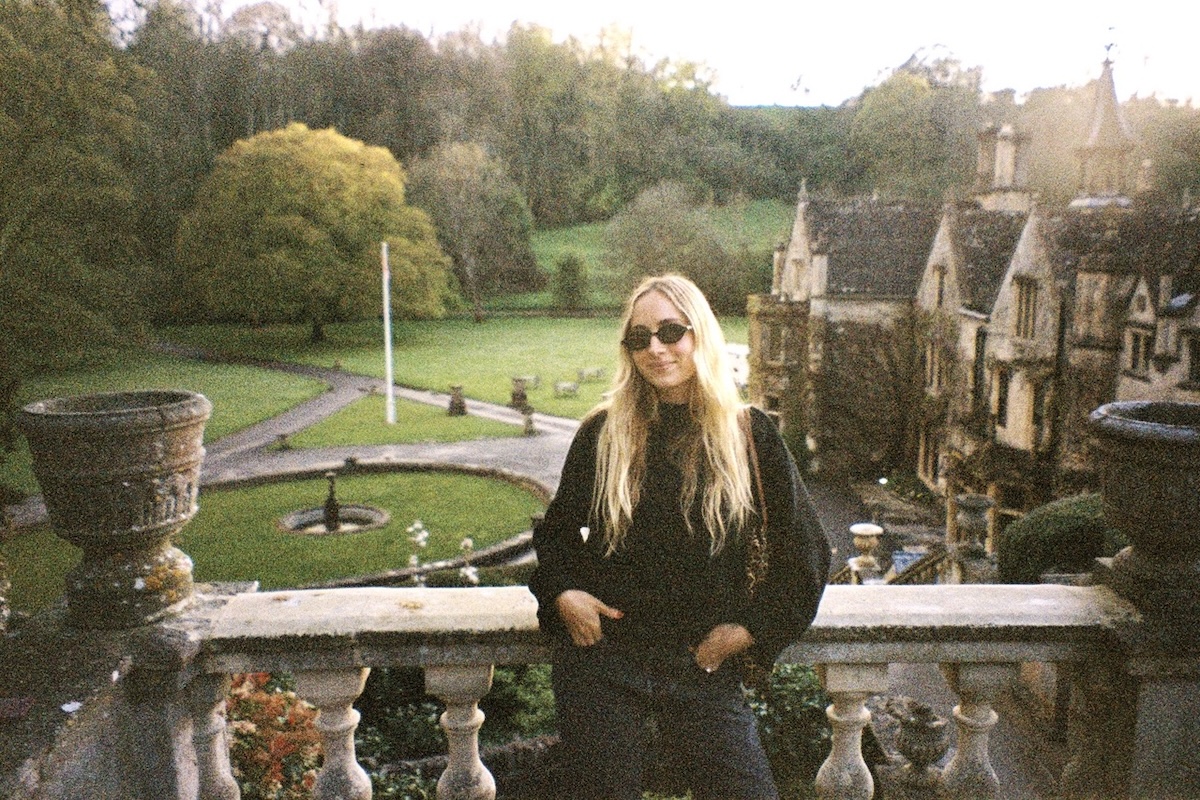
I open the bathroom window, and cold, crisp air hits my face, carrying the smell of wet asphalt from last night’s rain and, beneath it, the faint petrichor rising from the garden below. Water drips from the foliage, pattering softly onto the ground. The birds grow louder, their songs stretching into the far corners of the room, while the sun slips from behind a cloud and sends warm rays through the curtains.
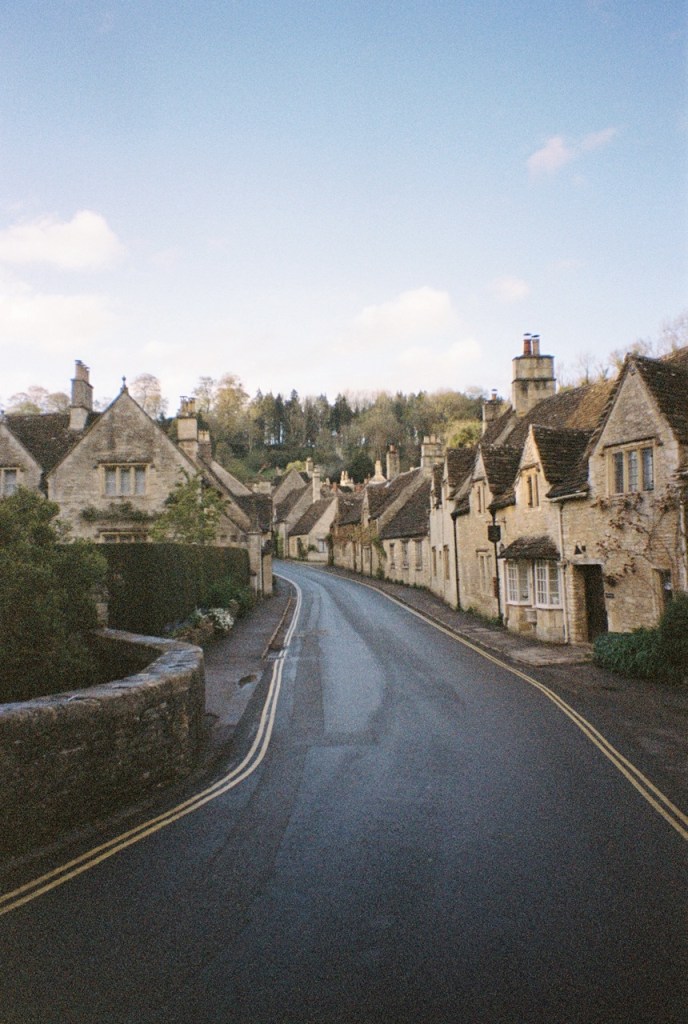
Now, I know that was a lot, but it’s impossible not to wax poetic about the magical town I’ve been staying in for the last seven days: Castle Combe, a small English village in the Cotswolds. Why I’ve spent the past week in a village with a population of approximately 356 comes down to England’s notoriously strict marriage laws.
For context, my fiancé Oliver and I are getting married here in October, in a small church, St. Mary’s, in the nearby village of Nettleton. It’s a special church, as it’s where his grandparents are buried and where his great-grandfather was the vicar many, many years ago.
Although Oliver is a dual citizen of the U.K., obtaining a marriage license is still quite tedious. We were required to stay in Wiltshire, the county where we are to be wed, for at least a week, 70 days before our wedding, and attend an appointment with the Wiltshire council on the eighth day, where we had to present a slew of documents and prove that our marriage was, in fact, legal and our partnership real.
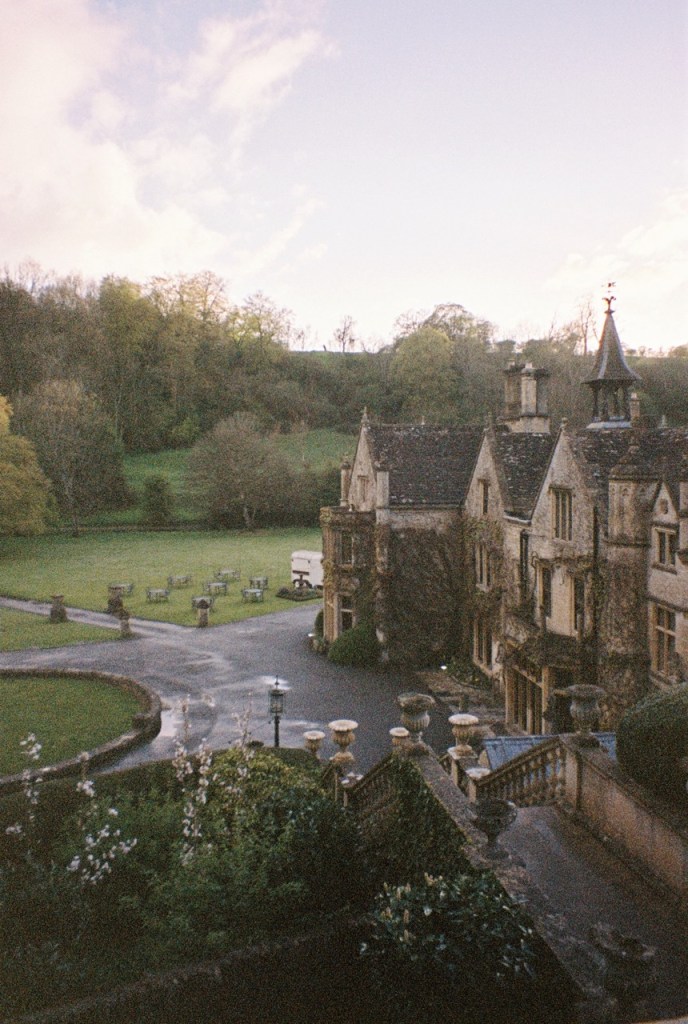
We chose to stay in Castle Combe because it’s home to the Manor House, a 14th-century hotel where our reception will be held in October. It was my third time seeing the village. I had been on trips with Oliver’s family twice before, but I had never stayed overnight. Most people only come here for the day, often just an hour, because the truth is, there’s not much to do except admire the town’s quaint, storybook beauty, but we were there for a week.
“Eight nights?” the woman who checked us in at the Castle Inn said, confirming she hadn’t misread the booking, probably wondering what the hell we planned to do with our time — I was right there with her. As she led us up the stairs to our room, I noticed the walls lined with photos from all the movies shot in Castle Combe: Poirot, Dick Turpin, The Wolfman, War Horse, Doctor Dolittle, and Stardust.
We traversed winding hallways before finally reaching our room which had a doorframe a few inches shorter than my 5’9″ frame. I laughed at this sight as Oliver, who is 6’4″, would practically have to bend himself in half to get through. “Wow, people really were tiny back then,” I joked, a little delirious and running on one hour of sleep, and the lady muttered something about the building being ancient. I was surprised and delighted to see that once inside, our room opened up to high ceilings. I immediately noticed the deep purple curtains, the same shade as the felt of the coronation crown, and peeled them back to see our unobstructed view of the town square.
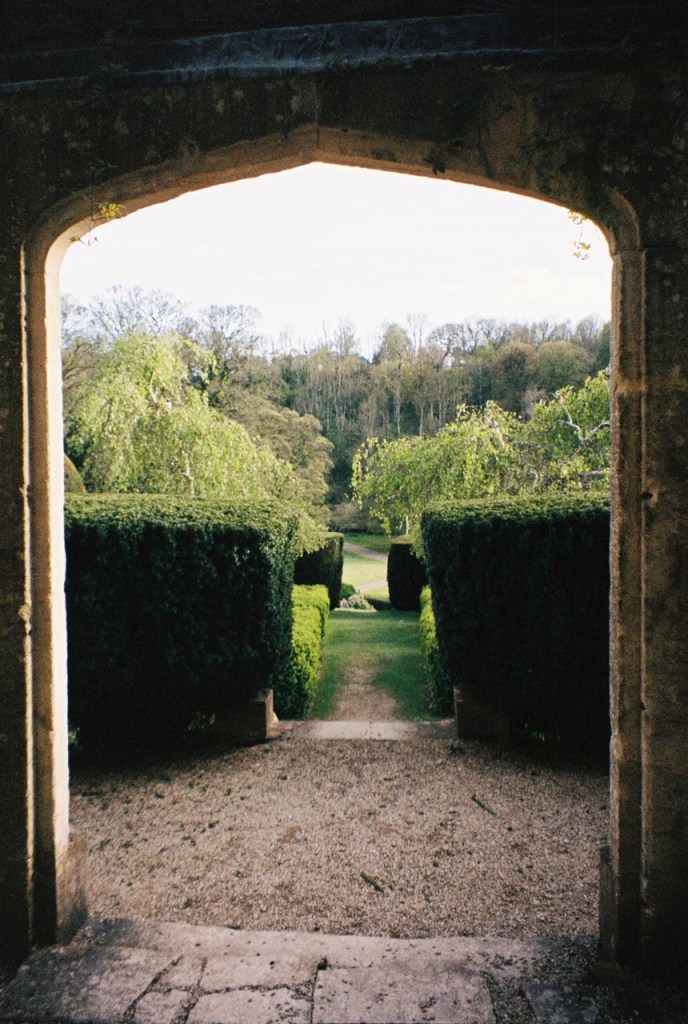
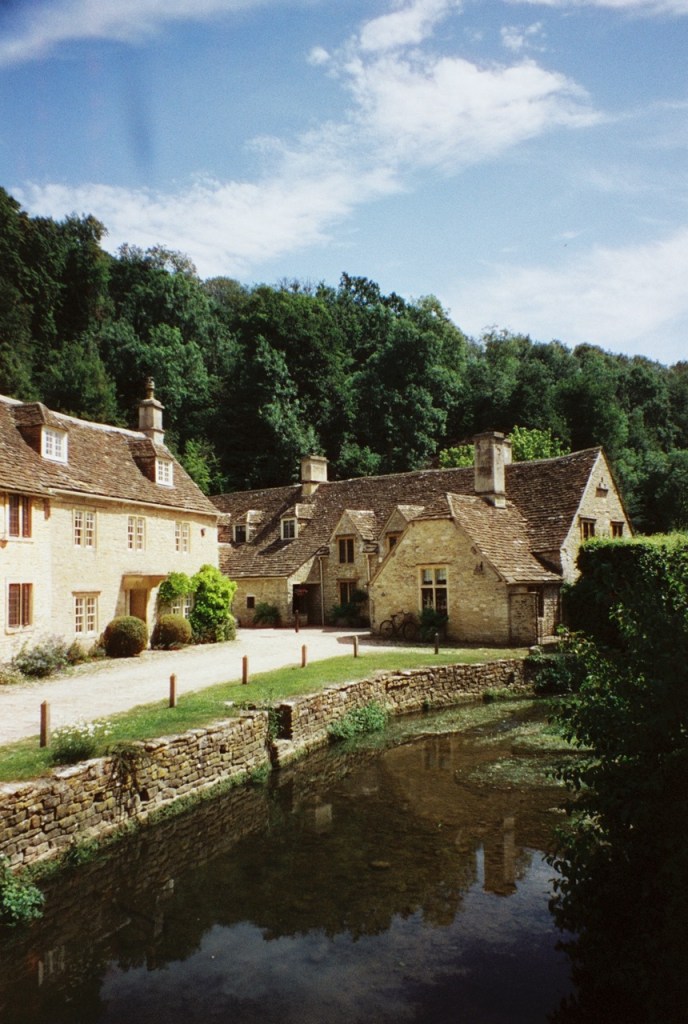
Castle Combe is often lauded as the “prettiest village in England” because it’s so perfect it feels unreal, as if something so beautiful could only exist in a fantasy world — you half expect to run into Goldilocks on her way to find porridge that is neither too hot nor too cold, but just right.
On any given day, the town’s main bridge is crowded with people and their cameras. From this view, the road curves in such a way that it seems to lead straight into the cottages behind it, like one of those cartoon backdrops where the painted wall pretends to be a tunnel.
In the afternoons, I’d open the shades in our room to tourists standing not 10 feet below our window, taking photos of the inn. Sometimes, I would accidentally make eye contact and retreat to the bedroom like a ghostly figure they’d go home and tell their family about, starting some rumor about the woman in white at the Castle Inn.
What is now Castle Combe first emerged as a small Roman settlement before developing into a thriving wool village during the Middle Ages, when England’s cloth trade fueled much of the local economy. Its name comes from a Norman castle established after William the Conqueror’s invasion, though only traces of it survive today. Remarkably, the village has remained largely unchanged for centuries, with no new buildings added since the 17th century.
This town is small — I mean, really, really small. There are just two places to eat: the Castle Inn and The White Hart, and if you’re in the mood for some fine dining, you can eat at The Manor House’s lounge dining restaurant or the Bybrook restaurant, which earned a 2025 Michelin star.
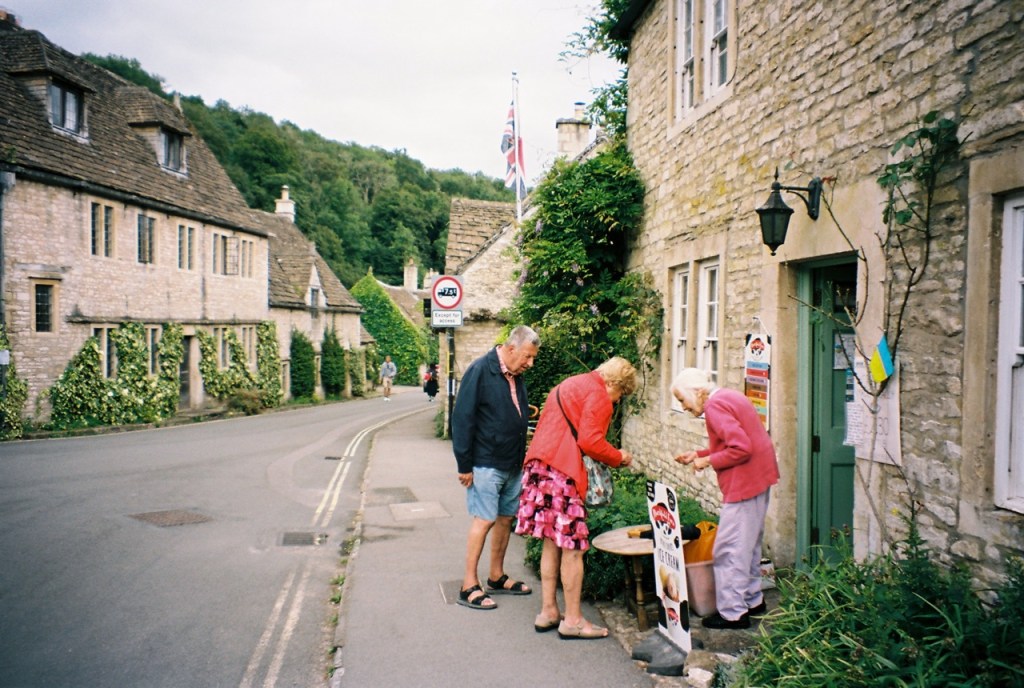
It’s easy to forget that people actually live here, but small reminders of ordinary life are tucked between the postcard-perfect cottages. One such resident tied a Ukrainian flag to their cottage door knocker and posted a sign reading “Ukraine Appeal,” followed by: “Since February 2022, I have raised £19,190.79 for Ukraine.” The owner invites passersby to “knock or put the money through the letterbox under the flag.”
Next door is Ellen’s Cottage, where the owner runs a small shop selling drinks and pastries. “This shop is run on trust,” reads a white paper taped to the front door, with an arrow pointing to the mail slot where you put your money when you take an item. I told myself I’d buy something from her, but kept putting it off. Then, on our last day, I walked over to the shop and saw that it was closed.
Our days in Castle Combe were simple and repetitive but never dull. Every morning, we headed downstairs for our complimentary breakfast. I usually ordered a full English — eggs, toast, potatoes, sausage, blood pudding, and a tomato — though I always pushed the latter two aside; tomatoes are just not my thing, and the blood pudding, well, need I say more? I’d also get a hot latte even though I prefer iced, but when I tried to order it, the woman quickly shot me down — it seems iced lattes haven’t found their way to rural England.
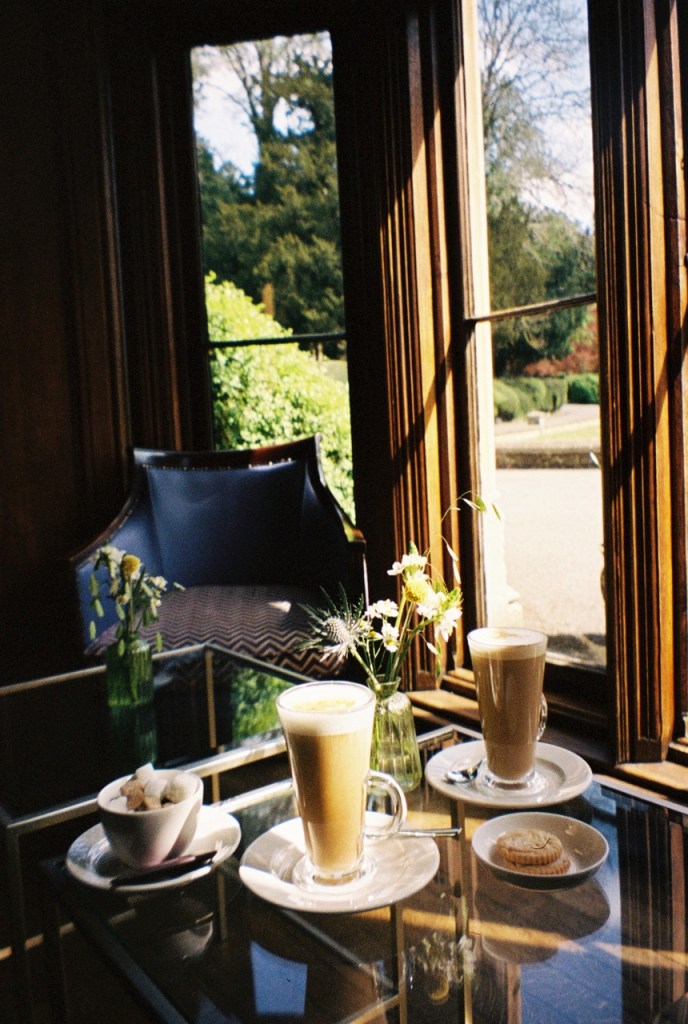
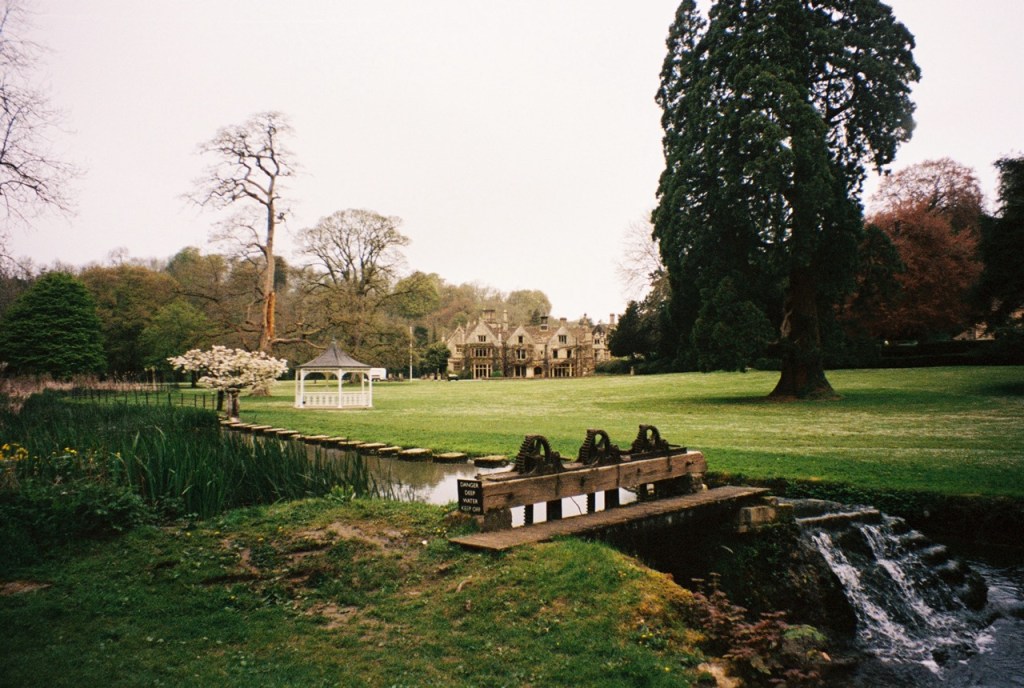
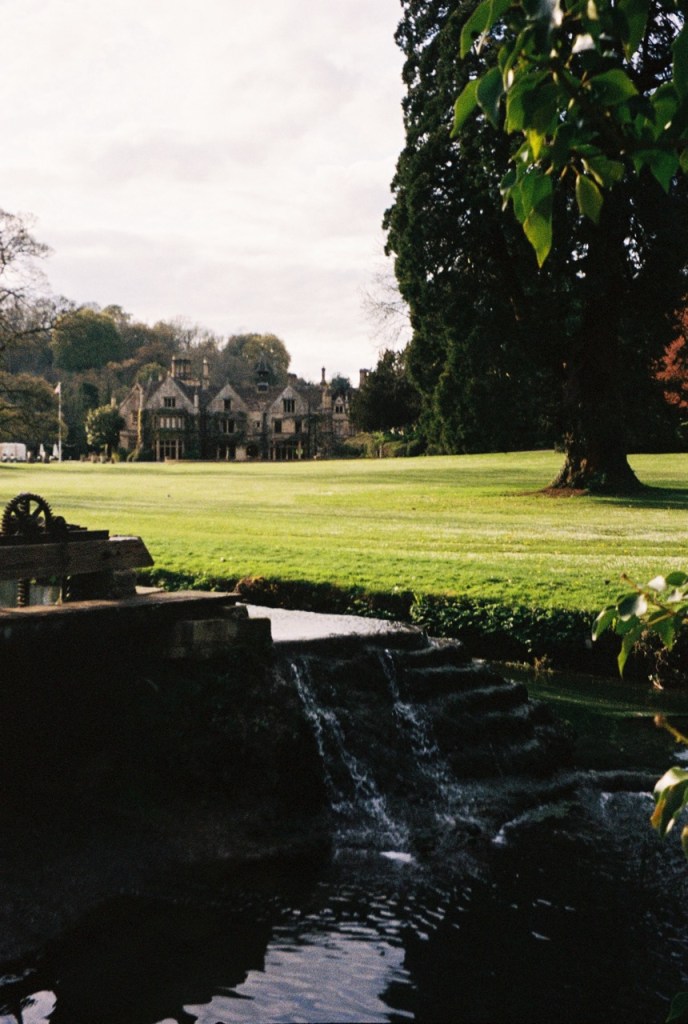
In the afternoons, I’d take my laptop to The Manor House and order a vanilla latte, which always came with a shortbread cookie. I’d sit in the bar, which overlooked the grounds, and after a few hours, I’d move to the library, where the moody lighting seemed to coax ideas to the surface.
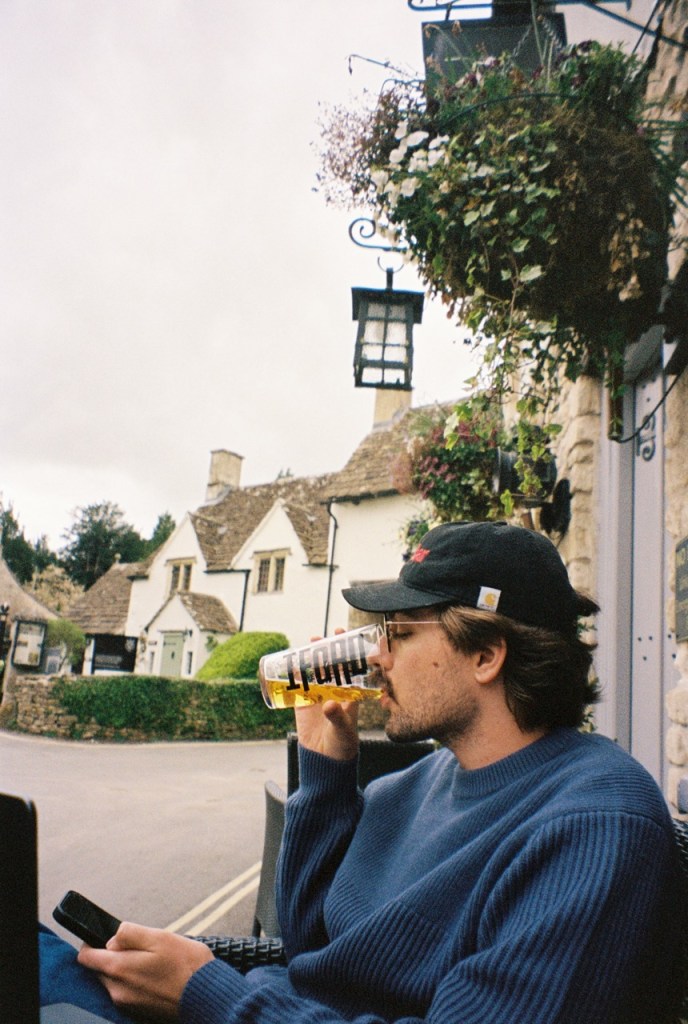
In the evenings, we’d dine at one of our two options or head to a nearby pub, the closest of which, The Salutation Inn, was ten minutes away. One night, we went to the Old Royal Ship, owned and operated by some of Oliver’s English family. We’d usually end the night with a glass (or two) of cider and take a nighttime walk around the grounds.
Walking, or as the English call it, “rambling,” was our friend. After breakfast most mornings, we started walking. One morning, we walked 2.5 miles, and we ended up in Nettleton at St. Mary’s Church, where we are to be married in just six months’ time. We visited the graves of Oliver’s grandparents in the churchyard, laying down daisies we had picked along the way. We then popped our heads into the church, which was quiet, cold, and empty, and it occurred ot me that the next time I’d be here would be my wedding day. We rambled back to Castle Combe, and the sun did that thing where it faded in and out of consciousness, like waking from anesthesia.
As we sauntered through wheat fields and the quintessential, vibrant green English countryside on our last day, I became sad and adopted that kind of worry that comes only with immense happiness — the kind William Wordsworth warns about in the opening of “Lines Written in Early Spring” — and wished that the morning would go on forever. Castle Combe has that effect; it takes hold of you, casts its spell so completely that once you’ve visited, you can never quite shake it from your mind.
Related Posts





Premier Events
Fri, Oct 23
2:00 PM
Santa Barbara
Music & Meditation: Clarinetist Nancy Mathison & Pianist Antonio Artese

Wed, Oct 21
6:30 PM
Santa Barbara
Teflon Comedy/Non-Schtick – Evening of Comedy

Thu, Oct 22
5:30 PM
Santa Barbara
Best Fest: A Celebration of the Best of Santa Barbara® Readers’ Poll 2026

Thu, Oct 22
6:00 PM
Santa Barbara
Chaucer’s Books Author Talk & Signing- Daniel M. Jaffe “Russian Silhouette: A Memoir of Activism and Identity”
Fri, Oct 23
5:30 PM
Solvang
Solvang Haunted House and Street Fair
Fri, Oct 23
7:00 PM
Santa Barbara
This & That Performs at Roy

Fri, Oct 23
7:00 PM
Santa Barbara
Beth Amine’s 20th Anniversary Wildcat Dance Variety Show

Fri, Oct 23
9:00 PM
Santa Barbara
Casa de la Raza Fundraiser: Brasscals! with DJ Darla Bea
Sat, Oct 24
10:30 AM
Santa Barbara
Picnic in the Cemetery: A Live Historical Event

Sat, Oct 24
11:00 AM
Goleta
2nd Annual Charger Cup to Benefit DP High Golfers

Sat, Oct 24
12:00 PM
Santa Barbara
Makers Hive Market
Fri, Oct 23 2:00 PM
Santa Barbara
Music & Meditation: Clarinetist Nancy Mathison & Pianist Antonio Artese
Wed, Oct 21 6:30 PM
Santa Barbara
Teflon Comedy/Non-Schtick – Evening of Comedy
Thu, Oct 22 5:30 PM
Santa Barbara
Best Fest: A Celebration of the Best of Santa Barbara® Readers’ Poll 2026
Thu, Oct 22 6:00 PM
Santa Barbara
Chaucer’s Books Author Talk & Signing- Daniel M. Jaffe “Russian Silhouette: A Memoir of Activism and Identity”
Fri, Oct 23 5:30 PM
Solvang
Solvang Haunted House and Street Fair
Fri, Oct 23 7:00 PM
Santa Barbara
This & That Performs at Roy
Fri, Oct 23 7:00 PM
Santa Barbara
Beth Amine’s 20th Anniversary Wildcat Dance Variety Show
Fri, Oct 23 9:00 PM
Santa Barbara
Casa de la Raza Fundraiser: Brasscals! with DJ Darla Bea
Sat, Oct 24 10:30 AM
Santa Barbara
Picnic in the Cemetery: A Live Historical Event
Sat, Oct 24 11:00 AM
Goleta
2nd Annual Charger Cup to Benefit DP High Golfers
Sat, Oct 24 12:00 PM
Santa Barbara



You must be logged in to post a comment.