

What’s this? Mural action in the tourist destination beach burg of Santa Barbara? It is anything but an oxymoron, as borne out by the presence and history of the medium in town. Some research and seeking out may be required, and beyond just the prominently visible George Floyd mural on Haley, the vast “Don Quixote” mural by Howard Warshaw and Channing Peake in the Central Library or the David Siquieros mural given a home at the entrance of the Santa Barbara Museum of Art. Another keynote mural in the county is noted artist Judy Baca’s celebration of farmworkers with a 1989 mural at the Guadalupe City Hall entrance.
An impressive accounting of the art form was presented by Sullivan Goss last year, in the form of an ambitious Santa Barbara mural map project, spanning the more than 100 murals in the region (see Independent story here).
Another significant survey, and forum, is now on view under the governmental auspices of the Santa Barbara County Office of Arts and Culture. Scaling the Walls, curated by artist and Office of Arts and Culture Curator Tom Pazderka, graces the walls of officialdom — at the Channing Peake Gallery on the ground floor of the County Administration Building and on the walls of City Hall galleries.
Yes, this art is taking to the streets, governmental spaces and to City Hall herself, by friendly force.
Pazderka said the project “has been a year in the making and it is possibly the biggest exhibition we’ve ever done in terms of scope and — pardon the pun — scale.” Seven new murals in progress are involved, previewed in this show, created in consortium by five organizations — nonprofits and art departments of various educational institutions in the county, and three individual artists.
Murals necessarily require more real estate, be it actual exterior walls and in this case, gallery wall space. A fine and site-specific introduction fills one wall at the entrance of the Channing Peake with the familiar orange bath of the state flower, “Poppies,” created by artists from Alan Hancock College.
Meanwhile, a team of student artists from UCSB’s ever-enterprising College of Creative Studies (Moxie Bright Evan, Owen Jenkins, and Beau Strickland) venture in a more abstract — yet literally grounded — direction with the epic “Picking Up the Cracks in the Sidewalk to Save for Later.” This meandering swath of visual stimuli could be viewed as a slice of street/sidewalk life, finding beauty in the everyday, elevating the quotidian to artistic status.
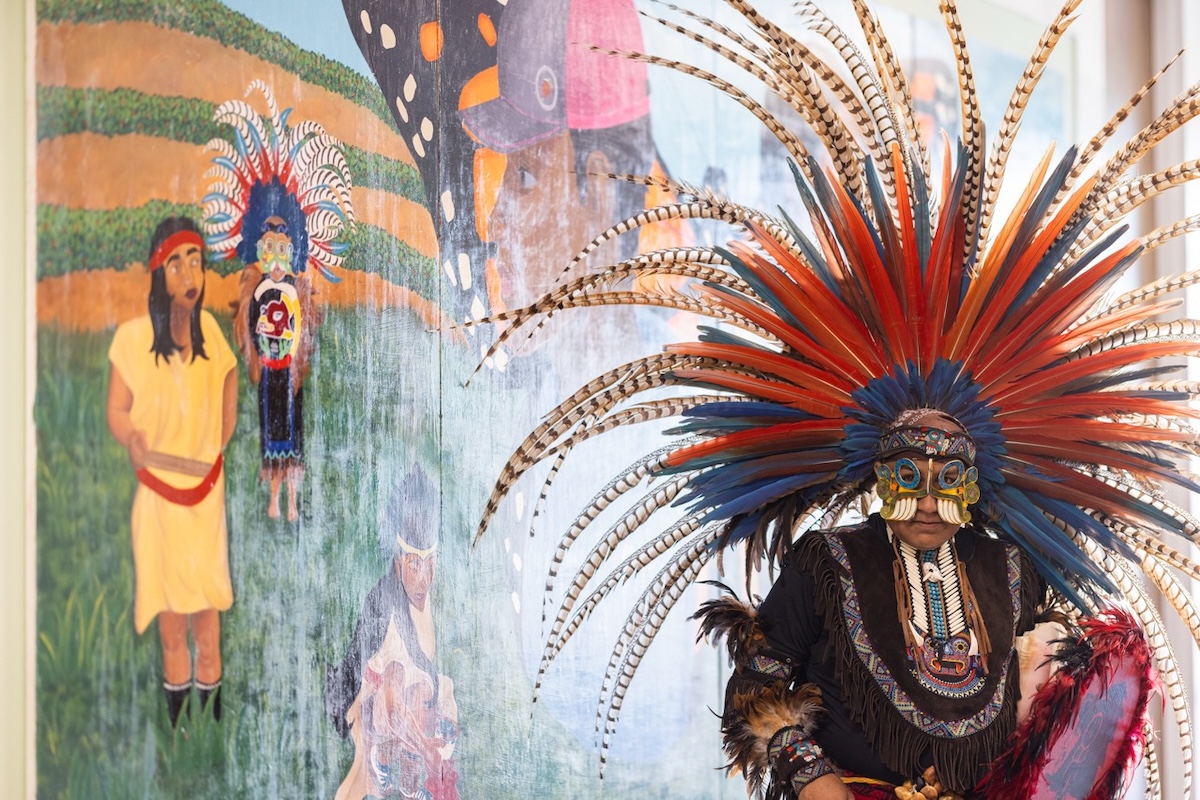
Across the hall in the Peake gallery, a more anthropological reality enters with the native subjects portrayed in “Indigenous Migrant Youth,” by the Corazon del Pueblo Culture and Creative Arts Center of the Santa Maria Valley (artists Elizabeth Lerena, Chantal Medina, Marlin Olea, and Tommy Ruiz). Native and contemporary youths flank looming portraits of an iconic boy and a girl, with a ceremonial butterfly as literal and symbolic background.
Individual artistic statements cohere into a mosaic of discrete square plywood panels made through Lynda Fairly Carpinteria Art Center, a “Teen Mural Project.” Through the Center and the efforts of the seasoned artist-muralist John Wulbrandt, the sometimes folk-art-like artistic expressions of youths age 11-19 were created around themes and issues triggered by the George Floyd tragedy and life during the pandemic.
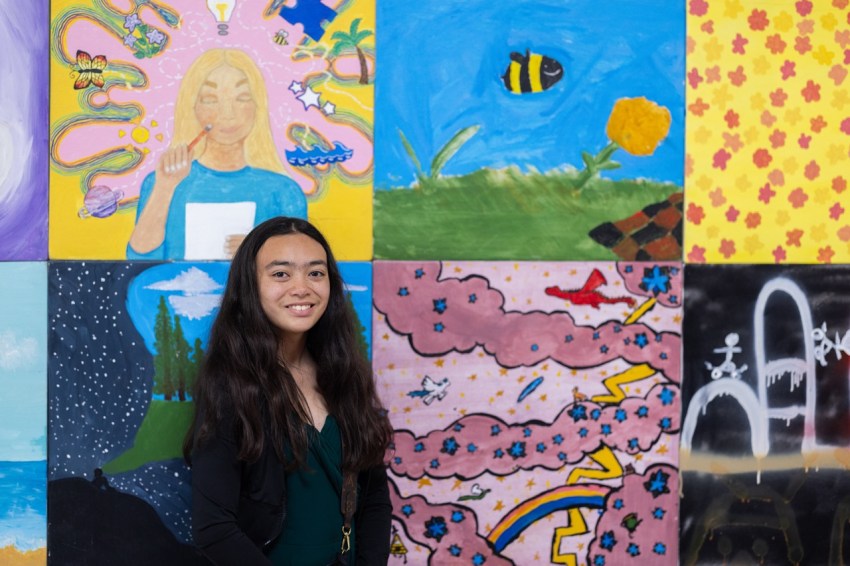
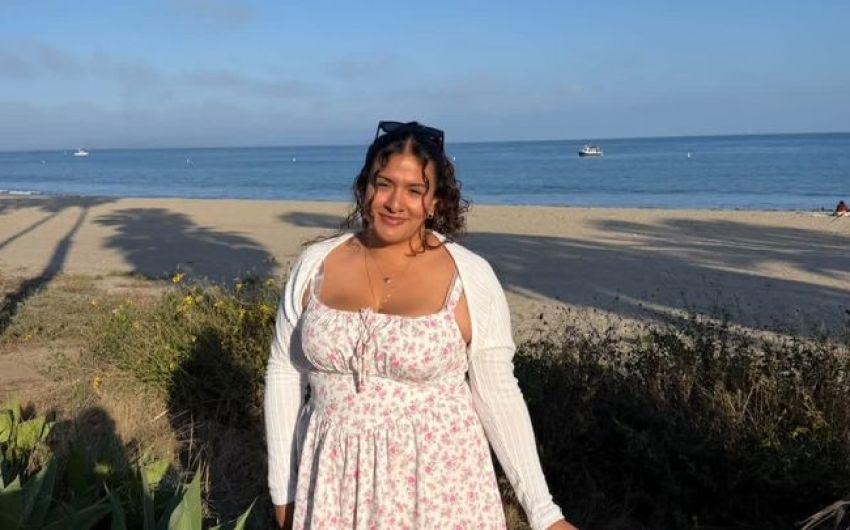
A young artist poses with her creation as part of the Teen Mural Project from Lynda Fairly Carpinteria Art Center | Photo: Ingrid Bostrom 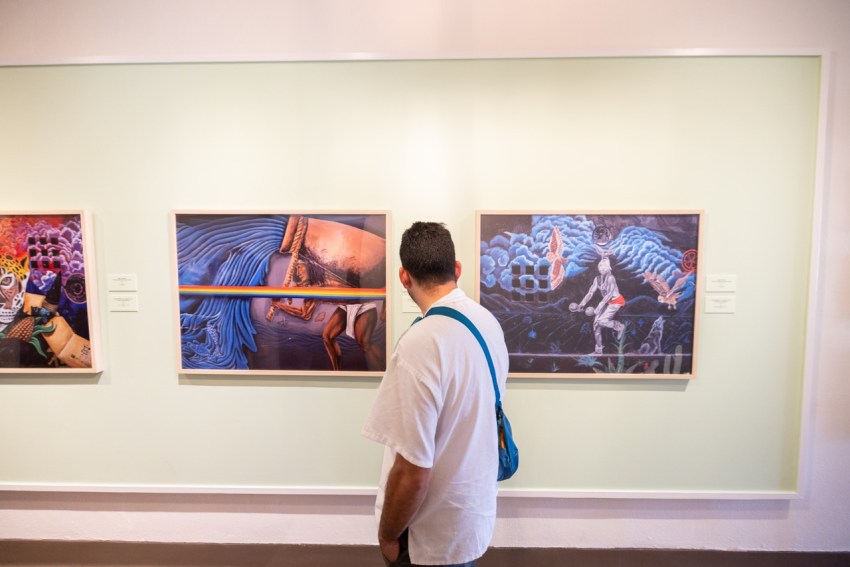
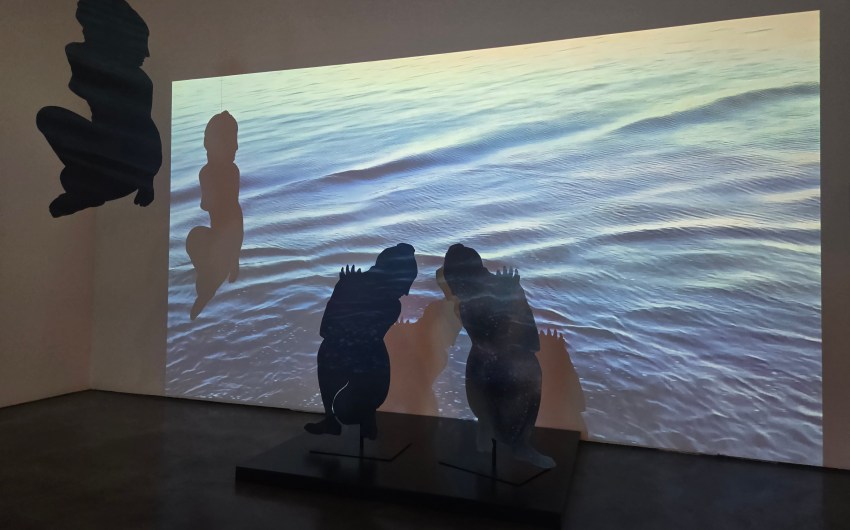
A guest views the ‘Scaling the Walls’ exhibit | Photo: Ingrid Bostrom 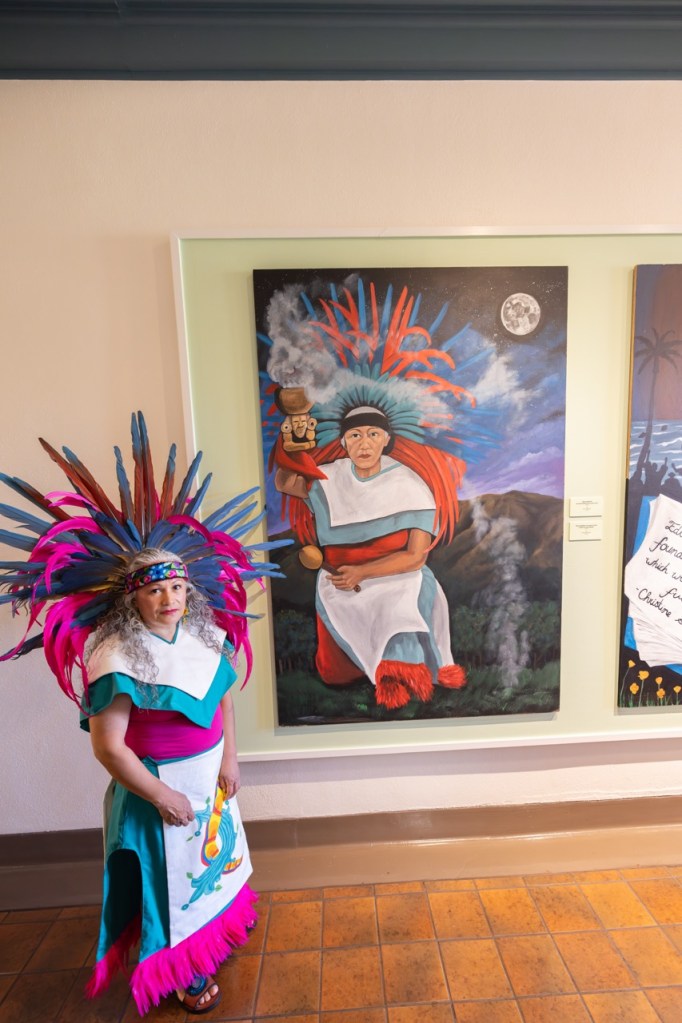
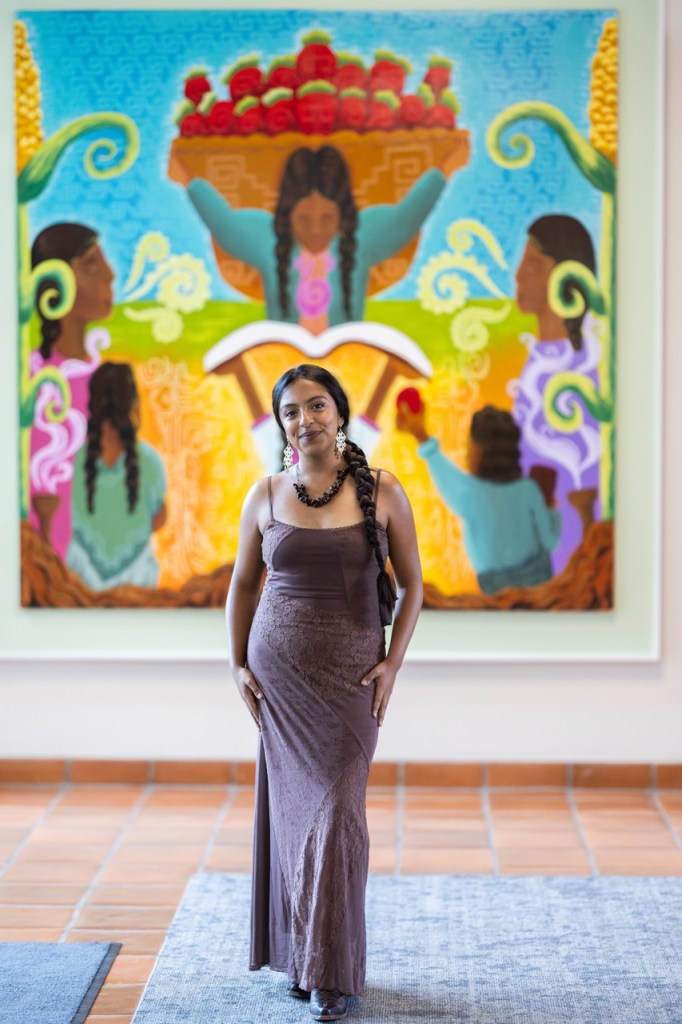
An artist at the opening of Scaling the Walls | Photo: Ingrid Bostrom 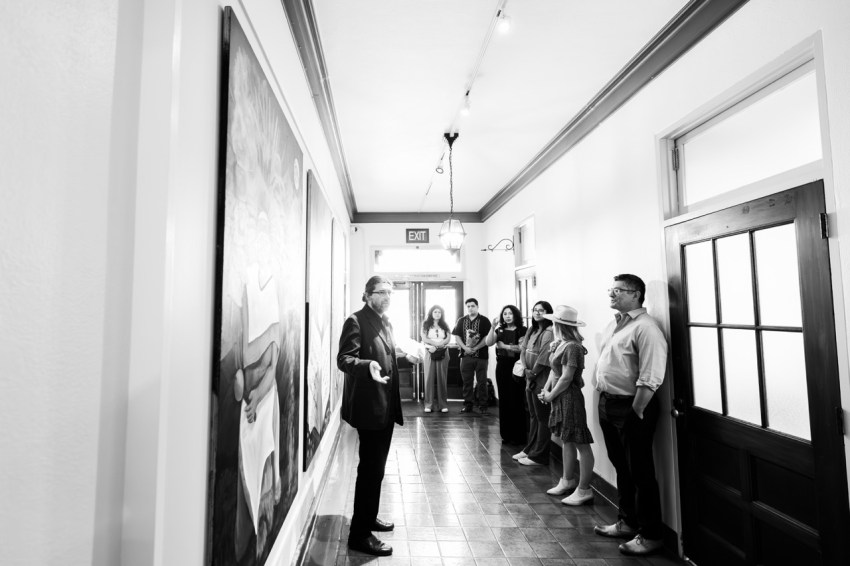
Curator Tom Pazderka welcomes guests to the Santa Barbara City Hall Gallery | Photo: Ingrid Bostrom 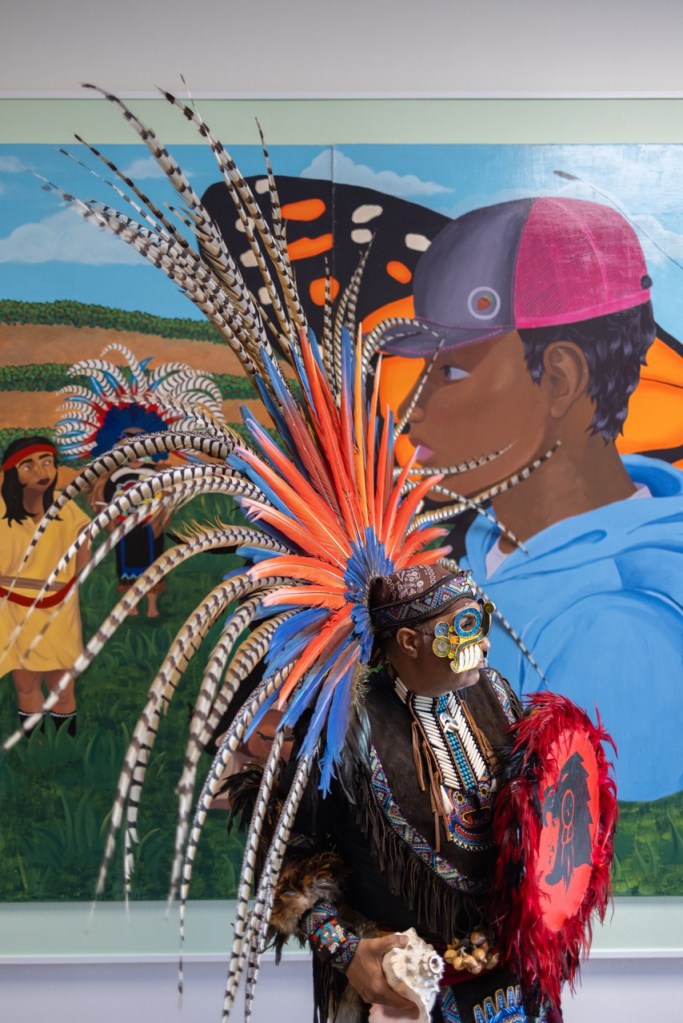
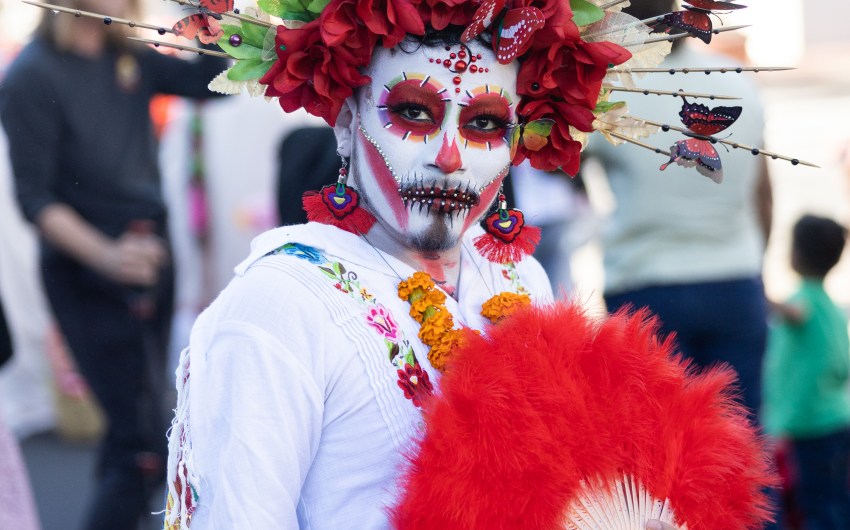
A performer in front of “Indigenous Migrant Youth” by Corazon del Pueblo Culture and Creative Arts Center | Photo: Ingrid Bostrom 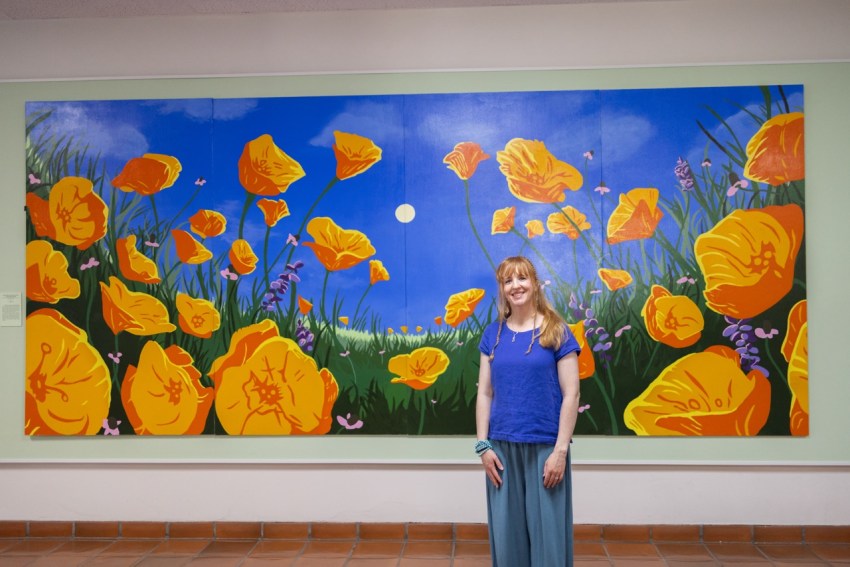
“Poppies” was created by artists at Alan Hancock College | Photo: Ingrid Bostrom 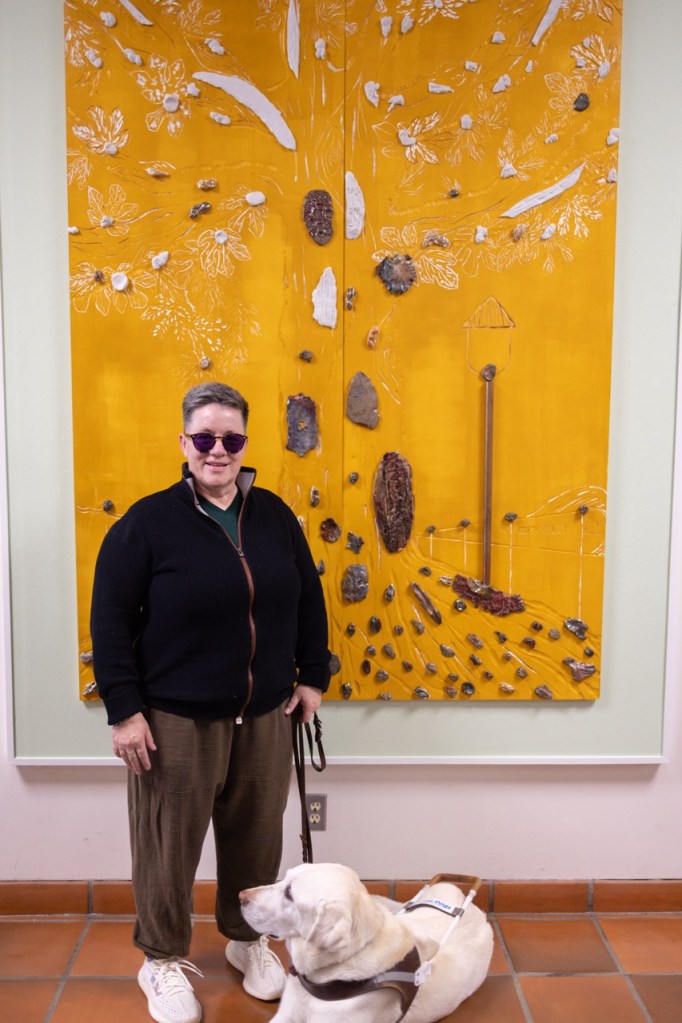
“A Seed Was Planted” by Cheri Owen | Photo: Ingrid Bostrom
In another corner and concern in the gallery and its host environs, the very “public” aspect of muralism is embodied in the two large and vibrantly hued square paintings making up “Sabiduria del Pueblo y Campo,” (translating to “Wisdom of the people and the countryside”) of Helen Yanez — a mentor at Corazon del Pueblo — literally bordering the government business portal to the County Planning Commission Hearing room. A socio-political element and equal time public visibility comes through her depiction of Santa Maria farmworkers on their arduous workaday tasks.
Another concrete and historical facet of Santa Barbara comes through in the show, thanks to the intriguing work of Cheri Owen, who happens to be legally blind. Her large piece, “A Seed Was Planted,” pays homage to the famed Moreton Bay Fig Tree, by the train station, which, legend has it, grew from a seed by an Australian sailor in 1876. Pertinent to the artist’s extra-visual sensibilities, tactility is key here, with sculpted clay objects and surface scrapings carefully etched into the whole.
Over at City Hall, the focus is on work created through the long-standing Parks and Recreation-hosted youth mentorship organization Arts Alliance, led by graduates of the program, artists Miguel “Omepache” Rodriguez and Denisse Villanueva. Native and mystical indigenous life is portrayed in such pieces as “Chumash Rainbow Bridge,” with tribal members toting a tomol, with a large rainbow-colored horizontal stripe bisecting the frame. Elsewhere, paintings of an indigenous priestess, graduation scene, and idealized view of farmworkers at work blend past, present and the metaphysical into harmonious accord.
Through it all, “Scaling the Walls” manages to both document and inspire the ongoing vibrancy of the mural tradition in our very county. Fittingly, the walls in question belong to us, the public body politic. See sbac.ca.gov/scaling-the-walls-2/.



You must be logged in to post a comment.