

As if by design, two Music Academy of the West (MAW) events last Saturday demonstrated how minimalism, born roughly 50 years ago, is being revitalized and reconstituted by next-generation progeny. At the Santa Barbara Public Library plaza, we heard MAW guest composer Christopher Cerrone’s The Only Way Is Through, a hypnotic etude for children’s choir — the Sing! Ensemble — and percussionists. Echoes of major minimalist Steve Reich trickle through it.
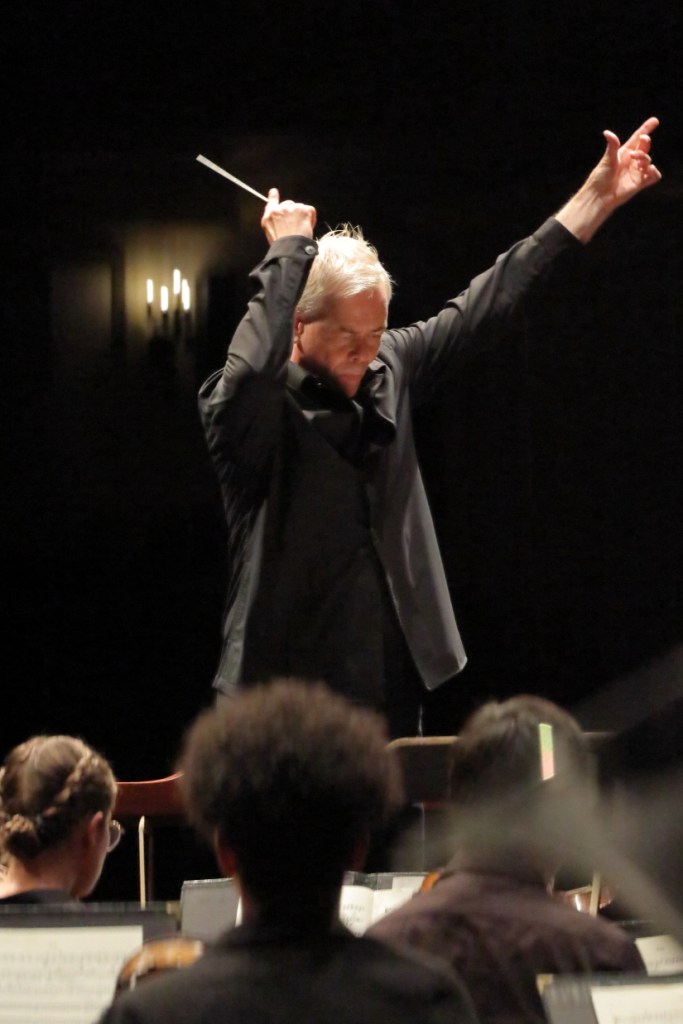
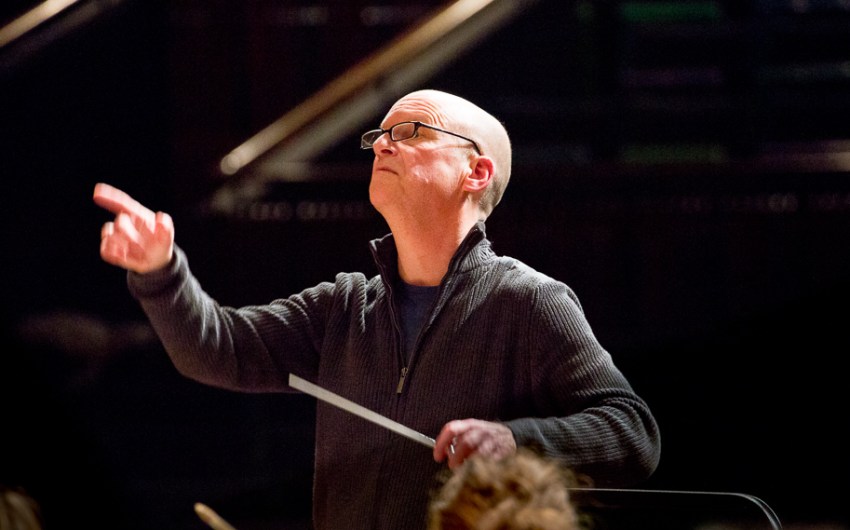
A more direct progeny connection settled into The Granada Theatre that night, in the form of Samuel Adams’s uniquely captivating “piano concerto,” No Such Spring, the centerpiece of an Academy Festival Orchestra program, mated with Sibelius’s First Symphony and boldly and sensitively conducted by Hannu Lintu. Although Adams is on a path of self-discovery and personal palette-making, it was hard to deny echoes of the early orchestral work of Great American composer John Adams, who is, of course, the younger composer’s father.
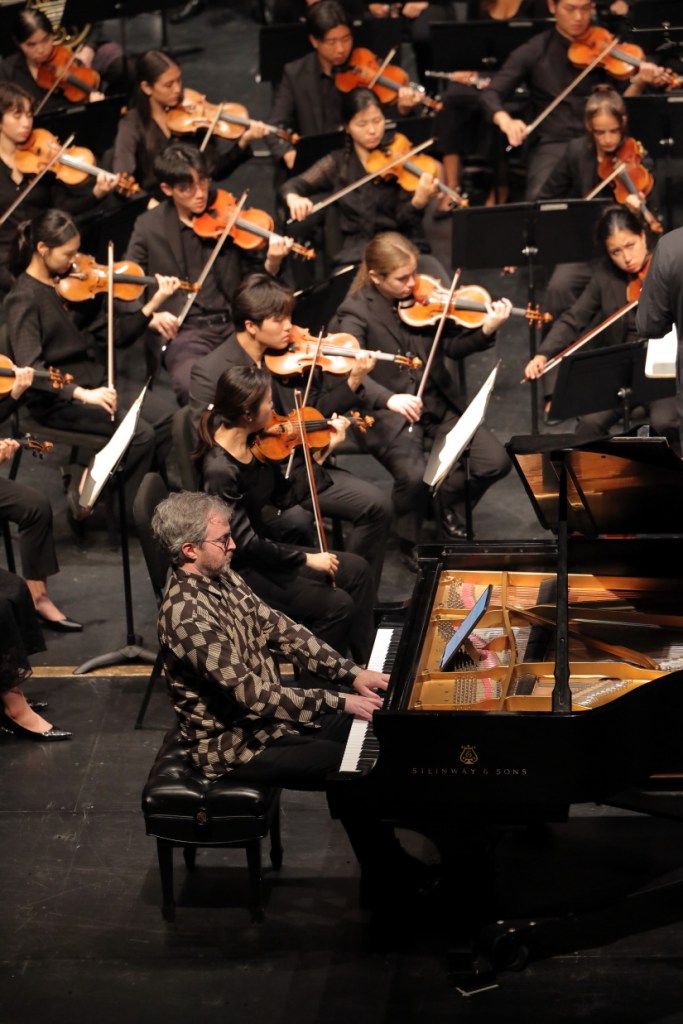
Son of minimalism allusions aside, Saturday’s Adams extravaganza easily met the expectation that this would be one of the clear highlights of this year’s MAW Festival (which closes out with this coming Saturday’s orchestra concert at the Granada). The work’s youth become it: the piece is a freshly-minted sensation, actually written for Academy faculty pianist Connor Hanick. He premiered it in 2023 with the San Francisco Symphony and reprised his role on Saturday.
And what was that role? That very question illustrates a distinguishing feature of the score. Contrary to the typical profile of a concerto, which features its soloist in a bright and challenging spotlight, the piano part in this score is more integrated into the ensemble whole. As Adams has explained, the piece evolved from the time of its commissioning — just pre-pandemic in 2020, by then SF Symphony head Esa-Pekka Salonen — and it grew and morphed from a much smaller work to a formidable orchestral opus which is “less a typical concerto and more akin to Olivier Messiaen and his ‘almost’ concertos,” e.g. Turangalila and Des canyons aux étoiles.

As heard on Saturday, the “almost” qualifier fits. Hanick lays out a series of simple and sometimes haunting motifs and solo moments, from the spare opening statement to the closing chordal benediction. Adams’s orchestral language treats the ensemble in both new and familiar ways, favoring luminous string beds and vigorous use of brass (à la Papa John’s work on his keynote ‘80s pieces, Harmonium and Harmonielehre). Textural surprises line the path of No Such Spring, as when two harps suddenly issue forth a strumming part. Dynamic contrast also plays a role, as when a dense, intense passage abruptly stops and segues into an eerily quiet solo piano passage, guiding a “slow movement” section into the rushes of the final “Garden of Wire and Wood” movement.
By the time of the final bittersweet chordal denouement, the naked lure of the piano part rang out in the Granada air, lingering in the memory even as I write this a few days later. In short, No Such Spring has staying power, and deserves the same on concert stages everywhere.
The musical highs continued after intermission, but in a more archival way. A general impression given by the AFO’s performance of Sibelius’s leaning-into-the-20th-century symphony, an impression probably both actual and implied, was that the Finnish maestro Lintu had just the right painterly touch with the great Finnish composer/national hero’s music.
But the primary takeaway from Saturday was all about Adams (and Hanick, by extension). In his statement, Adams suggests that the title No Such Spring relates to such references as Stravinsky’s iconic Rite of Spring and as “not only as a symbol of renewal, but as something violent, chaotic and wild, like Thoreau’s pond, booming and cracking….” Such visceral and surprise-turning qualities come through in the score, which mediates the repetitive motif patterning of minimalist thinking with assertive structural detours into whereabouts not quite known. It’s never a dull moment, flecked with meditative eddies, with and beyond the piano.
Saturday’s lesson in Santa Barbara: the seductive, propulsive minimalist beat goes on, in the hands and minds of younger, productive contenders.





You must be logged in to post a comment.