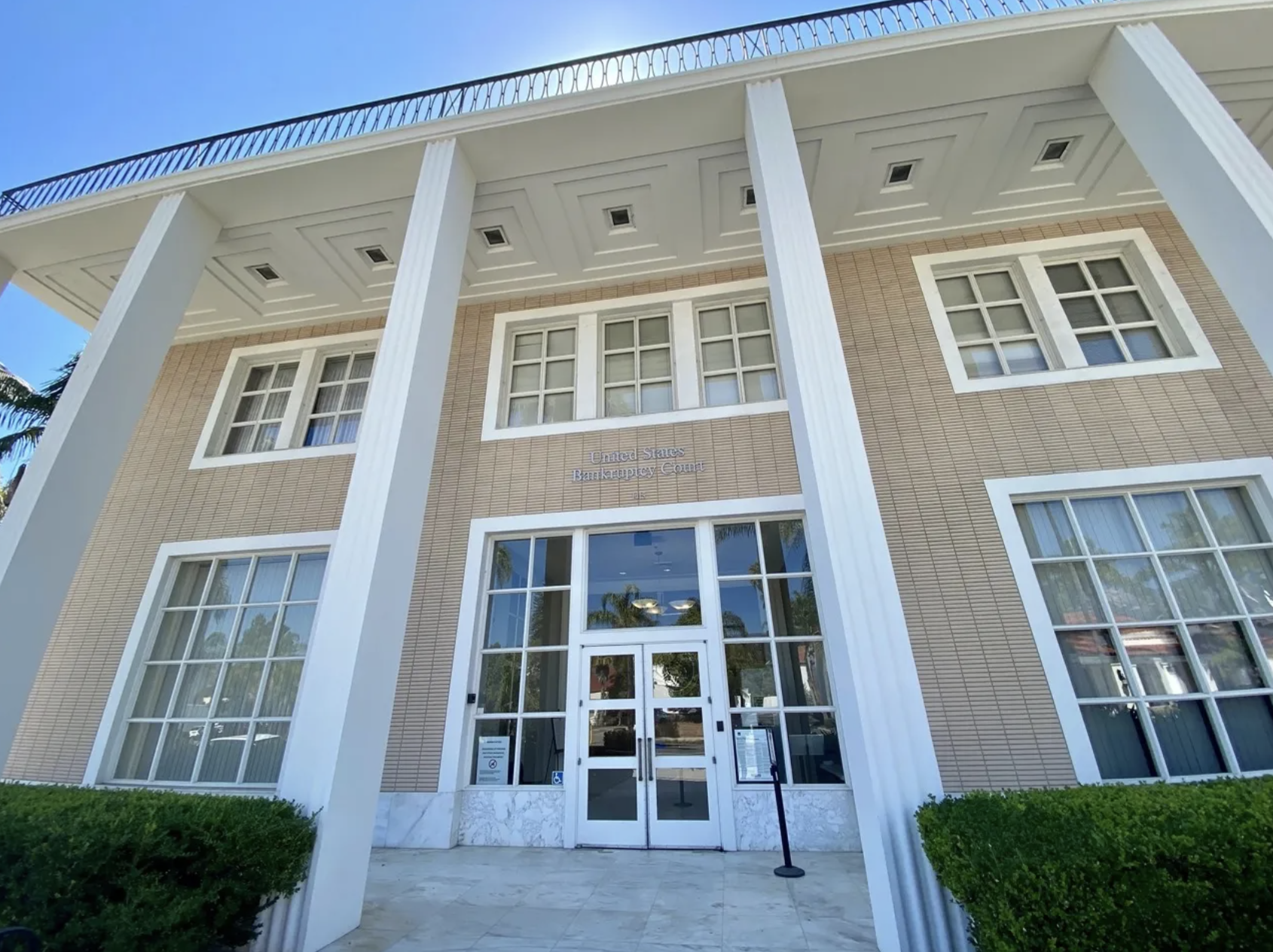
A heatwave this past August caused air conditioning units to fail across Santa Barbara, including at the federal bankruptcy court at 1415 State Street. The heat that grew intolerable on the second floor might just bring about the removal of the Santa Barbara News-Press case from the venue, away from the city that the daily print publication covered for more than 150 years.
The Santa Barbara property that holds the Northern Division of the U.S. Bankruptcy Court for the Central District of California belongs to Wendy P. McCaw, the billionaire publisher of the News-Press when it filed for bankruptcy in July 2023. She owns a number of significant pieces of real estate around town, and her property management company was in charge of maintaining the air conditioning at the courthouse. A week-long stream of emails between “ampersandsb” and the court’s facility managers indicated it would be days before the repairman could get there and that someone was getting hot under the collar about it.
Who that someone was is redacted in the emails presented in an exhibit that McCaw’s attorneys filed recently. Also redacted is who was present to discuss “an ongoing rent withholding dispute concerning conditions in courthouse” at a Facility Security Committee meeting in August. In fact, the entire meeting document is a series of big black boxes in the exhibit McCaw’s attorneys filed in step one of a two-step process. They must first get the court’s permission to use redacted documents before they can file their motion to change the venue of the bankruptcy proceedings. That motion has not yet been filed, but the implication is that the court holds prejudice against their client.
The fact that McCaw owns the bankruptcy court property was no mystery to the court or the attorneys. In April 2024, roughly one year into the now three-year bankruptcy, Judge Ronald A. Clifford III asked all the attorneys if they knew McCaw owned the building in which they sat. It had even come up at a recent Committee on Conduct meeting that included the presiding judge, Clifford said. The attorneys acknowledged they did know; no one objected.
Moving the case away from Santa Barbara holds another benefit for McCaw’s attorneys, Eisner LLP of Beverly Hills. At the previous hearing, in May 2025, they failed to make an in-person appearance as directed, instead, appearing remotely by video. Judge Clifford sanctioned the entire lawfirm, prohibiting its attorneys “from making any remote appearance in the Northern Division of this Court, in this or any other case, pending further order of the Court.” A transcript of the May hearing has been made part of the record.
The bankruptcy case, now in two phases, isn’t likely to end for a couple more years. There’s the regular set of proceedings to wind up business and pay creditors, currently on pause for the second, adversarial proceeding. That vein mines the trustee’s claim against the News-Press real estate — the historic, George Washington Smith–designed white Spanish-Revival monolith next door to City Hall in downtown Santa Barbara and the gray cinderblock printing press plant in Old Town Goleta.
The stakes are high for the bankruptcy creditors, as the properties are worth an estimated $30 million. Ampersand Publishing LLC, the McCaw-owned publisher of the News-Press, claimed less than $50,000 in assets when it filed for Chapter 7. More than 800 creditors are owed millions in unpaid bills, subscriptions, and wages.
According to bankruptcy trustee Jerry Namba’s attorneys, the two properties belong in the bankruptcy estate, not to McCaw. The trustee hopes to prove McCaw’s transfer of the two properties in 2014 away from Ampersand Publishing and to herself, through two different LLCs she owned, falls within the lengthy statute of limitations of the IRS. Namba’s attorneys argue that because the IRS is a creditor and the trustee represents all the creditors, the trustee may use that statute to claw back the properties.
McCaw’s attorneys assert that because Ampersand Publishing had never paid employees what they were owed — a $2 million judgment affirmed in 2017 by the National Labor Relations Board included merit pay, which would have had taxes withheld — the IRS statute was invalid: No employee compensation, no tax consequence, they claimed.
Judge Clifford took six months to review the thorny question, ultimately deciding the trustee had a valid argument but that the final determination would have to be made at trial. McCaw has demanded a trial by jury. Where it will take place is now an open question.