It was January 2016, during my first week working at a Mexican restaurant in Goleta when I heard the words: “Are you stupid?”
A woman asked me for a plate. I didn’t understand what she meant. My English was still new to me, unfamiliar on my tongue. The woman grew impatient, then angry. She repeated the word “plate” louder and louder, and when I froze, she called me stupid.
She didn’t know that I had just arrived in the U.S. from Mexico. Every word of English felt like a puzzle I was trying desperately to solve. She didn’t know how hard I was trying.
Standing there, holding a tray and feeling the eyes of the restaurant on me, I felt fear, sadness, and embarrassment all at once. For the first time, I felt completely out of place.
Before becoming a server, I was a janitor at a school. I cleaned classrooms when students and teachers had gone home. The hallways were quiet, and the smell of cleaning supplies filled the air. Sometimes, as I wiped desks or swept floors, I wondered what it would feel like to sit in one of those classrooms as a student.
But first, I needed to learn the language.
I realized that, if I wanted to belong to and understand the world around me, I needed to improve my English. So, I enrolled in the English as a Second Language program at Santa Barbara City College. Slowly, word by word, sentence by sentence, the language that once felt impossible began to open doors.
A year later, I became pregnant with my first child and continued working as a server. I remember the morning sickness, the swollen feet, and the achy back by the end of each shift. I missed my family in Mexico deeply, but traveling back was not an option. I was homesick and lonely, living in a new country where I still did not fully feel like I belonged.
Still, I kept going.
Motherhood brought joy and hope, but it also brought fears and responsibilities. I knew that if I wanted to give my child more opportunities, I needed to keep moving forward.
So, I did.
I got a better job and enrolled at Ventura College. Balancing school, work, and motherhood wasn’t easy. By then, I had two children, and there were nights when I studied after they fell asleep and mornings when exhaustion followed me everywhere. Yet step by step, class by class, I kept going until I graduated with high honors with a degree in business management.
At that point in my life, I was trying to be a good worker, a good mother, a good student, and a good member of my community.
But the journey wasn’t always encouraging.
In the summer of 2023, I worked as a housekeeper. The job itself wasn’t the problem. I’ve never been afraid of hard work or felt ashamed of any job. To me, work means dignity and opportunity.
What hurt was something else.
I often felt invisible.
People spoke around me instead of to me. It was as if my accent, background, or simply being an immigrant made my thoughts and feelings less important.
I remember sitting in my car before shifts, crying quietly so no one would see. Not because the work was difficult, but because I felt like I didn’t matter.
After six weeks, I left.
As I walked away, I felt sadness for the coworkers who stayed because they had no other choice. Like me, they were immigrants, people with dreams, families, and ambitions, yet treated as if they were invisible.
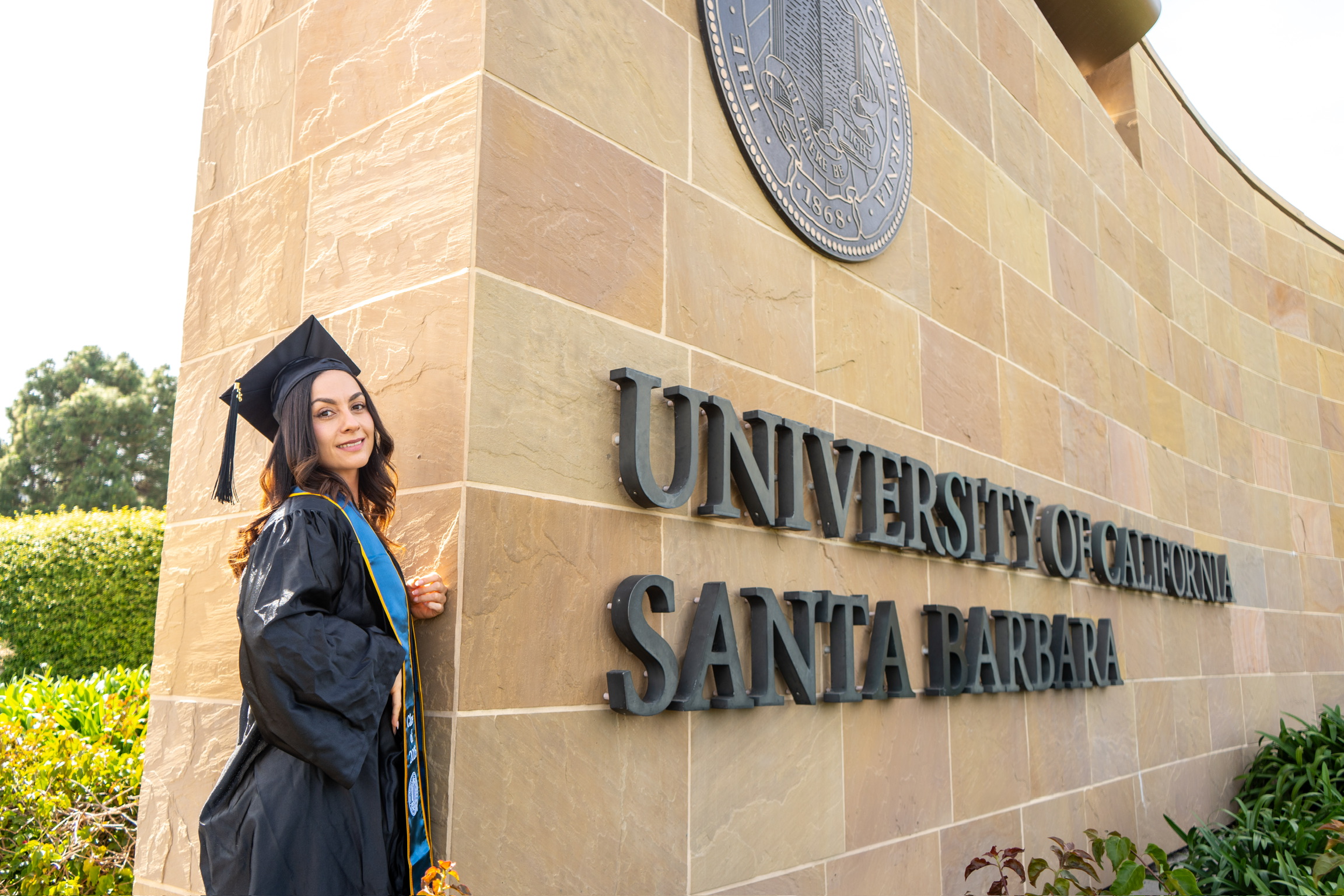
That same day, I drove to UCSB and filled out my application.
I refused to let anyone make me feel unworthy.
The following year, I began studying at UCSB. For the first time, I felt part of a community, but being a student again was intimidating. I was older than my classmates, and my strong accent sometimes made me hesitate before speaking in class.
Impostor syndrome followed me often.
At the same time, immigration debates were everywhere during the presidential election season. The language used about immigrants made me feel as though people like me were being blamed or targeted. Those moments were difficult and discouraging.
I love this country. I’m grateful for the opportunities it has given me, for the education I have received, and for the community my family has found here.
My story is only one story among millions.
Like me, many immigrants carry hope, courage, and determination. We leave behind families, languages, and familiar places to build new lives. We work hard because we believe in the possibility of belonging.
Immigrants are often described in political debates as numbers, problems, or threats.
But we are not statistics.
We are parents, students, workers, and neighbors. We are people who dream, struggle, and continue moving forward even when the path is uncertain.
And sometimes, our stories begin with a single moment like standing in a restaurant, trying to understand the meaning of the word plate, while hoping that one day we will be fully understood too.