
Island of Ash:
A Trip to Santa Rosa Island
After the Fire
Damage Assessment and Recovery Efforts Begin
Following Largest Fire in Channel Islands History
By Callie Fausey | Photos by Elaine Sanders
June 18, 2026
[Updated: Mon., June 22, 10:30am]
On June 5, the last firefighting crew was pulled off Santa Rosa Island following the largest blaze in the Channel Islands’ history.
On June 8, the Independent was invited to see the charred island for ourselves. It’s the second largest island in the chain of eight Channel Islands, five of which, including Santa Rosa, make up Channel Islands National Park. Known as the “Galapagos of North America,” these islands are rich with history and full of rare animal and plant life found nowhere else in the world.
When Santa Rosa Island burned, some of this history and life burned with it.
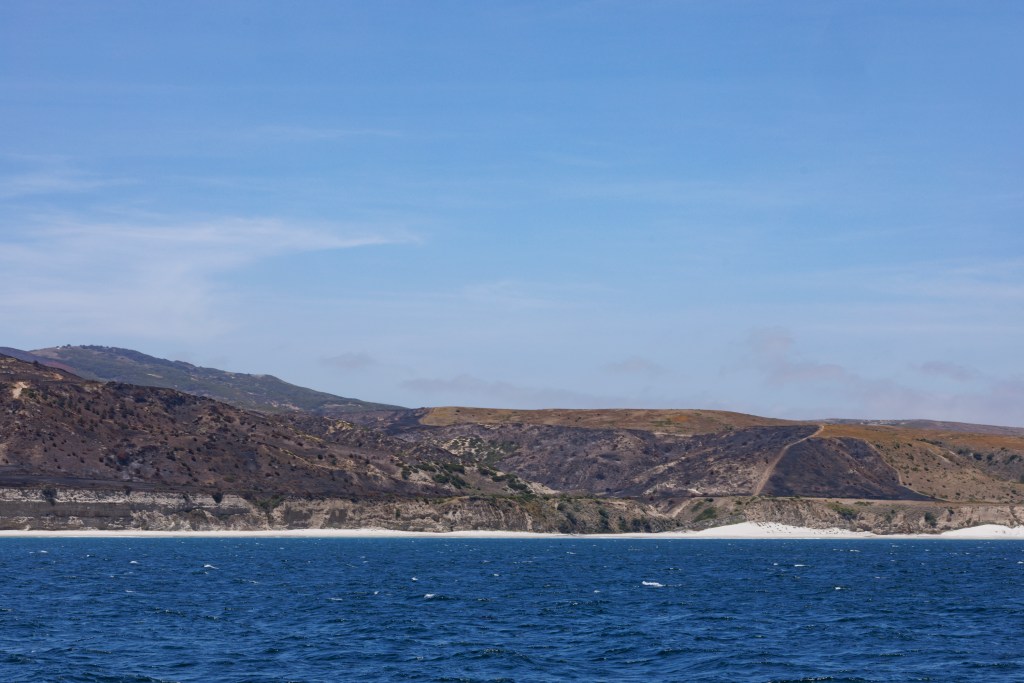
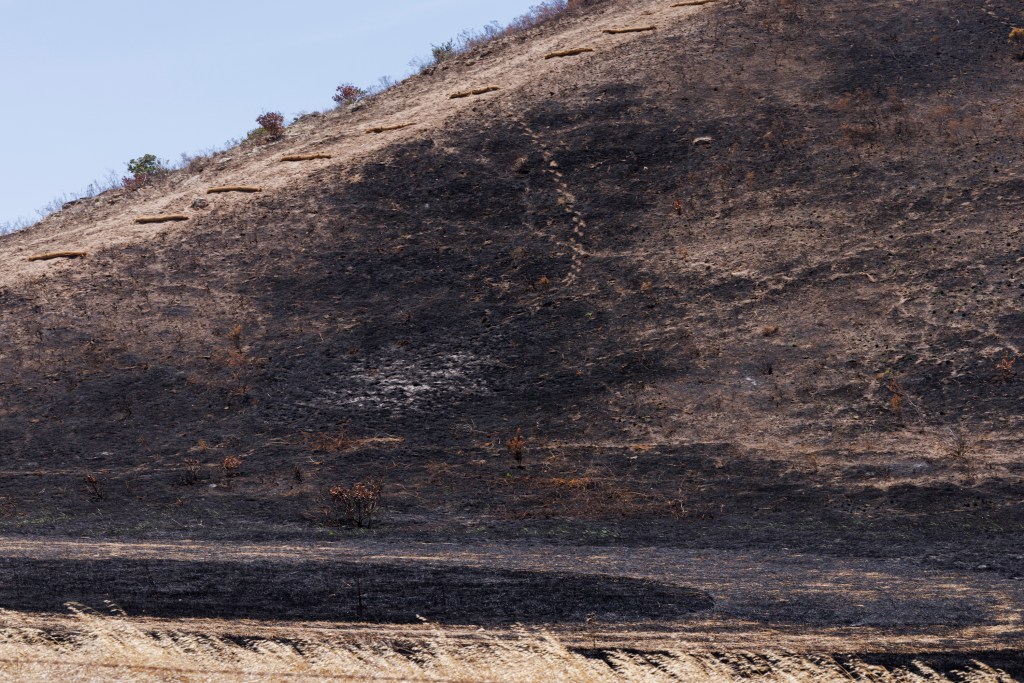
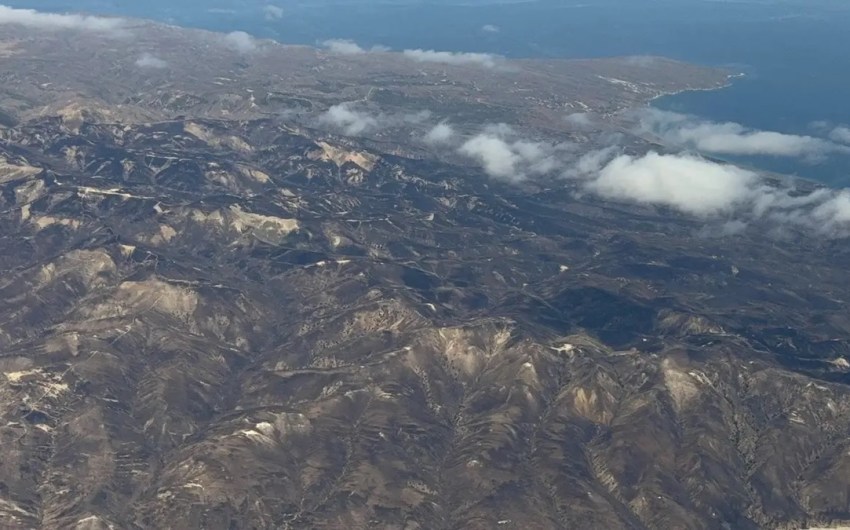
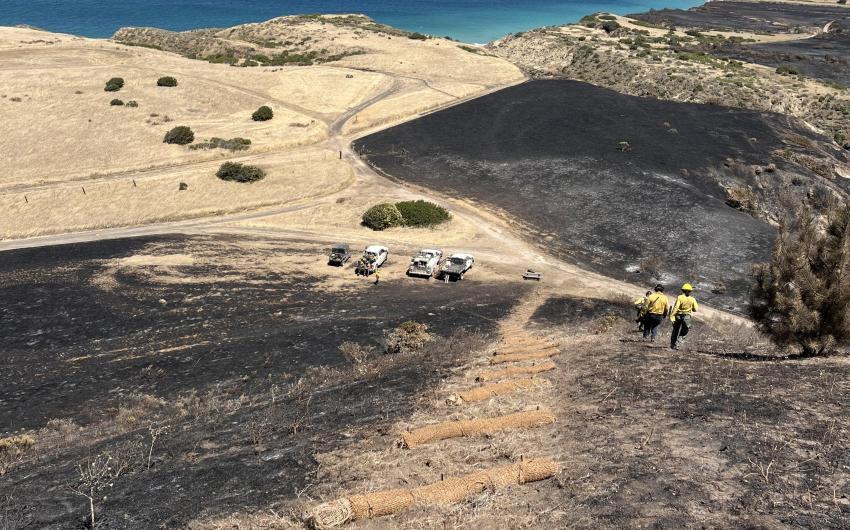
Our tour revealed the extent of the devastation: Much of the once-pristine landscape was reduced to ash. Containment lines were visible through the stark contrast between blackened and unburnt grasslands. As high winds kicked up dust around us, it was easy to picture the rolling blaze consuming vegetation along the island’s curves.
The fire burned for about two weeks, scorching a total of 18,379 acres. Depending on perspective, 40 percent of the island was lost, but 60 percent saved. It was hard not to think of the flora and fauna that felt the heat.
With firefighters gone, a team of specialists took up residence on the island for a rapid assessment of the ecological, cultural, and recreational impacts of the fire for the National Park Service to address in its long-term restoration efforts.
Flames Spark and Spread
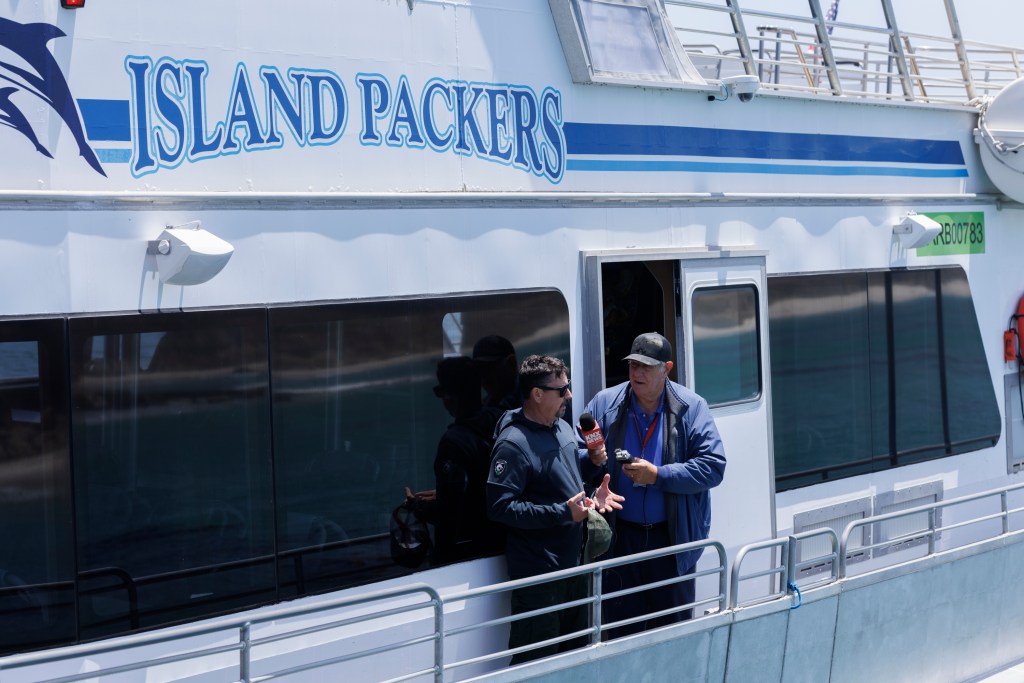
On the hours-long Island Packers boat ride to the island, Kelly Singer, acting deputy fire chief for the U.S. Wildland Fire Service’s Coastal Mountain Unit, gave us some of the missing details behind the fire response.
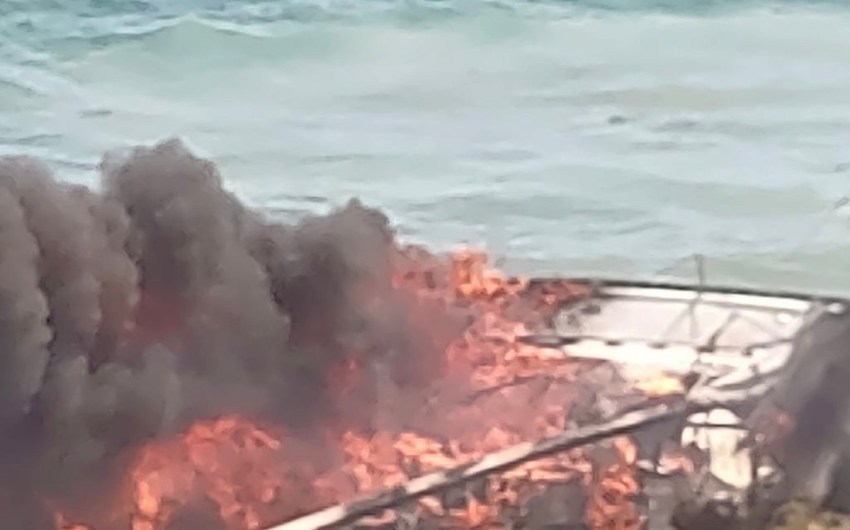
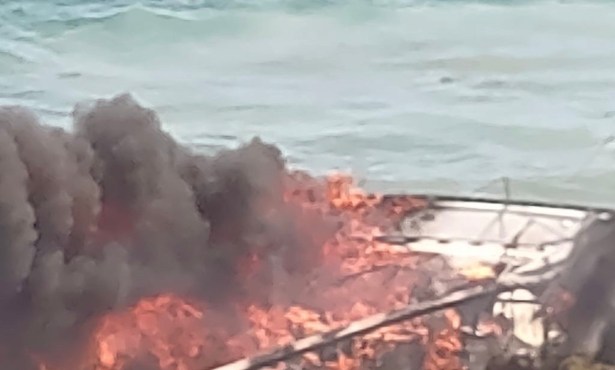
The fire started on Thursday, May 14, after a 67-year-old man reportedly crashed his sailboat, a 54-foot-long vessel named Wet Vette, on the island amid choppy waters and unfavorable weather conditions. As reported by the Independent’s Elaine Sanders, that same ship ran aground on the nearby Santa Cruz island the week prior.
The human-caused fire, which is still under investigation but suspected to have started due to either the initial boat wreck or the emergency flares the sailor subsequently fired, was not reported until the next day. It was first spotted by a plane overhead early Friday morning, and was confirmed by park staff by 8:30 a.m.
Park Service staff, working on restoration projects or research studies, live on the island for weeks at a time. While their homes were miles away from the fire’s origin near Ford Point on the southeast edge, they could see the 20-to-30-foot flames pushing toward them. A fire duty officer on call initiated the response after the staff’s alert.
The Park Service uses a “run card” — a blueprint of resources to send to a fire — to guide its response.
“Once we know there’s a fire on the island, we notify the fire duty officer; get aircraft up in the air, if it is feasible, to get some eyes on it; and determine what the resource needs are going to be,” Singer explained.
However, firefighters did not arrive on-site until late Friday afternoon.
Why did it take several hours? Fighting fire on a remote island is challenging to say the least, Singer said.
“It’s just a really hard place to get to,” Singer said. “Getting all the crews ordered, driving to Channel Islands headquarters [at Ventura Harbor], getting all their gear packed and loaded on the boats …. It takes a lot of logistics to get in place,” he said.
Working Against the Wind
Even with 150 personnel assigned to the fire, it was a logistical nightmare.
The blaze outpaced firefighters, mainly hot-shot crews who, without fire engines, did much of the containment work by hand. Tankers were initially ineffective due to high winds, causing firefighters to rely on hand tools. They were working against winds of 30 to 50 miles per hour. Weather conditions complicated air support, response time, and water drops. Crews had to be self-sufficient for 72 hours at a time due to high seas preventing supply runs.
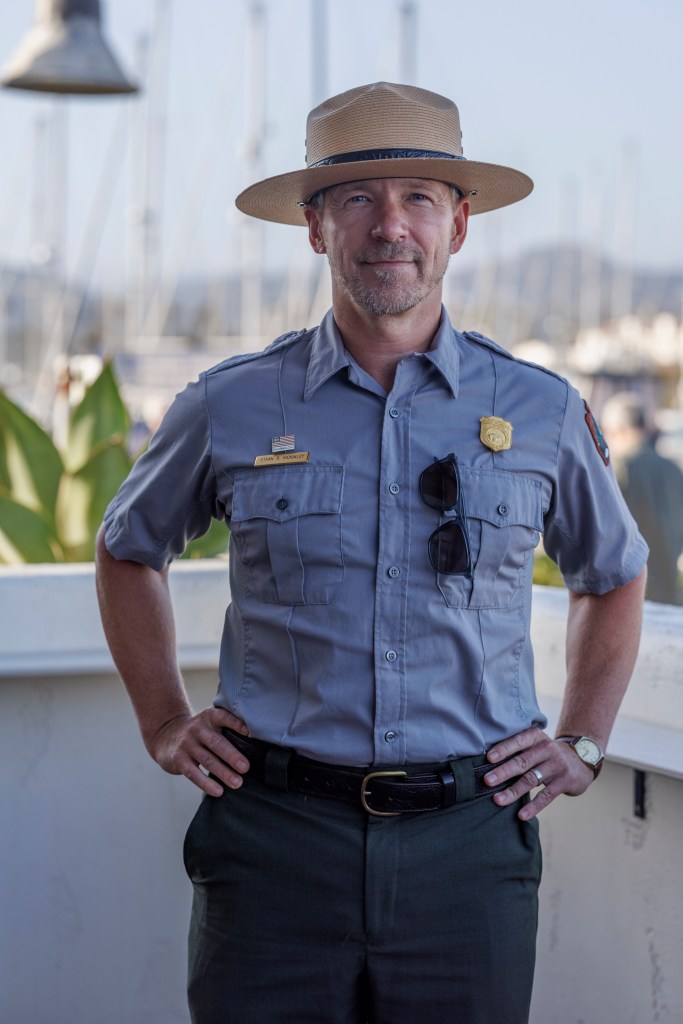
Channel Islands National Park Superintendent Ethan McKinley said objective hazards stood in the way for some time, including a two-day-plus wind event with gale-force winds — which only happens, on average, about once a year, so “the timing was just so poor for us.”
“It was grim in the first few days of this fire, and we were at a point where we really didn’t know if we were going to come out victorious or not,” he recounted after the tour, when we had returned to Ventura Harbor. “That [first] night, I didn’t sleep … that’s a pretty unusual thing for a fire to be at that point where you can’t deploy resources.”
Eleven park service staff were airlifted off the island on day three after assisting with prepping structures and water supplies.
“There was plenty of time to get them off the island, but we wanted the firefighters to be focused on suppression, not dealing with additional people on the island,” Singer said.
There were some campers on the island, but they all, wisely, elected to cut their trips short and return home.
Balancing Risks and Resources
Singer stressed that firefighters knew what was at stake: island-endemic species and structures that are essential for the National Park Service’s research and restoration efforts. Old military facilities on the island dating back to the Cold War and buildings in the Main Ranch, built for the large Vail & Vickers cattle ranching operation that ran for almost a century before the island was sold to the National Park Service in 1986, were also at risk of burning.
Thanks to the Park Service’s heavy equipment already on-island, the crews were able to put in dozer lines to protect some of the parks’ infrastructure. Additionally, some structures were wrapped in an aluminum-foil-like material to shield them from the flames.
When the weather was right, in “small windows of opportunity,” aircraft were eventually deployed to drop sea water and retardant — without it, “we would’ve lost half the island,” Singer said. Some vegetation was dyed an apocalyptic pink due to the retardant, leaving behind a strange odor.
“It was grim in the first few days of this fire, and we were at a point
where we really didn’t know if we were going to come out victorious or not.”
—Ethan McKinley, Channel Islands National Park Superintendent
In fighting wildfires, it is often considered wise to use the closest water source. Super Scooper planes were used to collect and drop hundreds of gallons of sea water at a time. McKinley said he thinks the Super Scoopers made the biggest difference and “were highly effective.”
McKinley had to approve the drops of retardant and saltwater, which can pose significant ecological hazards to sensitive habitat. McKinley had to balance the risk to resources and firefighting effectiveness, “and the idea is … reducing damage to the degree possible while still having a successful firefight, which is a hard line to walk.”
Supporting such a large number of personnel and equipment “was pretty difficult,” Singer explained, so the National Park Service relied on Island Packers for transportation. The Park Service does have a fleet of its own boats, but they were used to move equipment and supplies, he said, while Island Packers’ boats were able to shuttle firefighters back and forth much quicker.
This was the first major fire managed by the brand-new U.S. Wildland Fire Service, a combination of four bureaus under the Department of the Interior. The Wildland Fire Service is still in its infancy, sans logo or mission statement. The Trump administration established the agency to unify the wildland fire management programs across the department’s bureaus and offices and to improve efficiency, according to the department’s announcement this January.
It was a continuation of President Donald Trump’s executive order from June, to “modernize” wildland firefighting capabilities and prevention. But the service is already starting off on rocky footing, as both Democratic and Republican lawmakers effectively blocked the service from being funded in an appropriations bill package this year, reporting that they do not agree with the consolidation of firefighting agencies. Additionally, many of the nation’s wildland firefighting resources are not included in the service, as they are managed by the U.S. Forest Service, which is notably excluded from the new Wildland Fire Service. The Forest Service may eventually join the Wildland Fire Service, but it would require approval from Congress.
“It is a joint effort with all collaborative agencies,” Singer said, describing some challenges of figuring out new goals and responsibilities between fire chiefs and superintendents.
When another fire ignited in Simi Valley on May 18, resources were temporarily diverted, “but I think we did a good job on describing what the high values are on this island, and we were able to get those assets back into play relatively pretty quick.”
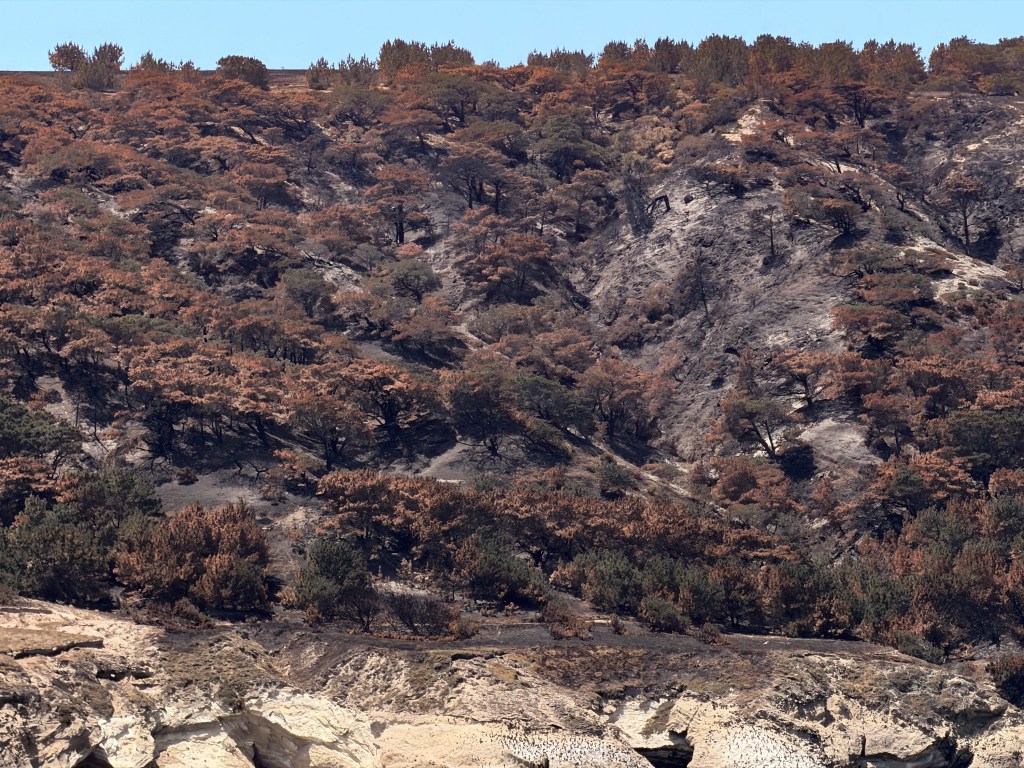
Among the resources affected by the blaze was the ultra-rare Torrey pine grove, and some trees were lost. But with winds blowing at 50 miles per hour, “we just couldn’t put firefighters in front of that,” Singer said.
Nevertheless, McKinley later added, “Our firefighters on the ground were the best I’ve ever seen in action, and they held the line when the cost of not holding the line would have been the entire island burned.”
“Even when they had what they call air attack, advising them to retreat, they refused that order,” he said. “They held the line, and we have them to thank for saving housing, saving the island.”
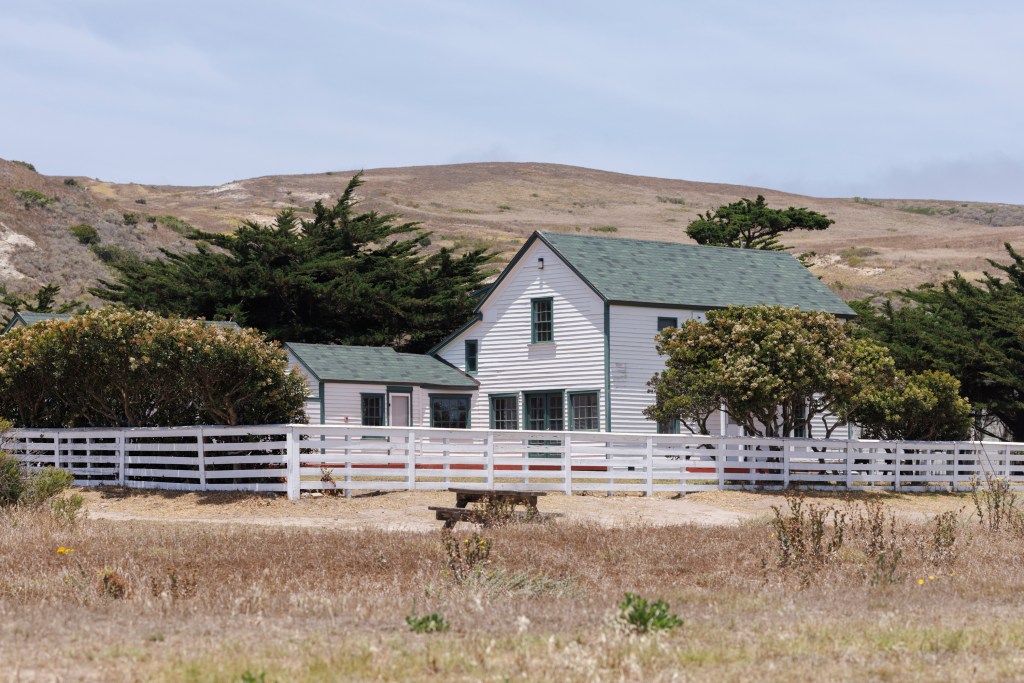
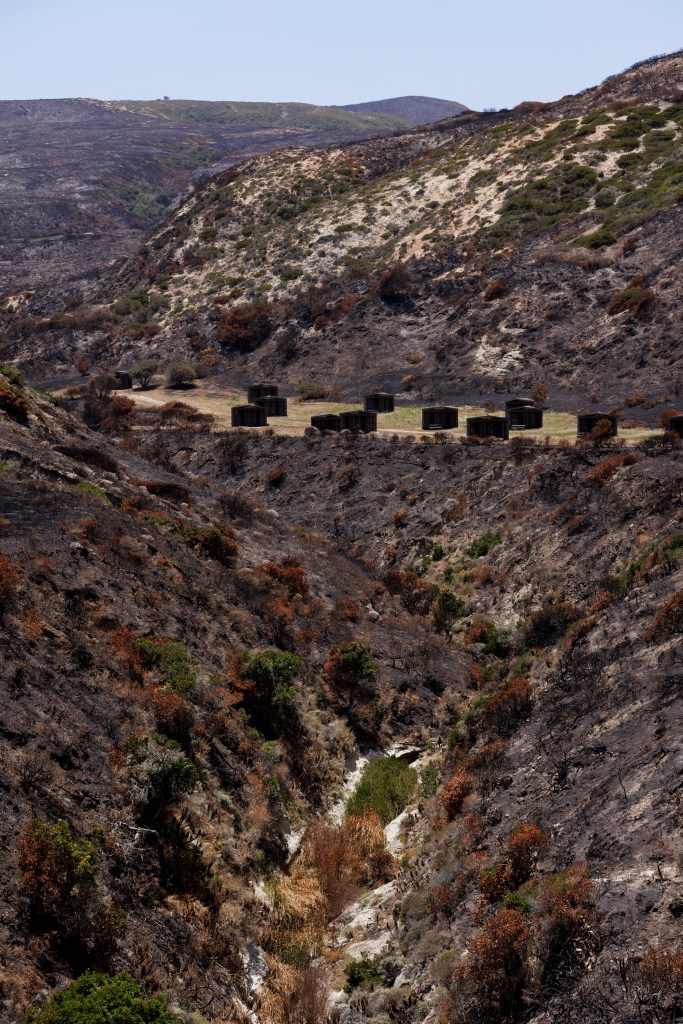
Three structures — two historic — were lost on the island, but for the most part, infrastructure — including housing, headquarters, campgrounds, and water facilities — was protected. The condition of cultural Chumash sites throughout the island are still under review, “and we know there will be impacts, but how much is still unknown,” Singer said.
McKinley said the grove of rare Torrey pine trees — located on two sandstone bluffs on the island’s northeast corner — was their “red line” in terms of protecting the island. “In this case, the line held exactly when the island needed it to hold. If it had broken, I think the entire island would burn.”
“And we almost got beat, I’ll tell you that,” he added.
Assessments of impacted habitat and wildlife are now underway. Repairs were baked into the fire suppression plan, and a majority of dozer and hand lines have been covered already.
‘A Mix of Sad and Hopeful’
As the boat approached the island, it slowed down to give reporters a good view of the Torrey pine grove. For the most part, they looked fine — a little brown but hard to distinguish whether that was just regular tree-brown or burnt brown.
We were assured that the trees — the island’s particular subspecies is found nowhere else in the world — remained intact, but their long-term well-being is still in question. The trees did burn over, McKinley said.
“There was 100 percent burn,” he said, but “that doesn’t mean that they all burned to 100 percent fatality.”
A team of scientists are now on the ground to assess the damages to wildlife and plants. Some hope is already blossoming from the ashes, but much is still unknown.
California poppies are popping up in the fire footprint, birds are returning to the island, and island foxes are trotting through their old stomping grounds. Some wildlife perished, McKinley said, but most species, like the island fox, are highly mobile and could outrun the fire.
What is left to be seen for those species, he said, is how adapting to the island post-fire will affect their behavior — will they need to find new hunting grounds? Will new nests and burrows need to be established?
Sasha Travaglio, the BAER (Burn Area Emergency Response) team’s public information officer, and team leader Jack Oelfke, met us at the dock once we reached Santa Rosa Island. In the background, the charred island loomed.
The BAER team is an A-team composed of recruited ecologists, biologists, hydrologists, archeologists, and even a paleontologist from all over the country.
“The Channel Islands are a really rich and diverse region,” Travaglio explained.
The team is looking at cultural, natural, and recreational resources, evaluating trails and roads and any risks to the public who may recreate on the island. Santa Rosa is closed at least through the end of June while risks are assessed — the economic impacts of which, at least, are negligible, since there are only 15 campsites.
The team’s work usually spans two weeks. But on Santa Rosa, they are crunched for time and only have a week, “because of the boat schedule and the weather,” Travaglio said.
Many inquiries about restoration were met with some form of “We’re still figuring that out.” In the words of Park Superintendent McKinley, “Recovery at this point is a big TBD.”
However, they do know that a significant amount of habitat, used by many “species of concern,” was burned. But specialists have identified a few positives: The endangered snowy plovers’ nesting sites were largely undisturbed on Skunk Beach on the island’s east side, and a majority of the cloud forest — what researchers call the rare oak and pine groves that live off water from heavy fog in the highest elevation on the island — survived.
They also have an idea of how they may be able to mitigate the loss of soil and potential erosion. But, in terms of plants, “this island has very little fire history, so the plants may not be very well fire adapted — that’s probably the case with the Torrey pines,” Oelfke said.
The status of several other endangered and rare plant species endemic to the island is to be determined.
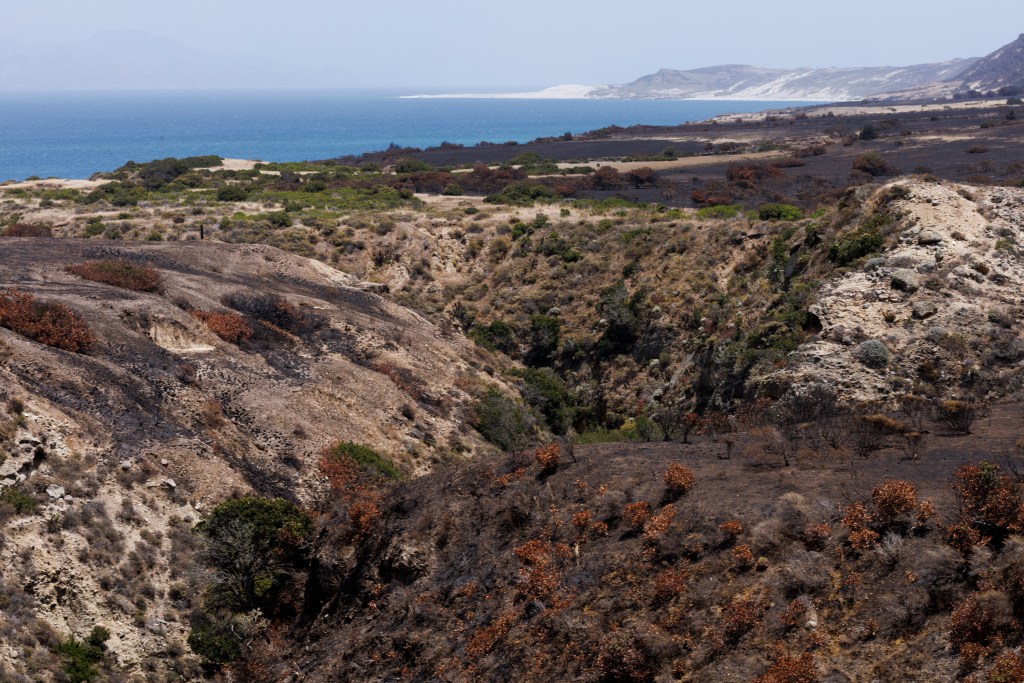
Saltwater dumps likely impacted higher-elevation species that are not accustomed to ocean spray, which is being investigated by the soil scientist on the BAER Team.
“It just depends on the amount of concentration,” McKinley said. “So, you know, if you water a plant with saltwater, it’s not going to be happy at the very least. And it might die. All that vegetation out there can be fragile.”
Personnel were told to avoid dropping retardant directly on the cloud forest, which is the site of an ongoing restoration project, and the fire narrowly avoided licking up to the restoration site, McKinley said. Retardant was also avoided near watersheds, to prevent it from seeping into the water system before it could degrade.
Scientists are also evaluating the Chumash archeological sites on the island, which could have been exposed or damaged by the fire and are at risk of further damage by erosion. Eight Chumash villages — including qhšiwqhšiw or qshiwqshiw, which translates to “where there’s a lot of crap,” likely referring to bird droppings on rocks — were established on the island, thanks to its plentiful resources, which island Chumash would trade with mainland tribes. Human presence on the Channel Islands dates back thousands of years, and the remains of humans who lived 13,000 years ago have been found on the island, placing them among the oldest human remains found in North America. McKinley said they have been working with tribal partners throughout the whole episode to “ensure their ancestors’ resting places are protected.”
“Recovery at this point is a big TBD.”
—Ethan McKinley, Channel Islands National Park Superintendent
What the team is doing now is collecting data to advise park staff about what to do next. The Channel Islands has a long-running monitoring program with decades of data on the plant and animal species on the island that will help them understand how the fire has impacted those species, combined with the post-fire data to guide any future fire response should it be needed.
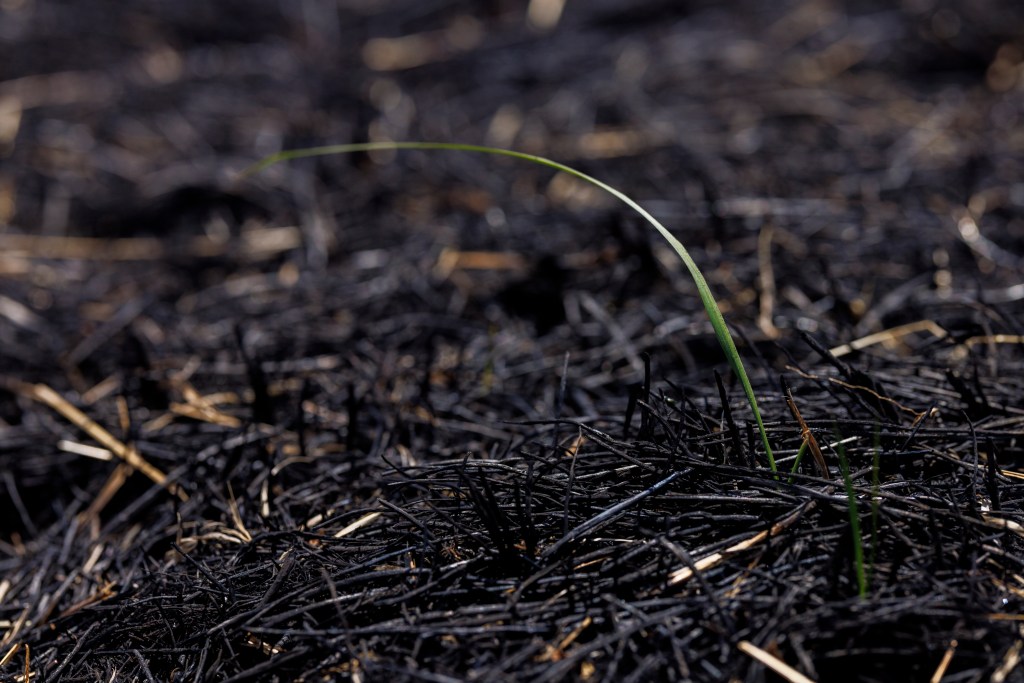
“But there’s no doubt that this will leave years of impact and recovery ahead of us,” McKinley said. There is much work to be done before the hills turn green again, such as erosion control through aspen matting and waddles (rolled up hemp “sausages” that keep soil in place), he said.
If damage to individual species are widespread — some species’ entire global range is within the burn scar — restoration may involve coordinating with the Santa Barbara Botanic Garden, which has a rare seed bank full of island-endemic species that can be used as an “insurance policy against extinction,” according to Matt Guilliams, a biologist with the Botanic Garden.
McKinley said the goal is to restore access at some level as quickly as possible, with public safety in mind. But there are still many unknowns: shifting landscapes, erosion, deadfall trees. “We want to keep people safe,” he stressed.
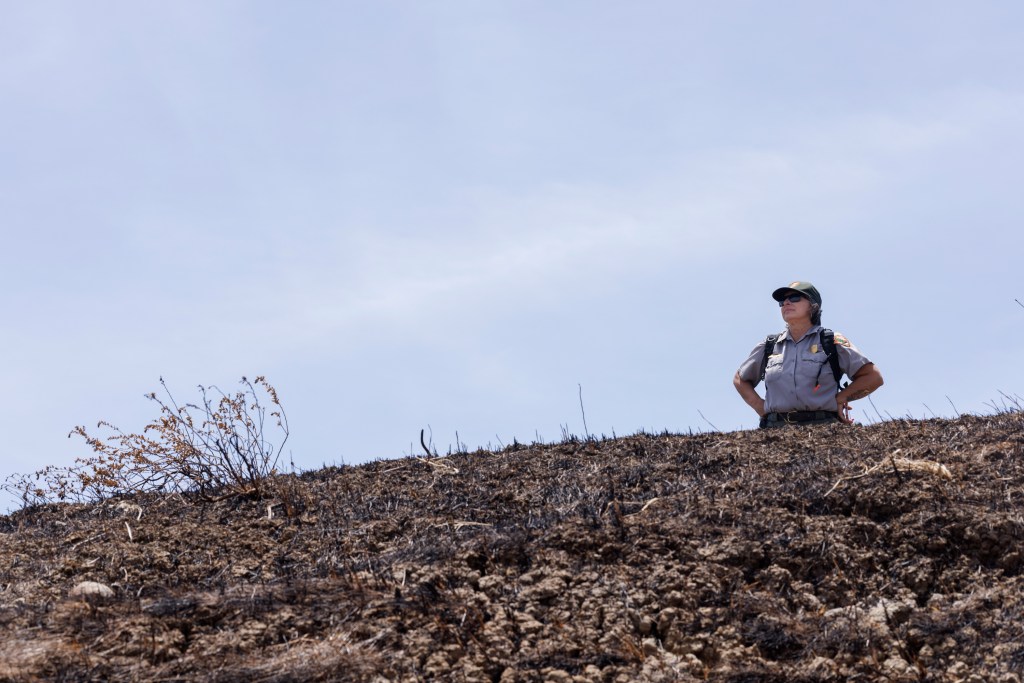
The destruction is hard to witness for park staff, who inevitably form attachments to the sites where they work. As Ana Cholo, the park’s new public information officer, explained it, “We’re government employees, but we’re still human beings.”
“I have a hard time looking past the individual plants or animals that have burned, because from my perspective, each one of those is sad,” said Emily Zivot, a ranger who has worked on the island for four years. She noted that the fire had the potential to be catastrophic, and her colleagues will be assessing long-term data on species. “It’s definitely a mix of sad and hopeful.”
Even with all the data they already have and continue to collect, it is going to be a multi-year, painstaking effort to restore the island to its former glory, McKinley said.
“I will breathe a sigh of relief when I see vegetation coming up.”
Elaine Sanders contributed reporting to this story.




You must be logged in to post a comment.