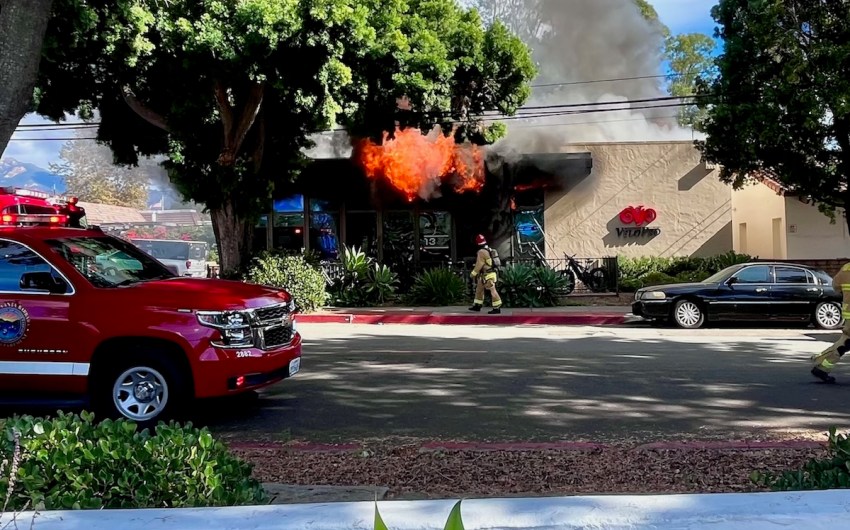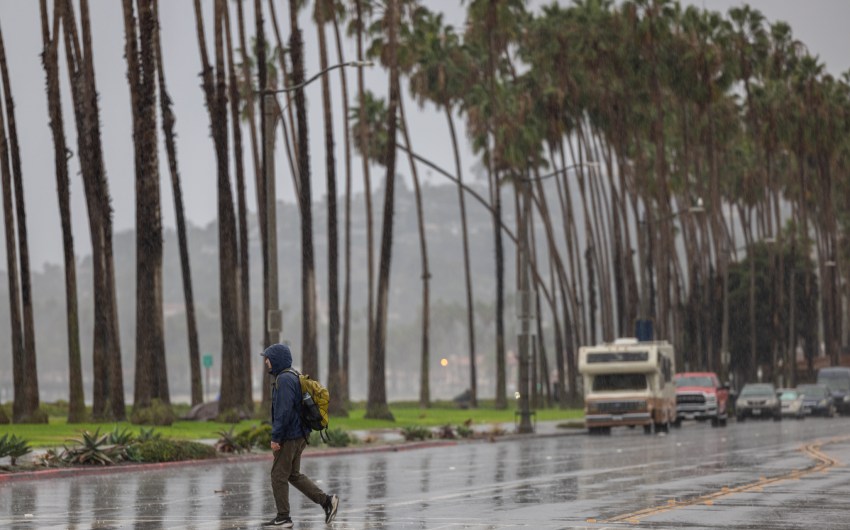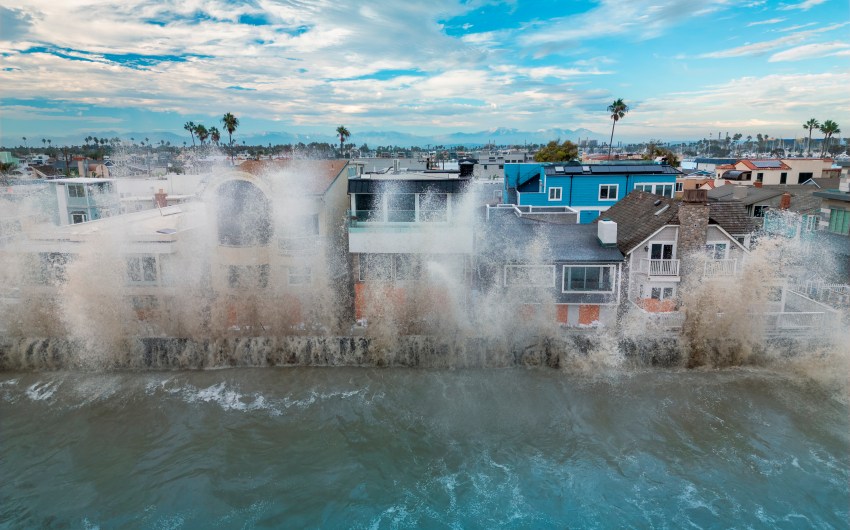
For the past several decades, California has been experiencing ever greater droughts, megafires, mudslides, degraded air quality, and long-term damage to ecosystems. In the mid-1800s, when American settlers started arriving in California, they found a landscape abundant with water. The Central Valley was a patchwork of wetlands. L.A. was a network of year-round rivers fed by mountain snowpack and natural springs.
For the next 100 years, our forebears drained wetlands for agriculture, channeled rivers for flood control, and cleared forests for development. The consequence was to break the local cycle of moisture that had kept the landscape hydrated and the climate stable. Aquafers were gradually drained, to the point that the land sank. Rivers were dammed, diverted, and straightened. The goal was to control nature, not work with it. Engineers concreted the L.A. River to move stormwater to the ocean as quickly as possible.
Fifty years ago, scientists believed that rainfall came from ocean evaporation forming into clouds which in turn migrated over land to yield precipitation. Ocean oscillations set the broad rhythm, but hydrologists have subsequently discovered what is called “precipitation recycling.” In his recent book, Restore the Rain, Alpha Lo explains the unfolding revolution in scientific understanding of how the biosphere creates rain.
By slowing water flows and giving them time to seep into the ground, stormwater is available for reuse during hot, dry periods, and not lost, as it would be if rushed out to sea. Trees and plants capture rainfall in their root systems, holding it in healthy soils and recycling it back to the atmosphere through evapotranspiration. This recycled moisture becomes the raw material for new clouds and new rain.
Tree roots push water down into the soil and aquafers during big rainstorms and pull it back up during dry periods. Lo calls this “aquafer rain.” Often, one-third to one-half of an area’s rainfall is a result of this terrestrial recycled moisture. Another plus: This hot season evapotranspiration provides is important cooling, a form of natural air conditioning.
The prevailing approach to reducing wildfire risk relies heavily on reducing flammable material — clearing underbrush, thinning trees, and creating fire breaks. There is little awareness, however, of how groundwater depletion contributes to the wildfire threat by robbing the landscape of deep moisture during the dry season.
The scientific evidence from soil moisture research, groundwater studies, and forest fire analyses all converge on the same conclusion: California’s fire crisis is fundamentally a water cycle crisis. The good news is that damage can be reversed and the historic water cycles restored. By reviving the small water cycle, we can restore not only landscapes but rainfall itself, bringing water, life, and climate back into balance, not only for California but the entire planet.