
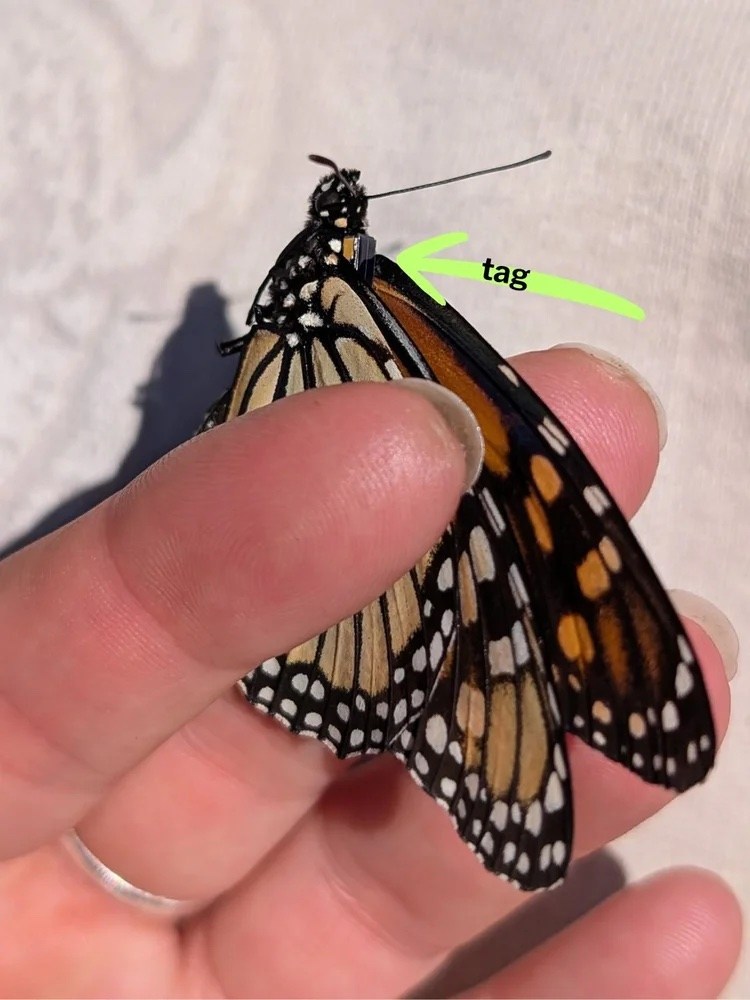
The tagging of monarch butterflies recommenced at the Ellwood Mesa this month, marking the second season of groundbreaking butterfly research at the Goleta preserve. Tagging involves putting a tiny tracker on the butterflies to better understand their mysterious migrations, as the Western monarch’s numbers have sunk well-below historic counts.
But there is hope. Ellwood is already looking much more orange than it was at this time last year. The November 17 count revealed 487 monarchs across all Ellwood sites — a major improvement from last year’s overall high of a measly 20 butterflies.
Every year, monarchs travel to Goleta to wait out the winter from October to February. They trek miles from summer breeding grounds in the Western United States and Canada to find refuge in Ellwood’s eucalyptus trees in the fall. In the past, these groups were quite impressive: reaching into the tens of thousands.
But Western monarchs are dying due to habitat loss, pesticide use, climate extremes, and winter storm impacts — killing off 95 percent of the population since the 1980s and prompting a proposed “threatened” status listing by the U.S. Fish and Wildlife Service.
The declines have inspired local conservation efforts to bring the butterflies back, including habitat restoration, and, last year, the new tagging effort. Nonprofit Ellwood Friends is again partnering with research firm Althouse and Meade to equip butterflies with “ultralight radio telemetry tags” to track monarchs across the region, Ellwood Friends announced last week.
On November 12, 10 butterflies were carefully caught and outfitted with Bluetooth “backpacks,” radio tags weighing roughly as much as a grain of rice. The Ellwood butterflies join others that have been tagged across North America and can be tracked by the public through the free Project Monarch app.
One butterfly, named Lulu, arrived at Ellwood on October 26 after a 38-day, 600-mile journey from Grand View, Idaho, where she was tagged by Wings Rising, “signaling an exciting start to the season,” said Ellwood Friend’s new director Anne Burdette in a press release.
Beyond following the butterflies’ movements, research teams are also “conducting thorough population counts and surveying Ellwood Mesa for previously undiscovered overwintering pockets to guide long-term conservation strategies,” Burdette said.
“The data will help scientists map key stopover sites, understand migration patterns more clearly, and guide long-term habitat conservation in hopes of reversing the decline,” she said.
The tags transmit data via the free Project Monarch app and the Motus network, allowing community members to track individual butterflies directly from their smartphones. Learn more about the research and how to track the monarchs at https://ellwoodfriends.org/monarch.










You must be logged in to post a comment.