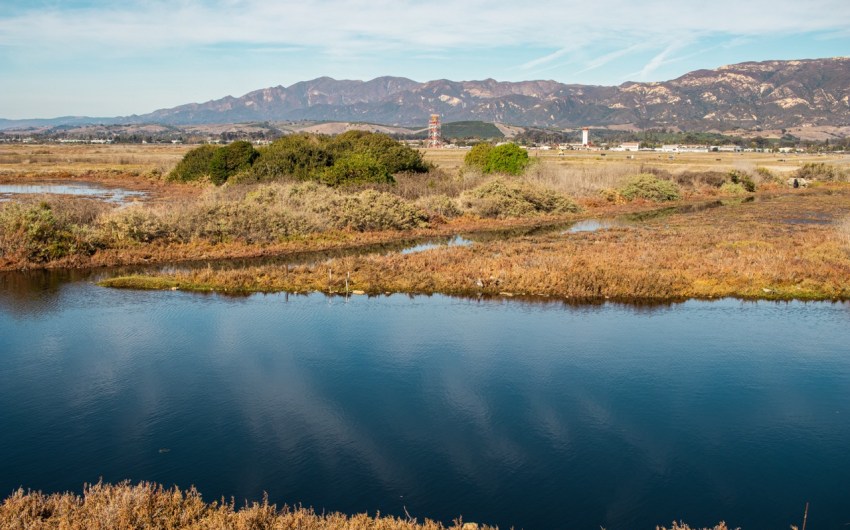
More than 120 oiled seabirds — most of them western grebes — have been rescued from beaches in Santa Barbara and Ventura counties since November 3, and the numbers continue to climb.
As of this Monday, 121 birds have been transferred to International Bird Rescue’s Los Angeles Wildlife Center for emergency care. That being said, “not all birds that are found survive long enough to reach care,” according to Ariana Gastelum, the organization’s marketing and communications specialist.
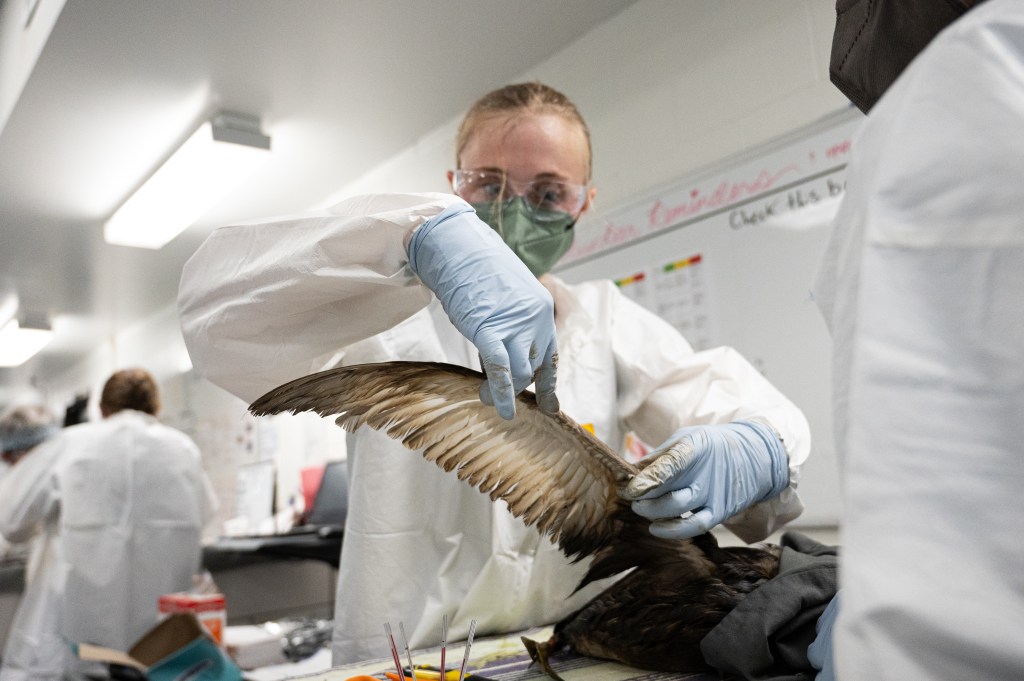
The birds are being stabilized in Goleta by Santa Barbara Wildlife Care Network before being shuttled south to San Pedro. From there, the work begins — warm water, Dawn dish soap, and pet grooming dryers. The process is delicate and labor-intensive, often requiring mild sedation to keep the birds calm.
“An oil seep of this magnitude can harm thousands of birds,” said JD Bergeron, CEO of International Bird Rescue, in a November 6 press release. “This is exactly the kind of situation where immediate, skilled care makes the difference between life and death for these birds. But we cannot do it alone — we urgently need the public’s support.”
So far, officials don’t know what caused the slick.
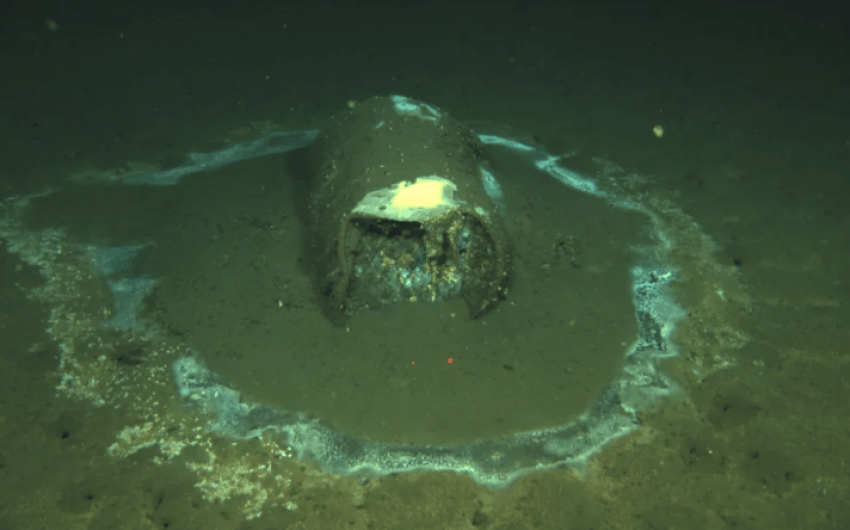
The U.S. Coast Guard, the Bureau of Safety and Environmental Enforcement, and California Department of Fish and Wildlife’s Office of Spill Prevention and Response (CDFW-OSPR) are investigating. The oil appears to have spread over an area approximately one square mile off the Santa Barbara coast. Preliminary information suggests it could be the result of natural seepage — a process where crude oil and gas leak from the ocean floor — but lab results are still pending.
Regardless of origin, the impact on wildlife is the same. When oil coats a bird’s feathers, it strips their waterproofing, which can lead to hypothermia, drowning, or poisoning. Western grebes — aquatic diving birds with long necks, dagger-like yellow bills, and fire-red eyes — don’t normally come ashore. If they’re found on beaches, it’s a sign of distress.
“These birds are vital bioindicators, meaning their health reflects the overall health of the environment,” said Ariana Gastelum, marketing and communications specialist for International Bird Rescue. “Because they’re highly sensitive to changes in their environment, increases in sick or oiled birds can alert us about ecological problems before we notice it, ourselves.”
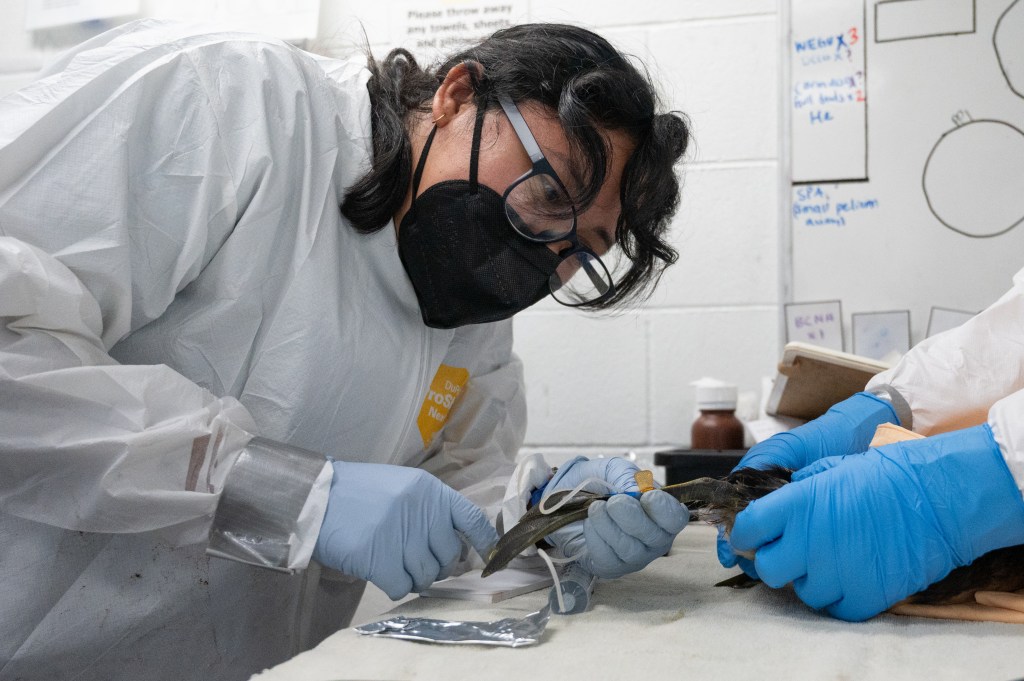
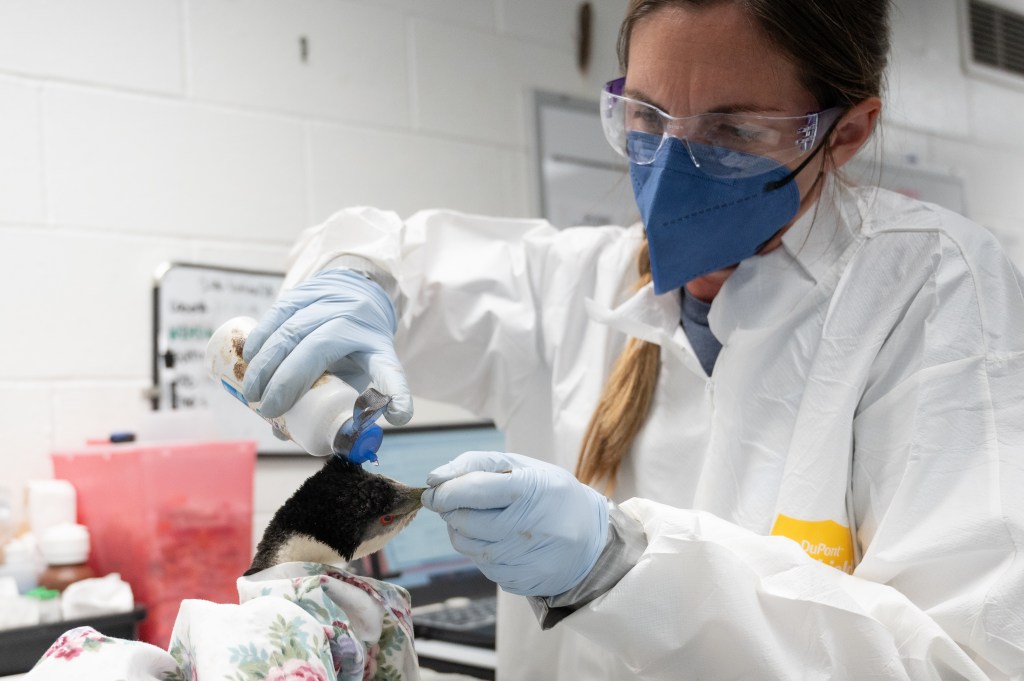
While western grebes are currently listed as a species of Least Concern by the International Union for Conservation of Nature, seabird populations worldwide are facing steep declines. According to the National Fish and Wildlife Foundation, seabirds are vanishing faster than any other bird group — with oceanic species especially vulnerable.
Back in San Pedro, once birds are cleaned and medically stable, they undergo a critical waterproofing phase before they can be released. Secondary injuries — often the result of oil exposure or beach stranding — are treated along the way.
International Bird Rescue has responded to more than 250 oil spill events since its founding in 1971, caring for over 160,000 birds across six continents. The nonprofit handled similar incidents in 2013 and 2019 involving natural seeps, and in 2015 spent over $230,000 responding to a “mystery goo” incident in San Francisco Bay that affected more than 300 birds.
The organization covers all costs — natural spill or not — and relies entirely on donations, volunteers, and community partners.
Residents along the coast are encouraged to keep an eye out. “Western grebes do not typically come ashore — if seen on a beach, they likely need immediate assistance,” the organization warned. Reports can be made to Bird Rescue’s helpline at (866) SOS-BIRD (866-767-2473), or through local animal control. The Santa Barbara Wildlife Care Network fields calls for wildlife in distress in Santa Barbara and Ventura Counties 365 days a year. Their helpline number is (805) 681-1080.
To support rehabilitation efforts, donations can be made at http://www.birdrescue.org/donate-oiled-birds-2025.
Editor’s Note: The headline of this story was updated to clarify that not all of the birds were western grebes. The story was also updated to add Santa Barbara Wildlife Care Network’s helpline.