

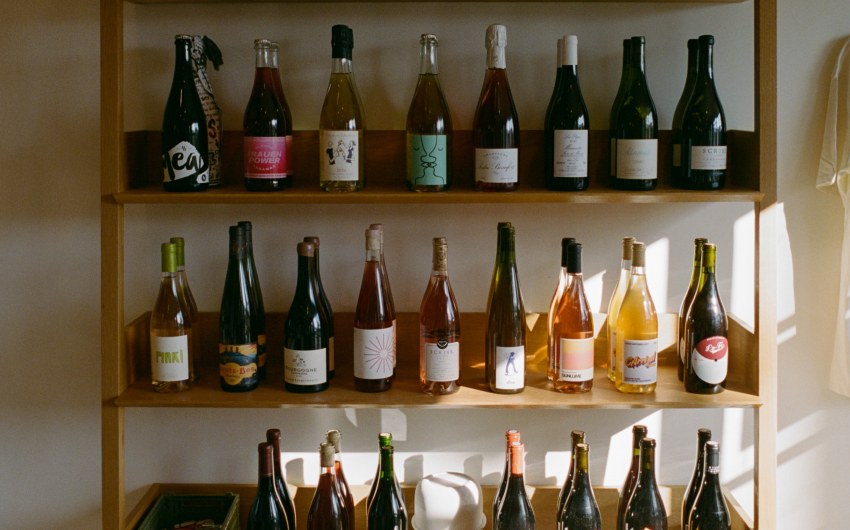
In a tough time when most wine festivals are either reinventing themselves or just shutting down, the Natural Coast Wine Festival is finding sell-out success through the most basic of stand-around-and-taste formulas. The draw is the curated list of wineries in attendance, all of which align in some fashion with the “natural” style of winemaking.
That’s been a controversial word in the wine industry for years. But, for the sake of this festival, being “natural” simply means that the wineries source fruit from sustainable vineyards and then use a light touch in the cellar, letting fresh fruit — rather than, say, the oak barrels or heavy extraction — do the talking.
This has long been a common path in Santa Barbara County, which is why you’ll recognize a lot of wineries pouring on April 25, such as Sandhi, Whitcraft, and The Ojai Vineyard. But the Natural Coast fest is also a prime place to meet some of the freshest faces in California winemaking. Here are four of those producers that are quite new to us.
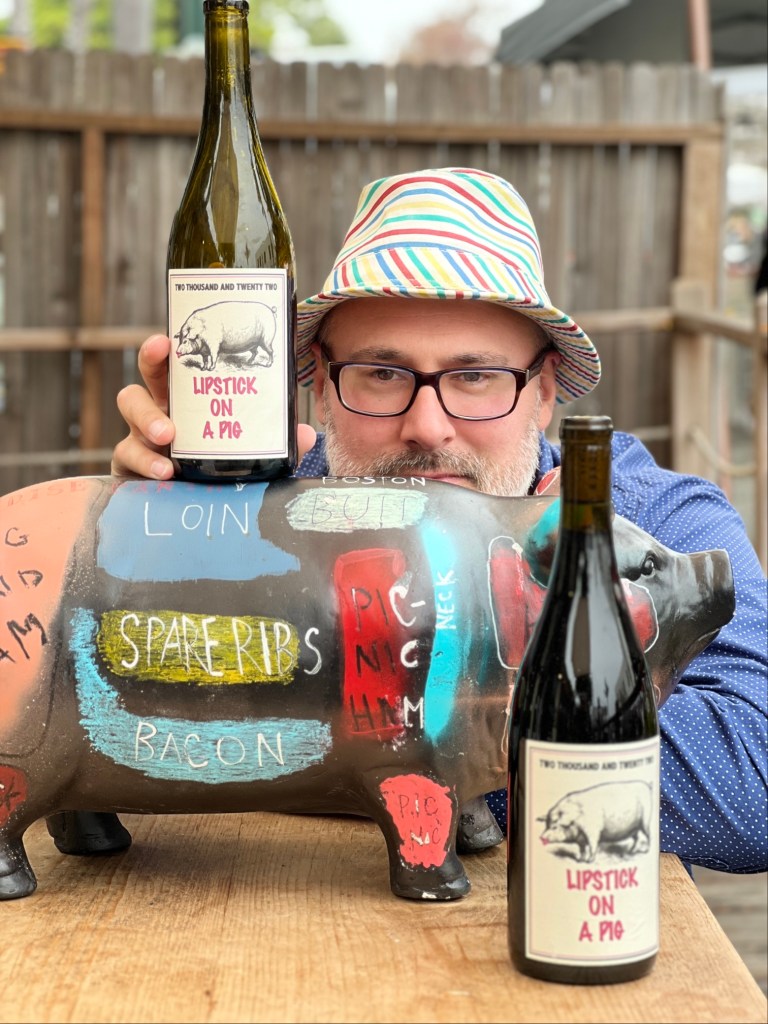
Boucher Wines
When he was 20 years old, Connecticut-raised Ray Boucher landed in Ventura County, first pursuing a career in acting and comedy. But in 2009, he and his wife-to-be — who made wine in her closet when they met — followed their passion for wine to Napa, where he became a sommelier at top restaurants and launched Boucher Wines in 2015.
Following the 2017 wildfires, they returned to Ojai and restarted their brand in 2022. “Our brand embodies fun and approachable,” said Boucher. “After living in Napa for 10 years, we realized it’s important that the average consumer can have a bottle of wine any night of the week at a good price point. It doesn’t have to be stuffy, confusing, or expensive.”
He’ll be pouring Lipstick on a Pig, which is a syrah-cab blend; Chill Red, which uses a rosé addition “to keep it fresh and feminine,” as it’s inspired by “my wild redhead wife”; and The Monger, which is a crisp, high-acid white made in homage to the world’s cheese-, fish-, and other mongers.
A music collector as well, Boucher is a resident deejay at Radio Roma, where he does as much wine education as possible. “I feel like wine and music go hand-in-hand,” he said. “We’re very much the new kid on the block down here but feel like we’re starting to fit in.”
See boucherwines.com.
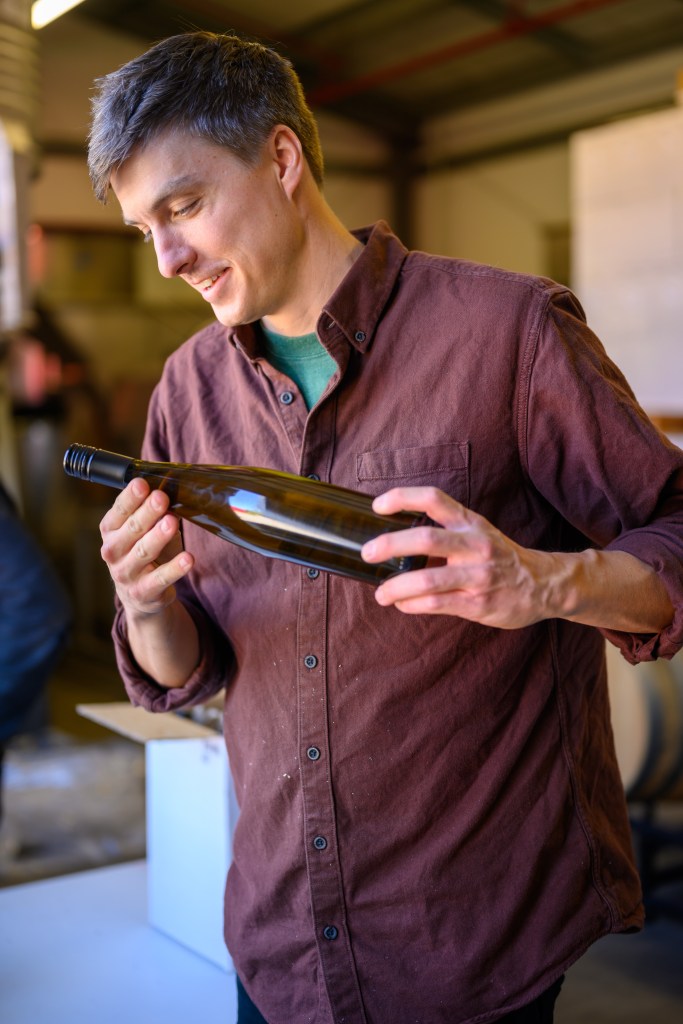
Elkins Wines
“My winemaking is not crazy or sexy,” said Matt Elkins of Elkins Wine. “My winemaking is simple. I really try to do as little as possible to make sure that it is the vineyard that gets the spotlight.”
Originally from Western Washington, Elkins got into wine at Washington State and then worked harvest jobs in Australia, South Africa, and Napa, where he settled down for five years. In 2022, he moved to the Central Coast, where he’s now working as an assistant winemaker at Tyler Winery.
“I’m excited to show off a syrah from a new-to-me vineyard that is just outside of the Sta. Rita. Hills AVA, just east of Lompoc,” said Elkins. “It’s a very cold and windy site for syrah and a really exciting contrast to my Spear Vineyard syrah.”
See elkinswines.com.
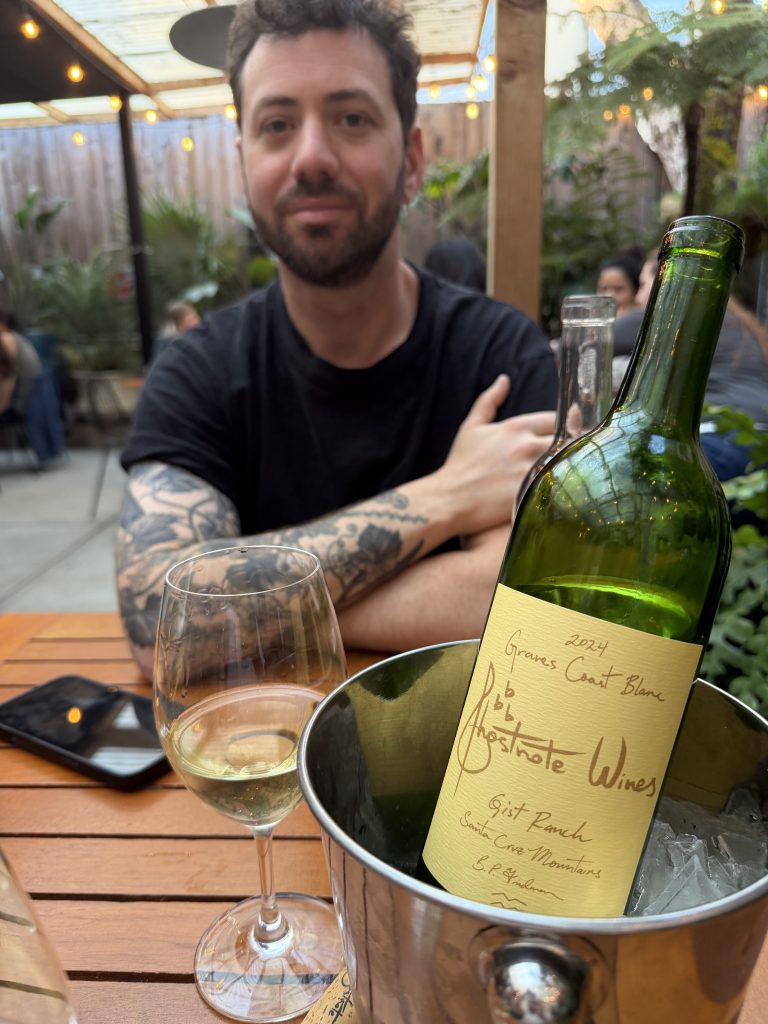
Ghostnote Wines
Growing up in Baltimore, Brad Friedman learned the joys of good food and drink thanks to his father, who sold fine wine around the greater D.C. region for more than 40 years. In college, he studied music, biotech, and eventually food science at UC Davis, which is how he started working at wineries when he was just 19 years old.
After harvests from NorCal to Australia, New Zealand, South Africa, Portugal, Austria, and France, Friedman decided to focus on the Santa Cruz Mountains, working for Big Basin and Ridge, and cofounding Subject to Change Wine Co. He’s now assistant winemaker at Thomas Fogarty Winery.
Friedman started Ghostnote in his garage in 2019, first focusing on Italian varieties. “I wanted to make something completely different but still rooted in the tradition and respect of the craft,” he said. “I decided to make the California versions of the wines that have always inspired me, with creativity driving everything from the choice in varieties, vineyards, and winemaking techniques.”
He went hard on the natty style for a bit but found the results inconsistent. “That approach tended to blur what I actually wanted to say about the place, tipping things too far toward the human element,” explained Friedman. “Now I’ve swung back slightly to land somewhere closer to natural, but not defined by it. What I want is people, place and purpose in equilibrium, none of them louder than the others.”
He’s excited to share his 2023 Super Santa Cruz from the Ascona Vineyard, which blends Bordelaise varieties with Italian ones, all picked on the same day and co-fermented. “It is a truly singular expression of the Ascona Vineyard and the Santa Cruz Mountains, bringing together the creativity and seriousness of the wines I’m aiming to produce with a clarity of the site and region in which they’re grown,” said Friedman.
See ghostnote.wine.
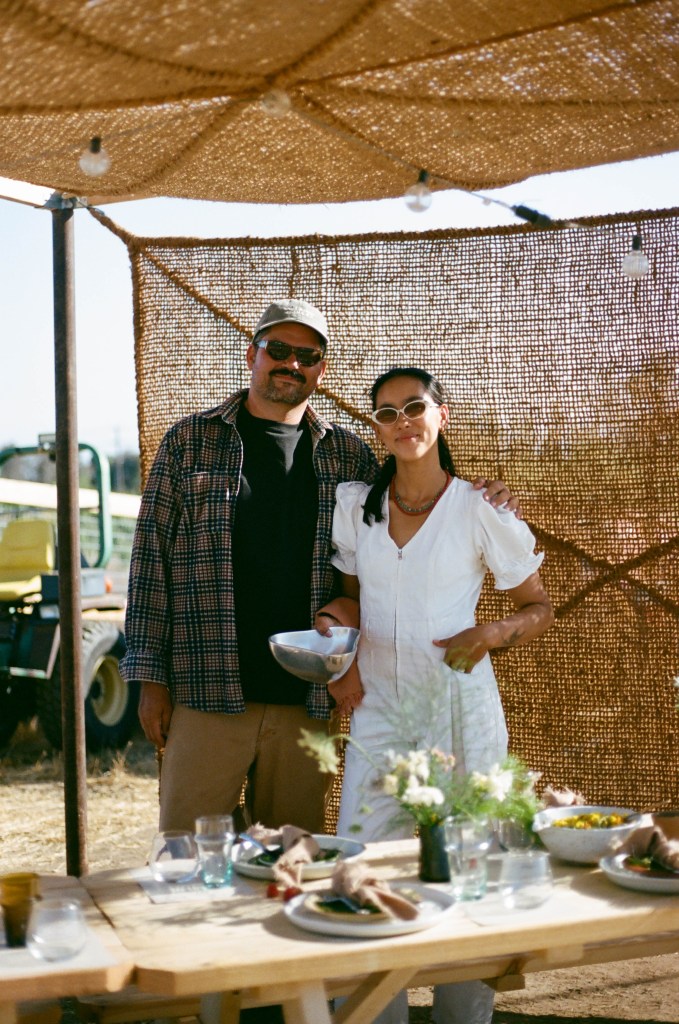
Lost Ranch
Jasmine and Joseph Wiens are the latest generation in a procession of restaurateurs and winemakers, from her roots in Hawai‘i, Seattle, and Oakland to his family history in Napa, Sonoma, Sacramento, and Lodi. Joe’s family then became a prominent producer in Temecula Valley, which is where they met and how he became a winemaker two decades ago.
In 2020, they both welcomed their first child and bought land for Lost Ranch. “We farm Lost Ranch with the lightest touch possible, working to integrate as seamlessly as possible into the native land,” said Joe. “This means farming beyond organically, with a no-spray, no-till philosophy. We graze sheep and foster native cover crops, sharing our land with the natural flora and fauna.”
They are an outlier in Temecula, which is dominated by more conventional estates that focus as much on events and restaurants as they do their grapes. “We are in the minority as a winery focused solely as a winery for wine’s sake, and even more unique as a winery focused on organic farming and low-addition/intervention winemaking,” said Joseph.
They’re exploring which varieties truly work in their climate, currently produce skin-contact assyrtiko and nero d’avola from their estate. They also source ancient mission wines from the Pechanga reservation; old-vine zinfandel, mataro, and grenache from Rancho Cucamonga; and prickly pears that they co-ferment with viognier. “This is an homage to a fruit that is native, abundant and probably best representative of our natural land,” he said. “It’s also a deliciously refreshing wine on a hot day.”
They’re honored to be included in the festival, despite not being from the Central Coast. “We’re excited to showcase earnestly made Temecula wines, with the hope that we can expose people to wines with similar intentions and philosophies as the participating Central Coast wineries, made from their southern neighbors,” said Joe.
See lostranchwinery.com.
See naturalcoastwinefest.com for details and tickets.
Related Posts

Premier Events
Tue, Oct 06
All day
Santa Barbara
New and Emerging Technologies in the Hands of Artists: Brave New Work 2.0

Tue, Oct 06
6:00 PM
Santa Barbara
Chaucer’s Books- Horror Stories with Joseph Fink
Wed, Oct 07
7:30 PM
Santa Barbara
Ensemble Theatre Company Presents: “Buyer & Cellar”

Wed, Oct 07
7:30 PM
Santa Barbara
The Theatre Group at SBCC Presents: “CLUE”

Fri, Oct 09
7:00 PM
Santa Barbara
Paseo Nuevo Spooky Movie Nights

Sat, Oct 10
1:30 PM
Goleta
🌴 Another Day in Paradise at S.B’s Premier Ice Rink

Sun, Oct 11
7:00 AM
Ojai
Flamenco Guitarist Tony Ybarra

Sun, Oct 11
10:00 AM
Santa Barbara
18th Annual Domestic Violence Solutions Brunch
Sun, Oct 11
10:00 AM
Santa Barbara
Free Community Day at S.B. Botanic Garden
Sun, Oct 11
10:00 AM
Santa Barbara
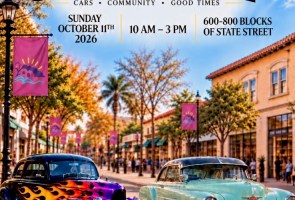
Downtown Classic Car Show Santa Barbara
Tue, Oct 06 All day
Santa Barbara
New and Emerging Technologies in the Hands of Artists: Brave New Work 2.0
Tue, Oct 06 6:00 PM
Santa Barbara
Chaucer’s Books- Horror Stories with Joseph Fink
Wed, Oct 07 7:30 PM
Santa Barbara
Ensemble Theatre Company Presents: “Buyer & Cellar”
Wed, Oct 07 7:30 PM
Santa Barbara
The Theatre Group at SBCC Presents: “CLUE”
Fri, Oct 09 7:00 PM
Santa Barbara
Paseo Nuevo Spooky Movie Nights
Sat, Oct 10 1:30 PM
Goleta
🌴 Another Day in Paradise at S.B’s Premier Ice Rink
Sun, Oct 11 7:00 AM
Ojai
Flamenco Guitarist Tony Ybarra
Sun, Oct 11 10:00 AM
Santa Barbara
18th Annual Domestic Violence Solutions Brunch
Sun, Oct 11 10:00 AM
Santa Barbara
Free Community Day at S.B. Botanic Garden
Sun, Oct 11 10:00 AM
Santa Barbara



You must be logged in to post a comment.