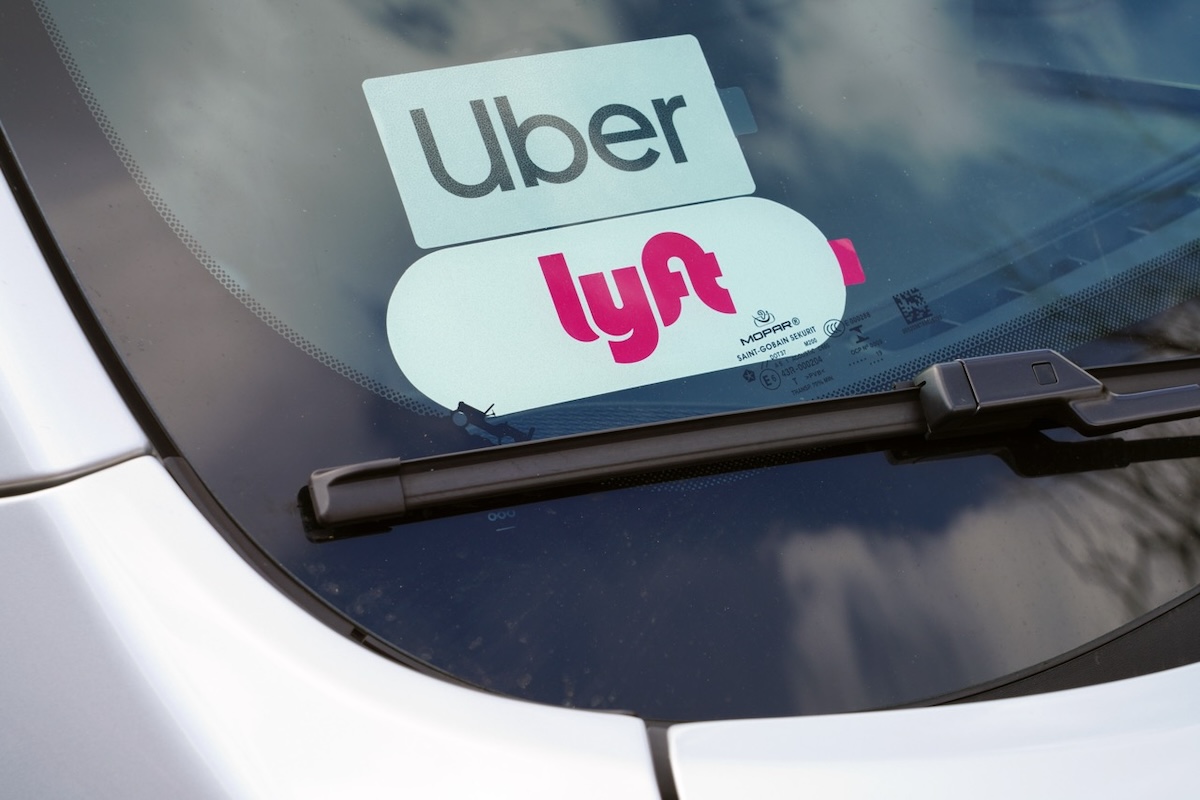
California’s moves to reduce greenhouse gases throughout the state added a $20,000 incentive for high-mileage Uber and Lyft drivers to buy or lease a new electric vehicle. To offset the loss of both state and federal EV incentives, the California Public Utilities Commission (CPUC) approved $25 million on July 2 to fund the difference in cost between an EV and an internal-combustion-engine vehicle among rideshare drivers.
In a program set to fire up in the third quarter, up to $20,300 will be available toward the purchase or lease of a new EV, and up to $14,200 to purchase or lease a used one. Another $1,170 annually would go toward four years of vehicle charging. A new EV costs anywhere between $30,000 and over $100,000. On the used market, they run the gamut of price tags.
Not all rideshare drivers qualify for the financial assistance, however. The Rideshare Incentives for Driving Electric (RIDE) program targets low- and moderate-income individuals who drive 4,500 passenger trips in 12 months (not food or other purchases). They must also make 400 percent or less of the federal poverty level, which for a single person is $63,840 of income in 2026, and $132,000 for a family of four.
There are other rules, too: keeping the vehicle and driving on an eligible platform for 36 months, or else the driver must pay back the incentive amount; the income must be verified for five years; and to receive the charging incentive, the driver must demonstrate they met the 4,500-trip requirement for the previous 12 months. Drivers may work for more than one of the qualifying companies, which were limited to those with five million miles or more in California. In addition to Uber and Lyft is HopSkipDrive, a rideshare network that transports students in areas without school buses.
It’s uncertain how many rideshare drivers already have electric vehicles, or, indeed, how many there might be in total. The State of California estimated 800,000 rideshare drivers in 2025 when Governor Newsom signed legislation that allowed them to unionize. A study by UC Riverside across 2020-2021, which included delivery and transportation drivers, found that 23 percent of the 1.3 million in California worked full time. For Santa Barbara County, gross wages, with tips, was about $38 per hour.
Funding for the program comes via a 9-cent fee per trip that rideshare customers have paid since March 2025, said Terrie Prosper, a spokesperson for the CPUC. That should cover as many as 1,050 incentive awards. Phase one of the two-phase program launches in the third quarter of 2026 under the administration of the nonprofit Center for Sustainable Energy based in San Diego. Phase two will contain further refinements that may include autonomous vehicle passenger carriers, GHG target optional credits, rental incentives, and clean vehicle requirements, Prosper outlined.
Correction: To qualify for the program, drivers must have 4,500 passenger trips, not miles, annually. And, they receive the charging incentive as long as they met the trip requirement for the previous 12 months.