
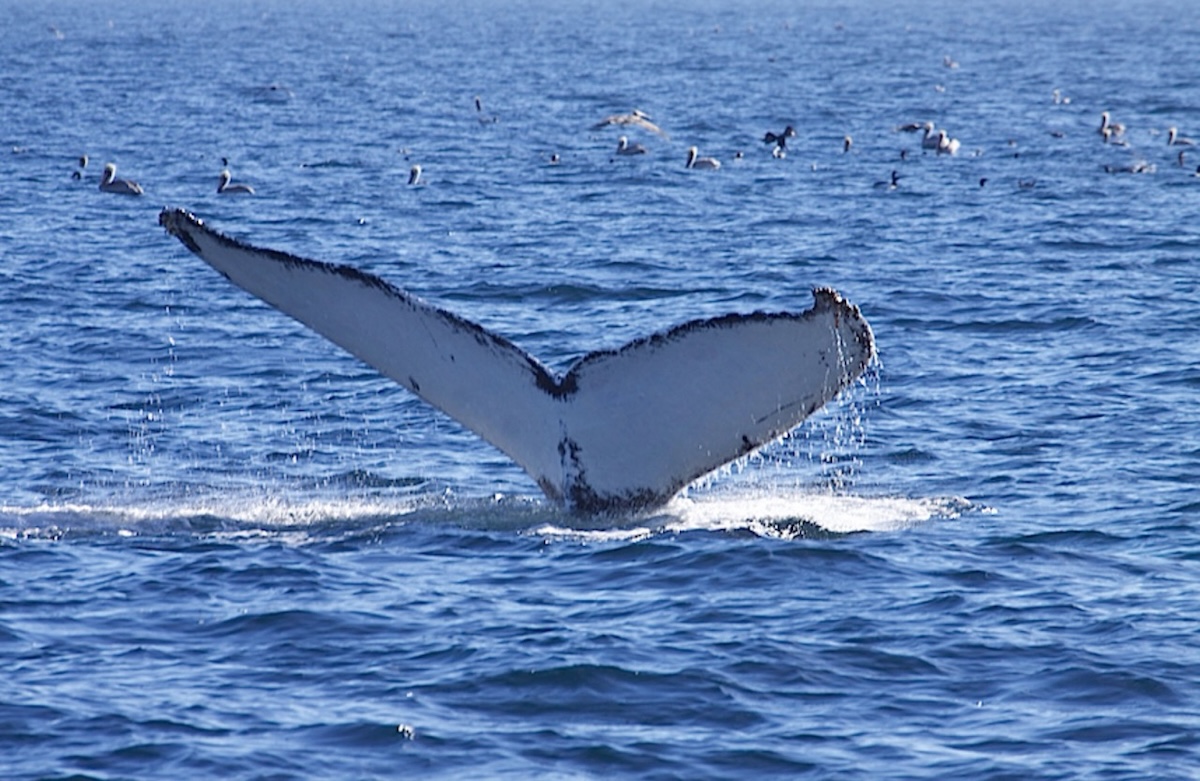
Fin whales are the second largest animal on Earth and are considered endangered under the Endangered Species Act, which is why protests broke out when a pregnant fin whale was dragged to port by a massive cruise ship in Seward, Alaska, just last month.
Seward residents gathered at the port on July 3, carrying signs that read “protect our whales,” and “10 knots or less = whale success,” protesting ships going above safe speeds, and hosting a memorial for the fin whale that was struck.
Protecting Blue Whales and Blue Skies, or BWBS, is a program in California aimed at reducing ship speeds for whale safety and to lower air pollution. Through a partnership with government agencies, foundations, research partners, and environmental nonprofits, BWBS is trying to prevent strikes like the one in Seward from happening.
A record-breaking number of shipping lines are taking part in the voluntary vessel-speed reduction program (VSR) during BWBS’s 2026 season. The program asks vessels 300 tons or more to reduce their speed to 10 knots (approximately 11.5 mph) or less from the Mexico border with California up to the Oregon border. Commercial cargo ships typically travel between 16 to 24 knots (approximately 18 to 27 mph) on open waters, but slow down to between 12 and 15 knots (approximately 13.5 to 17 mph) along coastlines or protected areas.
According to a report in 2024 by BWBS, lowered vessel speeds reduced fatal whale strikes by 50 percent, and there was an 85 percent cooperation rate overall by fleets, meaning that almost all of the ships in the Santa Barbara channel cooperated with the VSR program.
Lowering ship speeds can decrease the amount of fatal whale strikes because it gives the crew of the ship more time to spot and steer away from a whale, and it also gives the whales more time to hear the ship and get out of the way. Lowered speeds also cause less fatal strikes; imagine a car crash going at five miles per hour compared to a crash at 30 miles per hour. A slower ship will have much less force, which could possibly save a whale’s life.
The VSR program is incentive-based, offering shipping companies that cooperate with positive media coverage and an award ceremony.
Vessel speed can also affect air pollution. Ships burn significantly less fuel when they are going slower, causing fewer greenhouse gasses and smog-inducing pollutants, such as nitrogen oxides, to be released.
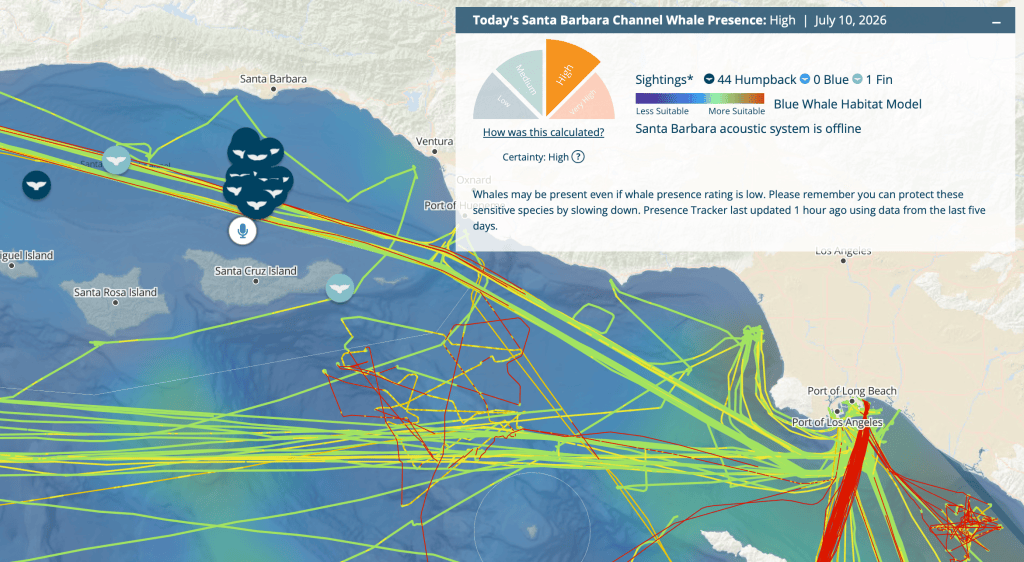
The Santa Barbara Channel is the second Whale Heritage Area in the country and is over 1,800 square miles. The channel has been described as a “whale superhighway” by the World Cetacean Alliance, as the abundance and predictability of cetacean species creates a hot-spot for research. Detailed tracking of whales in the channel, done by Whale Safe, shows the presence of whales on a daily basis and can contribute to data showing how the VSR program affects whale safety.
On average, 2,500 large commercial vessels travel through the Santa Barbara Channel annually. Long Beach and Los Angeles are home to two of the busiest ports worldwide, little more than 115 miles away.
Most whale strikes go unnoticed by large vessels but are usually reported when ships dock or when whales wash ashore and have marks that show they were struck. The Environmental Defense Center, who partnered with BWBS in 2014, estimates 80 whales are killed by ship strikes off the West Coast annually.
The VSR program has decreased the number of whale strikes since its launch in 2014, when seven companies participated. With 60 ships cooperating this season, expectations are that more whales will be spared a brutal death.



You must be logged in to post a comment.