

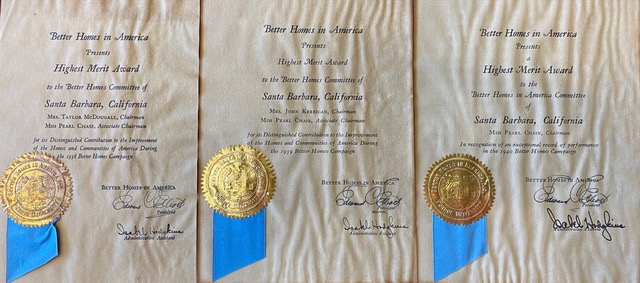
In 1922, Herbert Hoover, the Secretary of Commerce, was named president of the Better Homes in America movement based in Washington, D.C. Established in conjunction with Marie Meloney, editor of popular women’s magazine The Delineator, it was a nationwide program designed to encourage the pride and investment of home ownership, and emphasized the values of efficiency, domestic arts and science, thrift, and self-reliance.
Participation in the civic and economic movement was termed “the most important public work to which women in this country could give their time.” The movement included the building of a showcase home in the nation’s capital, and competition among communities across the country.
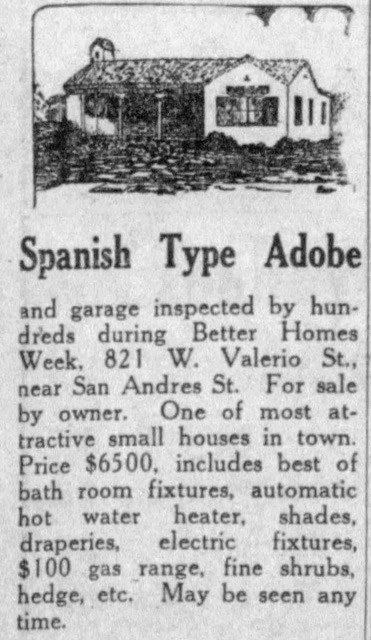
Entries into the competition for the affordable homes had to fit the criteria set forth by the contest rules: Constructed on a lot sized 50 feet wide by 150 feet deep, the home had to cost less than $5,000, with five rooms and a one-car garage. It had to include landscaping and formal drawings.
In 1924, the Community Arts Association and Plans and Planting published the book Small House Designs. Pearl Chase wrote the dedication to Bernhard Hoffmann, “In recognition of his devoted, farsighted, and generous leadership in promoting the development and enhancing the attractiveness of Santa Barbara.” It was fitting, therefore, that she was named the chair of “Better Homes in America, and she organized the prize-winning Santa Barbara entries of the national competition for years to come.
“The small home with a small garden and all the related types of activities and knowledge that would help the small owner who couldn’t hire an architect and a landscape architect so they asked me if I wanted to do this,” she noted.
It was work the consummate organizer was born to do, combining her expertise in home economics, her concern for social welfare, her interests in culture and architecture, and her ability in motivating individuals to work together for the common good. Not incidentally, focus on home ownership had to have a positive impact on the family real estate business.
As she termed it, “The effort was to encourage families to own their own homes and gardens, and to put knowledge of high standards in house building, home furnishing and equipment, and home life within the reach of all citizens. That the splendid cooperation of the organized groups of the city and the hard work of the hundreds of committee members has counted, may be seen in the increasing number of attractive small houses and gardens throughout Santa Barbara.”
Post-Earthquake Award
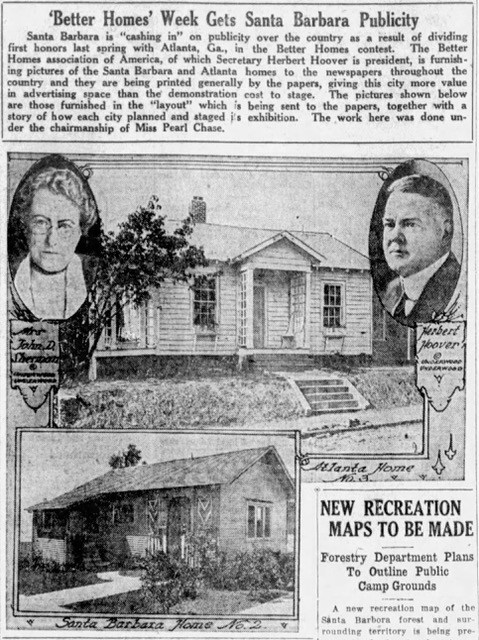
The 1925 competition, which Santa Barbara had entered, was completed in May, before the earthquake. As Pearl noted, “The first telegram I received after the earthquake of June was from the demonstration houses that had survived.” None of the demonstration homes had been damaged in the temblor.
Nothing could have been more positive for the revitalization of Santa Barbara after the earthquake than the announcement that the city shared the first-place award with Atlanta in the National Better Homes Campaign. As Pearl observed, “spectacular recognition came with the announcement a week following the ’quake.”
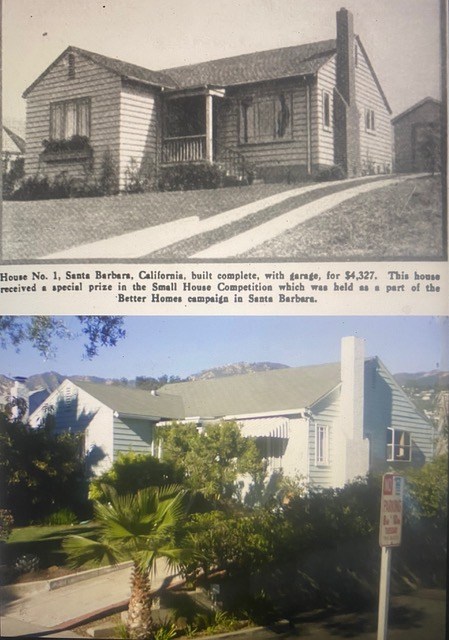
In 1926, the Plans and Planting Committee published a book about what they termed “New Santa Barbara,” and Pearl wrote the section titled “Better Small Homes in Santa Barbara.” She detailed how Santa Barbara answered the question posed by Herbert Hoover, then-president of the Better Homes in America movement: “Do you want Better Homes in your community?”
She observed, “The effort was to encourage families to own their own homes and gardens, and to put knowledge of high standards in house building, home furnishing and equipment, and home life within the reach of all citizens. That the splendid cooperation of the organized groups of the city and the hard work of the hundreds of committee members has counted, may be seen in the increasing number of attractive small houses and gardens throughout Santa Barbara. “
Pearl shared how the city was beginning to take shape in the post-earthquake era, calling it an issue of “considerable importance.” She wrote, “While most American cities have been content to drift in our traditionless flux, Santa Barbara has consciously set herself the problem of reviving the forms of her Spanish-Californian past. I believe this is a legitimate step. These traditions are beautiful in themselves; they are historically, climactically, and aesthetically appropriate.”
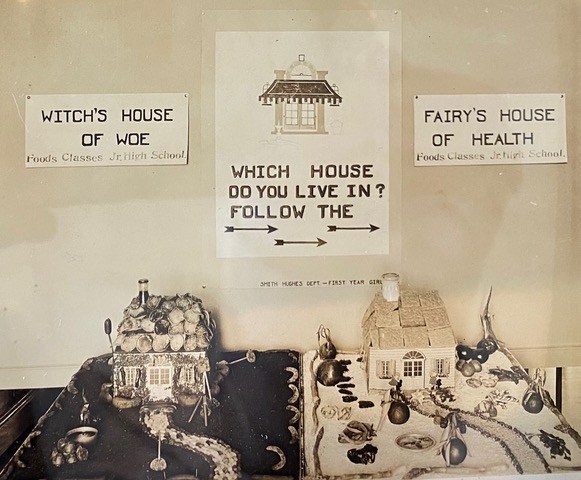
The national program offered Santa Barbara a way to shine, a small town with big ambitions to be forward-thinking with an eye on the glories of its historic past. In educating the masses about the benefits of home ownership on a moderate income, Pearl helped instill locally the values of stability and the desirability of strong family ties bound together in a home that was beautiful comfortable and utilitarian. It was the ultimate combination of individual and community pride.
Hoover reinforced the notion when he offered his congratulations for special recognition of Santa Barbara County in 1928, “It had seemed that in previous years your programs had reached an all-around standard of excellence which were felt could hardly be equaled. But this year, you again have set a new standard of achievement in the number, quality and diversity of houses demonstrated, in enlisting organized cooperation and public interest throughout the entire county, in school participation, and in rendering service to the community on a continuing basis.”
When he was elected president, Hoover recognized Pearl’s multiple areas of expertise and invited her to participate in several conferences, including the President’s Conference on Home Building and Home Ownership and the White House Conference on Child Health and Welfare. Since Santa Barbara was a perennial winner in the competition, she was recognized as a leader in the Better Homes in America program and referred to as “one of the brilliant persons on any of the committees.”
The national organization kept two offices: one in Washington, D.C., and one in Santa Barbara. Pearl managed to conduct research and work with Better Homes committee members on the East Coast for numerous meetings, providing her with a welcome reason to travel, visit friends and relatives across the continent and get away from Santa Barbara, sometimes for more than a month, depending on the state of her father’s health.
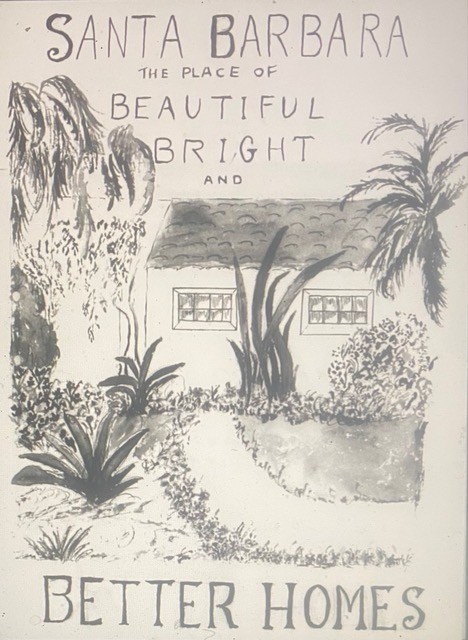
Great effort went into keeping Santa Barbara standards and gracious way of living. Locally, Better Homes in America hosted home and garden tours, offered suggestions for household furnishings and budgets, and spread the idea of happy, healthy home ownership and tidy well-kept neighborhoods, whatever the income level of the residents.
The purpose of Better Homes in America was to encourage the stability of home ownership and illustrate to the millions of American families of moderate Incomes how they could make the most of their homes from the standpoints of beauty, comfort, and utility.
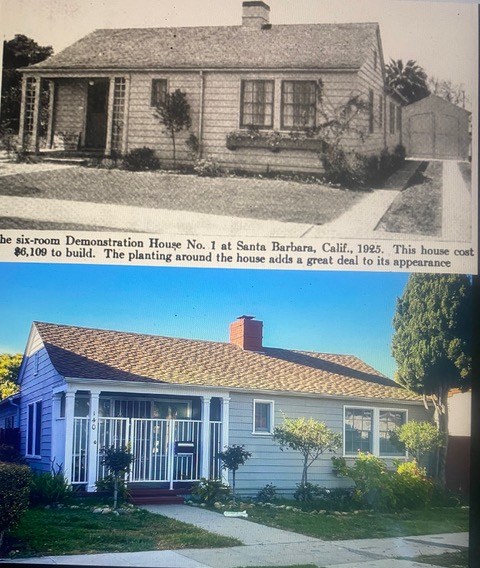
The principal demonstration home In Santa Barbara was called “The Home That Budget Built.” It was planned and built by the local committee expressly for Better Homes Week. It was a single-story, six-room home was located on a lot that cost a little more than $2,000, with materials that cost a little more than $6,000. Total furnishings were estimate at $1,600; a smaller floor plan could save about $1,000. Plans and Planting offered brochures about every aspect of home ownership, from applying for a loan to selecting appropriate furniture and accessories.
Pearl’s brother Harold came up with an even more modest approach to help develop housing for low-income families. During the Depression, he developed the northwest area of Hope Ranch, a former walnut orchard, as Arboleda Acres.
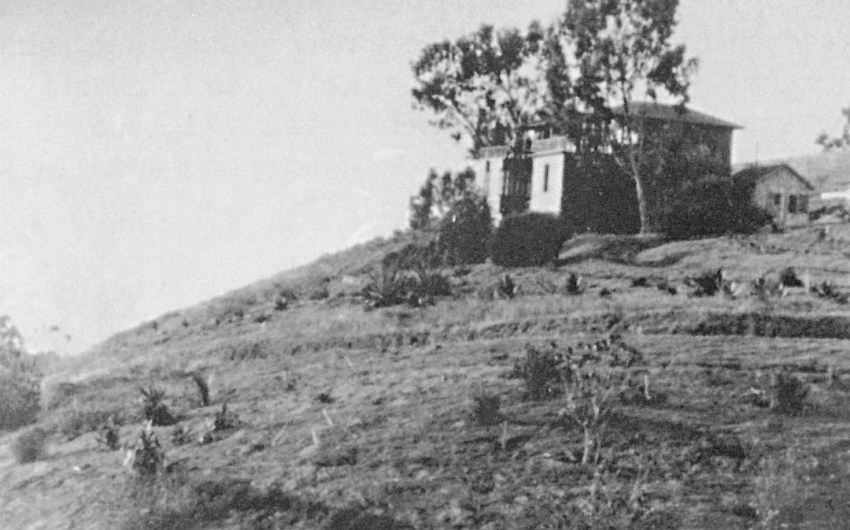
Small, efficient model homes from the project were prize-winning entries in Pearl’s Better Homes in America efforts, and they served as inspiration for self-sufficient living in a difficult time. Today, the area is known as Hope Ranch Annex, and it still retains its unique semi-rural feel.
The neighborhood was built of comprised of small, four-and-a-half-room home farms on one-acre lots, complete with their own private fruit and nut orchards, and room for vegetable gardens. Purchasers were offered alfalfa lawns to support a neighborhood cow — which moved from one home to another — and areas for poultry houses, limited to 20 hens that could be located no closer than 75 feet to the home. The price of these homes ranged from $3,900 to $4,500.
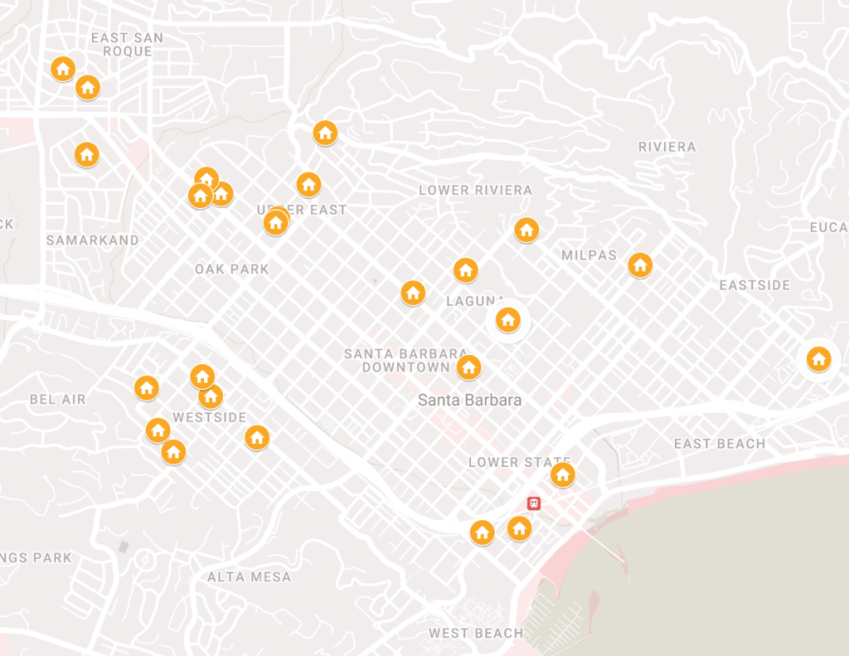
In a letter that she sent to hundreds of newspapers across the nation, Pearl summed up the benefits of working on the Better Homes movement: “The Community Arts work for more attractive homes and gardens and a more beautiful city has been strengthened. More people realize that this making of a Home City Beautiful is everybody’s business, not that of a comparatively small number. The Better Homes campaign was a good thing for Santa Barbara because it was one on which there was no division of opinion. Many groups worked together in it, which had recently been antagonistic in other public matters.”
Cheri Rae is a longtime neighborhood advocate and the author of A String of Pearls: Pearl Chase of Santa Barbara. She is a board member of the Pearl Chase Society, and the longtime editor of the society’s newsletter, “The Capital,” where this article first appeared. Email Cheri at pcs@pearchasesociety.org or visit pearlchasesociety.org.







You must be logged in to post a comment.