

This has been a notable and ambitious Requiem year for the Santa Barbara Symphony (SBS), to inspiring ends for the listening public. Following fairly close on the heels of last spring’s performance of Brahms’s glorious German Requiem, recent fare featured Mozart’s famed and even ever-popular example of the form (popular, for a requiem).
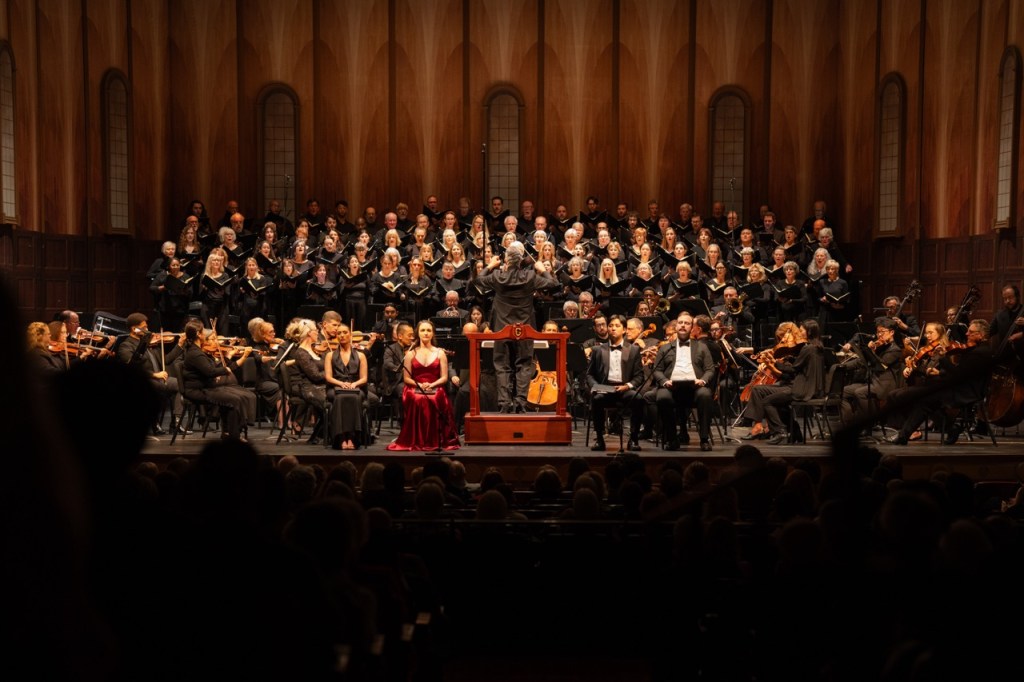
As part of the double-play Requiem servings, the two performances also functioned as significant showcases for the fledgling Santa Barbara Symphony Chorus, formed by maestro Nir Kabarreti — now in his 20th season at the podium. In both performances, the massed musical forces in the orchestral and packed choral real estate on stage amounted to a population of some 200 musicians. It was a sight, and sound, to behold.
Although Mozart’s masterwork, consuming the concert’s second half, was clearly the main attraction and marketing hook of the program, the opening pieces were hardly idle also-rans. In an impressively balanced plate of a program, the proceedings opened with two contemporary works — the 1992 vintage Musica celestis (Heavenly Music) by respected mid-career American composer Aaron Jay Kernis and the ink-still-at-least moist piece Memoria: Concerto for Two Trombones and Orchestra by Swedish composer Andrea Tarrodi.
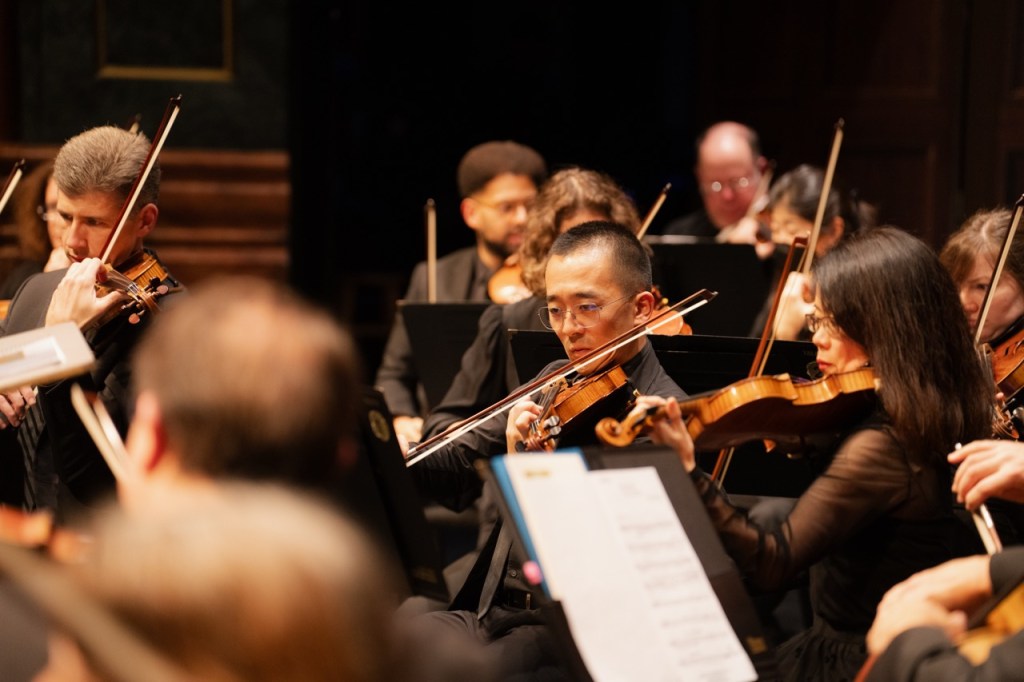
Taken as a one-two case study, the two wholly accessible scores invoked a musical question: Who’s afraid of contemporary music? It’s not all out to bite us or engage us in brain puzzles.
Kernis’s music reaches out to soothe and gently provoke, with its ethereal, celestial string orchestra scoring of simple quasi-minimalist phrases thrown into more complicated weaves of additive parts. A more vigorous section climbs into friendly chordal clusters, in a piece which manages to be tonal, with a difference or three.
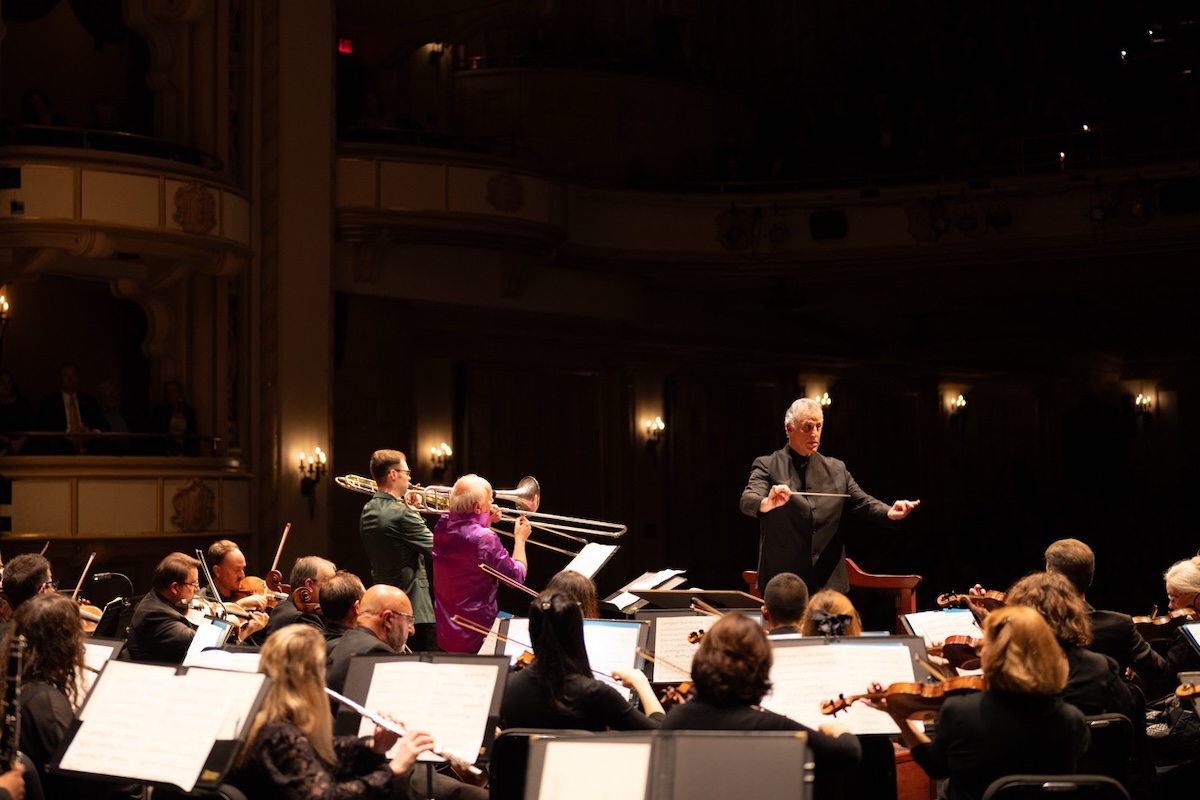
A logical link connects Requiem with Tarrodi’s piece in that her work, co-commissioned by the SBS and Tonhalle Düsseldorf, champions the too-often overlooked solo power of the trombone, as does Mozart’s score, especially given the trombone solo in the “Tuba mirum” movement. In both pieces, the symphony’s own principal trombonist Dillon Macintyre was put to good use, joining renowned Swedish trombonist Christian Lindberg, flown in for this occasion, on the Tarrodi.
Lindberg, dressed in a shiny pink shirt in contrast to the black-and-white dress code elsewhere (a particular Swedish look), was assured in this music, and also a bit overeager to amuse the troops, as in his chirpy encore by the two trombonists involving whistling and audience finger snapping.
As with the Kernis, Tarrodi’s score also plays off of simple motives, hovering textures and gestures, as the soloists float echoing intervals to brighten up the funereal march-like introduction. Things work their way into a bustling sonic hive effect before leaving a cadenza space for the trombonists, with Lindberg sidling up to whistling and teasingly low tones on his instrument. In this piece, as with other examples of Tarrodi’s music, she sometimes taps into the introspective and mystical spirit of some Scandinavian music, a world where northern lights and atmospheric poetry murmur, meditatively.
Mass and popular culture accounts for the familiarity of Mozart’s Requiem to a wide landscape of the public, thanks to the influence of Miloš Forman’s hit 1984 film Amadeus. Visions of Tom Hulce (Mozart) and F. Murray Abraham (Salieri) may stubbornly dance in our heads while we take in the score. But the music nonetheless speaks loftily for itself, from the opening somber onramp section through various combinations and emotional states for large chorus and solo voice writing (soloists here being the nimble soprano Anastasia Malliaras, mezzo Christina Pezzarossi, tenor Brad Bickhardt, and baritone Andrew Gilstrap).
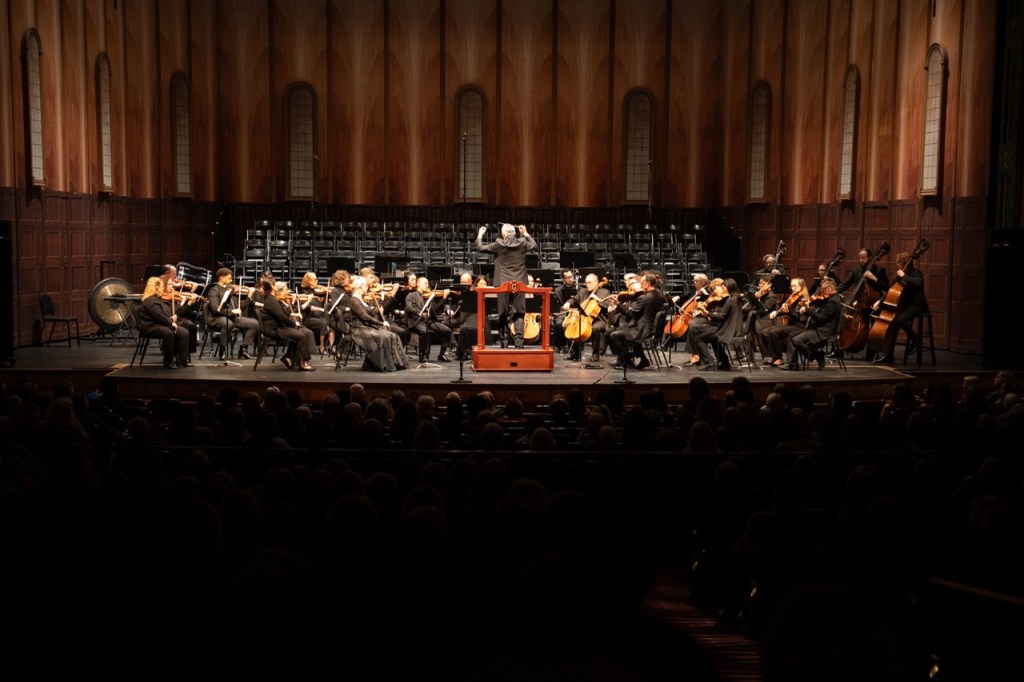
Kabaretti, who has conducted opera in high places in Europe, has a sure feel for Mozart’s inherently more dramatic approach to a liturgical medium — which generally veers towards deifying restraint in other composer’s hands.
Never mind the lingering Hollywood fairy dust factor now attached to Mozart’s final — and unfinished — opus. The music is a transcending time and musical fashion, and the symphony’s grand, respectful treatment served as a reminder that this sublime musical entity is well worth revisiting. It’s a lasting testament to Mozart’s immortal gift to music and humanity, and, by degrees, the heavens. Christian faith is not required to appreciate its emotional and spiritual grandeur.
Kabaretti and his 200-fold comrades did right by this music’s legacy, a fitting grand finale to the 2025 portion of the symphony’s life.
Related Posts


Premier Events
Sat, Oct 10
9:00 AM
Santa Barbara
Treble Clef Chorus Fall Treasure Sale
Sun, Oct 11
5:00 PM
Santa Barbara
Trinity Choir: Choral Evensong
Wed, Oct 07
7:30 PM
Santa Barbara
Ensemble Theatre Company Presents: “Buyer & Cellar”

Wed, Oct 07
7:30 PM
Santa Barbara
The Theatre Group at SBCC Presents: “CLUE”

Thu, Oct 08
7:00 PM
Santa Barbara
“A Night of Blues” with Morganfield Burnett

Fri, Oct 09
7:00 PM
Santa Barbara
Paseo Nuevo Spooky Movie Nights

Sat, Oct 10
9:00 AM
Santa Barbara
SBNC 1st Annual Health & Wellness Fair

Sat, Oct 10
1:30 PM
Goleta
🌴 Another Day in Paradise at S.B’s Premier Ice Rink

Sun, Oct 11
7:00 AM
Ojai
Flamenco Guitarist Tony Ybarra

Sun, Oct 11
10:00 AM
Santa Barbara
18th Annual Domestic Violence Solutions Brunch
Sun, Oct 11
10:00 AM
Santa Barbara
Free Community Day at S.B. Botanic Garden
Sun, Oct 11
10:00 AM
Santa Barbara
Downtown Classic Car Show Santa Barbara
Sat, Oct 10 9:00 AM
Santa Barbara
Treble Clef Chorus Fall Treasure Sale
Sun, Oct 11 5:00 PM
Santa Barbara
Trinity Choir: Choral Evensong
Wed, Oct 07 7:30 PM
Santa Barbara
Ensemble Theatre Company Presents: “Buyer & Cellar”
Wed, Oct 07 7:30 PM
Santa Barbara
The Theatre Group at SBCC Presents: “CLUE”
Thu, Oct 08 7:00 PM
Santa Barbara
“A Night of Blues” with Morganfield Burnett
Fri, Oct 09 7:00 PM
Santa Barbara
Paseo Nuevo Spooky Movie Nights
Sat, Oct 10 9:00 AM
Santa Barbara
SBNC 1st Annual Health & Wellness Fair
Sat, Oct 10 1:30 PM
Goleta
🌴 Another Day in Paradise at S.B’s Premier Ice Rink
Sun, Oct 11 7:00 AM
Ojai
Flamenco Guitarist Tony Ybarra
Sun, Oct 11 10:00 AM
Santa Barbara
18th Annual Domestic Violence Solutions Brunch
Sun, Oct 11 10:00 AM
Santa Barbara
Free Community Day at S.B. Botanic Garden
Sun, Oct 11 10:00 AM
Santa Barbara



You must be logged in to post a comment.