

Sign up to get Matt Kettmann’s Full Belly Files, which serves up multiple courses of food & drink coverage every Friday, going off-menu from our regularly published content to deliver tasty nuggets of restaurant, recipe, and refreshment wisdom to your inbox
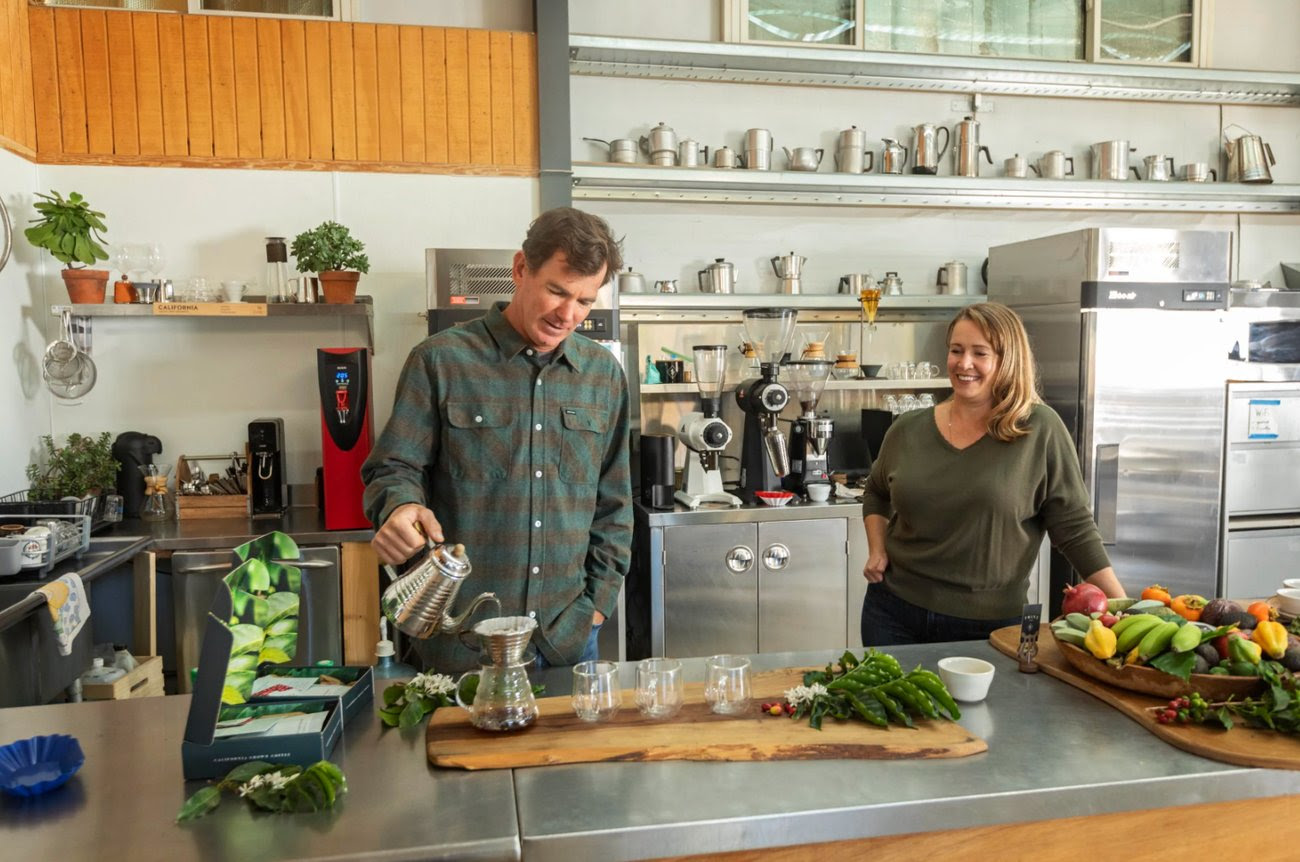
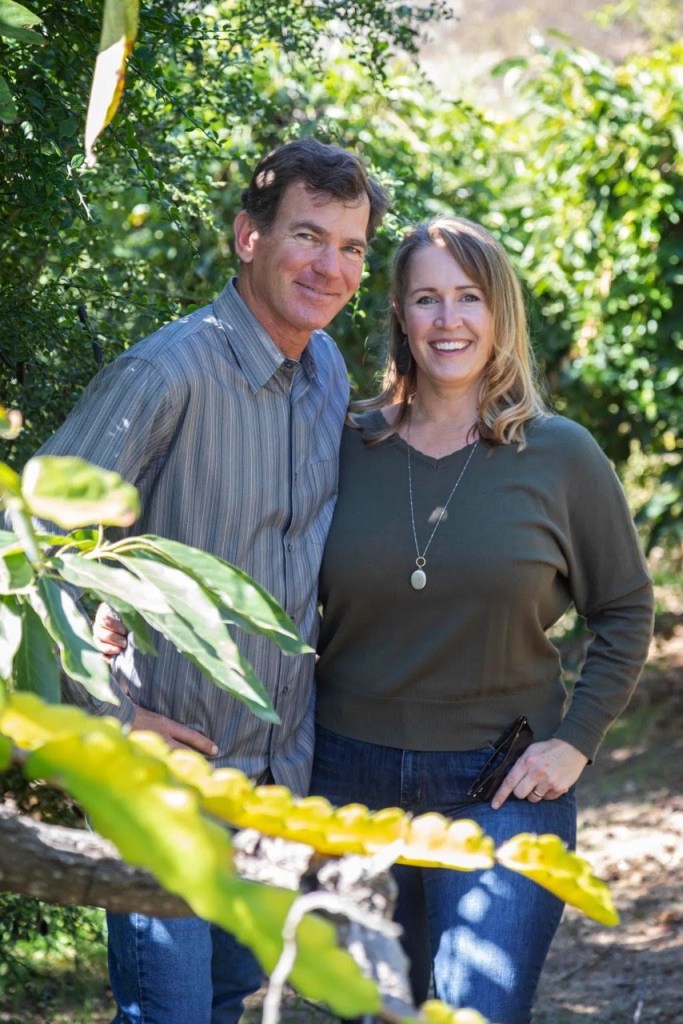
I was shocked beyond belief on Monday evening when a text came through from a friend announcing a GoFundMe campaign in memory of Jay and Kristen Ruskey, the couple who pioneered the most adventurous crops in California — including coffee trees and caviar limes — from their Good Land Organics farm in western Goleta. They died together suddenly sometime Sunday morning while visiting friends in Cambria, leaving behind three teenage children and their groundbreaking company, Frinj Coffee.
I’d just been emailing Jay about his trip to the Dubai Coffee Auction a couple weeks before, when he was excited to present Frinj on the world’s most coveted coffee stage. I’ve been following and writing about their work for more than a decade, including this in-depth cover story from 2021.
Though we were not particularly close, I considered Kristen and especially Jay to be friends, and I hope he’d say the same about me. Our conversations over the years frequently exceeded the official topic at hand to cover our own families and interests, and we often traded notes on recent epic meals or our travels around the world.
As I write this on Wednesday afternoon, we still don’t know exactly how they died, though that doesn’t really matter, especially for their kids, two of whom are in my own son’s class at Dos Pueblos High. Unsurprisingly, the Ruskeys were widely beloved and surrounded by a strong community of friends and family, so that will help chart at least a semblance of a path forward. If you’d like to support financially, here is that GoFundMe link.
I first met Jay and Kristen together over dinner with other journalists at the Biltmore about 15 years ago, when they were showing off the caviar limes. Their reputations preceded them, so I was excited to get to know them in person, and soon was out at their farm atop Farren Road at the end of Goleta, writing a tiny story for Sunset Magazine.
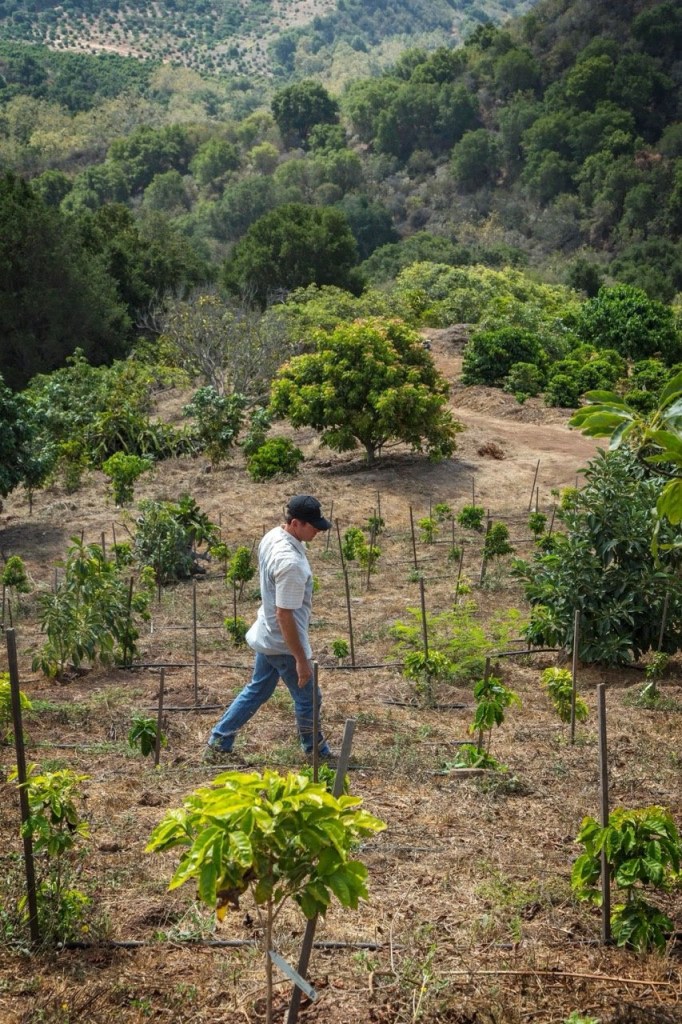
I’d return many times in the years to come, always overjoyed to wander around the hilly property with Jay as he gave me ice cream beans, surinam cherries, and other exotic fruits to try.
It was truly like walking through an agricultural version of Willie Wonka’s chocolate factory, but with tree tomato and wampee fruits rather than candy. I even planted my own caviar lime tree a few years ago, which now drops its pungent, pepper-shaped citrus bombs all year long.
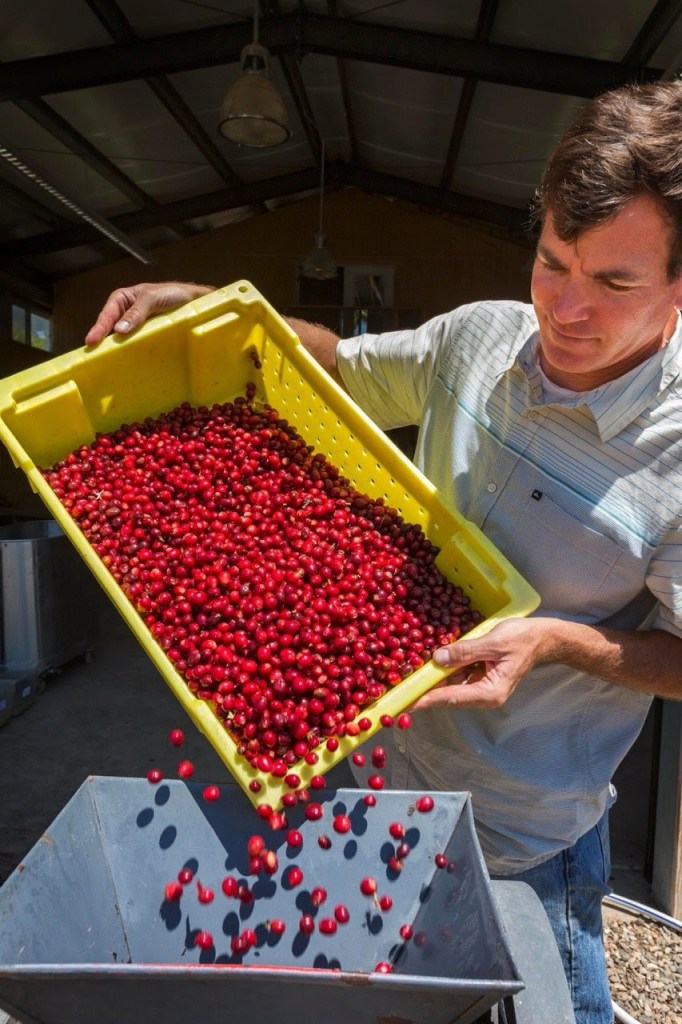
Coffee became the Ruskeys’ main focus with the launch of Frinj in 2017, which I was very proud to learn was named after an article I wrote called “Farming the Fringe” a few years before. But Jay never really stopped exploring new crops that could either aid in existing farming operations or become marketable products themselves. With the support of Kristen, Jay was the genius sort of farmer that California and the rest of the world needs right now to adapt and evolve in a fast-changing climate and increasingly cutthroat marketplace.
I hadn’t spoken to Jay much over the past two years. Soon after writing this report on a regenerative farming event at his property, I learned that Frinj was being sued by a past employee and was filing for bankruptcy. Jay wasn’t particularly pleased that I wanted to report this news, but he respected my journalistic need to do so, as it was already in the public record. I followed the case sporadically over the years, mostly seeing so many of Jay’s farming partners, including rock star Jason Mraz, write letters in support of Frinj.
He hadn’t responded to a couple of my messages over the past year, so I was very happy to receive an email from him on January 5 of this year, telling me that Frinj was out of bankruptcy, back in full swing, and headed to the Dubai Coffee Auction two weeks later. It would be the first time that a California-grown coffee was evaluated on that global stage, and he thought it could be their Bottle Shock moment, referring to the movie about California wine’s coming-of-age moment in 1976. I wrote about that here.
I reached out a week or so after the contest to see how it all went, and Jay wrote back enthusiastically. “It was a good show,” he replied. “We got California coffee showcased as a world-class coffee with the best coffees in the world. Our washed Geisha stood out for flavor and cleanliness in the cup, and many have called it the best in the expo. We acquired some new interested buyers from other parts of the world who appreciate the coffee craftsmanship that we do at Frinj.”
They sold their green coffee beans for $356 per kilo to Phylocoffea in Japan, which is owned by a previous World Brewers Cup Champion Tetsu Kasuya. “We will work with Kasuya on how he presents the coffee to the world,” said Jay on January 26.
That was the last I heard from him. I was very much looking forward to visiting the farm again soon, perhaps as a feature story for our upcoming Coffee Week promotion next month. I was about to email him about that this week.
I’ll deeply miss those walks that opened my eyes to so much about what’s possible in farming but also about how to live a meaningful, ever-curious life. Now I don’t know if I’ll ever get back, and have no idea what will happen to Frinj without Jay and Kristen, who were its driving force. And I can’t even fathom what their children must be going through right now, so my thoughts are definitely with them.
I’ll be raising my glass in the weeks to come to Jay and Kristen, and I suggest you do the same. Santa Barbara and the greater California farming community lost more than it may ever know.
From Our Table
Here are some stories you may have missed:
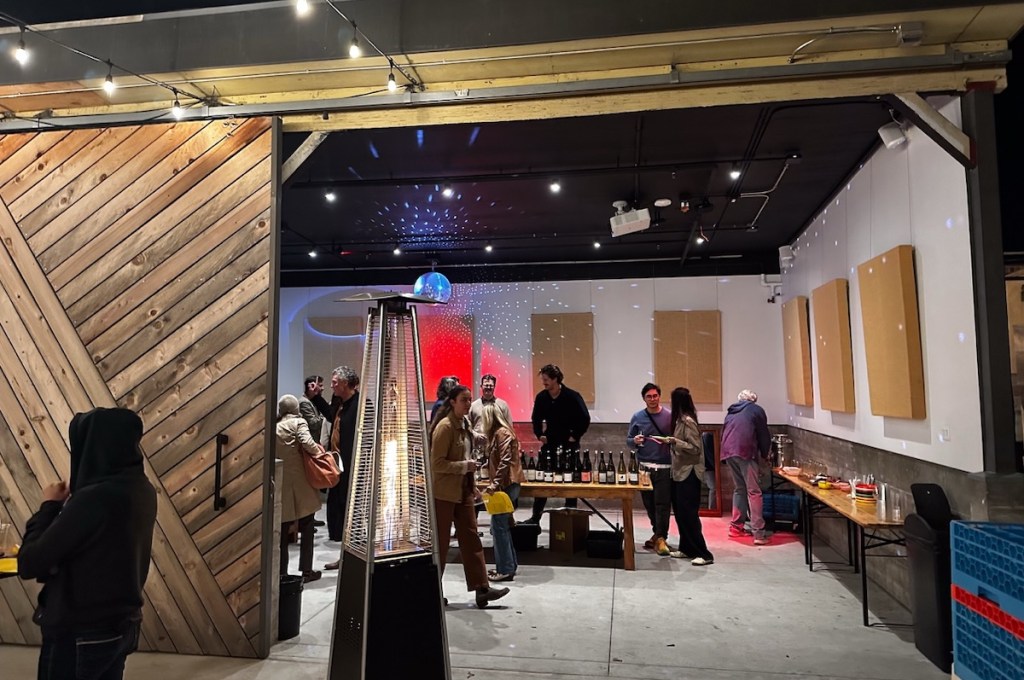
- Satellite S.B. is hosting tastings of imported wines from South Africa and beyond during The Factory’s portfolio tastings in March.
- Nalla’s Indian Cuisine comes to Star Lane Vineyard and Beckmen Vineyards in the coming weeks to serve immersive South Asian dinners.
- Lil Dom’s Seafood in Carpinteria is hosting a series of Mardi Gras meals this weekend, February 15 to 17.
- Leslie Dinaberg had a good time interviewing Dancing with the Stars star Maksim Chmerkovskiy about his new line of spirits, Tetya Kapa.
- San Ysidro Ranch is hosting Valentine’s Day fun.








You must be logged in to post a comment.