

Sign up to get Matt Kettmann’s Full Belly Files, which serves up multiple courses of food & drink coverage every Friday, going off-menu from our regularly published content to deliver tasty nuggets of restaurant, recipe, and refreshment wisdom to your inbox
There’s nothing easy about growing chocolate in Santa Barbara, far from the tropical jungles that the cacao tree usually calls home.
After somehow acquiring cacao pods full of healthy seeds and getting them to grow in a hot and humid greenhouse, the emerging flowers of one tree must be hand-pollinated with pollen from the flowers of another. This requires a tiny paint brush — trimmed so that just a couple bristles extend — and then someone with expert training and perfect eyesight must directly apply the pollen to the nearly invisible stigmas inside Theobroma cacao’sminiscule flowers.
Complicating matters further, this can only happen when both plants flower within the same three-day window, and those two trees must be genetically compatible. Unless you’ve got a bunch of money to spend on DNA sequencing, the compatibility equation is mostly a crapshoot, meaning that endless rounds of trial and error pairing varying trees are the only means to a pollinated end.
But it is indeed possible to produce cacao pods full of the coveted beans that become chocolate in Santa Barbara. And if our region becomes home to the first-ever commercial cacao farm in the continental United States, it may one day even be profitable.
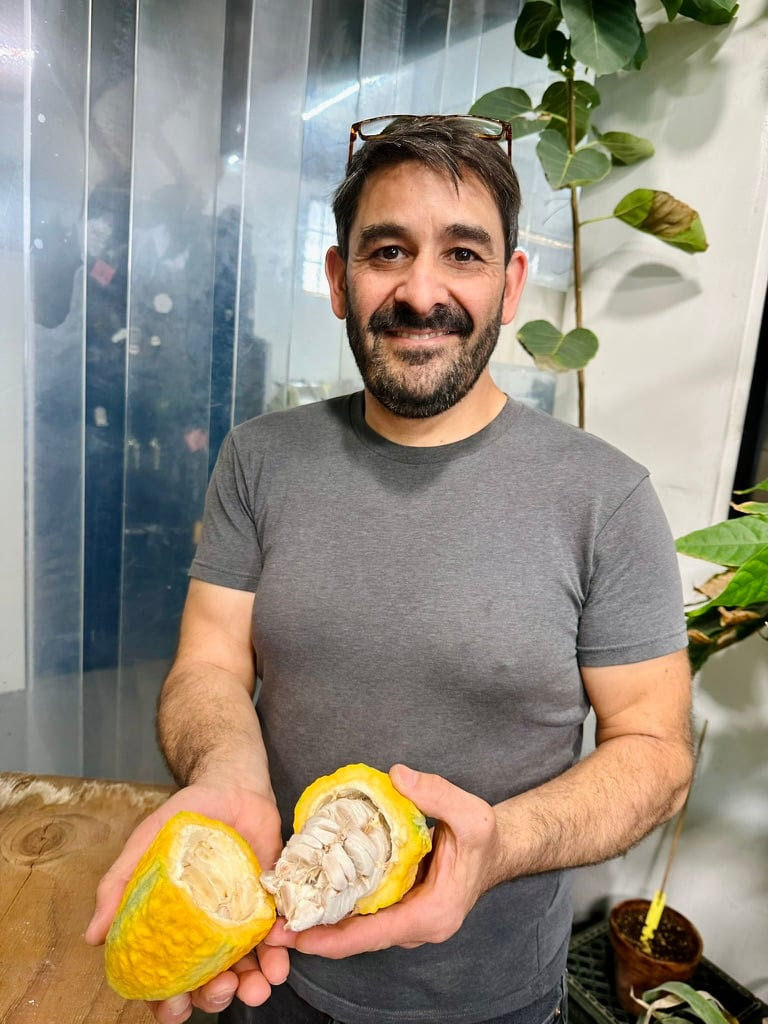
Just last week, Michael Orlando at Twenty-Four Blackbirds cracked open his fifth-ever Santa Barbara–grown cacao pod, grown in the small greenhouse he built back in 2016 when he moved his bean-to-bar company into a factory on East Haley Street. I’ve been writing about Mike since he started turning imported cacao beans into chocolate bars back in 2010, and he was the main character of my 2018 cover story about Santa Barbara’s role in the global bean-to-bar boom.
I’ve been aware of his cacao growing efforts since they started, but was excited to hear that they were finally, literally, bearing fruit. The first one emerged more than two years ago, and the same tree sprouted the next four, although bright pink tags on numerous other trunks reveal the many unsuccessful pollination attempts.
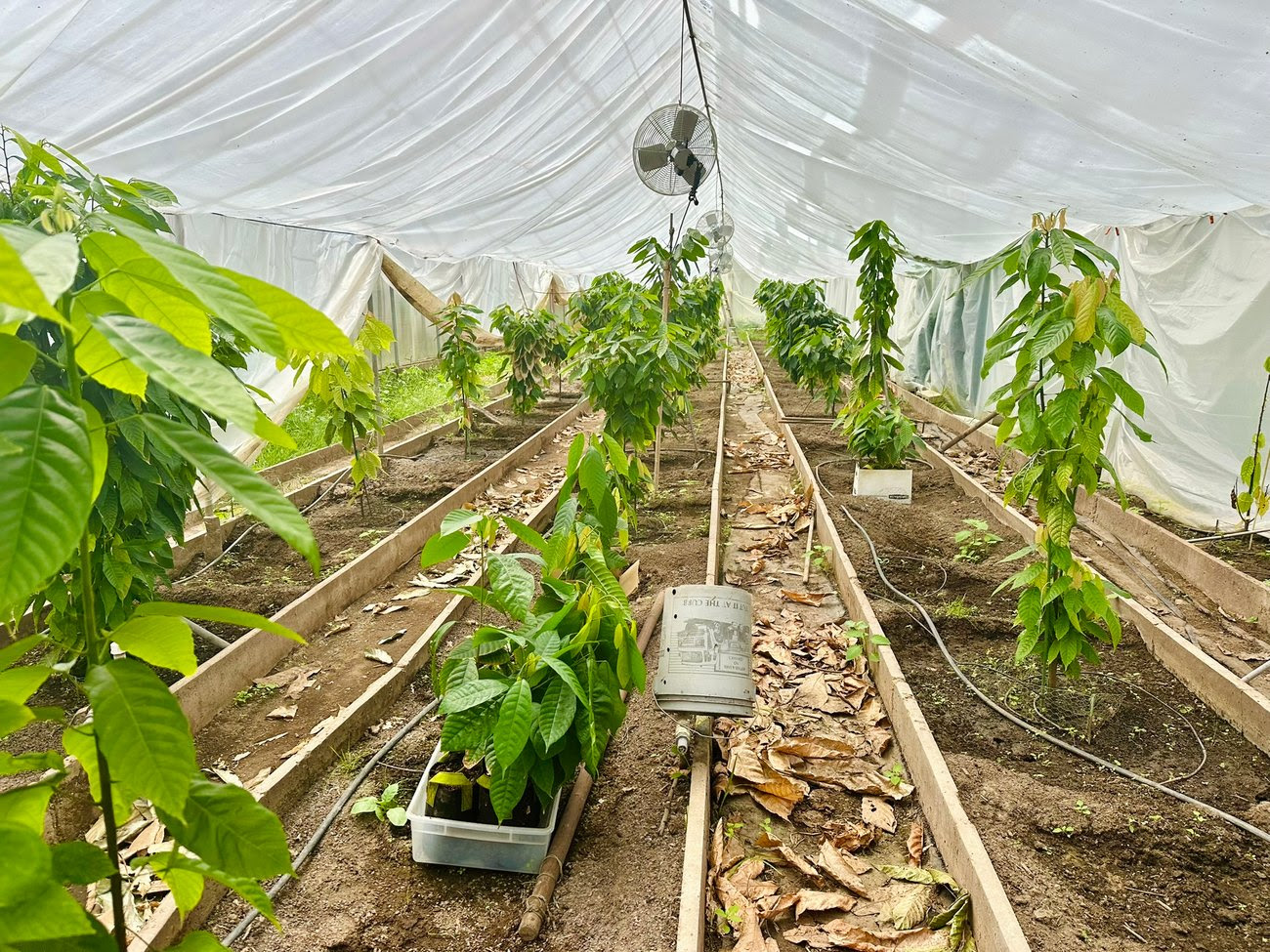
“At this point, everything sorta works,” Orlando told me as we stood in the damp heat of the greenhouse, home to cacao trees of various sizes, all the way down to seedlings that came from those first homegrown pods. (Those seeds, if not planted, are what get fermented into cacao beans, roasted, and processed into chocolate.) “Every pod had about 50 seeds, and they all take,” he explained. “Once you have the climate, getting them to grow is not really a problem.”
In February 2020, right before the start of COVID, he expanded his farm ambitions to a real, albeit rundown, greenhouse near the coast in Goleta. He spent his early pandemic days weeding and erecting a plastic-sheathed greenhouse-within-a-greenhouse to house even more cacao plants. Those came from the seeds inside pods that Orlando collected at various conferences, where growers from India, Latin America, and Africa show off their fresh cacao. There are now dozens of trees ready to reproduce, with more regularly coming in as seedlings mature.
That nursery stock alone is valuable, given that these plants are surviving and, in some cases, thriving, despite the non-tropical climate outside. “By having no budget, we are naturally selecting cold-climate trees,” said Orlando, explaining that a similar — though much better funded — quest is underway at UC Davis, sponsored by Mars, Incorporated.
Orlando figures he needs about 20 reliably fruiting trees to produce enough beans to make a commercial batch of chocolate, which he could sell to restaurants and at the farmers’ market. “The real goal is to make a Santa Barbara–grown cacao-bean-to-chocolate bar,” he said. “It would be like San Francisco sourdough.”
The cost would presumably be pretty high, at least at first, so that could become a sort of “charity bar” to help pay for the project. “This won’t be a cash cow,” he said. “But I do want it to become self-sustaining.”
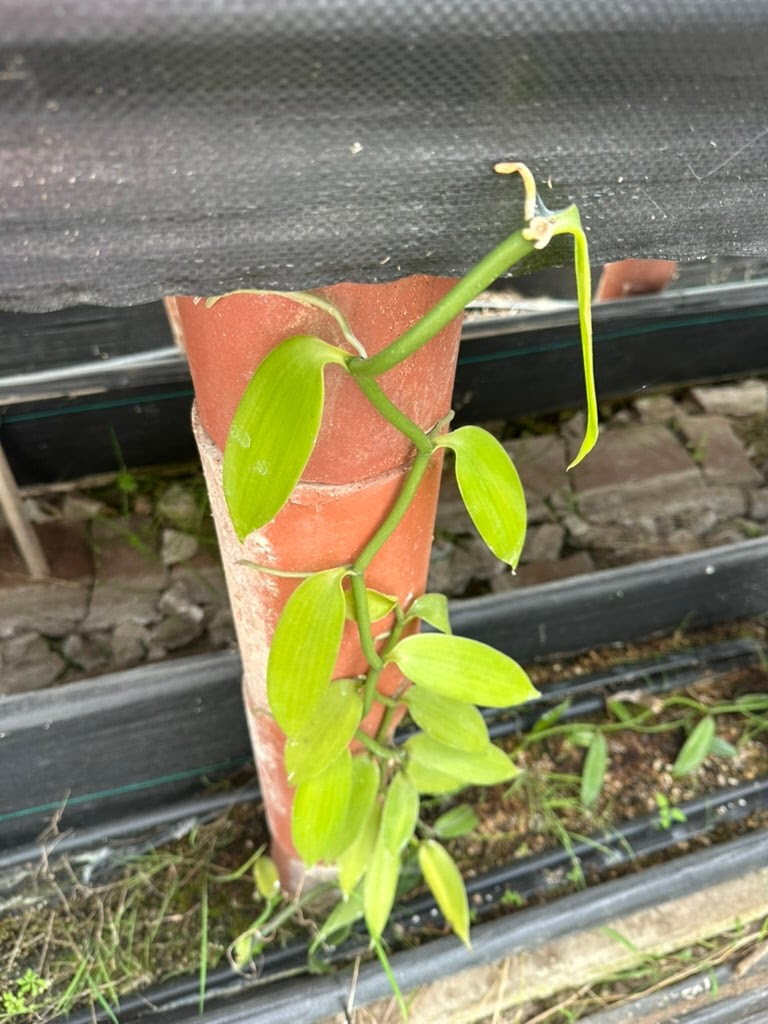
He has higher profitability hopes for vanilla, which he grows in the greenhouses, though none have sprouted beans yet. Based on the spice’s current commodity prices, Orlando’s little vanilla block could generate $250,000 annually if it works. Like the chocolate, a commercial vanilla farm in Santa Barbara would be the first of its kind in the continental United States. “No one is doing this,” he said.
The broader impact of Orlando’s efforts extend beyond chocolate and vanilla. “We are developing a low impact way to grow tropical plants,” he said, explaining that the prevailing wisdom is that it takes tons of resources to make tropical plants work outside of the tropics. His thrifty greenhouses reveal that tropical crops like pineapple, kava, and rambutan can be grown with simple temperature and humidity controls that don’t take much more energy than a couple of solar panels.
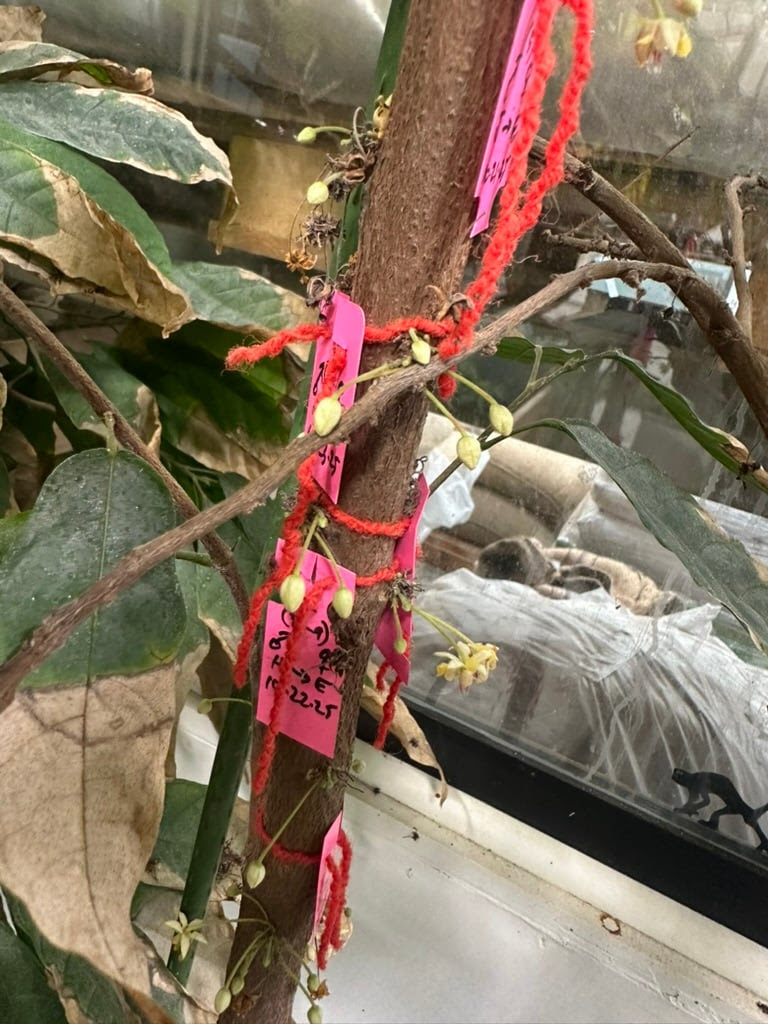
“It’s not as expensive as it seems,” he said. “This is the proof that it works.”
Orlando is now ready to double the size of his cacao greenhouse, and to ready the vanilla for its next stage. But the farm operation is hitting a wall when it comes to time, labor, and money, so he’s hunting for volunteers, donations of gardening materials like weed barrier and compost, and potentially even investors to turn this farm experiment into a real enterprise. Anyone willing to do some weeding, dig some holes, contribute some supplies, or consider financial support can email him directly at mike@twentyfourblackbirds.com.
Back at the greenhouse on East Haley, steps away from the same block’s craft brews, vegan crunchwraps, and artisan lattes, Orlando graciously shared his latest cacao pod with me.
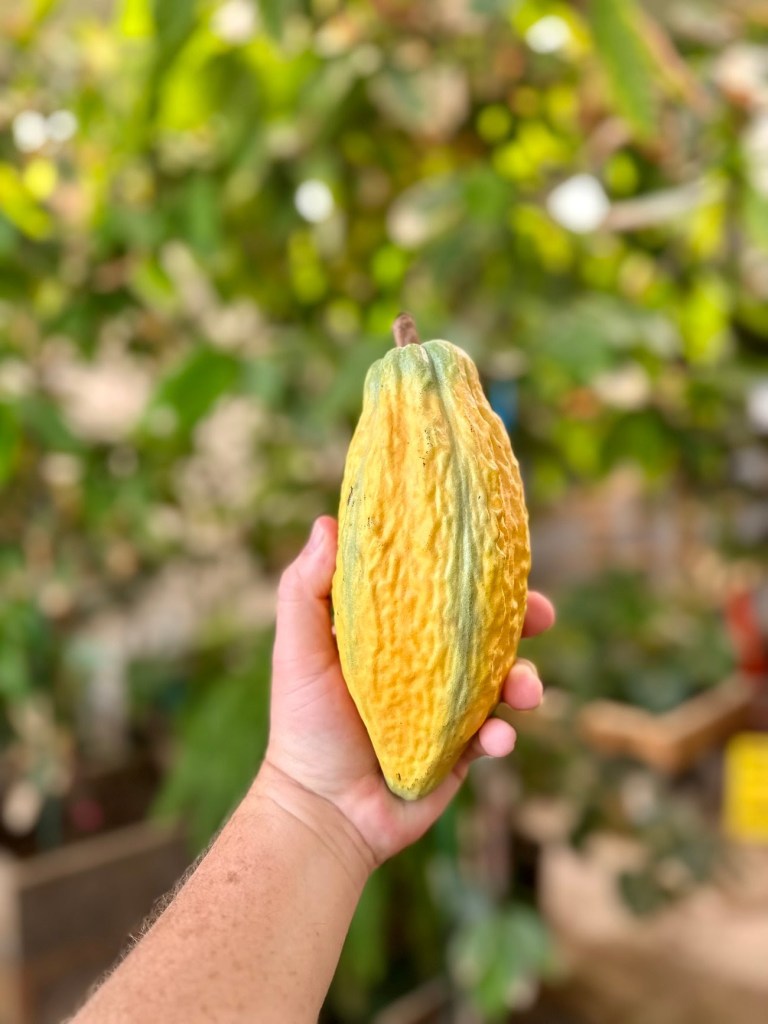
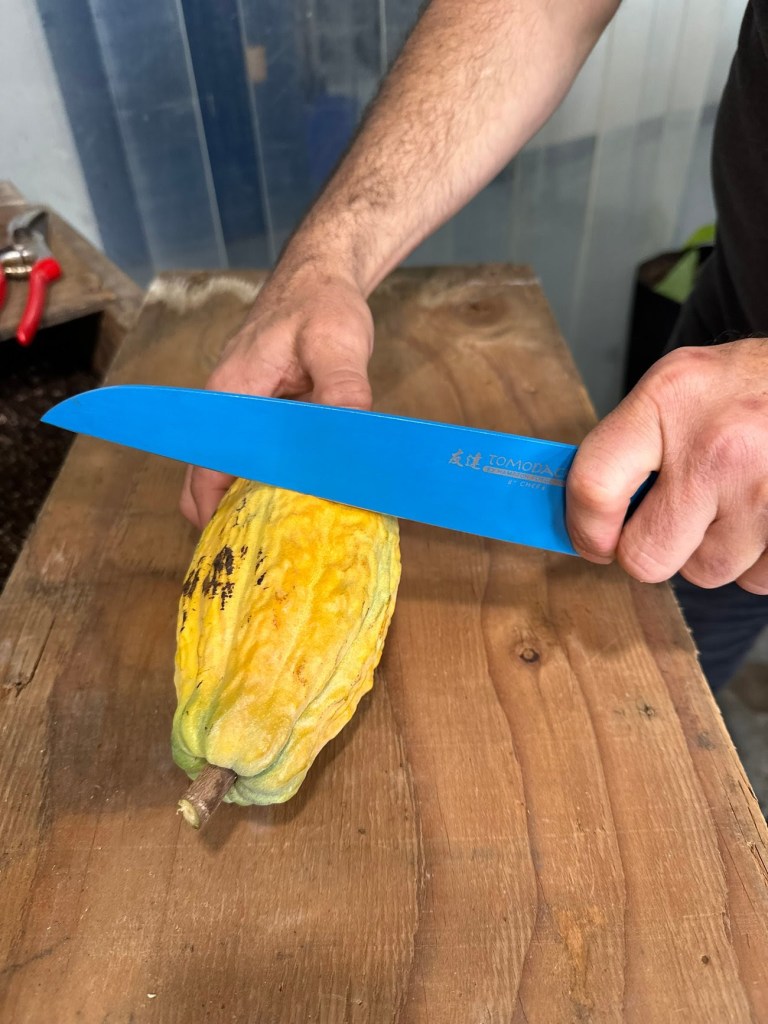
As he sliced open the yellow-green husk — about the size of a large sweet potato — its milk-white seeds emerged, stacked neatly like rows of fat garlic cloves. We plopped them in our mouths to suck off their sweet coating, discussing their subtly tropical flavors of tangy banana and lychee, and then spit them into a bowl.
Orlando counted 62 seeds that day, the most ever from a Santa Barbara–grown pod. That means there will be another 62 cacao trees soon, ready to make chocolate history.
From Our Table
Here are some stories you may have missed in recent weeks:
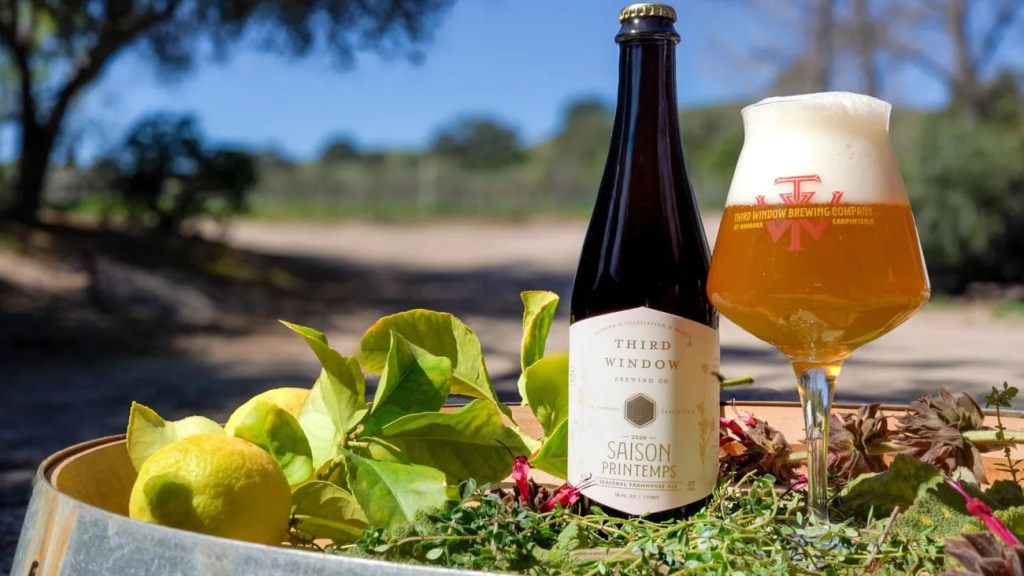
- Rebecca Horrrigan reported that Third Window Brewing is helping to celebrate the S.B. Botanic Garden’s 100-year anniversary with a series of native plant-enhanced brews. (Fun fact not in the story: I helped develop this idea and put it into motion!)
- Tiana Molony gets the backstory on the Basque cheesecake at Dom’s Taverna.
- Meaghan Clark Tiernan, who had a funL.A. Times travel piece on Goleta, wrote about comedian and food entrepreneur Anna Vocino.
- Leslie DInaberg visited the Santa Barbara Pizza House for some budget-friendly Italian cuisine.
- Our video squad of Maya Johnson and Andrew Migliaccio shot some interviews of culinary storyletters at the inaugural S.B. Literary Fest.
- Richellle Boyd went to the Miramar to check out their Bounty series of winemaker dinners.
- I wrote about the Ava Hotel in Paso Robles and some fun new things to do there.
Related Posts


Premier Events

Mon, Oct 26
7:00 PM
Santa Barbara
Beauty and the Origins of Electrophysiology, Telecommunications & the Global Theater
Mon, Oct 26
5:00 PM
Montecito
Halloween at The Speakeasy at San Ysidro Ranch

Mon, Oct 26
6:00 PM
Santa Barbara
Chaucer’s Book Talk & Signing with Jennifer Chassman Browne “See Us, Know Us: Profiles of Disability”

Wed, Oct 28
5:00 PM
Santa Barbara
Fundraiser for Domestic Violence Solutions
Wed, Oct 28
7:00 PM
Santa Barbara
Reel Rock 20 Climbing Film Tour
Wed, Oct 28
7:00 PM
Goleta
IVRPD Presents : Halloween Pumpkin Patch

Thu, Oct 29
6:00 PM
Santa Barbara
Halloween Paint & Sip at Goodland Wine Shop
Fri, Oct 30
12:00 AM
Montecito
Día de los Muertos at The Speakeasy
Fri, Oct 30
11:30 AM
Santa Barbara
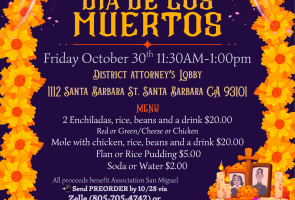
🌼💀 Join us for Día de los Muertos! 💀🌼

Fri, Oct 30
2:00 PM
Santa Barbara
“Sea to Summit “Art Exhibit & Benefit Oct 30 & 31

Fri, Oct 30
3:00 PM
Santa Barbara
Family Movie Night at the Eastside Library: “Coco”
Mon, Oct 26 7:00 PM
Santa Barbara
Beauty and the Origins of Electrophysiology, Telecommunications & the Global Theater
Mon, Oct 26 5:00 PM
Montecito
Halloween at The Speakeasy at San Ysidro Ranch
Mon, Oct 26 6:00 PM
Santa Barbara
Chaucer’s Book Talk & Signing with Jennifer Chassman Browne “See Us, Know Us: Profiles of Disability”
Wed, Oct 28 5:00 PM
Santa Barbara
Fundraiser for Domestic Violence Solutions
Wed, Oct 28 7:00 PM
Santa Barbara
Reel Rock 20 Climbing Film Tour
Wed, Oct 28 7:00 PM
Goleta
IVRPD Presents : Halloween Pumpkin Patch
Thu, Oct 29 6:00 PM
Santa Barbara
Halloween Paint & Sip at Goodland Wine Shop
Fri, Oct 30 12:00 AM
Montecito
Día de los Muertos at The Speakeasy
Fri, Oct 30 11:30 AM
Santa Barbara
🌼💀 Join us for Día de los Muertos! 💀🌼
Fri, Oct 30 2:00 PM
Santa Barbara
“Sea to Summit “Art Exhibit & Benefit Oct 30 & 31
Fri, Oct 30 3:00 PM
Santa Barbara



You must be logged in to post a comment.