

Press releases are posted on Independent.com as a free community service.
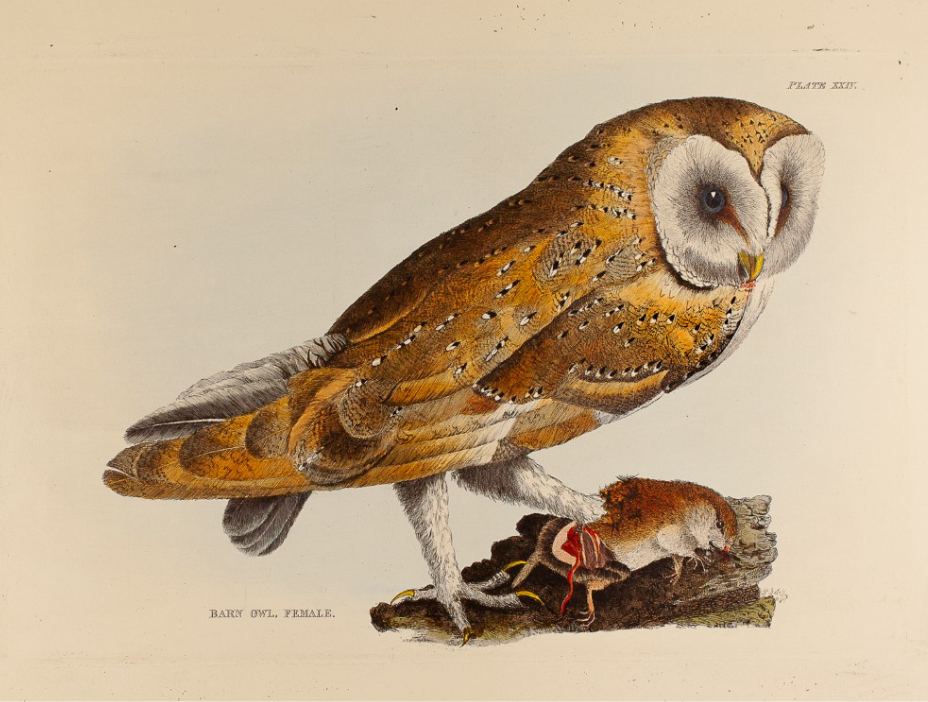
The Santa Barbara Museum of Natural History presents the first ever museum exhibition devoted to Prideaux John Selby (1788–1867), a “British Audubon” who had a major influence on other naturalists—including Charles Darwin—but whose work is less well-known today.
Selby was an aristocrat who lived on the border of England and Scotland. In 1819, he embarked on an extraordinary project: the life-size depiction of every type of bird to be found in Britain, on land and water, native and migrant alike. Over the next 15 years, he would produce hundreds of large hand-colored etchings which show the plumage, behavior, and lifecycle of birds in meticulous detail. Opening on October 9, Selby’s Circles: Art & Nature in Romantic Britain features a selection of works from this ambitious project and illuminates the man and the world that produced them.
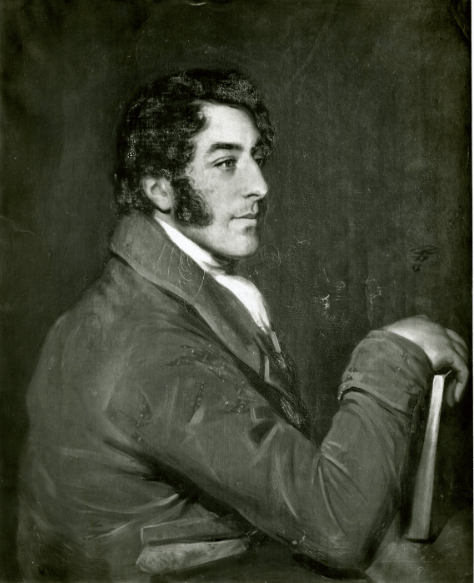
Selby’s large inherited estates stretched along Britain’s northeastern coastline, still a globally important site for bird migration. These estates enabled him to observe each bird’s qualities year-round while providing him with the wealth required to complete this huge artistic project. He was also helped by his unusually broad and inclusive social circle, which encompassed both the American artist-ornithologist John James Audubon and the local artisan Thomas Bewick, now considered one of Britain’s greatest printmakers. “Bewick taught Selby how to etch. Audubon taught Selby how to bring birds alive,” says Gallery Curator Sarah Monks, Ph.D.
The exhibit’s curation and interpretation by Dr. Monks sets Selby’s etchings in their social, scientific, and artistic contexts. He began this project at the historical moment when Mary Shelley’s Frankenstein and Jane Austen’s Persuasion had just been published. Like these Romantic novels, Selby’s highly expressive etchings explore lifeforces, characters, and styles of appearance. He was among the first to identify in detail how birds’ feathers change with age, seasons, and the desire to breed. He was also among the first to document contemporary extinctions, noting the ways in which an increasingly industrialized society was beginning to threaten birdlife. Together, his etchings illustrate his radically Romantic philosophy of nature as a set of interconnected circles in which creatures have affinities with each other. Selby was more interested in what living beings shared than in what divided them.
Alongside Selby’s etchings, the exhibition features works by Thomas Bewick including A History of British Birds (1797-1804), a new acquisition for the Museum and widely considered Bewick’s finest work. The exhibition also features a unique engraving from Audubon’s Birds of America. Created entirely while Audubon was in Edinburgh with Selby, and featuring Audubon’s own handwritten corrections, this extremely rare and newly restored print from the Museum’s historical print collection will be displayed for the first time. At the exhibition’s heart is a suitably circular display of real bird specimens from the Museum’s Vertebrate Zoology Collections, sharing their own affinities with Selby’s birds on the wall.
Selby’s Circles: Art & Nature in Romantic Britain runs October 9, 2026 through January 4, 2027 in the John and Peggy Maximus Gallery at the Museum. The exhibition is included with Museum admission, and Members are always free. The gallery is ADA accessible. Visit sbnature.org/maximus to learn more about the antique print collection, gallery, and exhibition.









You must be logged in to post a comment.