
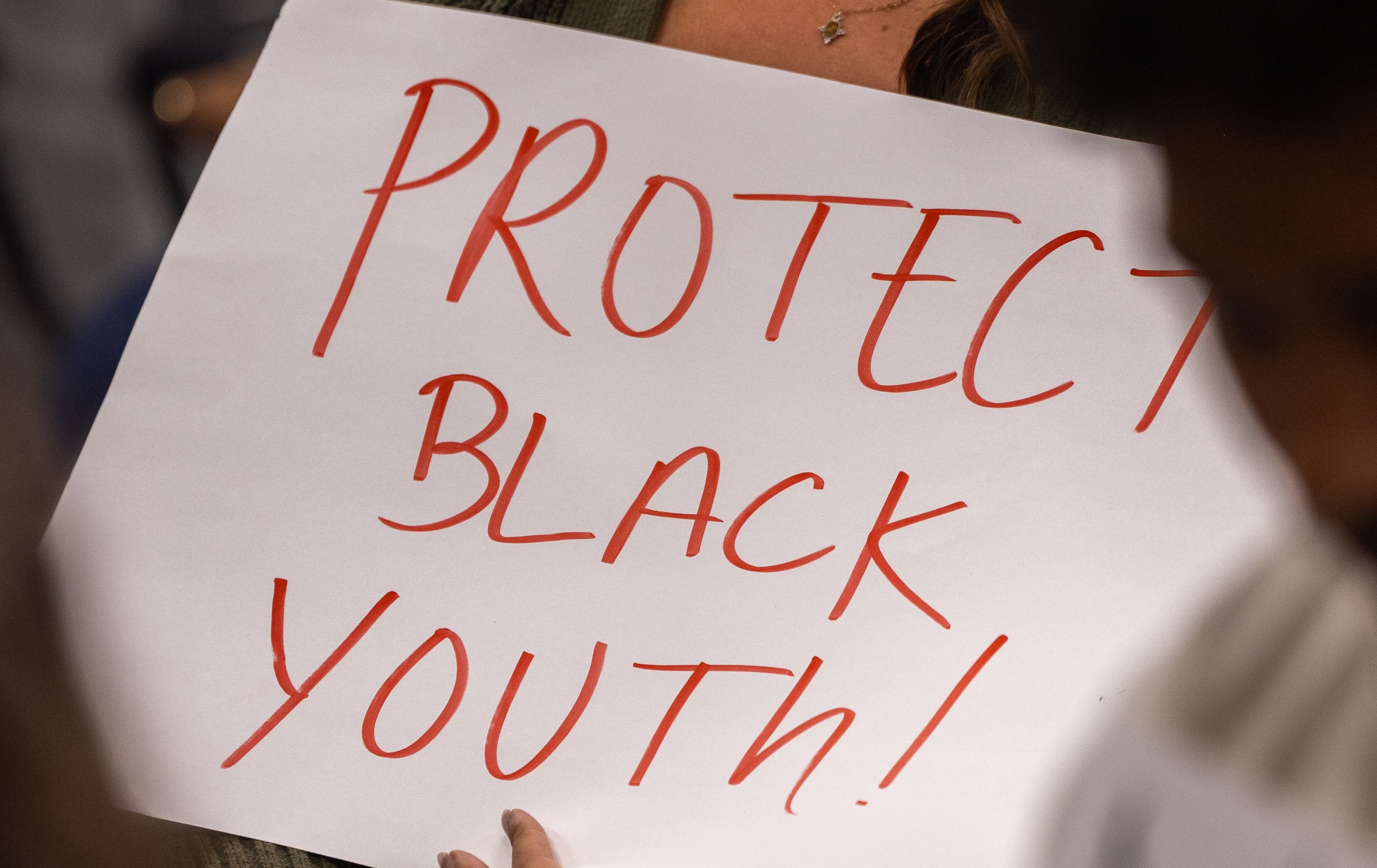
In terms of addressing anti-Black incidents in the Santa Barbara Unified School District, the school board is starting to put its money where its mouth is.
On Tuesday, district staff brought forth a $375,000 initiative for “inclusive school communities.” It involves hiring an inclusive schools community director, who would oversee the district’s anti-racism work and ethnic studies implementation, and a teacher on special assignment (TOSA) specifically focused on ethnic studies implementation at the elementary level.
“This work is centered on moving forward the anti-racist work that has been laid out, that we have heard so many speak so passionately about,” said Marianne Hew, assistant superintendent of student and family services.
Ongoing anti-Black incidents in schools recently sparked public outcry, particularly following a viral social media post depicting white San Marcos High School students in “Black face.”
Members of the public, district staff and students, and representatives from community groups — including Healing Justice Santa Barbara and the NAACP — have repeatedly spoken out about racist incidents and urged the board to take substantive action to combat anti-Blackness.
The new director would lead and oversee the district’s anti-racism work, including a racial incident response protocol, expanded ethnic studies curricula, professional learning, and discipline guidelines.
They would bridge that with the district’s mental health initiatives and “community schools” model, Hew said. The position will “imbed” and “integrate” those initiatives — rather than treat them as “silos” — into ethnic studies courses and “the pedagogy of every classroom.” Additionally, the TOSA would further ensure the “comprehensive” implementation of ethnic studies and inclusion of diverse, “culturally responsive” content from preschool to 12th grade.
Some community members worried that junior highs would be exempted from oversight and implementation based on the board reports, but Board President Bill Banning clarified that the work “doesn’t erase junior highs; it just doesn’t center it.” Others took issue with the fact that the district failed to bring the proposed positions to its Committee Advancing Black Achievement, Wellness, and Excellence (CABAWE) for feedback before presenting them to the board.
Boardmember Celeste Kafri proposed taking the item off the agenda and bringing it back after it went to CABAWE, but the crowd booed the idea, telling her to “approve the funding!”
“I 100 percent support investing in these types of positions,” Kafri said, “but I do think we need to have CABAWE involved.”
Banning said the board could move forward with the proposal as presented and “make revisions as we go.” He said the board has not “been doing enough,” and said he would not support anything that did not approve the positions that night.
“Support for Black students has to be a priority for this board and this district,” Banning said, which was met with supportive snaps and whoops from the room, once again full of community members, staff, parents, and students. “We don’t need to wait.”
Boardmember Gabe Escobedo agreed. “What we have here is far more than what I thought it would be,” he said. He noted that Tuesday was his last meeting on the school board before stepping into his new role on the City Council in January.
“I think this is the first time I’ve come to a meeting and there have been substantive proposals focused on the preemptive work, the proactive work, that can actually get into systems change,” he said. “What I’m hearing is seriousness about this work.”
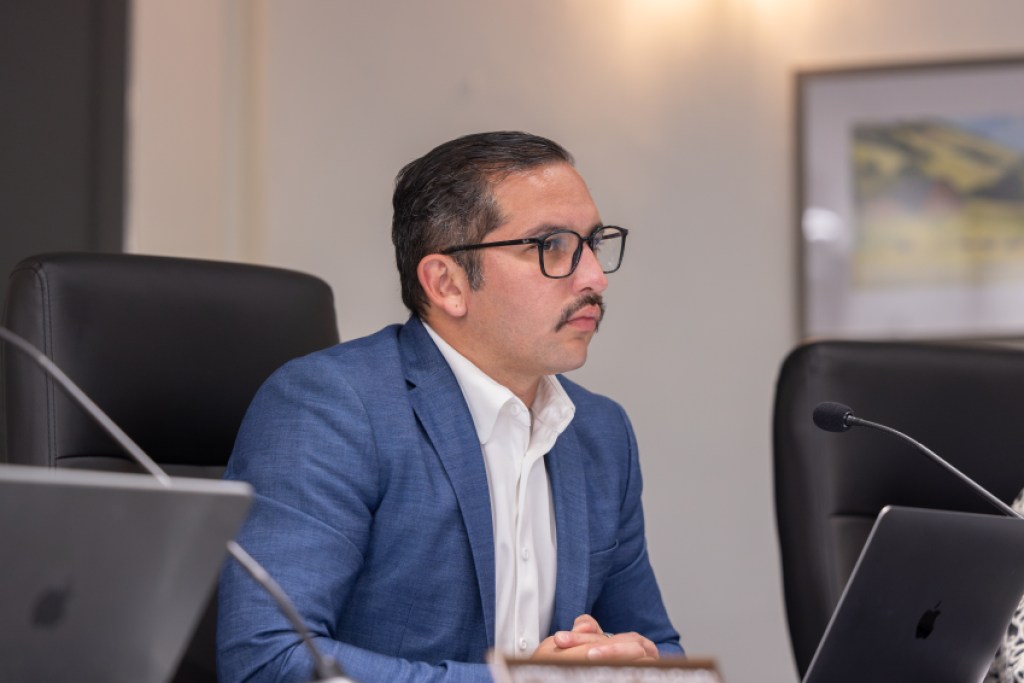
He did say that the proposal felt “rigid,” without “room to shape it,” but noted it was a “good starting point.” He suggested changing the TOSA position to an “equity” TOSA to avoid consequences related to “culture wars,” and said the job descriptions themselves should go to CABAWE for review.
He said he was happy “to see and hear engagement on this topic,” from colleagues he accused of being reluctant to engage with it in the past. “We need to have some humility … to understand that we need other perspectives because we have used our perspectives and we have fallen short.”
Ultimately, Escobedo made a motion to approve the funding for the new positions, send the job descriptions to CABAWE for review, and ask for their priorities for next steps — such as a potential TOSA position dedicated to the junior high space — which passed unanimously.

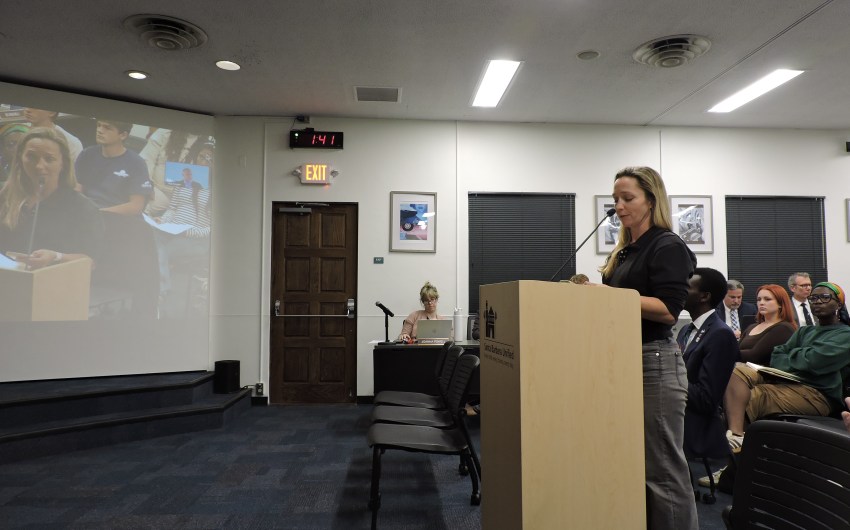
Community members took to the podium to reiterate their concerns around “normalized” racism in the district and ask for more funding to support Black students on campus, particularly through the district’s partnership with Healing Justice. While some public commenters suggested the district could do more, the room cheered when the board passed the proposal.
Community member Julius Abanise, a parent and frequent attendee of the board meetings, summed up the room’s sentiments well: “This is a down payment,” he said of the proposal on the table that night. “Future work needs to be done with additional funding.… We need to equip Black students to not only survive, but to thrive.”
A student from Dos Pueblos High School brought up the daily realities Black students continue to face on campus: hearing things like “whip jokes” and people saying the “n-word,” citing a lack of education around derogatory terms and Black studies.
“Kids as young as 3 can intake racism,” the student said. “Black students shouldn’t have to fill in for educators; we shouldn’t have to tell our classmates, ‘This is wrong. Don’t do this.’”
Supporters of ethnic studies filled the room, with many wearing “Ethnic Studies Now!” T-shirts. Barbara Parmet, a member of the “Ethnic Studies Now!” coalition, said ethnic studies “is about the whole community: understanding our histories and who we are. And it is the only way to make us healthy again.”
Connie Alexander, president of the Santa Barbara NAACP, urged the board to ensure the work continues, including through its process to select a new superintendent, which she noted should be “transparent.” On Tuesday, the board appointed boardmembers Bill Banning and Sunita Beall to serve on a temporary advisory committee to recommend superintendent search firms to the board, which will screen proposals and recommend search firms at the board’s January 12 meeting.
“You must be invested in holding the line, and keeping every administration you have set on keeping these positions,” Alexander said.
Related Posts


Premier Events

Sat, Nov 21
9:00 AM
Santa Barbara
Hope as a Phenomenon of Human Nature

Sat, Nov 21
9:00 AM
Goleta
Holiday Gift Boutique in Goleta

Fri, Nov 20
11:00 AM
Santa Barbara
Santa Barbara Antique & Vintage Show

Sat, Nov 21
10:00 AM
Solvang
56th Annual Holiday Open House

Sat, Nov 21
10:00 AM
Santa Barbara
MOXI’s Seaside Sock Skating
Sat, Nov 21
11:00 AM
Santa Barbara
Santa Barbara Antique & Vintage Show

Sat, Nov 21
11:00 AM
Santa Barbara
Cassatt Reconsidered: Lecture with Mary G. Morton
Sat, Nov 21
7:30 PM
Santa Barbara
Juilliard String Quartet & Simone Dinnerstein

Sat, Nov 21
7:30 PM
Santa Barbara
Santa Barbara Blues Society Presents Teresa James and the Rhythm Tramps
Sun, Nov 22
11:00 AM
Santa Barbara
Santa Barbara Antique & Vintage Show

Sun, Nov 22
2:00 PM
Goleta
Prime Time Band Fall Concert

Sun, Nov 22
5:00 PM
Santa Barbara
Choral Evensong: Sung by the Trinity Choir
Sat, Nov 21 9:00 AM
Santa Barbara
Hope as a Phenomenon of Human Nature
Sat, Nov 21 9:00 AM
Goleta
Holiday Gift Boutique in Goleta
Fri, Nov 20 11:00 AM
Santa Barbara
Santa Barbara Antique & Vintage Show
Sat, Nov 21 10:00 AM
Solvang
56th Annual Holiday Open House
Sat, Nov 21 10:00 AM
Santa Barbara
MOXI’s Seaside Sock Skating
Sat, Nov 21 11:00 AM
Santa Barbara
Santa Barbara Antique & Vintage Show
Sat, Nov 21 11:00 AM
Santa Barbara
Cassatt Reconsidered: Lecture with Mary G. Morton
Sat, Nov 21 7:30 PM
Santa Barbara
Juilliard String Quartet & Simone Dinnerstein
Sat, Nov 21 7:30 PM
Santa Barbara
Santa Barbara Blues Society Presents Teresa James and the Rhythm Tramps
Sun, Nov 22 11:00 AM
Santa Barbara
Santa Barbara Antique & Vintage Show
Sun, Nov 22 2:00 PM
Goleta
Prime Time Band Fall Concert
Sun, Nov 22 5:00 PM
Santa Barbara


You must be logged in to post a comment.