

A proposed housing development on the Carpinteria bluffs is chugging forward with a new alternative, splitting the project across two parcels, and increasing affordable units and open space.
Carpinteria residents bristled at first mention of the 191-unit housing project — dubbed “The Farm” — when out-of-town developers submitted the initial application to the city in 2024.
Subsequent meetings on the project were overwhelmed with opposition, sprinkled with some YIMBY-minded neighbors who acknowledged a need for more housing in the city. The community has long fought development on the bluffs, and this time is no different.
The main project site is located at 5885 Carpinteria Avenue, currently occupied by the Tee Time driving range and the Carp Farm School. It is next to the Carpinteria Bluffs Nature Preserve and the Seal Sanctuary — land valued for its grassy open space, native habitat, wildlife, and trails.
Conservation-conscious Carpinterians are fighting tooth and nail to prevent the project. Their argument is that housing is important, but can be built elsewhere in the city, avoiding the “sacred” bluffs they value for its natural resources and public access.
The developers imagined constructing a seaside neighborhood, with some open space and coastal access preserved for the public. Also, thanks to builder’s remedy laws, the project is exempt from local zoning requirements as long as it includes a portion of affordable housing units.
The city has been stuck between the rock of community opposition and the hard place of needing more affordable housing and being beholden to honoring builder’s remedy.
But the developers just went back to the drawing board and will present a new project alternative to the Carpinteria City Council on Monday, November 23.
The original project includes 191 units, consisting of single-family homes and townhouses, 39 of which would be affordable — the 20 percent required by builder’s remedy — on the Tee Time site, plus hundreds of parking spaces.
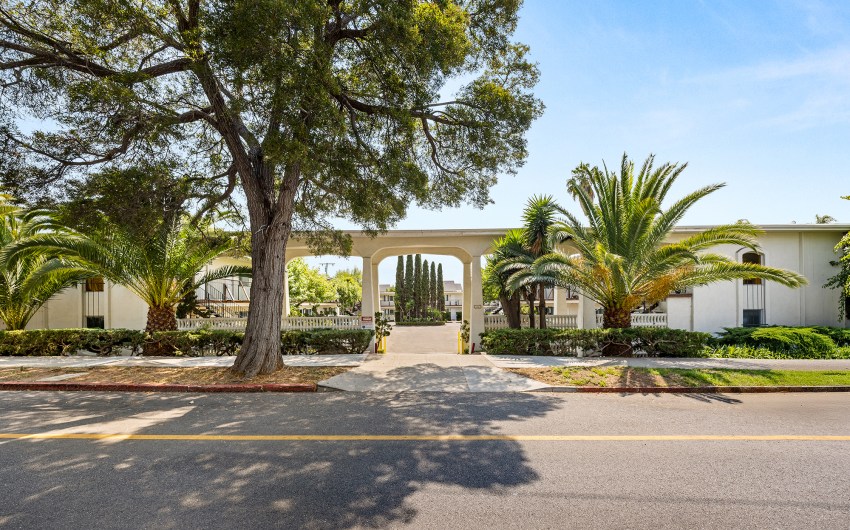
The new alternative incorporates the adjacent S&S Seeds property at 6155-6175 Carpinteria Avenue to split the development into two, dedicating the adjacent site to income-restricted units.
Overall, the proposal includes revisions in an apparent attempt to make the project more palatable:
- Reducing the number of for-sale units at the Tee Time site to 175.
- Improving ocean views from the adjacent Carpinteria Bluffs Nature Preserve, adding public parking to preserve access, and dedicating a portion of the Tee Time site to the city for open space.
- Using S&S Seeds to develop more affordable units, up to 87 from the originally proposed 39, and dedicating a portion of the site to the City for open space.
- Relocating the Carp Children’s Farm School and adding a public parking lot to the S&S Seeds Parcels while preserving existing trails.
Developer Paul Brenneke, a wealthy investor from Oregon who bought the land for $15 million, said in a statement that, in the years he has spent “listening to the residents of Carpinteria,” one thing became clear: “how deeply people care about preserving what makes Carpinteria special.”
He acknowledged the mix of feedback from those concerned about the development and those who recognize the “critical shortage” of housing in the area, particularly of the affordable variety.
“I understand and appreciate both perspectives,” he said. “Those conversations have led us to explore an alternative that I believe offers a meaningful improvement for the community.”

The proposed plan, he noted, would reduce developed lot coverage by approximately 21 percent, from 105,000 square feet to 82,500 square feet, “with the recovered area devoted to landscaping and open space.” Together with People’s Self-Help Housing, they are proposing an “approximately $27 million investment in affordable housing on the S&S Seeds property,” instead of developing it separately.
He noted the state’s pressure on Carpinteria to build more housing: Carpinteria must plan to build 901 new residential units by 2031.
“I believe this alternative demonstrates that housing and preservation do not have to be competing priorities,” Brenneke said.
However, the Citizens for the Carpinteria Bluffs, the main drivers behind protecting the bluffs from development, do not support the alternative. Patrick Crooks, the community group’s president, said it came “out of left field,” and was placed on the City Council’s agenda at the 11th hour.
By including the S&S Seeds site in the proposal, the number of units proposed on the bluffs actually increases from 191 to 262, Crooks said.
“We’re asking the community to show up and let the council know we don’t want residential on the bluffs,” he said.
The group has been unflinching in its opposition to any development on the bluffs, instead advocating for the developers to either donate or sell the land to be fully preserved.
“Constructing 262 new residential units on the bluffs completely changes Carpinteria, damages carefully protected environmental preserves, pushes development outside of current uses and disregards decades of planning,” the Citizens group said in a post on Instagram.
Citizens, alongside the Carpinteria Valley Association, retained the Environmental Defense Center in June to represent them in administrative proceedings before the City of Carpinteria as the project entered into an environmental review period.
The decision to secure EDC followed a consistency review by the city, the groups said in a June press release. The review documented a list of inconsistencies between the original project and local policies, spanning public beach access, visual resources, public services, and hazards, they said.
Crooks said the EDC is pursuing a continuation on the Monday night agenda item, to give the community more time to review the complex proposal.
“The community ought to know what’s going on, and not be slammed with the 17th agenda item on a Monday night before a holiday,” he said.
Under the city’s agreement with the developer, the new alternative being proposed would be studied as one of the alternatives in the environmental review process. That means the public and the City Council will be able to compare the current project and the proposed alternative before any decision is made, the city said in a public announcement.
“The agreement would also set a timeline for completing that review through the City’s standard development review process,” it states. “This streamlined review would be supported by third-party consultants paid for by the developer.”
The City Council’s action on Monday would not approve any project, including the current proposal or the alternative, the city clarified. The council will only decide whether to enter into an agreement allowing for the study of the alternative proposal within the broader, state-mandated environmental review process.
If the agreement is approved, the draft environmental impact report would be available by September 2027, according to the city. Under the proposed timeline, the city’s Planning Commission could consider the project in March 2028, and it would move on to the City Council by April 2028.
Members of the public may attend the meeting in person or submit comments via email at publiccomment@carpinteriaca.gov.
Carpinteria on a Development Trajectory
The alternative comes on the heels of a community meeting last week on a separate, 196-unit Carpinteria Valley housing project proposed for 1101 and 1103 Bailard Avenue. The large apartment complex, which would sit right outside of Carpinteria city limits, comes from the Housing Authority of the County of Santa Barbara and developer Red Tail Multifamily. The project has been on the city’s radar for years, but has been met with much opposition from residents and the City Council due to its size and potential impacts to the city, such as increased traffic. The application is currently being reviewed by Santa Barbara County staff, as the project site itself falls under county — not city — jurisdiction. The demolition of existing infrastructure on the property is scheduled for the fall.
Within city limits, community members are still pushing back against the Surfliner Inn, a two-story, 36-room inn proposed for Linden Avenue, which was approved by the Carpinteria Planning Commission on October 5. However, nine people filed a combined four appeals against the approval, citing concerns around noise, traffic, and safety. A special meeting of the City Council is scheduled for 5:30 on November 30 to consider the appeals.
Related Posts




Premier Events

Fri, Nov 27
9:00 AM
Solvang
Solvang Julefest 2026

Tue, Dec 01
All day
Montecito
Culinary Christmas at Rosewood Miramar Beach

Wed, Dec 02
3:00 PM
Solvang
Solvang Julefest Nighttime “Makers Markets”

Wed, Dec 02
6:00 PM
Santa Barbara
Holiday Bingo to Benefit the Friendship Center

Wed, Dec 02
7:00 PM
Ventura
Rubicon Theatre Company Presents “Dickens’ A Christmas Carol: A Ghost Story”

Wed, Dec 02
7:30 PM
Santa Barbara
Ensemble Theatre Company Presents “RENT”

Thu, Dec 03
3:00 PM
Santa Barbara
MORE Theater/SB presents “Madame Ebeneza’s Holiday Inn”

Fri, Dec 04
10:00 AM
Santa Barbara
8th Annual Elks Lodge Holiday Bazaar & Bake Sale

Fri, Dec 04
7:00 PM
Carpinteria
The Alcazar Theatre: “A Christmas Carol”

Sat, Dec 05
6:00 PM
Goleta
Annual Old Town Goleta Holiday Parade
Fri, Nov 27 9:00 AM
Solvang
Solvang Julefest 2026
Tue, Dec 01 All day
Montecito
Culinary Christmas at Rosewood Miramar Beach
Wed, Dec 02 3:00 PM
Solvang
Solvang Julefest Nighttime “Makers Markets”
Wed, Dec 02 6:00 PM
Santa Barbara
Holiday Bingo to Benefit the Friendship Center
Wed, Dec 02 7:00 PM
Ventura
Rubicon Theatre Company Presents “Dickens’ A Christmas Carol: A Ghost Story”
Wed, Dec 02 7:30 PM
Santa Barbara
Ensemble Theatre Company Presents “RENT”
Thu, Dec 03 3:00 PM
Santa Barbara
MORE Theater/SB presents “Madame Ebeneza’s Holiday Inn”
Fri, Dec 04 10:00 AM
Santa Barbara
8th Annual Elks Lodge Holiday Bazaar & Bake Sale
Fri, Dec 04 7:00 PM
Carpinteria
The Alcazar Theatre: “A Christmas Carol”
Sat, Dec 05 6:00 PM
Goleta


You must be logged in to post a comment.