

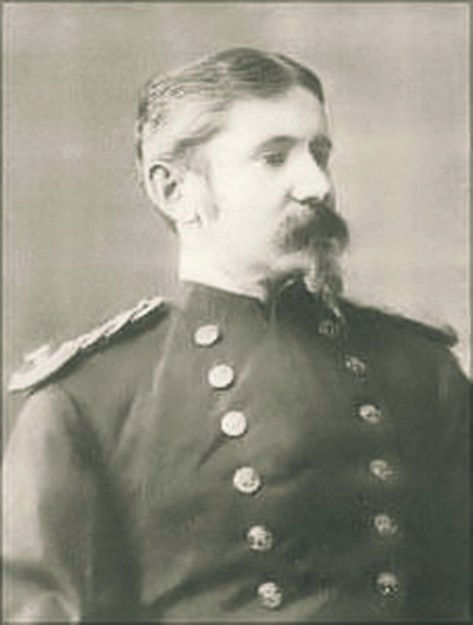
For most of the 1800s, the Westside’s Gillespie Street (named for Major Archibald H. Gillespie, a hero during the 1846-1848 Mexican–American War) was considered farmland. The most common mentions of the street in the local papers were ads for chickens, cows, horses, and pampas grass.
Polo Players Appear
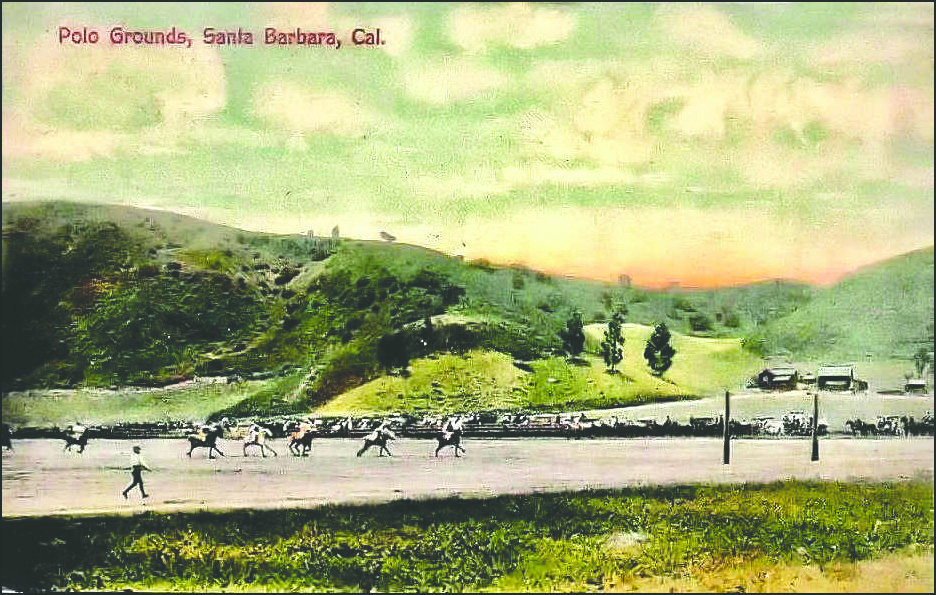
As the new century arrived, the Westside was transformed. “The winter meet of the Pacific Coast Polo and Pony-Racing Association commences at 3:00 this afternoon at the Santa Barbara Polo Club’s grounds here to the west of town … walk or drive out Carrillo Street. The grounds are but a few blocks off State Street” (Daily News, April 18, 1900).
And suddenly, the sleepy side of the city woke up in a big way. “There was a steady stream of people making their way to the polo grounds on West Carrillo Street…. The grandstand was taxed to its utmost capacity…. The 2,500 people who saw the game went wild with enthusiasm and every good play brought forth thundering applause” (Morning Press, April 24, 1900).
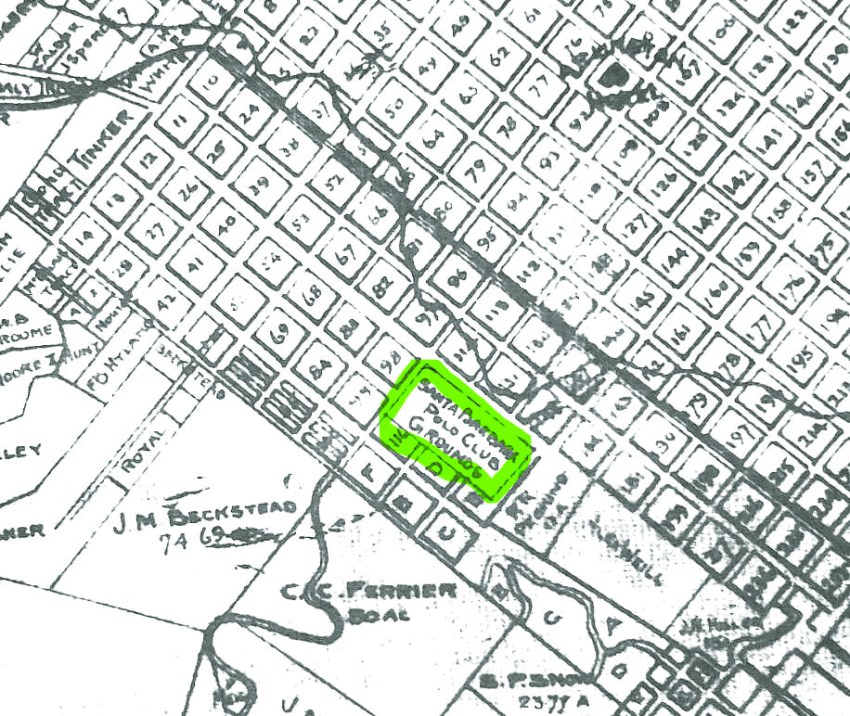
The polo grounds were bordered by San Andres on the east, Figueroa on the south, Gillespie on the west, and Victoria Street on the north, according to Westside History by Walker A. Tompkins. But in 1906, the lease on the property expired and the polo players rode away.
The Speedway Arrives
In 1912, the horses returned. A “representative of the horsemen of the city … secured an agreement from property owners on Gillespie Street to convert the stretch into a speedway [racetrack …. It would be stipulated that automobiles and heavy traffic be not permitted on the street…. With such a speedway, it is believed a very interesting sport can be developed in Santa Barbara” (Morning Press, October 4, 1912).
“A crowd of enthusiastic horsemen gathered on the Gillespie Street speedway this afternoon to witness a short program of races which had been prepared by the Santa Barbara County Driving Club…. These races may serve as tryouts for larger races to be held once a month on Sunday afternoons” (Independent, February 22, 1913).
The horse races were a popular attraction: “1,000 People See Sunday’s Races … on Gillespie Speedway” (Morning Press, September 16, 1913). James T. Ruiz, one of the spectators, commented: “Sulky racing was the chief sport. The sulky was a light vehicle with two spoked wheels and rubber tires. The driver’s legs were outstretched on the sulky shafts, braced by a metal footrest attached to each shaft. The drivers wore white trousers, colored shirts, and goggles to protect their eyes from the dust…. The horses were trotters, animals of great beauty, tossing tassels on their heads in a spirited way as they ran…. Betting among the onlookers was lively” (Recollecting and Writing, courtesy of Gledhill Library).
The races were occurring as “Flying A” cowboys were making movies all around town, so it was only natural that they joined in. (One wonders if perhaps the “Flying A” cowboys had inspired the idea for the speedway?) “The running races between the American Film Company ponies were exciting, with some extraordinary close finishes” (Morning Press, March 16, 1913).
Of course, the inevitable accidents occurred. “They had one of the San Marcos steers out on the Gillespie speedway for some stunts. The steer got mad, and the crowd, gathered to see the picture made, scrambled across the fence into the field. The steer smashed through the fence and then everybody climbed back”(Morning Press, December 6, 1913). (The movie being filmed was A Blowout at Santa Banana.)
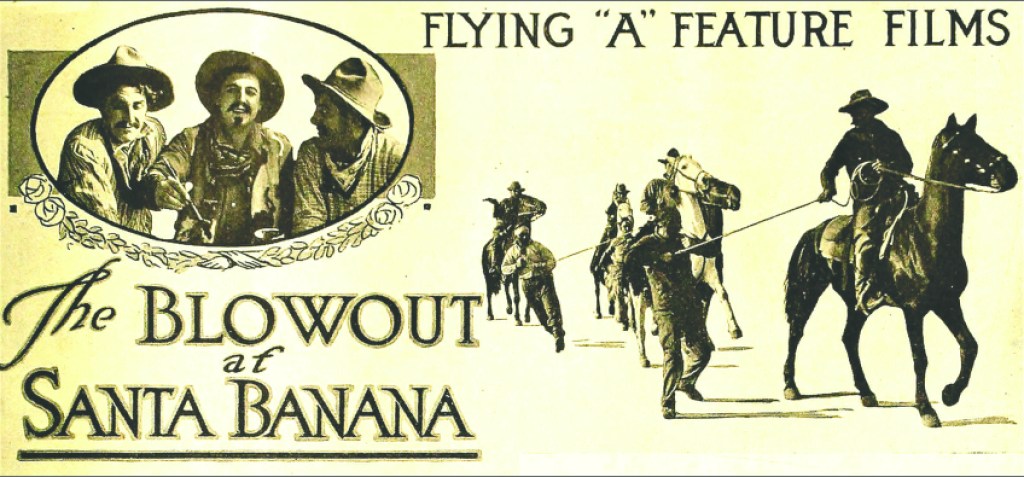
“Ed Coxen [actor] was compelled to remain in bed yesterday as a result of injuries received during a fall from horseback on the Gillespie speedway … this particular scene will prove very spectacular as it was real” (Morning Press, March 29, 1914).
Eventually, as more homes appeared on Gillespie Street and more families owned automobiles, the flag came down on the street racing in 1921.
Please note: Your trusty Street Stories columnist does not encourage speeding on Gillespie Street or elsewhere in our fair city.
Betsy J. Green is a Santa Barbara historian, and author of Discovering the History of Your House and Your Neighborhood, Santa Monica Press, 2002. Her website is betsyjgreen.com.




You must be logged in to post a comment.