
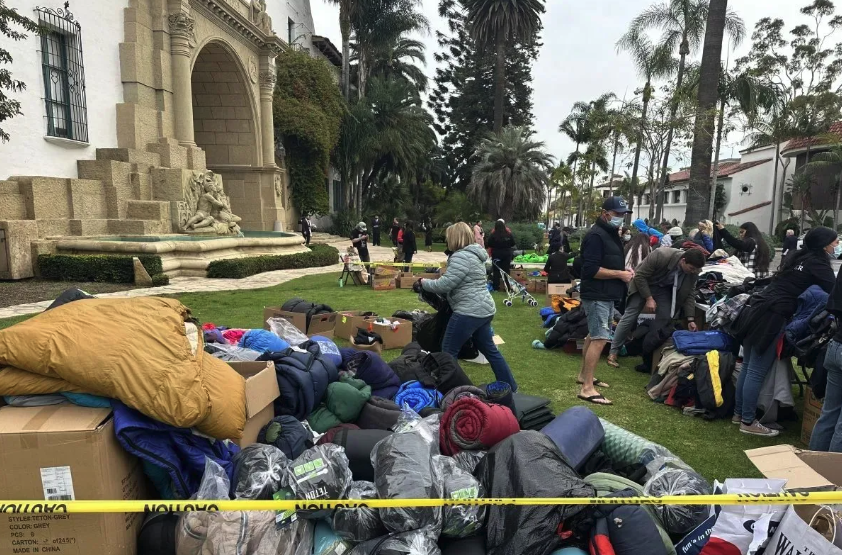
With Santa Barbara residents firmly in the foothills of fa-la-la-la season, nighttime for about 2,455 unhoused residents entails coping with the cold and the rain. For the eighth year in a row, the Santa Barbara Public Defender’s Office is hosting its year-end sleeping bag drive for those in need of something warm and dry to slip into at night. It turns out, however, that what’s most urgently needed are new socks and underwear (including thermal underwear).
For people who have hygiene products and new or like-new sleeping bags, scarves, gloves, jackets, shoes, and even backpacks to donate — as well as new, not used underwear and socks — please drop them off between now and December 11 at the Public Defender’s offices at 1100 Anacapa Street in downtown Santa Barbara or at 312 East Cook Street in Santa Maria. Donations are accepted Monday-Friday, 8 a.m.-5 p.m. For individuals in need of such donations, the time to show up — outside the same addresses — is December 11, noon-3 p.m.
In previous drives, typically 200 sleeping bags got donated, though years ago — thanks to a donation of 60 bags by one local doctor — they managed to give away 280.
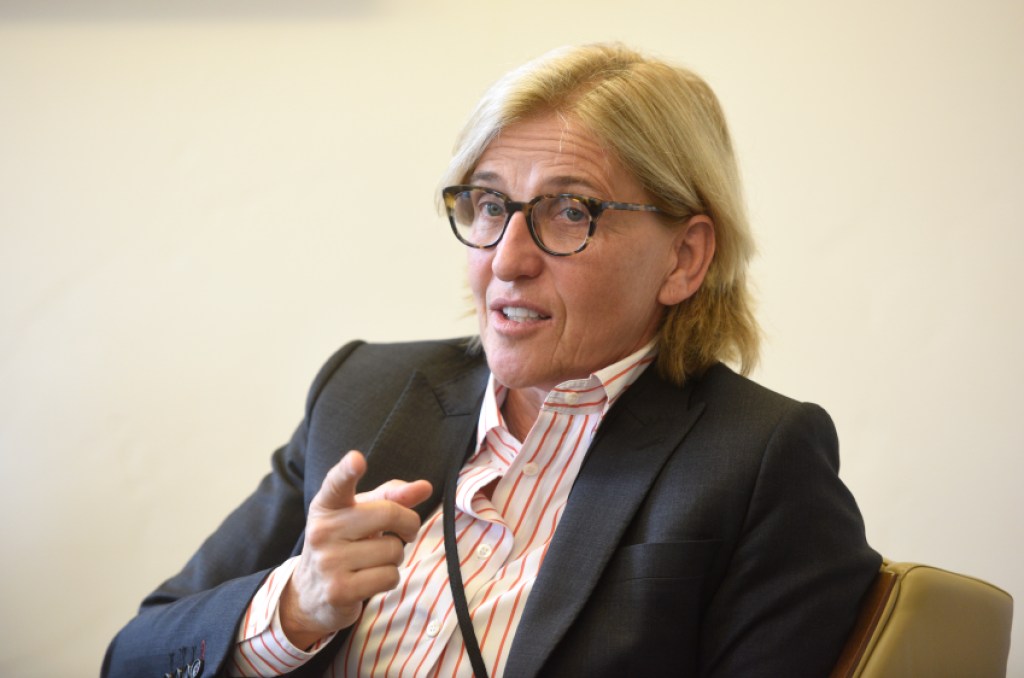
This program was launched under the auspices of Public Defender Tracy Macuga, who will be stepping down from the post after 10 years. During her tenure, Macuga sought to reinvent the scope and scale of her office’s duties with the end goal being keeping as many defendants as possible out of the criminal justice system before they ever got into it. She is best known for her department’s Holistic Approach Program, in which deputy attorneys were paired up with de facto social workers, schooled in ferreting out any underlying issues — such as mental illness — that brought prospective defendants into contact with the criminal justice system. She also pushed hard to get prospective clients seen by their public defenders faster, partly in hopes of minimizing the demand for additional bed spaces in county jail. In that vein, she pushed hard for new meeting spaces in the proposed addition for the north county jail.
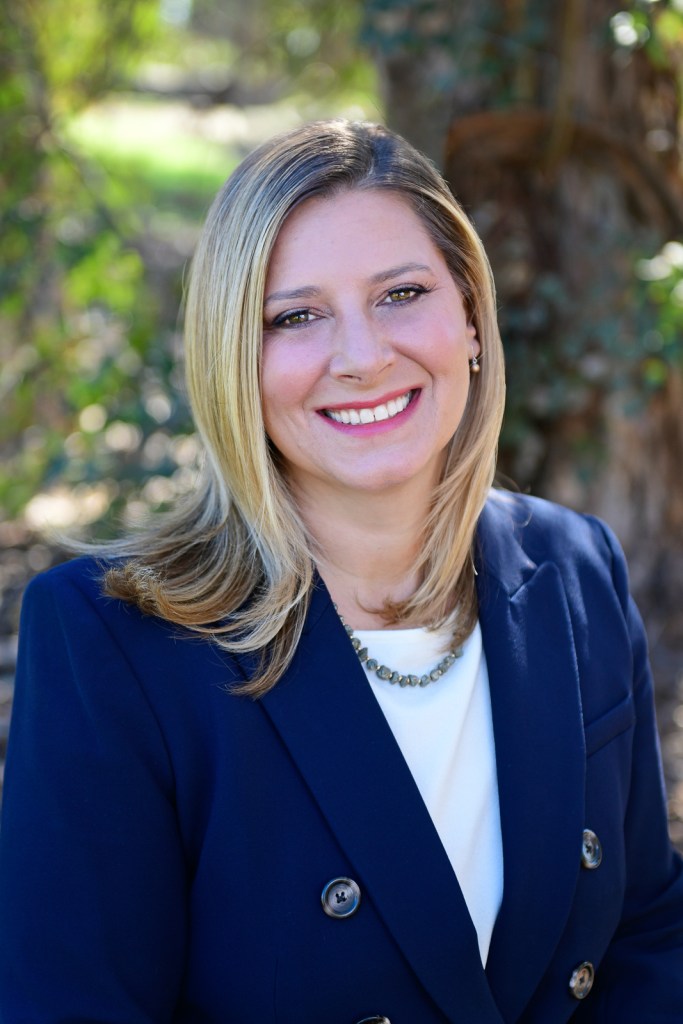
Macuga will be replaced as of March 1 by Amy Hoffman, chief deputy public defender from San Diego County. There, Hoffman was responsible for a distinct branch of the department responsible for some of the most complex and horrifying violent crimes. She was also charged with handling litigation stemming from compliance — or lack thereof — with the Racial Justice Act. This act, passed by the state legislature in the wave of criminal justice reform following George Floyd’s murder, allows criminal defense attorneys to argue discriminatory motive by the prosecution whether or not the alleged discrimination was intentional or unconscious.
In the meantime, as the mercury plummets at night and rain remains a threat, the county has activated its warming centers. Their availability can be tricky to predict as there has to be a 50 percent chance or more of rain and temperatures need to go down to 35 degrees or below. The homeless shelter on Cacique Street — now known as “Casa Cacique” but before as that “Mercy Housing,” “PATH,” and “Casa Esperanza,” each new name reflecting a change of ownership and management — is open.
As the fastest growing homeless population subset are people living in their vehicles, the demand for available parking spaces is, as always, straining up against available supply. According to Kristine Schwartz, who runs the Safe Parking program, all participating lots run at near capacity every night. The length of the waiting list depends upon the make of vehicles — the lack of space suitable for RVs is most acute. Schwartz says they could really use a downtown lot willing to accommodate RVs.
More immediately troublesome, she added, the grant Safe Parking has administered the past several years to get encampment dwellers out of the not-so-great outdoors and into housing is running out in December. Otherwise, Schwartz said, her agency has seen an uptick in the number of homeless since early this summer.
The next Point-in-Time Count — a seat-of-the-pants census undertaken early in the year to determine the number of homeless people, either sheltered or unsheltered — is scheduled early in the morning of January 22. Volunteers are always needed. To volunteer, register at countyofsb.pointintime.info/.







You must be logged in to post a comment.