
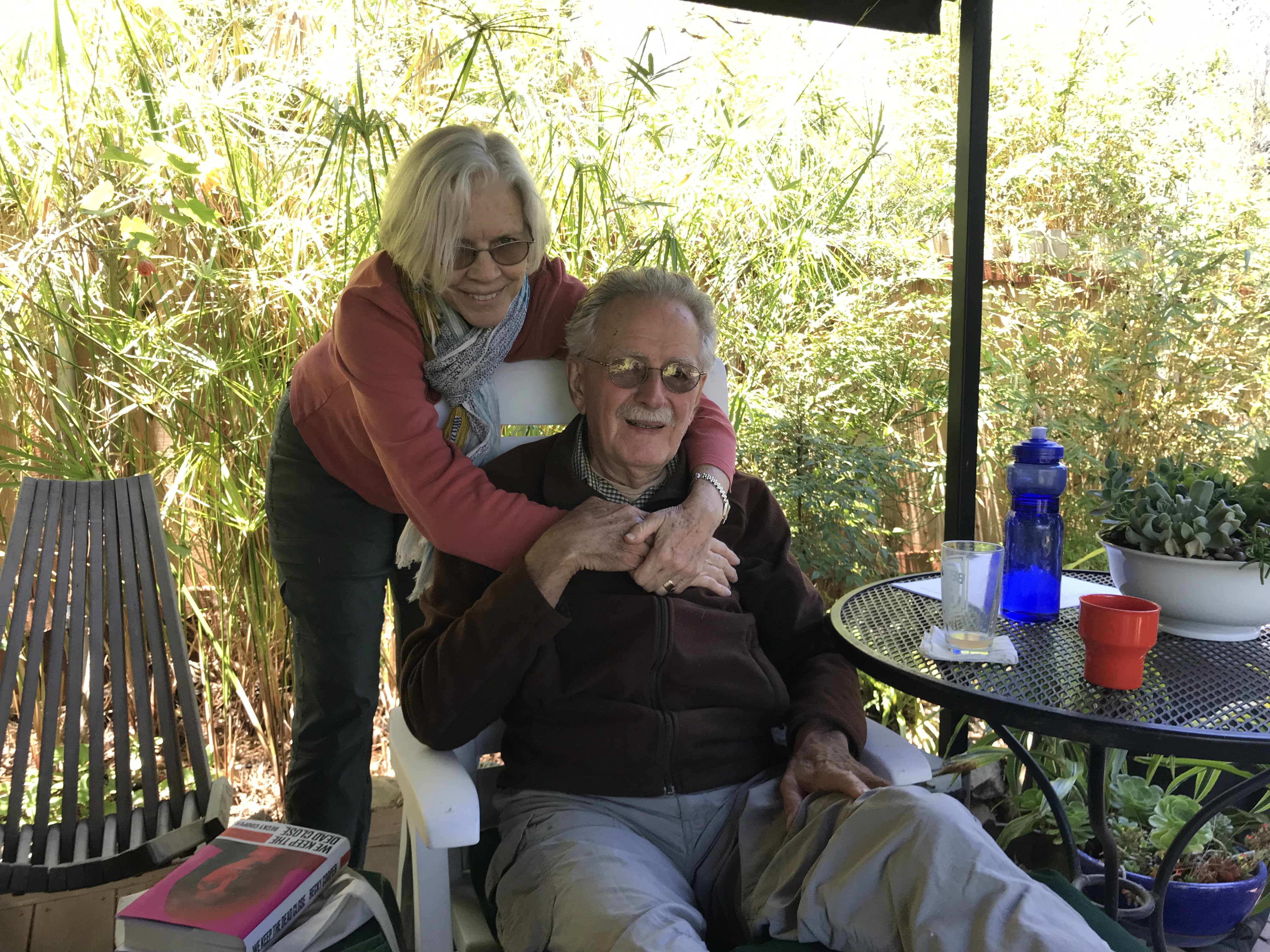
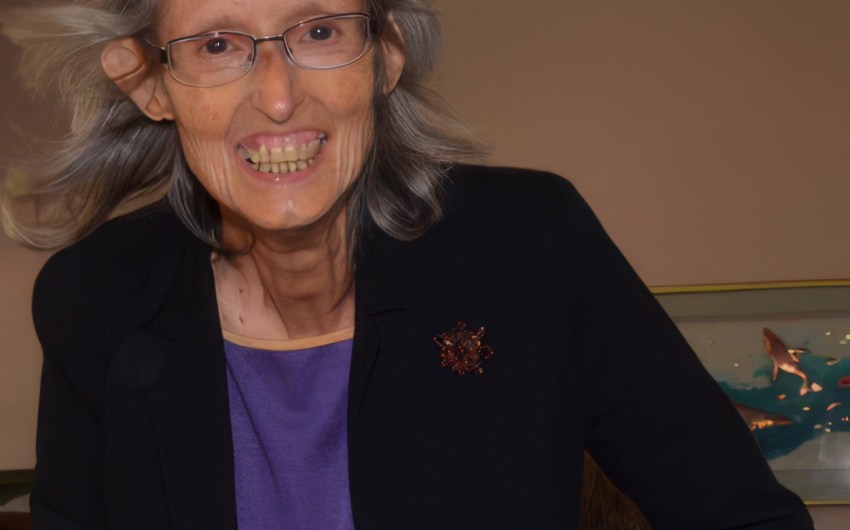
Michael Glassow served as a mentor, colleague, and most of all a friend to so many during his 40 years as a professor of anthropology at UC Santa Barbara. He was generous to a fault, always finding time to meet with students, assist colleagues, and contribute his expertise and experience to historic preservation projects. Mike considered it his duty to serve on the boards of state and national archaeological societies. Locally, he volunteered for more than 35 years as Advisory Member to the Historic Landmark Commission, reviewing all archaeological technical reports conducted as part of the City of Santa Barbara’s environmental review process, and he was honored posthumously with a proclamation by the mayor and City Council for his public service and dedication to archaeological resource protection.
Born in Wisconsin, Mike grew up in Illinois and Michigan. His interest in archaeology began during his senior year in high school when he encountered two books in the library, Digging in the Southwest by Ann Axtell Morris and Beginning in Archaeology by Kathleen Kenyon. These books stimulated his imagination, and he set his sights on a career in the field. About the same time, he saw an announcement in a Boy Scout magazine for summer work at the Philmont National Scout Ranch in New Mexico. One of the jobs was as a program counselor in archaeology. “This is great!” Mike thought, so he applied and got the job. For the next four summers, he worked at Philmont as field assistant to an archaeologist who oversaw the program. Mike then took over as director while he pursued his graduate studies in anthropology at UCLA. An important monograph, Prehistoric Agricultural Development in the Northern Southwest, and a number of published research articles resulted from his more than a decade of archaeological investigations in northeastern New Mexico.
While Mike was a graduate student at UCLA, the University of California established its Research Station on Santa Cruz Island. Mike’s first visit to the island took place in 1966 when he assisted in collecting soil samples in the arroyo wall of Pozo Canyon to obtain pollen that would reveal vegetation change in prehistory. Three years later, his dissertation still in progress, Mike was hired to teach anthropology courses in archaeology and cultural ecology at UCSB.
A few years later, he became involved in two large-scale projects: one as co-director of work at Santa Cruz Island funded by a National Science Foundation grant, the other as principal investigator at what was then called Vandenberg Air Force Base, now Vandenberg Space Force Base.
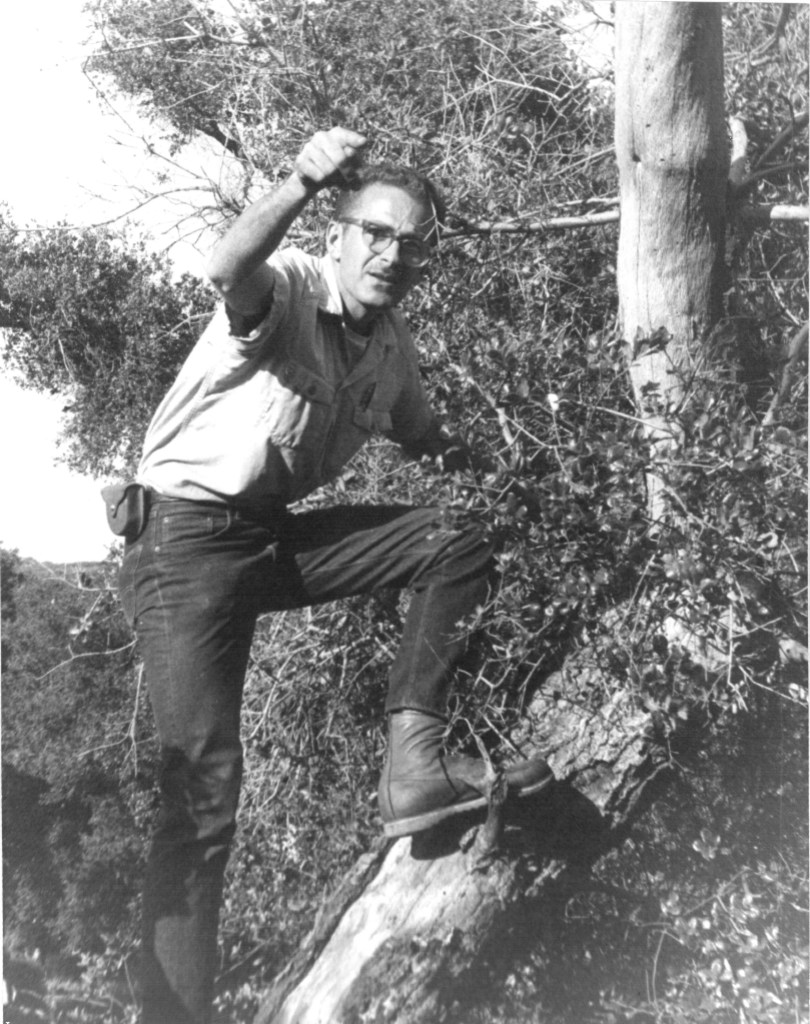
From the time Mike arrived at UCSB, his focus was on research that shed light on the prehistory of the Santa Barbara region. Mike taught undergraduate courses in North American Indians, Western North American Archaeology, field and lab techniques, and archaeological method and theory. His graduate seminars focused on cultural ecology and understanding subsistence change. Twenty PhD dissertations, and many more master’s theses, in archaeology were completed with Mike as chair. He delighted in participating in his students’ field research, including projects in distant areas like Alaska and the Russian Far East.
Reflecting upon Mike’s career, it again hits home for me how many benchmarks in my life are associated with him as a teacher, role model, collaborator, and most of all, a true friend. I first met Mike after completing my sophomore year in high school in 1966. I had joined an Archaeology Specialty Explorer Post, sponsored by the Pacific Coast Archaeological Society. We raised funds for our post to spend two weeks at Philmont Scout Ranch, where Mike headed up the summer archaeology program. We worked under Mike’s direction that summer in the Sangre de Cristo Mountains, and I returned for three more summers serving as one of Mike’s field assistants and as a program counselor in archaeology. Daily work in field excavation and evening labs with Mike’s oversight were formative, and I decided upon a career in archaeology. Mike’s serious, dedicated approach to archaeology as an anthropological science served as my role model. When I entered UCSB as an undergraduate, I worked in Mike’s lab.
After graduating following an eight-year hiatus, I returned to UCSB for my advanced degrees in anthropology, and Mike, by then a soon-to-be-tenured professor, became chair of my graduate committee. He had obtained funding for a halftime position for a graduate student to manage the department’s collections, and I was hired for the job, which provided financial support as I worked on my thesis and dissertation. Mike encouraged my research in many ways, including field visits to sites that had once been the locations of Chumash villages identified in Spanish records. My experience of Mike’s support and encouragement is typical, as many of his graduate students will affirm. He organized symposia at professional meetings at which we graduate students could participate, he edited volumes in which our work appeared, and he coauthored papers with us.
Mike set an enviable example of being responsible, finishing whatever he began and not taking on more than he knew was reasonable to accomplish. He was committed to the discipline of archaeology as an important subfield of anthropology. He worked with his students to develop research designs that would contribute not only to our understanding of past cultures but also make use of museum collections that could be studied anew using techniques not available at the time they were excavated. He was committed to preserving archaeological sites as repositories of scientific knowledge about past environmental conditions and cultural adaptations, and importantly, as culturally significant to Chumash descendants.
Mike loved being outdoors. He had walked over all of the islands within Channel Islands National Park. His walking speed left most of us in the dust, as all will attest. Mike was an accomplished photographer and never traveled without his camera. He liked working with his hands and did work on his home as well as volunteering his labor to assist others. For example, he helped with the move of the Goleta Depot to Stow Park in 1981 and repaired all the wood windows of the Depot. As a hobby, Mike devoted himself to learning how to repair clocks. He became proficient as a ham radio operator in order to communicate with his wife, Anabel Ford, while she was in Belize and Guatemala in the days before internet communications. He appreciated plein air artwork, and many paintings by Oak Group artists decorate Anabel and Mike’s home.
As I was nearing completion of my dissertation, I was hired to serve as Curator of Anthropology at the Santa Barbara Museum of Natural History. Throughout my 37 years at the Museum, Mike always stepped forward to provide support when asked. We collaborated on several projects and coauthored important studies together. Two volumes coauthored and edited by Mike, The Punta Arena Site and Goleta Slough Prehistory, were published in the Museum’s Contributions in Anthropology series.
On one memorable occasion, Mike and I accompanied several other North American archaeologists to the Russian Far East to participate in an international conference held at the remote University of Magadan, former location of one of the gulags. There we shared our research with Russian colleagues and Mike gave the concluding lecture, focusing on how discoveries in Eastern Russia shed light on Western North American prehistory and vice versa.
In 2004, when Mike served as Anthropology Department chair at UCSB, he approached me to see if I might be interested in teaching a course on campus. I proposed several ideas to him, and he endorsed one of these, a course that came to be titled “Indigenous Peoples of California,” which I then taught annually for 18 years. Again, I owe it to Mike for helping me deepen my career as an anthropologist and offering me an opportunity to develop and teach a university course. My final trip with Mike occurred after I retired in 2023. I accompanied him to Belize and Guatemala to participate in Anabel’s research at the important ancient Maya site of El Pilar. While there, Mike and I visited other ancient Maya sites in Belize and accompanied Anabel and her crew to Guatemala to spend two days at Tikal. Anabel and Mike had lived at Tikal in 1978, when Anabel conducted her dissertation research. Throughout the years, Mike assisted Anabel in her ancient Maya fieldwork, in all aspects of the work including survey, excavation, and assisting in record keeping and preparing profile drawings.
During the course of his productive and notable career, Mike made substantive contributions to our understanding of California prehistory, as well as in his earlier work in the American Southwest and Mexico. Yet even more important are the many students he mentored over a 50-year span and the example he continued to set as a kind, thoughtful, ever-encouraging teacher, friend, and colleague to us all. With Mike’s passing, his legacy will live on. His final publication with the Santa Barbara Museum of Natural History, a book entitled Santa Barbara’s Ancient Past: Cultural Change and Development over 13,000 Years, will soon be available.




You must be logged in to post a comment.