

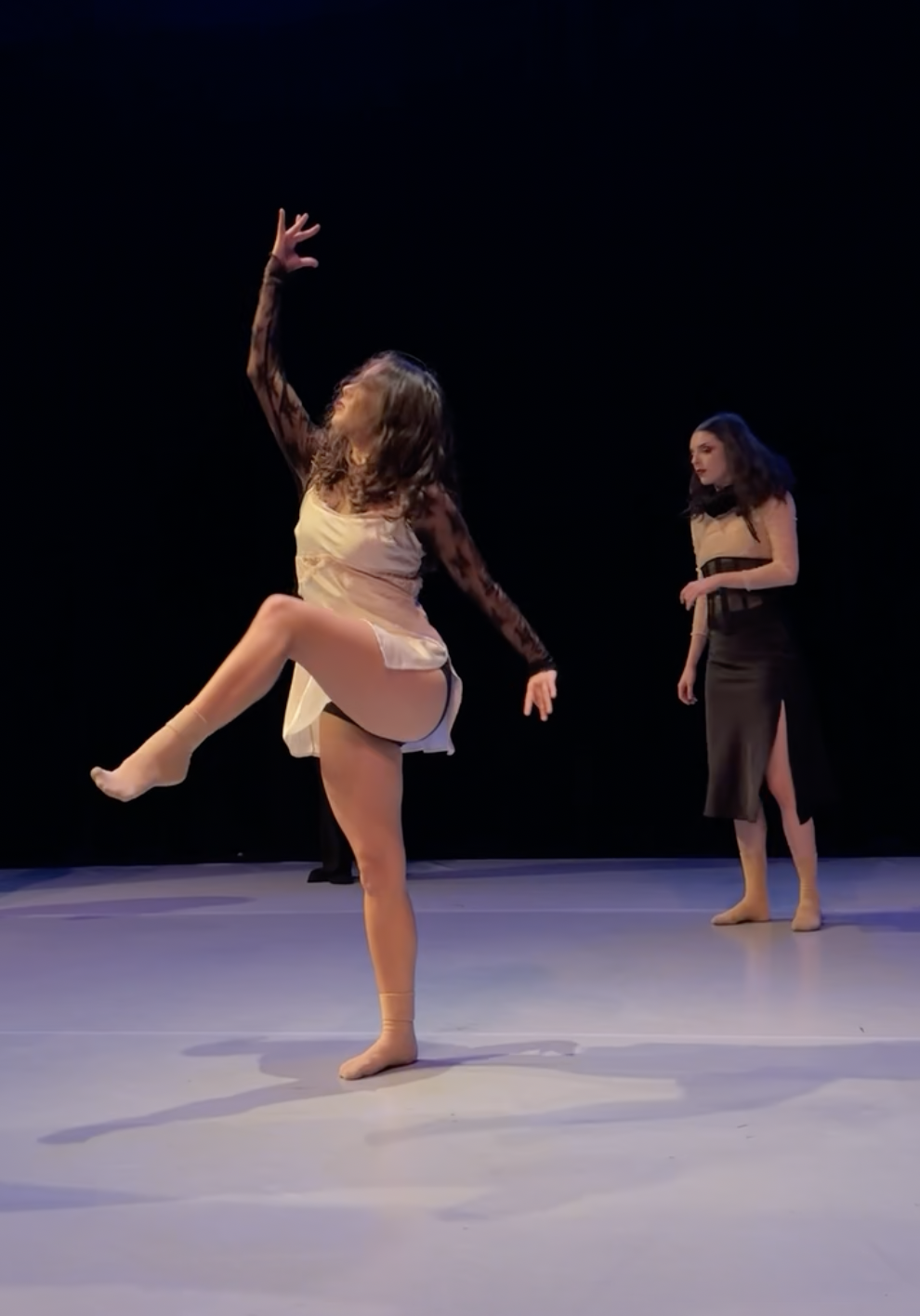
On the recent dark, rainy Halloween night, Meredith Ventura’s Novus and Selah dance companies performed appropriately frightening representations of female vampires and witch trials that challenged the audience to reflect, reimagine, and rethink old attitudes.
Through their respective research, scholar-choreographers almost–Dr. Meredith Ventura and Dr. Chloé Roberts interrogate how the female body has been represented, used, and abused throughout history. Ventura’s doctoral research dives into the post-Victorian world of Radical Cabaret, a rebellion against societal norms which spawned the development of modern dance in the 20th century. Roberts’s doctoral research examines how religious systems have constructed the image of the witch to regulate and discipline non-conforming female bodies, and how that history of shame persists into the present.
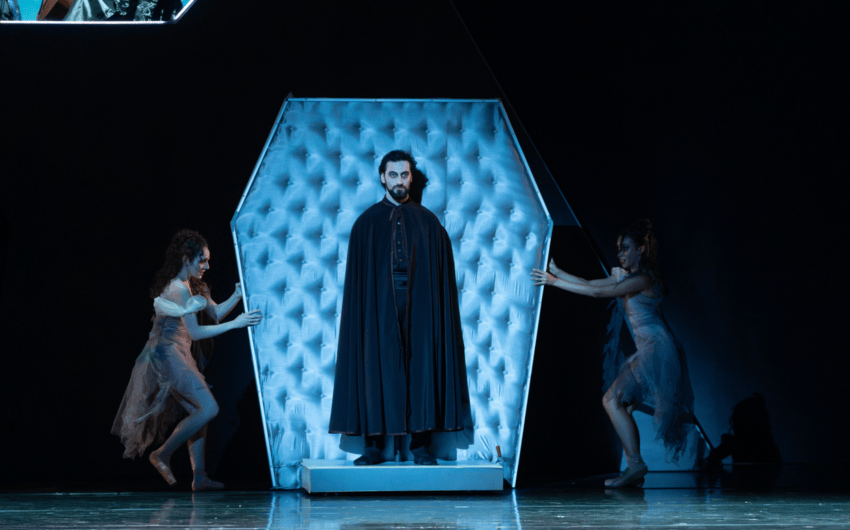
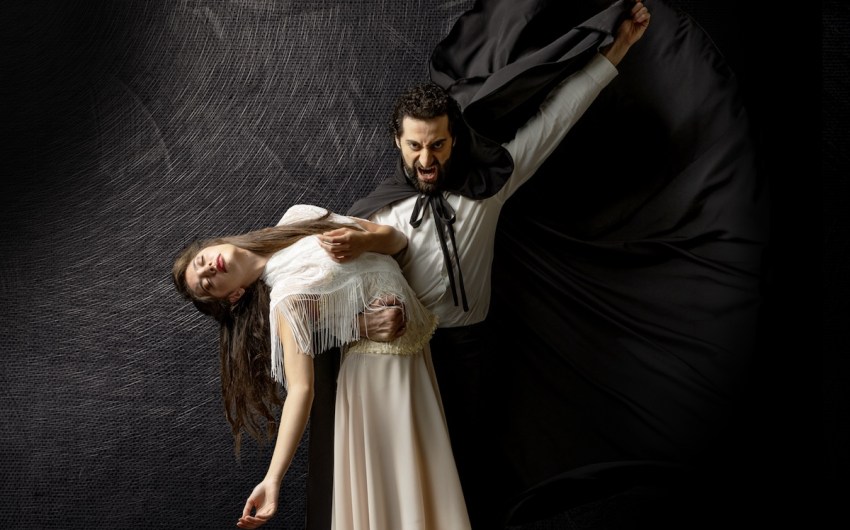
Before Irish author Bram Stoker wrote Dracula in 1897, Joseph Sheridan Le Fanu wrote Carmilla in 1872. Whereas Dracula explores the taboo subject of male-male sexuality, Carmilla explores the even-more-taboo subject of love and desire between two women. Carmilla, danced in semi-classical style, is set in Styria, a forested region of Austria, just west of Dracula’s home town in the Carpathian Mountains, said to be the original home of vampires in gothic fiction. Ventura did not intend to create a narrative of the whole story; rather, she created vignettes taken from the book that highlight the struggles of the main characters, and the turmoil of the communities of the living and the dead as they interact and overlap into each other’s dimensions.
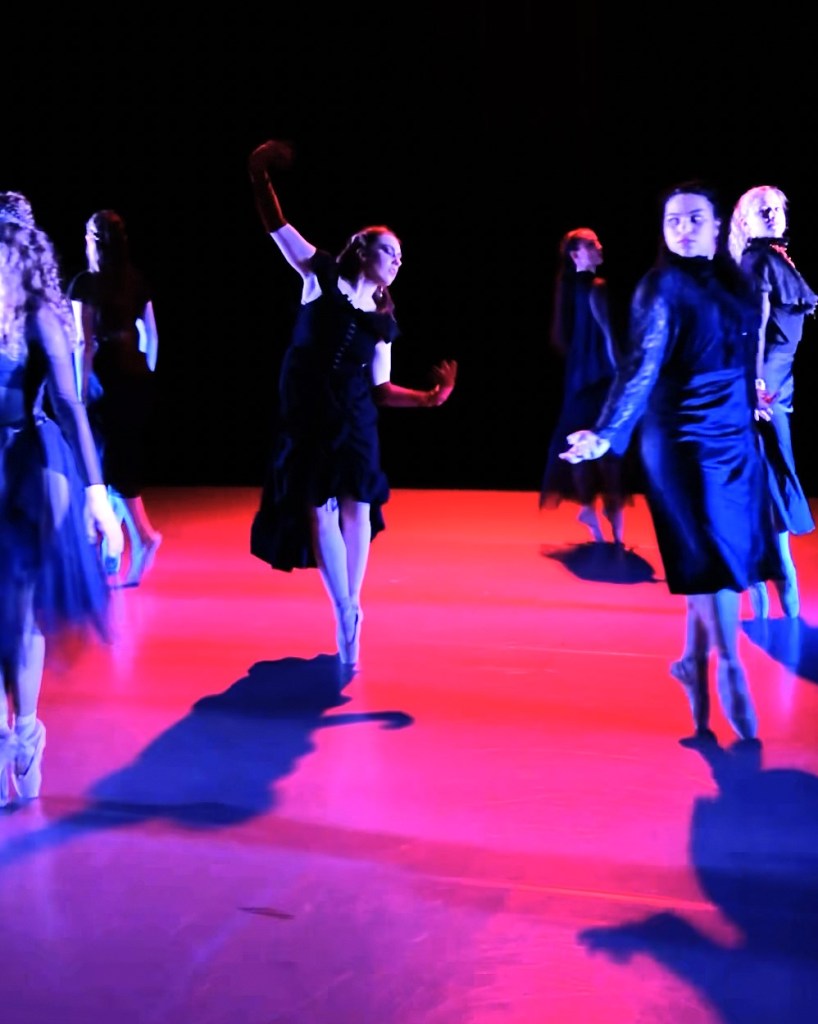
The Villagers, dressed in white, are led by a very sheltered young woman named Laura (Kristin Sholberg), Laura’s father (Vietor Davis), and a visiting General (Oliver Myers). All is well until a strange, fascinating woman — Carmilla (Rosalind Young) — arrives and awakens in Laura “an intoxicating mixture of desire, fascination, and fear” (program notes). She wears a dress of red velvet and off-white, setting her apart from the rest of the villagers in all-white. We don’t know that she is really a very ancient vampire until we meet her later, dressed in black, leading the Vampire women.
Highlights of the piece include a seductive pas de deux between Laura (Sholberg) and Carmilla (Young), the striking Vampire’s Dream, set to “The 5th Season” by Nono, and a dramatic, red-and-black-costumed masquerade ball set to “Masquerade Suite Waltz” by Aram Khachaturian, punctuated by an impressive series of solo fouettés by Young.
Eventually, the Vampires surround the Villagers, killing all except Laura, who is devastated when her father and the General vanquish the Vampiress Carmilla.
Ventura wrote in the program, “[Carmilla’s] powerful queer plot uses horror to foreground how necessary intimacy is for the human condition.”
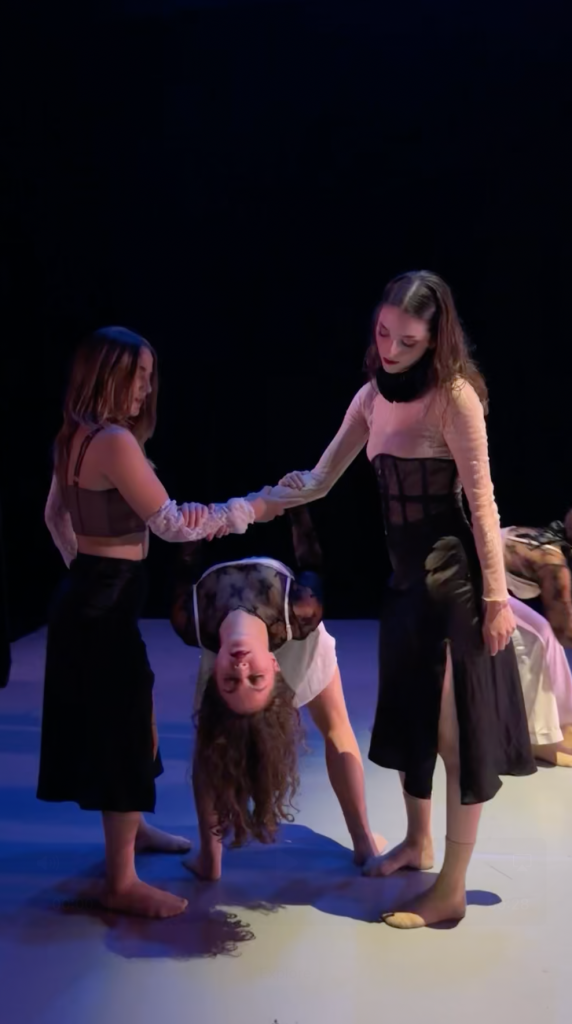
The company trainees danced the part of the Villagers. Bravo to Ventura for pushing the apprentices into a professional performance, helping them bridge the gap between studio and stage.
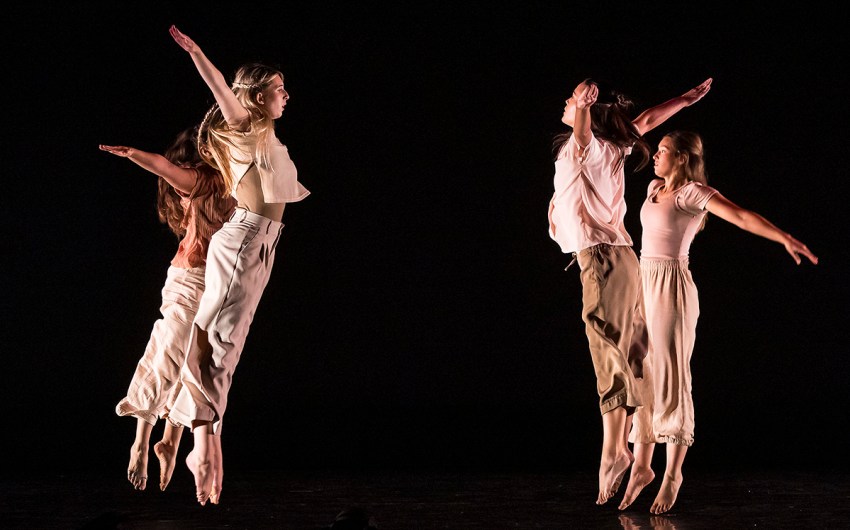
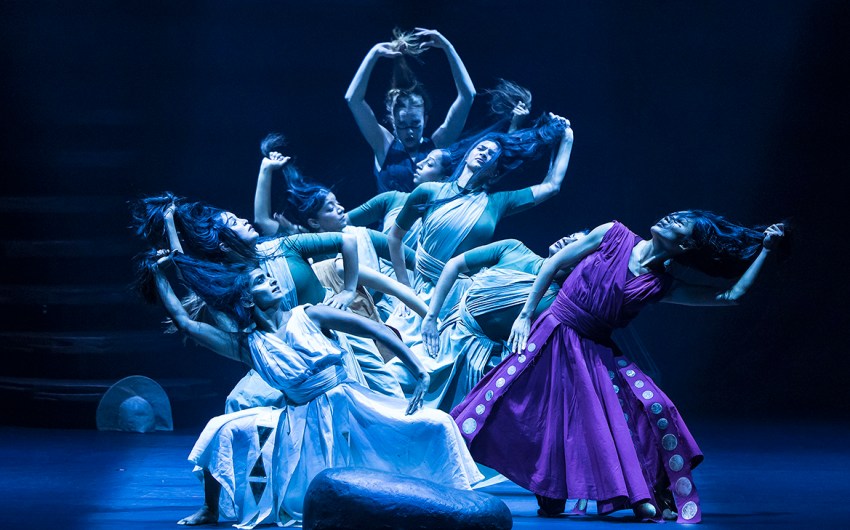
Jules Michelet’s 1862 book La Sorcière takes a broader look at witchcraft as an act of rebellion against the oppression of feudalism and the Church. Sorcière recounts the trial of a young woman, Tiennette, who is accused of being a witch because she has dared to love another woman. Through a soundscape that traverses romantic old tunes, punctuated with jarring dialect, Roberts takes the audience on a terrifying journey of Tiennette’s tender love turned into a heinous crime by those who accuse and revile her, but secretly desire her (or so it seems).
Act I establishes the character of Tiennette (Bella Schwartz) as seen through the eyes of her lover (Molly Gray), a would-be lover turned Accuser (Rachyl Pines), and an Alchemist (Avery Trask). As the story unfolds, the pure character of gentle Tiennette is transformed into that of an accused witch through the lens of a society that is afraid of what it cannot control. Schwartz’s lyrical, sensual portrayal of Tiennette, her dancing fluid and soft, presents a character anyone could love, and makes her eventual death so very poignant.
As the lovers (Schwartz and Gray) dance to Glen Miller’s “A Nightingale Sang in Berkeley Square,” the Accuser (Pines) looks on, as if she longs to be in Tiennette’s place. This music is followed by Nina Simone’s poignant “Black Is the Color of My True Love’s Hair,” which went straight to my heart with piercing sorrow. As the two lovers retreat upstage, holding each other tenderly, Pines dances an agonized solo in which it seems she painfully yearns for the Lover’s embrace. Suddenly the music changes to the interrogation, “Are you a good witch or a bad witch?” with the response, “I’m not a witch at all!” and Pines suddenly becomes the harsh Accuser. Known for her many virtuoso performances, including her recent aerial solo in The Stranger, Pines is a powerful dancer and actor. I could feel her inner conflict, torn between desire and duty.
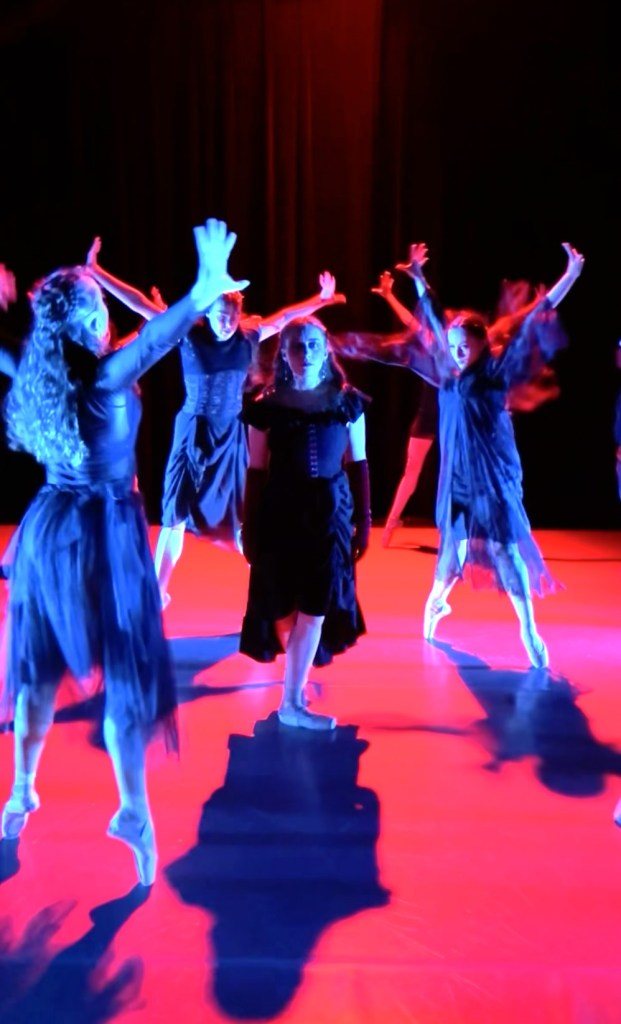
Through Act II we see the interrogation and torture of the accused, “forced to inhabit the narratives created … by their accusers and the law” (program notes). Act III is the culmination of Tiennette’s journey through accusation, imprisonment, torture, and execution.
The final dance considers “what remains of a community after a body has been accused, named, and sentenced” (program notes). In the end, Tiennette and her lover fall to the ground surrounded by the community, to a brief sound bite of “Ding Dong, the Witch Is Dead.” Suddenly, the lover (Gray) gets up, escapes from the crowd, and dances wildly downstage, as if her grief is of such magnitude that she goes mad. Meanwhile, the group lifts Tiennette in the air, rotating her on high as if elevating her to sainthood, accompanied by Édith Piaf’s famous song of rebellion “Non, je ne regrette rien (No, I regret nothing).”
Maybe a little more fright than we wished for on Halloween, Carmilla x Sorcière is definitely a call to respond to life with compassion.
Follow the upcoming performances of Selah and Novus at selah.dance/2026-2027. Tickets are available for their next show, Nutcracker Sweet, at Center Stage Theater December 4-6.
Related Posts




Premier Events
Sat, Nov 21
9:00 AM
Santa Barbara
Hope as a Phenomenon of Human Nature
Sat, Nov 21
9:00 AM
Goleta
Holiday Gift Boutique in Goleta
Fri, Nov 20
11:00 AM
Santa Barbara
Santa Barbara Antique & Vintage Show

Sat, Nov 21
10:00 AM
Solvang
56th Annual Holiday Open House

Sat, Nov 21
10:00 AM
Santa Barbara
MOXI’s Seaside Sock Skating
Sat, Nov 21
11:00 AM
Santa Barbara
Santa Barbara Antique & Vintage Show
Sat, Nov 21
11:00 AM
Santa Barbara
Cassatt Reconsidered: Lecture with Mary G. Morton
Sat, Nov 21
7:30 PM
Santa Barbara
Juilliard String Quartet & Simone Dinnerstein
Sat, Nov 21
7:30 PM
Santa Barbara
Santa Barbara Blues Society Presents Teresa James and the Rhythm Tramps
Sun, Nov 22
11:00 AM
Santa Barbara
Santa Barbara Antique & Vintage Show
Sun, Nov 22
2:00 PM
Goleta
Prime Time Band Fall Concert
Sun, Nov 22
5:00 PM
Santa Barbara
Choral Evensong: Sung by the Trinity Choir
Sat, Nov 21 9:00 AM
Santa Barbara
Hope as a Phenomenon of Human Nature
Sat, Nov 21 9:00 AM
Goleta
Holiday Gift Boutique in Goleta
Fri, Nov 20 11:00 AM
Santa Barbara
Santa Barbara Antique & Vintage Show
Sat, Nov 21 10:00 AM
Solvang
56th Annual Holiday Open House
Sat, Nov 21 10:00 AM
Santa Barbara
MOXI’s Seaside Sock Skating
Sat, Nov 21 11:00 AM
Santa Barbara
Santa Barbara Antique & Vintage Show
Sat, Nov 21 11:00 AM
Santa Barbara
Cassatt Reconsidered: Lecture with Mary G. Morton
Sat, Nov 21 7:30 PM
Santa Barbara
Juilliard String Quartet & Simone Dinnerstein
Sat, Nov 21 7:30 PM
Santa Barbara
Santa Barbara Blues Society Presents Teresa James and the Rhythm Tramps
Sun, Nov 22 11:00 AM
Santa Barbara
Santa Barbara Antique & Vintage Show
Sun, Nov 22 2:00 PM
Goleta
Prime Time Band Fall Concert
Sun, Nov 22 5:00 PM
Santa Barbara


You must be logged in to post a comment.