
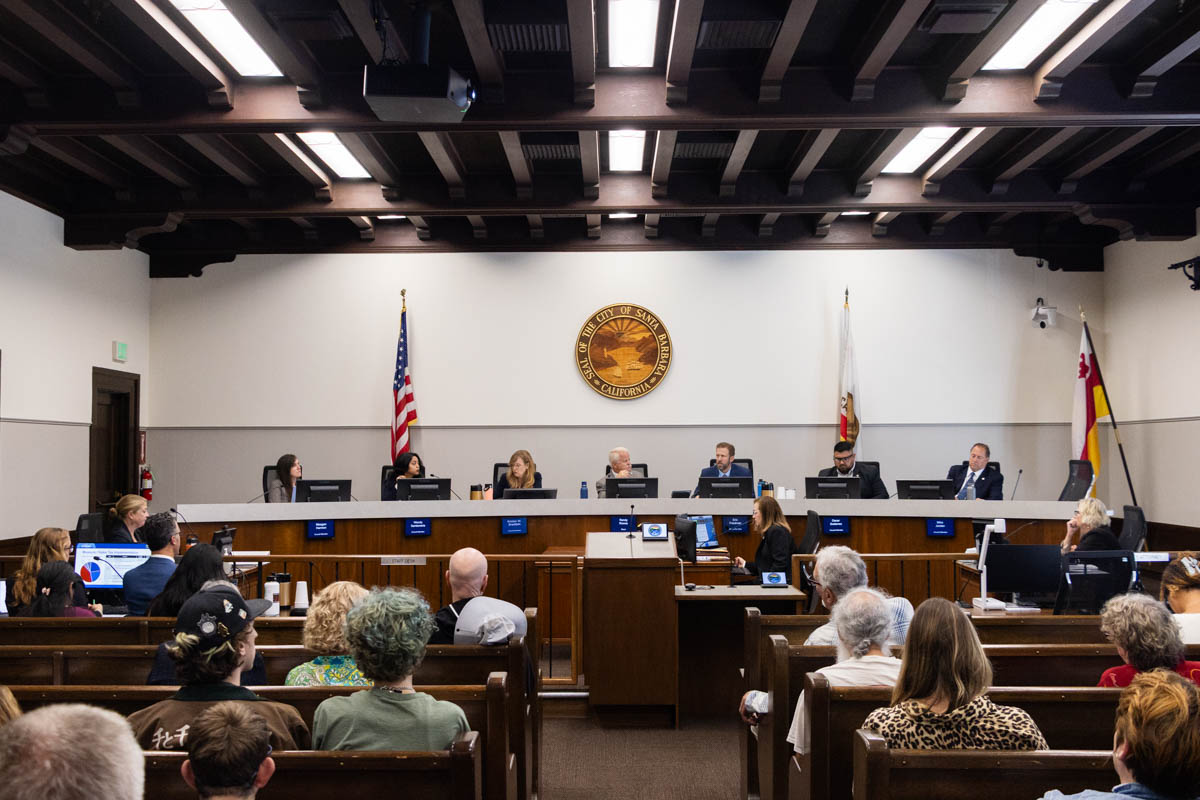
Santa Barbara’s recently passed rent stabilization ordinance is one of the most hotly debated City Council decisions in recent memory, and while the new citywide rent cap is facing a potential referendum that could send it to the ballot, the adoption of the policy in a 4-3 vote represents a major milestone in the long road to rent stabilization.
Building Momentum
The momentum behind a citywide rental stabilization program had been growing for years, if not decades, before the current version began making its way through the city planning process in late 2025. Current Councilmembers Kristen Sneddon and Meagan Harmon have been vocal supporters of a rent cap since they joined council in 2018 and 2019, respectively; and in late 2021, Councilmember Oscar Gutierrez joined former Mayor Cathy Murillo in an attempt to get an even stricter 2 percent cap approved before she left office.
The cap moved forward in a 4-3 vote at the time, and the city even commissioned a $200,000 study before the issue lost momentum when Randy Rowse defeated Murillo and took office in 2022. Mayor Rowse was opposed to any form of rental restrictions, and he tipped the council into a slight majority against rent stabilization with Councilmembers Mike Jordan, Eric Friedman, and Alejandra Gutierrez — considered to be the swing vote on the issue — all ready to vote in opposition.
From 2022 to 2024, rent stabilization became a major focal point for organizations such as Santa Barbara Tenants Union and CAUSE, which continued to work with tenants who struggled to keep up with the city’s skyrocketing rents.
In April 2022, a group of protesters held a “rent control vigil” calling out Councilmember Alejandra Gutierrez for failing to support renters in her Eastside District 1. In the 2024 election, former CAUSE organizer and fiery tenant advocate Wendy Santamaria ran on a campaign heavily focused on rent stabilization.
Crafting the Ordinance
Santamaria defeated Gutierrez and joined the council in January 2025, opening the next chapter in the push for rent stabilization. Councilmembers Santamaria and Sneddon finally got the ball rolling with a two-person memo that included a “sample ordinance” drafted with the input of pro-bono attorneys and housing policy experts.
The memo was intended to get the council to officially discuss a citywide rent cap, and while the move did earn the four votes necessary to formally pursue a draft ordinance, the inclusion of what Councilmember Harmon considered as a “fully baked ordinance” was seen as a misstep, causing friction between councilmembers who agreed about the policy on principle, but disagreed on process.
In December 2025, the city began with a work plan outlining a potential ordinance to be implemented by January 2027. City council then passed a temporary rent freeze in January 2026, until the city completed the new policy.
The moratorium itself sparked confusion for tenants and landlords (and prompted a wave of illegal rent hikes), and the pressure of the looming deadline forced City Council to work faster than anticipated. In March 2026, the city hired a consultant to guide the planning process; around the same time, a group of property owners filed a lawsuit challenging the city on the rent freeze.
City Council held several public meetings in the spring and summer, crafting the ordinance in April, checking in on progress in May, and releasing a draft for a 30-day public comment period in June and July. As the city council approached a July 28 showdown, many of the major policy points had earned support from the council’s four-vote majority— including the proposed cap of 60 percent of the Consumer Price Index (CPI) or 3 percent, whichever is lower.
Each of the hearings on rent stabilization drew large numbers of landlords, tenants, and community members whose opinions on rent stabilization grew stronger as the ordinance progressed. The lawsuit filed by property owners challenging the rent freeze was dismissed by a judge in July. Though the ordinance still had four votes at every step, the council hearings became more contentious as councilmembers debated the details.
Rocky Finish
As the ordinance neared its final form, the tension over the planning process and the reality of what the program might cost (potentially more than $2 million a year, depending on how strict and expansive the policy was) added to the already polarized nature of discussions.
Councilmembers Santamaria and Sneddon took on leading roles, steadily supporting policy decisions that made the program more tenant-friendly and removing exemptions beyond those allowed by state law. Mayor Rowse and Councilmembers Friedman and Jordan voted in opposition during every step, with both Jordan and Friedman expressing frustration about the direction of the policy, with the proposed cap becoming one of the most restrictive in the state.
At the July 28 hearing, City Council went through an exhaustive round of more than 120 straw poll votes, deciding on every element of the program, from the rental registry to the plan for petitions for tenants and landlords who wanted to ask for legal rental adjustments.
During this hearing, Councilmember Harmon — who has consistently supported the rent cap — raised what would become a significant sticking point, over whether deed-restricted affordable housing would be exempt from the rental stabilization program.
Housing Authority director Rob Fredericks warned that forcing additional restrictions on units that were already affordable could cause unintended complications. Councilmember Harmon took those concerns to heart, asking her colleagues to exempt Section 8 units run through the Housing Authority.
Despite Harmon’s concerns — and under the added pressure from city staff eager to meet the council’s intended January 2027 launch date — the ordinance moved forward, with the four-vote majority still intact, thought tensions were high.
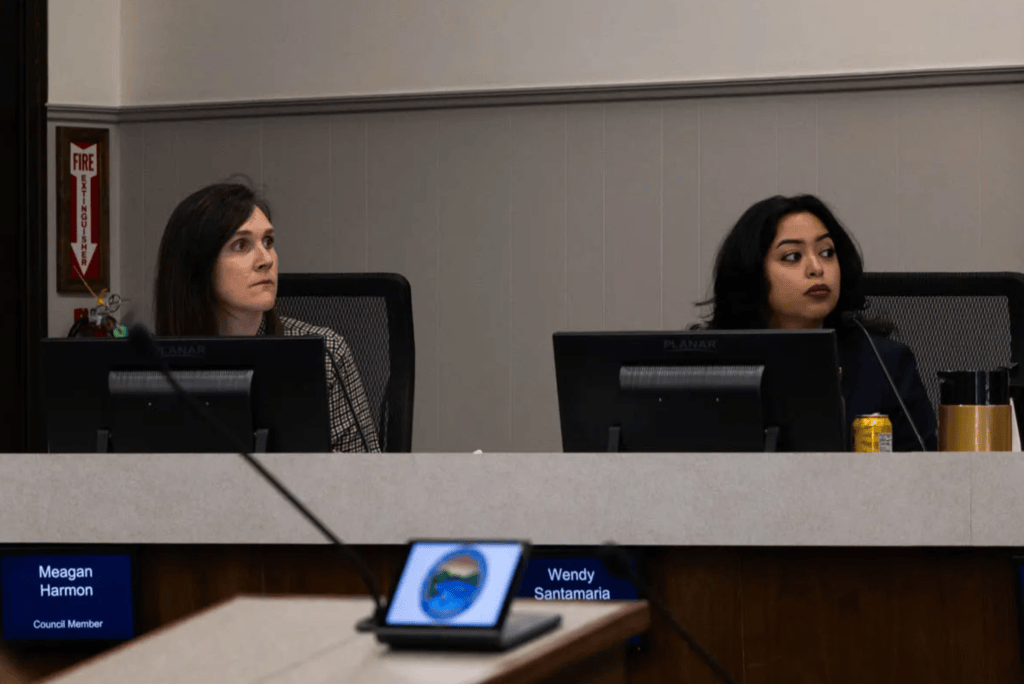
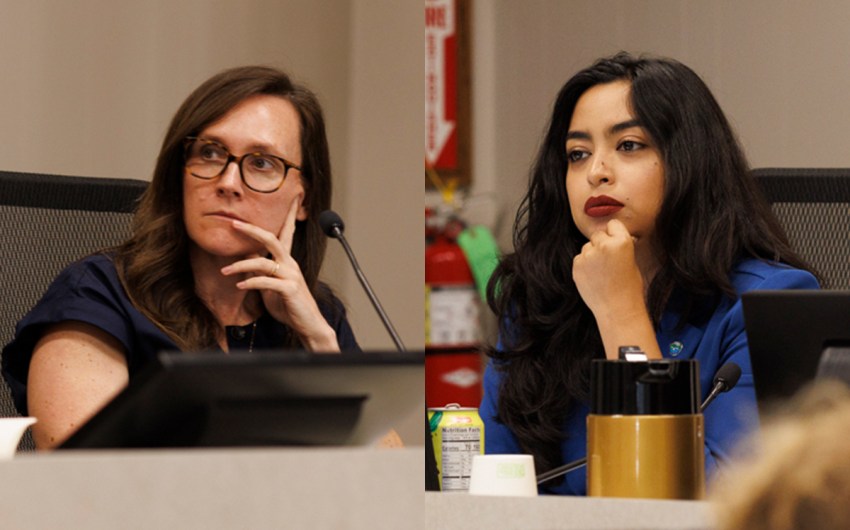
The tension came to a head on September 22, when the ordinance came to council for the first of several votes on final approval. At the end of another marathon hearing, Councilmembers Harmon and Santamaria had a standoff over the affordable housing exemptions. Harmon said she was willing to vote against the ordinance if it did not exempt deed-restricted affordable and Section 8 units; Santamaria was adamant that the units should still be covered to ensure the dwellings were habitable.
This disagreement forced an unusual two-part vote, with the ordinance earning the usual four-vote majority approval as a whole, and the exemptions being added in a separate vote with Santamaria and Gutierrez voting in opposition, and Jordan and Friedman joining Harmon and Sneddon in favor.
A week later, the affordable housing exemptions took up much of the discussion in another long hearing, though Harmon and Santamaria eventually agreed on a plan they could both support, with the affordable units exempted from the ordinance but explicit direction that the tenants of the units be afforded a pathway to petition should they not be able to deal with habitability issues through the Housing Authority. The ordinance moved one step closer to final approval in another 4-3 vote.
On October 6, what was scheduled as an informal vote of approval turned into a final chance to air grievances, when Councilmember Sneddon asked to pull the item to consider a last-minute change that would have made the cap rate a flat 3 percent.
Sneddon’s last-minute request only added to the frustration felt by councilmembers Friedman and Jordan, who felt Sneddon had already agreed that the “goalposts” kept moving during the planning process, Jordan said that any further changes or delay would only add to what he called a “bad process and poor governance.”
After multiple members of the public made comments urging council to pass the ordinance without any more delay, Sneddon revoked her motion, and the ordinance officially crossed the finish line.
Potential Referendum
Paid signature gatherers are currently outside supermarkets across town, asking city residents to sign a petition that would place a referendum against the recently passed ordinance, sending it to voters in a special election next year. The referendum would require nearly 5,500 signatures collected in 30 days, and could lift the cap for months leading up to the vote, leaving tenants vulnerable to potential rent increases.
The referendum is backed by the Santa Barbara Rental Property Association, whose members have expressed concerns about the new restrictions.
In the meantime, city staff will continue to work toward launching the program in January. The city set aside $500,000 to fund implementation, which would include a fee study to decide the rates for the rental registry. The city will also work on amendments to its eviction ordinance to align with the newly passed rent cap policy.
Related Posts



Premier Events

Sat, Oct 17
9:00 AM
Santa Barbara
Mesa Harmony Garden Fall Plant Sale Continues…

Fri, Oct 23
2:00 PM
Santa Barbara
Music & Meditation: Clarinetist Nancy Mathison & Pianist Antonio Artese
Sat, Oct 24
9:00 AM
Santa Barbara
Mesa Harmony Garden Fall Plant Sale Continues…

Sun, Oct 18
9:00 AM
Santa Barbara
“Move with MADD” Santa Barbara 3K Community Walk & Fundraiser to Prevents Impaired Driving

Sun, Oct 18
11:00 AM
Santa Barbara
17th Annual Asian American Neighborhood Festival

Sun, Oct 18
1:00 PM
Santa Barbara
Lincoln Elementary School 150th All Year Reunion

Sun, Oct 18
3:00 PM
Santa Barbara
Seaworthy Author Talk -Will Sofrin

Sun, Oct 18
3:00 PM
Goleta
Free Concert Offers Journey Through Italian Music

Mon, Oct 19
7:00 PM
Santa Barbara
PFLAG Santa Barbara October Meeting: “Schools and Inclusive Practices – What creates a safe and inclusive school?”

Tue, Oct 20
7:00 PM
Santa Barbara
Get Out the Vote Night @ SOHO, Music Performance by Loyal Defense Workers

Wed, Oct 21
6:30 PM
Santa Barbara
Teflon Comedy/Non-Schtick – Evening of Comedy

Thu, Oct 22
5:30 PM
Santa Barbara
Best Fest: A Celebration of the Best of Santa Barbara® Readers’ Poll 2026
Sat, Oct 17 9:00 AM
Santa Barbara
Mesa Harmony Garden Fall Plant Sale Continues…
Fri, Oct 23 2:00 PM
Santa Barbara
Music & Meditation: Clarinetist Nancy Mathison & Pianist Antonio Artese
Sat, Oct 24 9:00 AM
Santa Barbara
Mesa Harmony Garden Fall Plant Sale Continues…
Sun, Oct 18 9:00 AM
Santa Barbara
“Move with MADD” Santa Barbara 3K Community Walk & Fundraiser to Prevents Impaired Driving
Sun, Oct 18 11:00 AM
Santa Barbara
17th Annual Asian American Neighborhood Festival
Sun, Oct 18 1:00 PM
Santa Barbara
Lincoln Elementary School 150th All Year Reunion
Sun, Oct 18 3:00 PM
Santa Barbara
Seaworthy Author Talk -Will Sofrin
Sun, Oct 18 3:00 PM
Goleta
Free Concert Offers Journey Through Italian Music

Mon, Oct 19 7:00 PM
Santa Barbara
PFLAG Santa Barbara October Meeting: “Schools and Inclusive Practices – What creates a safe and inclusive school?”
Tue, Oct 20 7:00 PM
Santa Barbara
Get Out the Vote Night @ SOHO, Music Performance by Loyal Defense Workers
Wed, Oct 21 6:30 PM
Santa Barbara
Teflon Comedy/Non-Schtick – Evening of Comedy
Thu, Oct 22 5:30 PM
Santa Barbara


You must be logged in to post a comment.